Sarvakarajnata, Sarvākārajñatā, Sarvakara-jnata: 3 definitions
Introduction:
Sarvakarajnata means something in Buddhism, Pali, Hinduism, Sanskrit. If you want to know the exact meaning, history, etymology or English translation of this term then check out the descriptions on this page. Add your comment or reference to a book if you want to contribute to this summary article.
In Buddhism
Mahayana (major branch of Buddhism)
Sarvākārajñatā (सर्वाकारज्ञता) refers to the “knower of all the aspects”, as defined in the 2nd century Mahāprajñāpāramitāśāstra chapter XLII.—The Buddha, on the other hand, cognizes the general characteristics (sāmānyalakṣaṇa) and the specific characteristics (svalakṣaṇa) of all the dharmas in an exhaustive manner. This is why he is called ‘knower of all the aspects’ (sarvākārajñatā).
In a later chapter of the Prajñāpāramitāsūtra, the Buddha himself says: “Omniscience (sarvājñatā) is the concern of Śrāvakas and Pratyekabuddhas; knowledge of the paths (mārgajñatā) is the concern of Bodhisattvas; knowledge of all the aspects (sarvākārajñatā) is the concern of the Buddhas”. The Śrāvakas and Pratyekabuddhas have general omniscience (sāmānyasarvajñatā) only and do not have the knowledge of all the aspects (sarvākārajñatā).
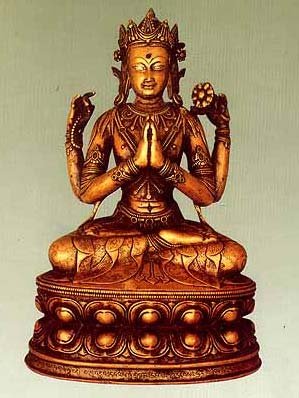
Mahayana (महायान, mahāyāna) is a major branch of Buddhism focusing on the path of a Bodhisattva (spiritual aspirants/ enlightened beings). Extant literature is vast and primarely composed in the Sanskrit language. There are many sūtras of which some of the earliest are the various Prajñāpāramitā sūtras.
Languages of India and abroad
Sanskrit dictionary
Sarvākārajñatā (सर्वाकारज्ञता).—(sarvākārajña-tā) [, see s.v. sarvakālajña.]
Sarvākārajñatā (in Sanskrit) can be associated with the following Chinese terms:
1) 一切相智 [yī qiè xiāng zhì]: “omniscient mind”.
2) 一切種 [yī qiè zhǒng]: “all kinds”; “all seeds”.
3) 一切種智 [yī qiè zhǒng zhì]: “all-inclusive cognition”; “universal cognition”.
4) 種智 [zhǒng zhì]: “omniscience”.
5) 薩婆若 [sà pó ruò]: “(Skt. sarvajña)”..
Note: sarvākārajñatā can be alternatively written as: sarvākāra-jñatā.
Sanskrit, also spelled संस्कृतम् (saṃskṛtam), is an ancient language of India commonly seen as the grandmother of the Indo-European language family (even English!). Closely allied with Prakrit and Pali, Sanskrit is more exhaustive in both grammar and terms and has the most extensive collection of literature in the world, greatly surpassing its sister-languages Greek and Latin.
See also (Relevant definitions)
Partial matches (+0): Sarvakara, Jnata.
Starts with (+0): Sarvakarajnatacarya, Sarvakarajnatavibhaga.
Full-text (+0): Sarvakarajnatavibhaga, Sarvakarajnatacarya, Yi qie zhong zhi, Dao xing, Sa po ruo, Yi qie xiang zhi, Zhong zhi, Yi qie zhong, Yi zhi, Buddha, Jnana, San zhi.
Relevant text
Search found 2 books and stories containing Sarvakarajnata, Sarvākārajñatā, Sarvakara-jnata, Sarvākāra-jñatā; (plurals include: Sarvakarajnatas, Sarvākārajñatās, jnatas, jñatās). You can also click to the full overview containing English textual excerpts. Below are direct links for the most relevant articles:
Maha Prajnaparamita Sastra (by Gelongma Karma Migme Chödrön)
Description of the ‘five eyes’ (cakṣus) < [Part 6 - Obtaining the five ‘eyes’]
VII. Winning omniscience and the knowledge of all the aspects < [Chapter XLII - The Great Loving-kindness and the Great Compassion of the Buddhas]
I. Difference between omniscience and the knowledge of all the aspects < [VII. Winning omniscience and the knowledge of all the aspects]
The Sanskrit Buddhist Literature of Nepal (by Rajendralala Mitra)
Page 245 < [The Sanskrit Buddhist Literature of Nepal (pages)]