Sampadana, Sampadāna, Sampādana, Saṃpādana: 19 definitions
Introduction:
Sampadana means something in Buddhism, Pali, Hinduism, Sanskrit, Marathi, Jainism, Prakrit, Hindi. If you want to know the exact meaning, history, etymology or English translation of this term then check out the descriptions on this page. Add your comment or reference to a book if you want to contribute to this summary article.
Alternative spellings of this word include Sampadan.
In Hinduism
Dharmashastra (religious law)
Sampādana (सम्पादन) refers to “preparing (the ground)” (for the Homa), according to Dadhirāma Marāsini’s 19th century Vivāhapaddhati (part of his Karmakāṇḍabhāskara) which is based on the Pāraskara-Gṛhyasūtra, a domestic manual in the Mādhyandina school of the Vājasaneyisaṃhitā.—If performed traditionally, high caste marriages among the Parbatiyas (Parbates/Paharis/Pahadis) or Indo-Nepalese people in Nepal are normally executed by following the course of events as presented in marriage manuals. The Homa-pṛṣṭha-bhūmi-sampādana rite is mentioned under the header called Marriage homa (vivāhahoma).
Dharmashastra (धर्मशास्त्र, dharmaśāstra) contains the instructions (shastra) regarding religious conduct of livelihood (dharma), ceremonies, jurisprudence (study of law) and more. It is categorized as smriti, an important and authoritative selection of books dealing with the Hindu lifestyle.
In Buddhism
Mahayana (major branch of Buddhism)
Sampādana (सम्पादन) refers to the “production (of the fruit of immortality)”, according to the Vajratuṇḍasamayakalparāja, an ancient Buddhist ritual manual on agriculture from the 5th-century (or earlier), containing various instructions for the Sangha to provide agriculture-related services to laypeople including rain-making, weather control and crop protection.—Accordingly, [after the Bhagavān taught the great heart-dhāraṇī], “Serpent chiefs, this great heart-dhāraṇī, called Tathāgata Vow Garuḍa Flame, wards off all hostile Nāgas, destroys and keeps back all clouds, thunderbolts, winds and lightning, protects crops, guards flowers, fruits and trees, produces (sampādana) the fruit of immortality, increases comfort and welfare. [...]”.
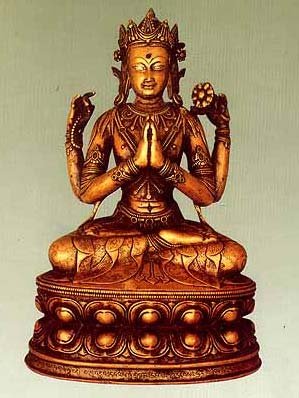
Mahayana (महायान, mahāyāna) is a major branch of Buddhism focusing on the path of a Bodhisattva (spiritual aspirants/ enlightened beings). Extant literature is vast and primarely composed in the Sanskrit language. There are many sūtras of which some of the earliest are the various Prajñāpāramitā sūtras.
Languages of India and abroad
Pali-English dictionary
sampadāna : (nt.) handing on; giving over; the dative case; supplying; making ready.
Sampadāna, (nt.) (saṃ+padāna) the dative relation J. V, 214 (upayogatthe), 237 (karaṇatthe); SnA 499 (°vacana). (Page 691)
— or —
Sampādana, (nt.) (fr. sampādeti) effecting, accomplishment Nett 44; preparing, obtaining J. I, 80. (Page 692)

Pali is the language of the Tipiṭaka, which is the sacred canon of Theravāda Buddhism and contains much of the Buddha’s speech. Closeley related to Sanskrit, both languages are used interchangeably between religions.
Marathi-English dictionary
sampādana (संपादन).—n (S) Acquiring, attaining, gaining; getting: also accomplishing, achieving, effecting.
sampādana (संपादन).—n Acquiring; accomplishing.
Marathi is an Indo-European language having over 70 million native speakers people in (predominantly) Maharashtra India. Marathi, like many other Indo-Aryan languages, evolved from early forms of Prakrit, which itself is a subset of Sanskrit, one of the most ancient languages of the world.
Sanskrit dictionary
Saṃpādana (संपादन).—
1) Accomplishing, effecting, fulfilment.
2) Gaining, obtaining, acquiring.
3) Cleaning, clearing, preparing (as ground); अपराङ्नस्तथा दर्भा वास्तु- संपादनं तिलाः (aparāṅnastathā darbhā vāstu- saṃpādanaṃ tilāḥ) Manusmṛti 3.255.
Derivable forms: saṃpādanam (संपादनम्).
Sampādana (सम्पादन).—n.
(-naṃ) 1. Gaining, acquiring, reaching, attaining. 2. Accomplishing, effecting. E. sam before pad to go, causal form, aff. lyuṭ .
Saṃpādana (संपादन).—i. e. sam-pad, [Causal.] + ana, n. 1. Accomplishing, [Vikramorvaśī, (ed. Bollensen.)] 37, 7 (vrata-, The completion of a vow); effecting, making, [Pañcatantra] 133, 1. 2. Cleansing, [Mānavadharmaśāstra] 3, 255. 3. Attaining. 4. Acquiring.
Saṃpādana (संपादन).—[feminine] ī = [preceding]; [neuter] as subst.
1) Sampādana (सम्पादन):—[=sam-pādana] [from sam-pad] mf(ī)n. ([from] idem) procuring, bestowing, [Mahābhārata]
2) [v.s. ...] accomplishing, carrying out, [Vikramāṅkadeva-carita, by Bilhaṇa]
3) [v.s. ...] n. the act of procuring or bestowing, [Kathāsaritsāgara; Sarvadarśana-saṃgraha]
4) [v.s. ...] bringing about, carrying out, accomplishing effecting, making, [Kāvya literature; Pañcatantra; Kathāsaritsāgara]
5) [v.s. ...] Putting in order, preparing, [Manu-smṛti]
Sampādana (सम्पादन):—[sa+mpādana] (naṃ) 1. n. Gaining, attaining; accomplishing.
Saṃpādana (संपादन):—(wie eben)
1) adj. (f. ī) a) verschaffend, zu Theil werden lassend: svarga [Mahābhārata 1, 6458.] — b) ausführend, erfüllend: durghaṭa [Oxforder Handschriften 238,b,20.] ājñā [Spr. (II) 881] (vgl. [Yājñavalkya’s Gesetzbuch 1, 76]). —
2) n. a) das Verschaffen, Herbeischaffen, Besorgen: vicitrānnapāna [Kathāsaritsāgara 54,192.] bhāryā [Mārkāṇḍeyapurāṇa 72, 12.] tṛṇa Comm. zu [Jaimini 1, 16.] pūjāsādhana [SARVADARŚANAS. 55, 20.] — b) das Zustandebringen, Ausführen, Erfüllen, Hervorbringen, Bewirken: sthūlavastra [Pañcatantra 133, 1.] satsamīhita [MĀLATĪM. 4, 4.] ātmacikīrṣitasya [Kathāsaritsāgara 15, 149.] svakārya [Kullūka] zu [Manu’s Gesetzbuch 1, 19.] dharmasya zu [7, 17.] yāga zu [11, 20.] vrata [Vikramorvaśī 37, 7.] śāstrasthiti [Sāhityadarpana 408.] tadarthaniścaya Comm. zu [Jaimini 1, 1.] sukha [SARVADARŚANAS. 118, 18. 169, 8.] [] zu [Bṛhadāranyakopaniṣad S. 14. 206. 261.] Comm. zu [Taittirīyasaṃhitā Prātiśākhya 3, 1. 14, 15.] zu [Taittirīyasaṃhitā 1, 914, 4.] — c) das Besorgen so v. a. in Ordnung - Bringen: vāstu [Manu’s Gesetzbuch 3, 255.] artha [7, 168.]
Saṃpādana (संपादन) in the Sanskrit language is related to the Prakrit words: Saṃpāḍaṇa, Saṃpāyaṇā.
Saṃpādana (in Sanskrit) can be associated with the following Chinese terms:
1) 作 [zuò]: “create”.
2) 修行 [xiū xíng]: “carry out or perform”.
3) 具 [jù]: “endowed with”.
4) 悉具 [xī jù]: “replete”.
5) 成 [chéng]: “accomplish”.
6) 成就 [chéng jiù]: “achieved”.
7) 成滿 [chéng mǎn]: “perfection”.
8) 成立 [chéng lì]: “consist of”.
Sanskrit, also spelled संस्कृतम् (saṃskṛtam), is an ancient language of India commonly seen as the grandmother of the Indo-European language family (even English!). Closely allied with Prakrit and Pali, Sanskrit is more exhaustive in both grammar and terms and has the most extensive collection of literature in the world, greatly surpassing its sister-languages Greek and Latin.
Hindi dictionary
Saṃpādana (संपादन) [Also spelled sampadan]:—(nm) editing; accomplishment.
...
Prakrit-English dictionary
Saṃpāḍaṇa (संपाडण) in the Prakrit language is related to the Sanskrit word: Saṃpādana.
Prakrit is an ancient language closely associated with both Pali and Sanskrit. Jain literature is often composed in this language or sub-dialects, such as the Agamas and their commentaries which are written in Ardhamagadhi and Maharashtri Prakrit. The earliest extant texts can be dated to as early as the 4th century BCE although core portions might be older.
Kannada-English dictionary
Saṃpādana (ಸಂಪಾದನ):—[noun] = ಸಂಪಾದನೆ [sampadane].
Kannada is a Dravidian language (as opposed to the Indo-European language family) mainly spoken in the southwestern region of India.
Nepali dictionary
Sampādana (सम्पादन):—n. 1. accomplishing; effecting; 2. editing;
Nepali is the primary language of the Nepalese people counting almost 20 million native speakers. The country of Nepal is situated in the Himalaya mountain range to the north of India.
See also (Relevant definitions)
Partial matches (+0): Padana, Sam, Cam.
Starts with (+0): Campatanai, Campatanam, Sampadana-garnu, Sampadana-samhita, Sampadanamgey, Sampadanata, Sampadanavibhaga.
Full-text (+47): Arthasampadana, Vratasampadana, Upasampadana, Vastusampadana, Amisakincikkhasampadana, Campatanam, Tadatthasampadana, Bhattavetanasampadana, Bhesajjasampadana, Rajjasampadana, Jivitasampadana, Catupaccayasampadana, Maggasampadana, Vivarasampadana, Gunasampadana, Asampadana, Karanasampadana, Ariyamaggasampadana, Asamatthatasampadana, Alavalasampadana.
Relevant text
Search found 21 books and stories containing Sampadana, Sam-padana, Sam-pādana, Sampadāna, Sampādana, Saṃpādana, Saṃpāḍaṇa, Sampāḍaṇa, Saṃpādanā; (plurals include: Sampadanas, padanas, pādanas, Sampadānas, Sampādanas, Saṃpādanas, Saṃpāḍaṇas, Sampāḍaṇas, Saṃpādanās). You can also click to the full overview containing English textual excerpts. Below are direct links for the most relevant articles:
Dictionaries of Indian languages (Kosha)
Page 358 < [Hindi-English-Nepali (1 volume)]
Page 195 < [Hindi-Assamese-English Volume 3]
Page 284 < [Hindi-Assamese-English Volume 2]
Ashta Nayikas and Dance Forms (study) (by V. Dwaritha)
Part 15 - Activities of Vāsakasajjikā < [Chapter 3 - Vāsakasajjikā]
Part 12 - Examples of other varieties of Svādhīnapatikā < [Chapter 2 - Svādhīnapatikā]
Tattvartha Sutra (with commentary) (by Vijay K. Jain)
Brihad Bhagavatamrita (commentary) (by Śrī Śrīmad Bhaktivedānta Nārāyana Gosvāmī Mahārāja)
Verse 1.5.49 < [Chapter 5 - Priya (the beloved devotees)]
Manusmriti with the Commentary of Medhatithi (by Ganganatha Jha)
Verse 3.255 < [Section XVI - Essentials of Śrāddha]
A Descriptive Catalogue of the Sanskrit Manuscripts, Madras (by M. Seshagiri Sastri)
Page 70 < [Volume 1, Part 1 (1901)]