Samadhivashita, Samādhivaśitā, Samadhi-vashita: 2 definitions
Introduction:
Samadhivashita means something in Buddhism, Pali, Hinduism, Sanskrit. If you want to know the exact meaning, history, etymology or English translation of this term then check out the descriptions on this page. Add your comment or reference to a book if you want to contribute to this summary article.
The Sanskrit term Samādhivaśitā can be transliterated into English as Samadhivasita or Samadhivashita, using the IAST transliteration scheme (?).
In Buddhism
Mahayana (major branch of Buddhism)
Samādhivaśitā (समाधिवशिता) refers to “mastery of Samādhi”, according to Mahāprajñāpāramitāśāstra (chapter 3).—Accordingly, “All who had come to the assembly accepted this command and remained. Then Kāśyapa the Great chose a thousand individuals. With the exception of Ānanda, all were Arhats, having acquired the six super-knowledges (abhijñā), liberation (vimokṣa) complete and without any doubt. All had acquired the three knowledges, mastery of Samādhi (samādhivaśitā). They could practice the Samādhis in a forward or reverse direction. All were without obstacles. They recited the three baskets and understood the inner and outer sacred scriptures. They recited and knew fully the eighteen kinds of great sūtras of the heretical sects (tīrthika) and all of them were able to conquer the heterodox (pāṣaṇḍa) in debate”.
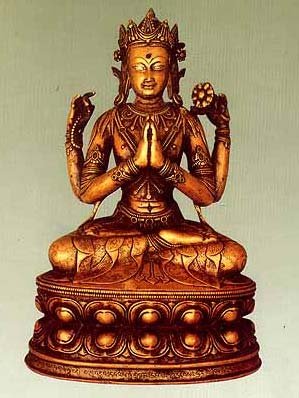
Mahayana (महायान, mahāyāna) is a major branch of Buddhism focusing on the path of a Bodhisattva (spiritual aspirants/ enlightened beings). Extant literature is vast and primarely composed in the Sanskrit language. There are many sūtras of which some of the earliest are the various Prajñāpāramitā sūtras.
Languages of India and abroad
Sanskrit dictionary
Samādhivaśitā (in Sanskrit) can be associated with the following Chinese terms:
1) 定自在 [dìng zì zài]: “meditative power”.
Note: samādhivaśitā can be alternatively written as: samādhi-vaśitā.
Sanskrit, also spelled संस्कृतम् (saṃskṛtam), is an ancient language of India commonly seen as the grandmother of the Indo-European language family (even English!). Closely allied with Prakrit and Pali, Sanskrit is more exhaustive in both grammar and terms and has the most extensive collection of literature in the world, greatly surpassing its sister-languages Greek and Latin.
See also (Relevant definitions)
Partial matches (+0): Vasita, Samadhi, Sanmati.
Full-text (+0): Ding zi zai, Pashanda, Vikridita, Vasita.
Relevant text
Search found 2 books and stories containing Samadhivashita, Samadhi-vashita, Samādhi-vaśitā, Samadhi-vasita, Samādhivaśitā, Samadhivasita; (plurals include: Samadhivashitas, vashitas, vaśitās, vasitas, Samādhivaśitās, Samadhivasitas). You can also click to the full overview containing English textual excerpts. Below are direct links for the most relevant articles:
Mahayana Dharani and Theravada Paritta (study) (by Biswajit Sankar Bhattacharyya)
Part 6 - Four Dhāraṇīs in the Bodhisattva-bhūmi < [Chapter 2 - A survey of the Mahāyāna Dhāraṇī Literature]
Maha Prajnaparamita Sastra (by Gelongma Karma Migme Chödrön)
I. The pratisaṃvids according to the Abhidharma < [Part 3 - The four unhindered knowledges]
Part 1 - The Buddha is omniscient, independent, without a teacher < [Chapter III - General Explanation of Evam Maya Śruta]