Rajadvara, Rājadvāra, Rajan-dvara: 13 definitions
Introduction:
Rajadvara means something in Buddhism, Pali, Hinduism, Sanskrit, the history of ancient India, Marathi. If you want to know the exact meaning, history, etymology or English translation of this term then check out the descriptions on this page. Add your comment or reference to a book if you want to contribute to this summary article.
In Buddhism
Theravada (major branch of Buddhism)
One of the gates of, Pulatthipura (Cv.lxxiii.160). It was probably to the south of the City. Cv. Trs. ii.39, n.4.
Theravāda is a major branch of Buddhism having the the Pali canon (tipitaka) as their canonical literature, which includes the vinaya-pitaka (monastic rules), the sutta-pitaka (Buddhist sermons) and the abhidhamma-pitaka (philosophy and psychology).
India history and geography
Rāja-dvāra.—(EI 32), king's court. Note: rāja-dvāra is defined in the “Indian epigraphical glossary” as it can be found on ancient inscriptions commonly written in Sanskrit, Prakrit or Dravidian languages.
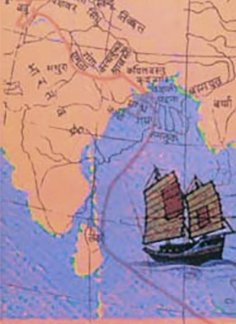
The history of India traces the identification of countries, villages, towns and other regions of India, as well as mythology, zoology, royal dynasties, rulers, tribes, local festivities and traditions and regional languages. Ancient India enjoyed religious freedom and encourages the path of Dharma, a concept common to Buddhism, Hinduism, and Jainism.
Languages of India and abroad
Marathi-English dictionary
rājadvāra (राजद्वार).—n (S) The royal mansion considered as a court of justice. 2 A gate or door of a palace.
rājadvāra (राजद्वार).—n The royal mansion; a gate of a palace.
Marathi is an Indo-European language having over 70 million native speakers people in (predominantly) Maharashtra India. Marathi, like many other Indo-Aryan languages, evolved from early forms of Prakrit, which itself is a subset of Sanskrit, one of the most ancient languages of the world.
Sanskrit dictionary
Rājadvāra (राजद्वार).—the gate of royal palace; राजद्वारे श्मशाने च यस्तिष्ठति स बान्धवः (rājadvāre śmaśāne ca yastiṣṭhati sa bāndhavaḥ) Subhāṣ.
Derivable forms: rājadvāram (राजद्वारम्).
Rājadvāra is a Sanskrit compound consisting of the terms rājan and dvāra (द्वार).
Rājadvāra (राजद्वार).—n.
(-raṃ) The gate of the palace. E. rāja for rājā king, dvāra gate.
Rājadvāra (राजद्वार):—[=rāja-dvāra] [from rāja > rāj] n. ([Harivaṃśa] etc.) the k°’s gate, gate of a royal palace
Rājadvāra (राजद्वार):—[rāja-dvāra] (raṃ) 1. n. Palace gate.
Rājadvāra (राजद्वार):—n. dass. [Harivaṃśa 3284.] [Spr. 458.] [Mārkāṇḍeyapurāṇa 126, 18] (dvāram acc. könnte auch zu dvār gehören). [Hitopadeśa 88, 18, v. l.]
Sanskrit, also spelled संस्कृतम् (saṃskṛtam), is an ancient language of India commonly seen as the grandmother of the Indo-European language family (even English!). Closely allied with Prakrit and Pali, Sanskrit is more exhaustive in both grammar and terms and has the most extensive collection of literature in the world, greatly surpassing its sister-languages Greek and Latin.
Kannada-English dictionary
Rājadvāra (ರಾಜದ್ವಾರ):—[noun] the main entrance of a palace and a palatial building.
Kannada is a Dravidian language (as opposed to the Indo-European language family) mainly spoken in the southwestern region of India.
Nepali dictionary
Rājadvāra (राजद्वार):—n. 1. royal entrance; 2. king's palace;
Nepali is the primary language of the Nepalese people counting almost 20 million native speakers. The country of Nepal is situated in the Himalaya mountain range to the north of India.
Pali-English dictionary
rājadvāra (ရာဇဒွါရ) [(na) (န)]—
[rāja+dvāra]
[ရာဇ+ဒွါရ]
[Pali to Burmese]
rājadvāra—
(Burmese text): မင်းအိမ်တံခါး၊ နန်းတော်တံခါး။
(Auto-Translation): Your house door, palace door.
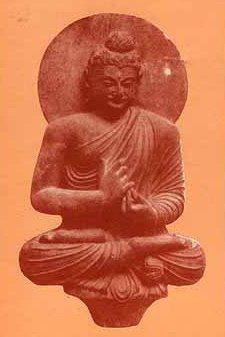
Pali is the language of the Tipiṭaka, which is the sacred canon of Theravāda Buddhism and contains much of the Buddha’s speech. Closeley related to Sanskrit, both languages are used interchangeably between religions.
See also (Relevant definitions)
Partial matches (+0): Dvara, Rajan, Raja.
Full-text (+0): Rajdwar, Rajadvarika, Upastha.
Relevant text
Search found 3 books and stories containing Rajadvara, Raja-dvara, Rāja-dvāra, Rājadvāra, Rajan-dvara, Rājan-dvāra; (plurals include: Rajadvaras, dvaras, dvāras, Rājadvāras). You can also click to the full overview containing English textual excerpts. Below are direct links for the most relevant articles:
Harshacharita (socio-cultural Study) (by Mrs. Nandita Sarmah)
Part 9.1: Infantry (padāti): < [Chapter 5 - Political Aspects]
Part 2.4: Relationship with the Sovereign Kings < [Chapter 5 - Political Aspects]
Part 4(b): Bāṇabhaṭṭa: His Style of Writing < [Chapter 1 - Introduction]
Dictionaries of Indian languages (Kosha)
Page 247 < [Bengali-Hindi-English, Volume 2]
Page 717 < [Hindi-Bengali-English Volume 2]
Page 717 < [Hindi-Marathi-English Volume 2]
Society in Mediaeval Ceylon (by M. B. Ariyapala)
Chapter 2 - The King (in ancient Ceylon) < [Part 1 - Political]