Rajadharma, Rājadharma, Rājadharmā, Rajan-dharma: 14 definitions
Introduction:
Rajadharma means something in Hinduism, Sanskrit, Marathi. If you want to know the exact meaning, history, etymology or English translation of this term then check out the descriptions on this page. Add your comment or reference to a book if you want to contribute to this summary article.
In Hinduism
Purana and Itihasa (epic history)
Rājadharmā (राजधर्मा).—A stork, which was a friend of Brahmā and a son of Kaśyapaprajāpati. This stork was known as Nāḍījaṅgha also. (See under Nāḍījaṅgha).
Rājadharma (राजधर्म).—Also Kṣatradharma; no sin to kill one in war.*
- * Matsya-purāṇa 103. 22.

The Purana (पुराण, purāṇas) refers to Sanskrit literature preserving ancient India’s vast cultural history, including historical legends, religious ceremonies, various arts and sciences. The eighteen mahapuranas total over 400,000 shlokas (metrical couplets) and date to at least several centuries BCE.
Shyanika-shastra (the science of Hawking and Hunting)
Rājadharma (राजधर्म) refers to “(the science of) politics”, according to the Śyainika-śāstra: a Sanskrit treatise dealing with the divisions and benefits of Hunting and Hawking, written by Rājā Rudradeva (or Candradeva) in possibly the 13th century.—Accordingly, [while discussing the importance of hawks]: “[...] To possess the knowledge of what is practicable and of the means to achieve it, to discern what is easily attainable and what is not, to employ proper persons for proper works and dissuade them from doing what is improper, and such other qualities, which have been highly spoken of in politics (rājadharma) [are considered also essential in the art of hawking]”.
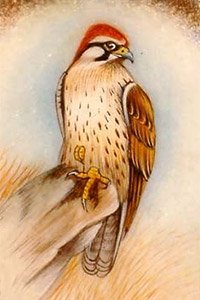
Shyanika-shastra (श्यैनिकशास्त्र, śyainikaśāstra) deals with ancient Indian skill of hawking/falconry (one of the ways of hunting) which were laid down in a systematic manner in various Sanskrit treatises. It also explains the philosophy behind how the pleasures derived from sense-experience could lead the way to liberation.
Dharmashastra (religious law)
Rājadharma (राजधर्म) refers to one of the topics dealt with in the (reconstructed) Devalasmṛti, a lost text dealing with Dharmaśāstra authored by Devala—one of the most famous personalities in the ancient Sanskrit literature renowned as a Vedic Seer and a highly celebrated sage.—The original and complete text of Devalasmṛti, is no longer existing. About 2500 prose and verse quotations, of the reconstructed text were thus collected, from numerous printed and manuscript works on Dharmaśāstra. After minute and repeated study of topics, treated in the collected quotations, they were classified even into the following twenty-two different prakaraṇas (divisions) [e.g., the rājadharma], of the three main adhyāyas (chapters).
Dharmashastra (धर्मशास्त्र, dharmaśāstra) contains the instructions (shastra) regarding religious conduct of livelihood (dharma), ceremonies, jurisprudence (study of law) and more. It is categorized as smriti, an important and authoritative selection of books dealing with the Hindu lifestyle.
Languages of India and abroad
Marathi-English dictionary
rājadharma (राजधर्म).—m (S) A law or precept as prescribed in the Shastras for the guidance of kings in the administration of government. 2 A quality or a virtue appropriate to or befitting kings. 3 Kingly duty or peculiar business.
Marathi is an Indo-European language having over 70 million native speakers people in (predominantly) Maharashtra India. Marathi, like many other Indo-Aryan languages, evolved from early forms of Prakrit, which itself is a subset of Sanskrit, one of the most ancient languages of the world.
Sanskrit dictionary
Rājadharma (राजधर्म).—
1) a king's duty.
2) a law or rule relating to kings (oft. in pl.).
Derivable forms: rājadharmaḥ (राजधर्मः).
Rājadharma is a Sanskrit compound consisting of the terms rājan and dharma (धर्म).
Rājadharma (राजधर्म).—[masculine] a king’s duty; Pl. the laws relating to kings.
Rājadharma (राजधर्म) as mentioned in Aufrecht’s Catalogus Catalogorum:—Pheh. 12.
—from Matsyapurāṇa. Haug. 52. Burnell. 192^a.
1) Rājadharma (राजधर्म):—[=rāja-dharma] [from rāja > rāj] m. a k°’s duty
2) [v.s. ...] [plural] rules or laws relating to kings, [Manu-smṛti; Mahābhārata] etc.
3) [v.s. ...] = mānuśāsana, [Catalogue(s)]
Rājadharma (राजधर्म):—[rāja-dharma] (rmmaḥ) 1. m. Royal duty; duty of the military tribe.
Rājadharma (राजधर्म):—m. die Pflicht eines Fürsten; pl. die für einen Fürsten geltenden Bestimmungen [Manu’s Gesetzbuch.7,1.9,324.] [Rāmāyaṇa.2,26,4. 102,1.] [Mahābhārata 12,2089.] [Oxforder Handschriften.7,b,4. 13,a,30. 85,b,42. 268,b,5.] rājadharmānuśāsana n. Titel des 1ten Abschnittes im 12ten Buche des [Mahābhārata] kaustubha bildet einen Theil des Smṛtikaustubha [Oxforder Handschriften 272,b, No. 645.]
Rājadharma (राजधर्म):—m. die Pflichten eines Fürsten ; Pl. die für einen Fürsten geltenden Bestimmungen. dharmānuśāsana n. oder einfach rajadharma ([Private libraries (Gustav) 1]) Titel des 1sten Abschnittes im 12ten Buch des [Mahābhārata]
Sanskrit, also spelled संस्कृतम् (saṃskṛtam), is an ancient language of India commonly seen as the grandmother of the Indo-European language family (even English!). Closely allied with Prakrit and Pali, Sanskrit is more exhaustive in both grammar and terms and has the most extensive collection of literature in the world, greatly surpassing its sister-languages Greek and Latin.
Kannada-English dictionary
Rājadharma (ರಾಜಧರ್ಮ):—[noun] the prescribed political, moral and ethical ways for ruling a state or nation.
Kannada is a Dravidian language (as opposed to the Indo-European language family) mainly spoken in the southwestern region of India.
Nepali dictionary
Rājadharma (राजधर्म):—n. 1. the duty of king or government; 2. the rights of a king or government;
Nepali is the primary language of the Nepalese people counting almost 20 million native speakers. The country of Nepal is situated in the Himalaya mountain range to the north of India.
See also (Relevant definitions)
Partial matches (+0): Rajan, Raja, Dharma, Dharma, Dharma.
Starts with (+0): Rajadharmabhrit, Rajadharmakanda, Rajadharmakaustubha, Rajadharmalakshana, Rajadharman, Rajadharmanushasana, Rajadharmanushasanaparva, Rajadharmaprakarana, Rajadharmasarasamgraha, Rajadharmavid.
Full-text (+57): Rajadharmavid, Rajadharmalakshana, Rajadharmabhrit, Rajadharmakaustubha, Dharmarajan, Rajadharmaprakarana, Rajadharmakanda, Wang fa, Rajadharmasarasamgraha, Rajaniti, Prasadapratishthadidhiti, Akashajananin, Rajdharm, Kamandaka, Rajadharmanushasana, Samkshiptacalarcavidhi, Aniruddhasamhita, Akasharakshin, Nadijangha, Mahotsavavidhi.
Relevant text
Search found 71 books and stories containing Rajadharma, Rāja-dharma, Rājadharma, Rājadharmā, Rajan-dharma, Rājan-dharma; (plurals include: Rajadharmas, dharmas, Rājadharmas, Rājadharmās). You can also click to the full overview containing English textual excerpts. Below are direct links for the most relevant articles:
Kathasaritsagara [Sanskrit/English] (by C. H. Tawney)
Markandeya Purana (Study) (by Chandamita Bhattacharya)
Wine (alcoholic drinks) < [Chapter 2]
1.11: Importance of the Mārkaṇḍeya-purāṇa < [Chapter 1]
Devala-smriti (critical study) (by Mukund Lalji Wadekar)
Chapter 8 - Devala-Smriti (a summary of the reconstructed text)
Chapter 5 - Outline of the Devala-Smriti
Vishnu Purana (by Horace Hayman Wilson)
Legend of Paraśurāma < [Book IV]
Chapter VII - Lineage of Puruvasas and Jahnu < [Book IV]
Chapter XI - Race of Yadu, An account of Arjuna, the lord of a thousand arms < [Book IV]
Bhishma Charitra (by Kartik Pandya)