Raja Yoga, Rajan-yoga, Rājayoga, Rajayoga: 18 definitions
Introduction:
Raja Yoga means something in Hinduism, Sanskrit, the history of ancient India, Marathi. If you want to know the exact meaning, history, etymology or English translation of this term then check out the descriptions on this page. Add your comment or reference to a book if you want to contribute to this summary article.
In Hinduism
Yoga (school of philosophy)
Raja yoga is considered the highest form of Yoga, and focuses primarely on meditation. Raja yoga is also known as "classical yoga". The practice of raja yoga typically starts with hatha yoga, which gives the body the needed health and strength to endure the more advanced stages of training.
Rājayoga (राजयोग) is the name of a work dealing with the Yoga system of Philosophy. It deals with—On the performance of the Rāja-yoga. By Rāmacandra Paramahaṃsa. Cf. Buhler’s Guzarat Catalogue. IV.
Rājayoga (राजयोग) refers to the “king of all Yogas”, according to the Amanaska Yoga treatise dealing with topics as absorption (laya), yogic powers (siddhi) and liberation, presented in the form of a dialogue between Īśvara and Vāmadeva.—The internal yoga [i.e., aparayoga] is called Rājayoga and its internal Mudrā is Śāmbhavī Mudrā. The entire second chapter is on Rājayoga, which is the Yoga Vāmadeva wanted to know. Śiva explains that Rājayoga is so called because it is the king of all Yogas and because it enables the Yogin to reach the illustrious king, the supreme Self. The first explanation clearly asserts the superiority of Rājayoga over the external Yoga and, indeed, all other types of Yoga.
Note: The Amanaska (2.3-4) defines rājayoga in two ways; firstly, it is the king (rāja) of all Yogas and, secondly, it causes the Yogin to attain the supreme Self who is the illustrious king (rāja).
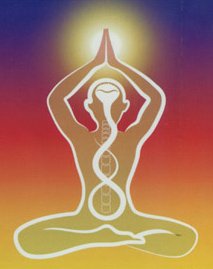
Yoga is originally considered a branch of Hindu philosophy (astika), but both ancient and modern Yoga combine the physical, mental and spiritual. Yoga teaches various physical techniques also known as āsanas (postures), used for various purposes (eg., meditation, contemplation, relaxation).
Vaishnavism (Vaishava dharma)
Rājayoga (राजयोग).—Patañjali’s process of imagining a form of the Absolute Truth within many forms.
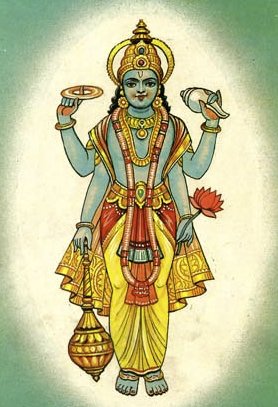
Vaishnava (वैष्णव, vaiṣṇava) or vaishnavism (vaiṣṇavism) represents a tradition of Hinduism worshipping Vishnu as the supreme Lord. Similar to the Shaktism and Shaivism traditions, Vaishnavism also developed as an individual movement, famous for its exposition of the dashavatara (‘ten avatars of Vishnu’).
Purana and Itihasa (epic history)
Rājayoga (राजयोग).—See under Yoga.
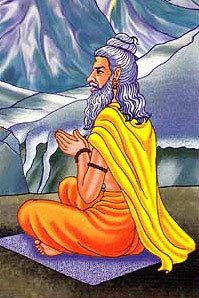
The Purana (पुराण, purāṇas) refers to Sanskrit literature preserving ancient India’s vast cultural history, including historical legends, religious ceremonies, various arts and sciences. The eighteen mahapuranas total over 400,000 shlokas (metrical couplets) and date to at least several centuries BCE.
Shaktism
Rājayoga (राजयोग) or “royal yoga” is commonly applied as a retronym—at least since the publication of Swami Vivekananda’s Rāja Yoga—to Patañjali’s system of aṣṭāṅgayoga, designates in many medieval and pre-colonial works on yoga something quite different. In the Haṃsavilāsa, or “Transport of the Haṃsas,” the work translated here, rājayoga is an ecstatic sensual rapture, a Śākta form of the rāsalīlā.
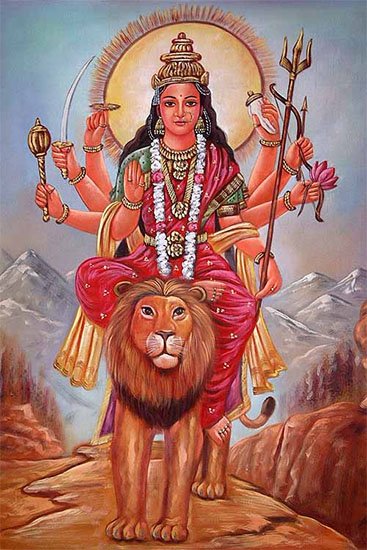
Shakta (शाक्त, śākta) or Shaktism (śāktism) represents a tradition of Hinduism where the Goddess (Devi) is revered and worshipped. Shakta literature includes a range of scriptures, including various Agamas and Tantras, although its roots may be traced back to the Vedas.
Jyotisha (astronomy and astrology)
Rājayoga (राजयोग) refers to a type of Yoga affecting the fortunes of men, according to the Bṛhatsaṃhitā (chapter 2), an encyclopedic Sanskrit work written by Varāhamihira mainly focusing on the science of ancient Indian astronomy astronomy (Jyotiṣa).—Accordingly, “We shall now proceed to give a brief description of (the qualifications of) a jyotiṣaka. [...] He must be able to use the Aṣṭakavarga tables to a given horoscope. He must know how the several Raja, Candra, Dvigraha, and Nabhasa yogas [i.e., rājayoga] affect the fortunes of men. He must also know how the fortunes of men are affected by the position and look of planets. He must be able to calculate the cause of one’s death and discover his future life”.
Jyotisha (ज्योतिष, jyotiṣa or jyotish) refers to ‘astronomy’ or “Vedic astrology” and represents the fifth of the six Vedangas (additional sciences to be studied along with the Vedas). Jyotisha concerns itself with the study and prediction of the movements of celestial bodies, in order to calculate the auspicious time for rituals and ceremonies.
India history and geography
Rāja-yoga.—(EI 12), a particular auspicious moment. Note: rāja-yoga is defined in the “Indian epigraphical glossary” as it can be found on ancient inscriptions commonly written in Sanskrit, Prakrit or Dravidian languages.
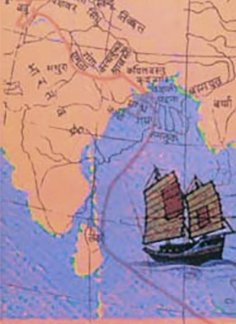
The history of India traces the identification of countries, villages, towns and other regions of India, as well as mythology, zoology, royal dynasties, rulers, tribes, local festivities and traditions and regional languages. Ancient India enjoyed religious freedom and encourages the path of Dharma, a concept common to Buddhism, Hinduism, and Jainism.
Languages of India and abroad
Marathi-English dictionary
rājayōga (राजयोग).—m (S) A simple and easy mode of abstract meditation; as disting. from the austere and rigorous modes. 2 Such a configuration of the planets at the birth of a person as indicates him to be destined for kingship. 3 The supreme or most excellent Yog, viz. holding secular grandeur or opulence, yet maintaining spiritual separateness and the exercises of abstract contemplation.
rājayōga (राजयोग).—m A simple and easy mode of abstract meditation.
Marathi is an Indo-European language having over 70 million native speakers people in (predominantly) Maharashtra India. Marathi, like many other Indo-Aryan languages, evolved from early forms of Prakrit, which itself is a subset of Sanskrit, one of the most ancient languages of the world.
Sanskrit dictionary
Rājayoga (राजयोग).—
1) a configuration of planets, asterisms &c. at the birth of a man which indicates that he is destined to be a king.
2) an easy mode of religious meditation (fit for kings to practise), as distinguished form the more rigorous one called हठयोग (haṭhayoga) q. v.
Derivable forms: rājayogaḥ (राजयोगः).
Rājayoga is a Sanskrit compound consisting of the terms rājan and yoga (योग).
Rājayoga (राजयोग).—m.
(-gaḥ) 1. The configuration of planets at the birth of a man indicating his future king-ship. 2. An easy mode of abstract meditation, as distinguished from the rigorous one called Hatayoga.
1) Rājayoga (राजयोग) as mentioned in Aufrecht’s Catalogus Catalogorum:—yoga. Burnell. 112^a. Oppert. Ii, 2167. Sb. 348.
—by Rāmacandra Paramahaṃsa. B. 4, 6. Bp. 304.
2) Rājayoga (राजयोग):—yoga, by Śaṅkarācārya. Rgb. 570.
3) Rājayoga (राजयोग):—jy. Gov. Or. Libr. Madras 75.
1) Rājayoga (राजयोग):—[=rāja-yoga] [from rāja > rāj] m. a constellation under which princes are born or a configuration of planets etc. at birth denoting a person destined for kingship, [Varāha-mihira’s Bṛhat-saṃhitā]
2) [v.s. ...] a [particular] stage in abstract meditation, or an easy mode of meditation, [Catalogue(s)] (cf. yoga)
3) [v.s. ...] Name of various works (also with yavana-praṇīta)
Rājayoga (राजयोग):—m.
1) eine Constellation, unter welcher Fürsten geboren werden, [Varāhamihira’s Bṛhajjātaka S. 2, S. 6.] [BṚH. 11] [?(passim). Weber’s Indische Studien 2, 275. Weber’s Verzeichniss No. 878.] —
2) Bez. einer best. Stufe der Meditation (yoga) [Oxforder Handschriften 224,b,9. 233. fgg., No. 566]; vgl. [AUFRECHT] in der Note auf [S. 235],a. — Was bedeutet aber das Wort in Verbindung mit mantrayoga und layayoga [Oxforder Handschriften] [?123,a,18?]
Rājayoga (राजयोग):—m. —
1) eine Constellation , unter welcher Fürsten geboren werden [Indische studien von Weber 14,355.] —
2) eine best. Stufe der Meditation. —
3) Titel eines Werkes [Classified index] —
4) neben mantrayoga und layayoga.
Sanskrit, also spelled संस्कृतम् (saṃskṛtam), is an ancient language of India commonly seen as the grandmother of the Indo-European language family (even English!). Closely allied with Prakrit and Pali, Sanskrit is more exhaustive in both grammar and terms and has the most extensive collection of literature in the world, greatly surpassing its sister-languages Greek and Latin.
Kannada-English dictionary
Rājayōga (ರಾಜಯೋಗ):—
1) [noun] a particular stage in abstract meditation.
2) [noun] (astrol.) a particular conjugation of planets at birth denoting a person destined for kingship.
3) [noun] (fig.) a very favourable period of time, during which that person would be having royal enjoyments.
4) [noun] such comforts, enjoyments.
5) [noun] a very effective medicine.
Kannada is a Dravidian language (as opposed to the Indo-European language family) mainly spoken in the southwestern region of India.
Nepali dictionary
Rājayoga (राजयोग):—n. 1. Astrol. the planet granting the favor of bestowal of kingship; 2. the ancient system of yoga as propounded by the sage Patanjali; an interior yoga; 3. path of meditation and mystic power; meditation to moksha;
Nepali is the primary language of the Nepalese people counting almost 20 million native speakers. The country of Nepal is situated in the Himalaya mountain range to the north of India.
See also (Relevant definitions)
Partial matches (+0): Yoga, Rajan, Raja.
Full-text (+371): Rajayogavidhi, Hathayoga, Rajayokam, Laya Yoga, Rajayoga yavanapranita, Yogataravali, Yoga, Rajayogabhashya, Raja, Yogaraja, King, Vaishishtya, Yogottama, Foremost, Uttamottama, Shlaghya, Antarmudra, Bahirmudra, Mudraparijnana, Sarvayoga.
Relevant text
Search found 68 books and stories containing Raja Yoga, Rāja-yoga, Rāja-yōga, Rajan-yoga, Rājan-yoga, Rājayoga, Rajayoga, Rājayōga, Rajayogas; (plurals include: Raja Yogas, yogas, yōgas, Rājayogas, Rajayogas, Rājayōgas, Rajayogases). You can also click to the full overview containing English textual excerpts. Below are direct links for the most relevant articles:
Yoga and its relevance in Modern Times (by Gitanjali Devi)
Part 1.2 - Introduction to Rājayoga < [Chapter 3 - Yoga: its divisions]
Part 3.2 - The concept of Yoga according to various Yoga-Upaniṣads < [Chapter 2 - Yoga philosophy in ancient times]
Part 1.1 - Introduction to Haṭhayoga < [Chapter 3 - Yoga: its divisions]
The body in early Hatha Yoga (by Ruth Westoby)
Rajas as Rājayoga, the Yoga of kings? < [Chapter 3 - Tracing blood]
Aparokṣānubhūti and Yoga < [Chapter 2 - Begin by cooking yourself]
The Yogatārāvalī and Haṭha Yoga < [Introduction: Female:body]
A Descriptive Catalogue of the Sanskrit Manuscripts, Madras (by M. Seshagiri Sastri)
Neurological basis of raja-yoga as described by Swami Vivekananda. < [Volume 5 (issue 2), Oct-Dec 1985]
Mental diseases in modern times – a spiritual outlook < [Volume 13 (issue 3-4), Jan-Jun 1994]
The origin of yogic cleansings < [Volume 14 (issue 1-2), Jul-Dec 1994]
Phaladeepika by Mantreswara (text and translation) (by Panditabhushana V. Subrahmanya Sastri)
The concept of Yoga in Yoga Upanishads (by Philomina T.L)
3. The Classifications of Yoga < [Chapter 4 - The contents of the Yogopaniṣads]
6. Comparision of Yogasūtra and Yogopaniṣads < [Chapter 5 - Textual Analysis]
4. The Yogopaniṣads (Introduction) < [Chapter 1 - Introduction]