Pashupatinatha, Paśupatinātha, Pashupati-natha, Pashupatinath: 6 definitions
Introduction:
Pashupatinatha means something in Hinduism, Sanskrit, the history of ancient India. If you want to know the exact meaning, history, etymology or English translation of this term then check out the descriptions on this page. Add your comment or reference to a book if you want to contribute to this summary article.
The Sanskrit term Paśupatinātha can be transliterated into English as Pasupatinatha or Pashupatinatha, using the IAST transliteration scheme (?).
Images (photo gallery)
India history and geography
1) Paśupatinātha (पशुपतिनाथ) (or Guhyeśvarī) is mentioned in the list of “selected settlements and sacred sites” of the Nepal Mandala (lit. “circle or country of Nepal”), the ancient name for the Kathmandu Valley. Historically, seventh-century Licchavi inscriptions define the Valley (including Paśupatinātha) not just as a geographic location and socio-political center, but it is also regarded as a sacred space specifically chosen by the Gods as their dwelling place.
2) Paśupatinātha (पशुपतिनाथ) (also Ārya-ghat) is also mentioned as a sacred site of the Deopatan region.
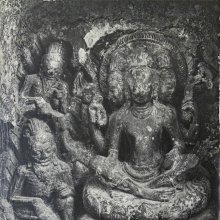
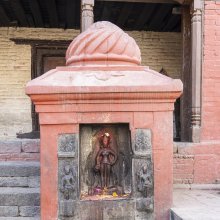
The Pashupatinath Temple (i.e., paśupatinātha-mandira) is a revered Hindu temple dedicated to Pashupati, a manifestation of Shiva. Located on the banks of the sacred Bagmati River in Kathmandu, Nepal, the temple is one of the oldest and most significant religious complexes in South Asia. The Pashupatinath temple is venerated as one of the holiest abodes of Shiva in Skanda Purana and is honored as one of the Paadal Petra Sthalams (Tamil Tevara Sthalam) of Tevaram. As per Shiva Purana, the linga of Pashupatinath that lies in Nepal has the capacity to fulfill all desires, and the story of Pashupatinath is narrated along with the greatness of Kedareshwara (Kedarnath) in the 9th chapter of "Koti-Rudra Samhita" which describes the journey of Pandavas in the search of Shiva. After Pandavas perform much penance, Shiva who had hidden himself underground in the form of a bull, reappears with his head in Pashupatinath, hump in Kedarnath, face in Rudranath, arms in Tungnath and navel in Madhyamaheshwar. [...] Pashupatinath Temple's existence is recorded as early as 400 CE. The ornamented pagoda houses the linga of Shiva. According to Gopal Raj Vamshavali, the temple was built by Prachanda Deva, a Licchavi king. Another chronicle states that Pashupatinath Temple was in the form of Linga shaped Devalaya before Supuspa Deva constructed a five-storey temple of Pashupatinath in this place.
Recognised as a UNESCO World Heritage Site since 1979, it is one of seven monument groups in UNESCO's designation of Kathmandu Valley and is described as an "extensive Hindu temple precinct" comprising a vast network of temples, ashrams, inscriptions, and images raised over the centuries along the banks of the sacred Bagmati River. The temple, considered one of the holiest pilgrimage sites for Hindus, is built on an area of 246 hectares (2,460,000 m2) and includes 518 mini-temples and the principal pagoda-style temple. The main temple priests are, as a long-standing tradition, Vedic Dravida Brahmins from Karnataka trained at the Sringeri Sharada Peetham in Southern India.
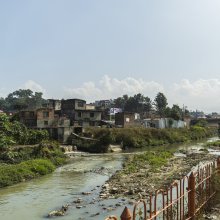
Pashupatinath refers to one of the sacred or popular destinations of Kathmandu (the capital of Nepal).—Description of Pashupatinath temple: Located three kilometres north-west of Kathmandu, in Deopatan, is the site of the Pashupatinath Temple complex. Located on the bank of the river Bagmati, it is considered the most sacred place in Nepal. Pashupati, an incarnation of the Hindu god Shiva is revered as a national deity of Nepal. The ornamented pagoda here houses the holy symbol of Lord Shiva and is said to date back to 400 BCE. According to the ancient Nepali chronicle Gopalraj Vamsavali, this temple was built by the Lichchhavi King Supuspa Deva. There are 518 temples and monuments on this 264-hectare site.
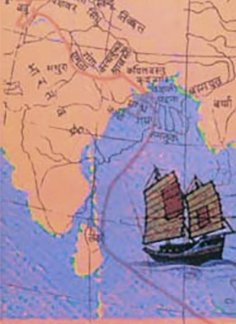
The history of India traces the identification of countries, villages, towns and other regions of India, as well as mythology, zoology, royal dynasties, rulers, tribes, local festivities and traditions and regional languages. Ancient India enjoyed religious freedom and encourages the path of Dharma, a concept common to Buddhism, Hinduism, and Jainism.
Languages of India and abroad
Sanskrit dictionary
Paśupatinātha (पशुपतिनाथ):—[=paśu-pati-nātha] [from paśu-pati > paśu > paś] m. Name of a [particular] form of Śiva, [Horace H. Wilson]
Paśupatinātha (पशुपतिनाथ):—m. eine Form Śiva’s [WILSON, Sel. Works 1, 213. 215.]
Paśupatinātha (पशुपतिनाथ):—m. eine Form Śiva's.
Sanskrit, also spelled संस्कृतम् (saṃskṛtam), is an ancient language of India commonly seen as the grandmother of the Indo-European language family (even English!). Closely allied with Prakrit and Pali, Sanskrit is more exhaustive in both grammar and terms and has the most extensive collection of literature in the world, greatly surpassing its sister-languages Greek and Latin.
See also (Relevant definitions)
Partial matches (+0): Pashupati, Nath, Natha, Temple, Pashupatinatha.
Full-text (+0): Sadvyu, Sadvyuu, Kathmandu, Arje ghat, Surya-ghat, Mrigasthali, Yakshamalla, Jayayaksha, Jayayakshamalla, Shleshmantaka, Shleshmantak, Satabiu, Satbiu, Aryaghata, Mahashivaratri, Rishisvara, Guhyeshvari, Icamgunarayana.
Relevant text
Search found 16 books and stories containing Pashupatinatha, Pashupati-nath, Pashupati-natha, Pashupatinath, Pashupatinath temple, Pasupati-nath, Paśupati-nātha, Pasupati-natha, Pasupatinath, Paśupatinātha, Pasupatinatha; (plurals include: Pashupatinathas, naths, nathas, Pashupatinaths, Pashupatinath temples, nāthas, Pasupatinaths, Paśupatināthas, Pasupatinathas). You can also click to the full overview containing English textual excerpts. Below are direct links for the most relevant articles:
Small Business and Livelihood < [Volume 15, Issue 1 (2023)]
Harmonizing Heritage and Artificial Neural Networks < [Volume 15, Issue 17 (2023)]
History of Nepal (the Bansawali) (by Munshi Shew Shunker Singh)
Chapter 6 - Ran Malla, king of Banepa; etc.
Chapter 9 - The Gorkha dynasty in Nepal
Kailash: Journal of Himalayan Studies
Part 4 - Architecture and Sculptures of ancient Nepal < [Ancient and Medieval Nepal (Part 2)]
Part 3 - The Licchavi era (5th to mid-8th century) < [Ancient and Medieval Nepal (Part 1)]
The Goddess Vatsala—her Temple and Yatra (festival procession) < [Volume 11, Number 3-4 (1984)]
Studies in the Cult of Jagannatha (by K. C. Mishra)
“Everyone Drinks from the Same Well” < [Volume 14, Issue 6 (2023)]
Expanding the Scope of “Supernatural” Dreaming in the Light of... < [Volume 16, Issue 5 (2025)]
The Challenge of Chronotopicity < [Volume 11, Issue 6 (2020)]