Parshvadvaya, Parshva-dvaya, Pārśvadvaya: 3 definitions
Introduction:
Parshvadvaya means something in Hinduism, Sanskrit. If you want to know the exact meaning, history, etymology or English translation of this term then check out the descriptions on this page. Add your comment or reference to a book if you want to contribute to this summary article.
The Sanskrit term Pārśvadvaya can be transliterated into English as Parsvadvaya or Parshvadvaya, using the IAST transliteration scheme (?).
In Hinduism
Jyotisha (astronomy and astrology)
Pārśvadvaya (पार्श्वद्वय) refers to “both sides” (i.e., beginning and end of a season), according to the Bṛhatsaṃhitā (chapter 12), an encyclopedic Sanskrit work written by Varāhamihira mainly focusing on the science of ancient Indian astronomy astronomy (Jyotiṣa).—Accordingly, “When star Canopus reappears after its conjunction with the Sun, waters muddled by their contact with the earth will resume their original clearness just in the same way as the minds of the Sādhus naturally recover their original purity after contact with the wicked. The autumn is attended by the Cakravāka on both its sides [i.e., pārśvadvaya] (i.e., beginning and end); in it is heard the music of the swan; and its opening is marked by the beautiful red sky; in all these respects the season resembles a woman with a rising bosom, sounding jewels and betel-coloured mouth”.
Jyotisha (ज्योतिष, jyotiṣa or jyotish) refers to ‘astronomy’ or “Vedic astrology” and represents the fifth of the six Vedangas (additional sciences to be studied along with the Vedas). Jyotisha concerns itself with the study and prediction of the movements of celestial bodies, in order to calculate the auspicious time for rituals and ceremonies.
Ayurveda (science of life)
Veterinary Medicine (The study and treatment of Animals)
Pārśvadvaya (पार्श्वद्वय) refers to the “two flanks” (of elephants), according to the 15th century Mātaṅgalīlā composed by Nīlakaṇṭha in 263 Sanskrit verses, dealing with elephantology in ancient India, focusing on the science of management and treatment of elephants.—[Cf. chapter 3, “on unfavorable marks”]: “1. If he has too few or too many toenails or members of the body, visible (external) testes, or (too) short (trunk-) ‘finger’, if he is dwarfish, frog-bellied, misshapen, has a blue, mottled, or brown-colored palate, is stolid, overlean, or leech-like (bloated?) or if his two flanks are not symmetrical (atulya-pārśvadvaya), if he is rough (in the skin), deficient in must, and his trunk has too short ends, such an elephant is not rated high”.
Āyurveda (आयुर्वेद, ayurveda) is a branch of Indian science dealing with medicine, herbalism, taxology, anatomy, surgery, alchemy and related topics. Traditional practice of Āyurveda in ancient India dates back to at least the first millenium BC. Literature is commonly written in Sanskrit using various poetic metres.
Natyashastra (theatrics and dramaturgy)
Pārśvadvaya (पार्श्वद्वय) or Pārśvadvayacāriṇi refers to one of twenty-five Madhupa types of Deśī varieties of Cārīs—“movements that involve the simultaneous movement of the feet, shanks and the hip”, according to Kallinātha’s Kalānidhi commentary on Śārṅgadeva’s Saṅgītaratnākara, 7.1016 (Vol. IV, pp.313-317).—Śārṅgadeva names and explains deśīcārīs of the ākāśikī-cārīs and ākāśikī-cārīs varieties described in Bharata’s Nāṭyaśāstra. Kallinātha also mentions a particular variety of deśī-cāris called madhupacārīs. The madhupa-cārīs [e.g., Pārśvadvaya-cāriṇi] have not been dealt with either by Bharata or Śārṅgadeva. Kallinatha gives a list of twenty five madhupa-cārīs, as enumerated by Kohala in his work Saṅgītameru
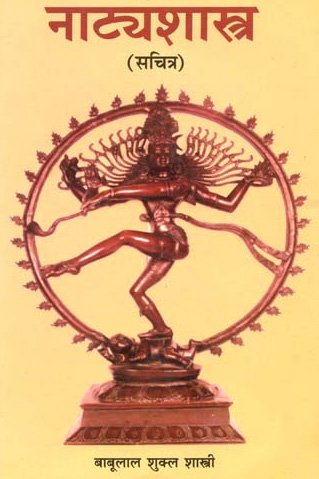
Natyashastra (नाट्यशास्त्र, nāṭyaśāstra) refers to both the ancient Indian tradition (shastra) of performing arts, (natya—theatrics, drama, dance, music), as well as the name of a Sanskrit work dealing with these subjects. It also teaches the rules for composing Dramatic plays (nataka), construction and performance of Theater, and Poetic works (kavya).
See also (Relevant definitions)
Partial matches (+0): Parshva, Dvaya.
Starts with (+0): Parshvadvayacarini, Parshvadvayacarini.
Full-text (+0): Parshvadvayacarini, Atulya, Carin.
Relevant text
Search found 4 books and stories containing Parshvadvaya, Parshva-dvaya, Pārśva-dvaya, Parsva-dvaya, Pārśvadvaya, Parsvadvaya; (plurals include: Parshvadvayas, dvayas, Pārśvadvayas, Parsvadvayas). You can also click to the full overview containing English textual excerpts. Below are direct links for the most relevant articles:
A Descriptive Catalogue of the Sanskrit Manuscripts, Madras (by M. Seshagiri Sastri)
Page 245 < [Volume 14 (1912)]
Notices of Sanskrit Manuscripts (by Rajendralala Mitra)
Page 222 < [Volume 15 (1911)]
Kohala in the Sanskrit textual tradition (Study) (by Padma Sugavanam)
Kohala and Nṛtya (10): The concept of Deśī Cārīs < [Chapter 2 - Kohala as seen in citations]
A History of Indian Philosophy Volume 2 (by Surendranath Dasgupta)
Part 3 - Organs in the Atharva-veda and Āyurveda < [Chapter XIII - Speculations in the Medical Schools]