Paramaraja, Parama-raja, Paramarāja: 7 definitions
Introduction:
Paramaraja means something in Buddhism, Pali, Hinduism, Sanskrit, the history of ancient India. If you want to know the exact meaning, history, etymology or English translation of this term then check out the descriptions on this page. Add your comment or reference to a book if you want to contribute to this summary article.
In Buddhism
Theravada (major branch of Buddhism)
A king of Ayodhya (in India?) who built a monastery, called the Lankarama, for the Elder Dhammakitti. P.L.C.245.
Theravāda is a major branch of Buddhism having the the Pali canon (tipitaka) as their canonical literature, which includes the vinaya-pitaka (monastic rules), the sutta-pitaka (Buddhist sermons) and the abhidhamma-pitaka (philosophy and psychology).
India history and geography
Paramarāja.—(EI 31, 33), royal title. See Paramarājādhirāja. Note: paramarāja is defined in the “Indian epigraphical glossary” as it can be found on ancient inscriptions commonly written in Sanskrit, Prakrit or Dravidian languages.
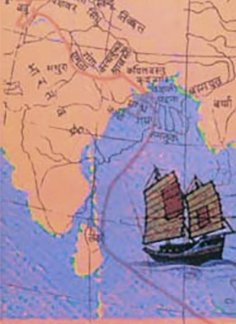
The history of India traces the identification of countries, villages, towns and other regions of India, as well as mythology, zoology, royal dynasties, rulers, tribes, local festivities and traditions and regional languages. Ancient India enjoyed religious freedom and encourages the path of Dharma, a concept common to Buddhism, Hinduism, and Jainism.
Languages of India and abroad
Sanskrit dictionary
Paramarāja (परमराज).—a supreme monarch.
Derivable forms: paramarājaḥ (परमराजः).
Paramarāja is a Sanskrit compound consisting of the terms parama and rāja (राज).
Paramarāja (परमराज).—m.
(-jaḥ) A supreme monarch. E. parama, and rājan a king, ṭac aff.
Paramaraja (परमरज):—[=parama-raja] [from parama > para] m. a supreme monarch, [Laghukaumudī]
Paramarāja (परमराज):—[parama-rāja] (jaḥ) 1. m. Supreme king.
Paramarāja (परमराज):—m. Oberkönig L.k. 1027.
Sanskrit, also spelled संस्कृतम् (saṃskṛtam), is an ancient language of India commonly seen as the grandmother of the Indo-European language family (even English!). Closely allied with Prakrit and Pali, Sanskrit is more exhaustive in both grammar and terms and has the most extensive collection of literature in the world, greatly surpassing its sister-languages Greek and Latin.
See also (Relevant definitions)
Partial matches (+0): Parama, Raja.
Starts with (+0): Paramarajadhiraja.
Full-text (+0): Paramarajadhiraja.
Relevant text
No search results for Paramaraja, Parama-raja, Parama-rāja, Paramarāja; (plurals include: Paramarajas, rajas, rājas, Paramarājas) in any book or story.