Paramanurajas, Paramāṇurajas, Paramanu-rajas: 2 definitions
Introduction:
Paramanurajas means something in Buddhism, Pali, Hinduism, Sanskrit. If you want to know the exact meaning, history, etymology or English translation of this term then check out the descriptions on this page. Add your comment or reference to a book if you want to contribute to this summary article.
In Buddhism
Mahayana (major branch of Buddhism)
Paramāṇurajas (परमाणुरजस्) refers to “atomic-sized dust”, according to the Gaganagañjaparipṛcchā: the eighth chapter of the Mahāsaṃnipāta (a collection of Mahāyāna Buddhist Sūtras).—Accordingly: “[...] The Śāriputra the Elder addressed himself to the Lord: ‘O Lord, how long the thought of awakening will be continued after the Bodhisattva Gaganagañja produced it?’. [...] The Lord said: ‘It is like this, Śāriputra, as if the world-spheres as numerous as the grains of sand in the river Gaṅgā are filled with the atomic-sized dust of Buddha-fields as numerous as the grains of sand in the river Gaṅgā, as if all the atomic-sized dust (paramāṇurajas) is put into a single dust-grain of a field during many hundreds of thousands of aeons, in the same way of calculating and establishing distinguishing marks, even though all the dust would be exhausted, the thought of incomparable complete awakening, which was produced by the Bodhisattva Gaganagañja, for the uncountable hundreds, thousands, millions, billions of ages, would never be exhausted’ [...]”.
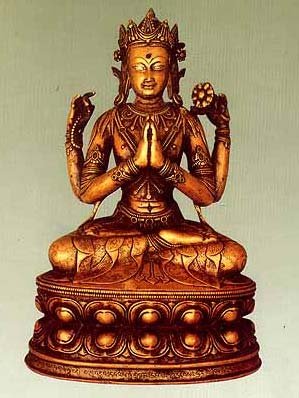
Mahayana (महायान, mahāyāna) is a major branch of Buddhism focusing on the path of a Bodhisattva (spiritual aspirants/ enlightened beings). Extant literature is vast and primarely composed in the Sanskrit language. There are many sūtras of which some of the earliest are the various Prajñāpāramitā sūtras.
Languages of India and abroad
Sanskrit dictionary
Paramāṇurajas (in Sanskrit) can be associated with the following Chinese terms:
1) 塵 [chén]: “defilement”; “object”; “pollution”.
Note: paramāṇurajas can be alternatively written as: paramāṇu-rajas.
Sanskrit, also spelled संस्कृतम् (saṃskṛtam), is an ancient language of India commonly seen as the grandmother of the Indo-European language family (even English!). Closely allied with Prakrit and Pali, Sanskrit is more exhaustive in both grammar and terms and has the most extensive collection of literature in the world, greatly surpassing its sister-languages Greek and Latin.
See also (Relevant definitions)
Partial matches (+0): Paramanu, Rajas.
Full-text (+0): Rajas, Paramanu, Ekaratnavyuha, Chen.
Relevant text
No search results for Paramanurajas, Paramāṇurajas, Paramāṇu-rajas, Paramanu-rajas; (plurals include: Paramanurajases, Paramāṇurajases, rajases) in any book or story.