Observing: 1 definition
Introduction:
Observing means something in the history of ancient India. If you want to know the exact meaning, history, etymology or English translation of this term then check out the descriptions on this page. Add your comment or reference to a book if you want to contribute to this summary article.
Images (photo gallery)


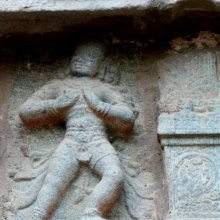
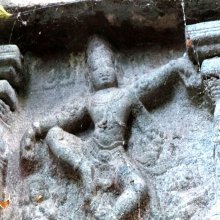


India history and geography
Observing (the Triratna in the form of darśana, jñāna, caritra) refers to one of the various methods of pursuing the spiritual life in the Hermitages (or Ashrams) of ancient India, as vividly depicted in the Kathās (narrative poems) such as Uddyotanasūri in his 8th-century Kuvalayamālā (a Prakrit Campū, similar to Kāvya poetry).—Page 87.20-28: Here is a vivid description of the intellectual and spiritual life in the Aśrama of a Jaina Muni. Uddyotanasūri gives a list of twenty-one methods of study and discussions and approaches to the tenets of religion and philosophy, [e.g., observing of Triratna in the form of darśana, jñāna, caritra] [...]. Also see the description of the hermitage of Divākara Mitra described by Bāṇa in the Harṣacarita.
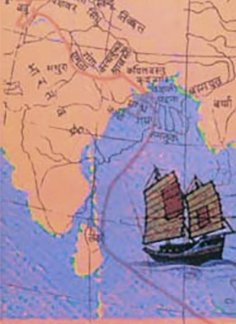
The history of India traces the identification of countries, villages, towns and other regions of India, as well as mythology, zoology, royal dynasties, rulers, tribes, local festivities and traditions and regional languages. Ancient India enjoyed religious freedom and encourages the path of Dharma, a concept common to Buddhism, Hinduism, and Jainism.
See also (Relevant definitions)
Full-text (+2179): Vratin, Palana, Samacarana, Apracyuta, Nishama, Yatavrata, Avipluta, Suvrata, Vratastha, Avrata, Amnayasarin, Tari, Parapakanivritta, Sabrahmacarin, Shruti, Darshin, Sandharana, Vilokana, Darshana, Anusevin.
Relevant text
Search found 480 books and stories containing Observing; (plurals include: Observings). You can also click to the full overview containing English textual excerpts. Below are direct links for the most relevant articles:
Matsya Purana (critical study) (by Kushal Kalita)
Part 4.4 - List of other Vratas described in the Matsyapurāṇa < [Chapter 4 - Religious aspects of the Matsyapurāṇa]
Part 4.2g - Ādityaśayana-vrata < [Chapter 4 - Religious aspects of the Matsyapurāṇa]
Part 4.3c - Gaurītṛtiyā-vrata < [Chapter 4 - Religious aspects of the Matsyapurāṇa]
How Development Affects News Media Coverage of Earthquakes < [Volume 11, Issue 7 (2019)]
Videogames and Innovation < [Volume 12, Issue 21 (2020)]
Understanding the Environmental Attitude-Behaviour Gap < [Volume 15, Issue 9 (2023)]
International Journal of Environmental Research and Public Health (MDPI)
Restorative Effects of Observing Natural and Urban Scenery after Working... < [Volume 20, Issue 1 (2023)]
Accept Anxiety to Improve Sleep < [Volume 18, Issue 24 (2021)]
Adaptation of the System for Observing Play and Recreation in Communities... < [Volume 17, Issue 1 (2020)]
Historical Elements in the Matsya Purana (by Chaitali Kadia)
Vows (Vrata) in the Matsya Purāṇa < [Chapter 5 - Cultural history in the Matsya-Purāṇa]
Prostitution in the Matsya Purāṇa < [Chapter 5 - Cultural history in the Matsya-Purāṇa]
Education in the Matsya Purāṇa < [Chapter 5 - Cultural history in the Matsya-Purāṇa]
Mahabharata (English) (by Kisari Mohan Ganguli)
Section CIX < [Anusasanika Parva]
Section XXV < [Anusasanika Parva]
Section XXXVI < [Rajadharmanusasana Parva]
Anumana in Indian Philosophy (by Sangita Chakravarty)
(B). Divisions of Anumāna (in Sāṃkhya-Yoga Philosophy) < [Chapter 3 - Treatment of Anumāna in Sāṃkhya-Yoga Philosophy]
(A). Definition of Anumāna (in Sāṃkhya-Yoga Philosophy) < [Chapter 3 - Treatment of Anumāna in Sāṃkhya-Yoga Philosophy]