Nivesita, Ni-visa-ne-ta, Niveshita: 11 definitions
Introduction:
Nivesita means something in Hinduism, Sanskrit, Jainism, Prakrit, Buddhism, Pali, the history of ancient India. If you want to know the exact meaning, history, etymology or English translation of this term then check out the descriptions on this page. Add your comment or reference to a book if you want to contribute to this summary article.
In Hinduism
Shaktism
Niveśita (निवेशित) refers to “being established” (in a particular lineage), according to the Kularatnoddyota, one of the earliest Kubjikā Tantras.—Accordingly, “[...] The goddess was established (niveśita) with devotion in the worship of the Beginningless Liturgy. Both of them were seated there and, in the union of supreme bliss, the venerable Lord of Kula instituted (their) marriage. [...]”.
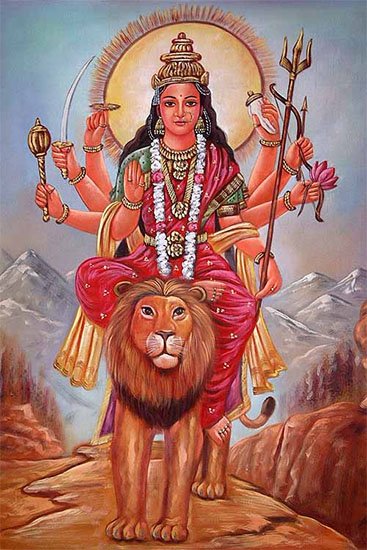
Shakta (शाक्त, śākta) or Shaktism (śāktism) represents a tradition of Hinduism where the Goddess (Devi) is revered and worshipped. Shakta literature includes a range of scriptures, including various Agamas and Tantras, although its roots may be traced back to the Vedas.
In Jainism
General definition (in Jainism)
Niveśitā (निवेशिता) refers to “having placed” (a treatise in the realm of words), according to the 12th century Yogaśāstra (verse 12.55) by Hemacandra: a Jain treatise dealing with Yoga and the highest reality (tattva).—Accordingly, “[This] Upaniṣad of Yoga, which is a cause of wonder in the mind of the assembly of the wise, was known from scripture, from the mouth of a good Guru and a little from experience in various places. Because of the profuse requesting of the Caulukya king, Kumārapāla, it was placed (niveśitā) in the realm of words by his teacher, the honourable Hemacandra. [...]”.

Jainism is an Indian religion of Dharma whose doctrine revolves around harmlessness (ahimsa) towards every living being. The two major branches (Digambara and Svetambara) of Jainism stimulate self-control (or, shramana, ‘self-reliance’) and spiritual development through a path of peace for the soul to progess to the ultimate goal.
India history and geography
Niveśita.—(CII 1), written [on stone]. Cf. prāsādo = yaṃ niveśitaḥ (Select Inscriptions, p. 295, text line 19); erected. Note: niveśita is defined in the “Indian epigraphical glossary” as it can be found on ancient inscriptions commonly written in Sanskrit, Prakrit or Dravidian languages.
The history of India traces the identification of countries, villages, towns and other regions of India, as well as mythology, zoology, royal dynasties, rulers, tribes, local festivities and traditions and regional languages. Ancient India enjoyed religious freedom and encourages the path of Dharma, a concept common to Buddhism, Hinduism, and Jainism.
Languages of India and abroad
Pali-English dictionary
nivesita : (pp. of nivedeti) established in; settled; arranged.
Nivesita, (adj.) (pp. of nivesati) settled, arranged, designed, built VvA. 82 (=sumāpita). (Page 373)
nivesita (နိဝေသိတ) [(ti) (တိ)]—
[ni+visa+ṇe+ta]
[နိ+ဝိသ+ဏေ+တ]
[Pali to Burmese]
nivesita—
(Burmese text): တည်နေစေ-တည်ထောင်-အပ်သော။
(Auto-Translation): Establish - Firmly set - Entrusted.
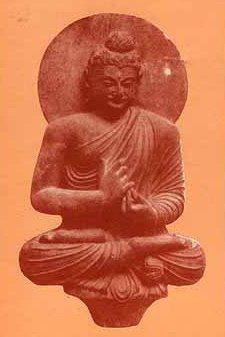
Pali is the language of the Tipiṭaka, which is the sacred canon of Theravāda Buddhism and contains much of the Buddha’s speech. Closeley related to Sanskrit, both languages are used interchangeably between religions.
Sanskrit dictionary
Niveśita (निवेशित):—[=ni-veśita] [from ni-viś] mfn. made to enter, placed in or upon, turned to, fixed or intent upon, engaged in etc., [Mahābhārata; Kāvya literature etc.]
Niveśita (निवेशित):—[ni-veśita] (taḥ-tā-taṃ) p. Entered into; engaged in; sent; fixed.
Niveśita (निवेशित) in the Sanskrit language is related to the Prakrit word: Ṇivesāviya.
Sanskrit, also spelled संस्कृतम् (saṃskṛtam), is an ancient language of India commonly seen as the grandmother of the Indo-European language family (even English!). Closely allied with Prakrit and Pali, Sanskrit is more exhaustive in both grammar and terms and has the most extensive collection of literature in the world, greatly surpassing its sister-languages Greek and Latin.
Kannada-English dictionary
Nivēśita (ನಿವೇಶಿತ):—
1) [adjective] kept or placed inside.
2) [adjective] kept or placed in a particular place, condition, etc.
Kannada is a Dravidian language (as opposed to the Indo-European language family) mainly spoken in the southwestern region of India.
See also (Relevant definitions)
Partial matches (+0): Visha, Mi, Luo, Ne, Da, Ni, Ta.
Starts with (+0): Nivesitakaradassana.
Full-text (+1): Nivittha, Viniveshita, Abhiniveshita, Samniveshita, Sadmaniveshita, Nivesitakaradassana, Abhinavanivesita, Anivesita, Nivesaviya, Durbhavya, Nivesh, Nibbisa, Nirajaska, Aparanta, Cavita, Kakaca, Alambi, Kshatra, Ganda, Caya.
Relevant text
Search found 13 books and stories containing Nivesita, Ni-veshita, Ni-vesita, Ni-veśita, Ni-visa-ne-ta, Ni-visa-ṇe-ta, Niveshita, Niveśita, Nivēśita, Niveśitā; (plurals include: Nivesitas, veshitas, vesitas, veśitas, tas, Niveshitas, Niveśitas, Nivēśitas, Niveśitās). You can also click to the full overview containing English textual excerpts. Below are direct links for the most relevant articles:
Cidgaganacandrika (study) (by S. Mahalakshmi)
Verse 159 [Śakti In Śuddhādhva] < [Chapter 3 - Third Vimarśa]
Yajnavalkya-smriti with Mitakshara and Viramitrodaya (by J. R. Gharpure)
Verse 1.248 < [Chapter 10 - On the Śrāddhas]
Chaitanya Bhagavata (by Bhumipati Dāsa)
Verse 2.1.337 < [Chapter 1 - The Beginning of the Lord’s Manifestation and His Instructions on Kṛṣṇa-saṅkīrtana]
A Descriptive Catalogue of the Sanskrit Manuscripts, Madras (by M. Seshagiri Sastri)
Old Brahmi Inscriptions (by B. M. Barua)
Part 1 - Inscription of Kharavela in the Hathigumpha < [Book 1 - Text and Tranlsations]
Part 5 - Jayaswal’s five corrected readings < [Book 2 - Notes]
Part 12 - Kharavela’s personal history < [Book 2 - Notes]
Notices of Sanskrit Manuscripts (by Rajendralala Mitra)
Page 394 < [Volume 10 (1890)]