Nijasva, Nija-ashva, Nija-sva, Nijashva, Nijāśva: 2 definitions
Introduction:
Nijasva means something in Hinduism, Sanskrit. If you want to know the exact meaning, history, etymology or English translation of this term then check out the descriptions on this page. Add your comment or reference to a book if you want to contribute to this summary article.
The Sanskrit term Nijāśva can be transliterated into English as Nijasva or Nijashva, using the IAST transliteration scheme (?).
Images (photo gallery)


In Hinduism
Shyanika-shastra (the science of Hawking and Hunting)
Nijāśva (निजाश्व) refers to “one’s own horse” (employed during hunting), according to the Śyainika-śāstra: a Sanskrit treatise dealing with the divisions and benefits of Hunting and Hawking, written by Rājā Rudradeva (or Candradeva) in possibly the 13th century.—Accordingly, “Hunting on horseback (āśvina) represents one of the eight subdivisions of Hunting (mṛgayā). [...] Five or six horsemen are quite enough for hunting rhinoceros. [...] If it turns back, then the horseman relying on the dexterity of his horse (nijāśva) should at once run in its front; others should hit it from behind or skilled archers should pierce it with arrows on the sides. [...]”.
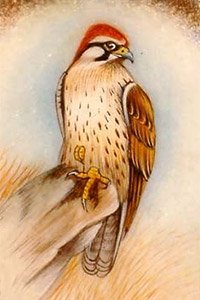
Shyanika-shastra (श्यैनिकशास्त्र, śyainikaśāstra) deals with ancient Indian skill of hawking/falconry (one of the ways of hunting) which were laid down in a systematic manner in various Sanskrit treatises. It also explains the philosophy behind how the pleasures derived from sense-experience could lead the way to liberation.
Languages of India and abroad
Sanskrit dictionary
Nijasva (निजस्व):—[=ni-ja-sva] [from ni-ja] n. one’s own property, [Monier-Williams’ Sanskrit-English Dictionary]
Sanskrit, also spelled संस्कृतम् (saṃskṛtam), is an ancient language of India commonly seen as the grandmother of the Indo-European language family (even English!). Closely allied with Prakrit and Pali, Sanskrit is more exhaustive in both grammar and terms and has the most extensive collection of literature in the world, greatly surpassing its sister-languages Greek and Latin.
See also (Relevant definitions)
Partial matches (+0): Ashva, Shva, Nija.
Starts with (+0): Nijasvarupa.
Relevant text
Search found 1 books and stories containing Nijasva, Nija-ashva, Nija-aśva, Nija-asva, Nija-sva, Nijashva, Nijāśva; (plurals include: Nijasvas, ashvas, aśvas, asvas, svas, Nijashvas, Nijāśvas). You can also click to the full overview containing English textual excerpts. Below are direct links for the most relevant articles: