Mihira: 18 definitions
Introduction:
Mihira means something in Hinduism, Sanskrit, the history of ancient India, Jainism, Prakrit, Hindi. If you want to know the exact meaning, history, etymology or English translation of this term then check out the descriptions on this page. Add your comment or reference to a book if you want to contribute to this summary article.
Alternative spellings of this word include Mihir.
In Hinduism
Purana and Itihasa (epic history)
Mihira (मिहिर) participated in the war between Gods and Demons, according to the Śivapurāṇa 2.4.7 (“Commencement of the War”).—Accordingly, as Brahmā narrated to Nārada: “[...] Duels were fought by the gods and the Asuras crushing each other, on seeing which heroes were delighted and cowards were terrified. [...] Śambhu fought with Īśāna. Śumbha an expert in battle fought with Śeṣa. Kumbha the Asura fought with the Moon. Kuñjara of great strength and exploit, an expert in different kinds of battles, fought with Mihira, using great weapons. [...]”.
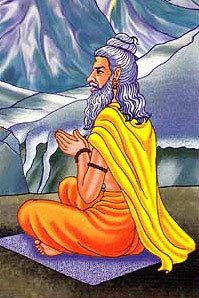
The Purana (पुराण, purāṇas) refers to Sanskrit literature preserving ancient India’s vast cultural history, including historical legends, religious ceremonies, various arts and sciences. The eighteen mahapuranas total over 400,000 shlokas (metrical couplets) and date to at least several centuries BCE.
Pancaratra (worship of Nārāyaṇa)
Mihira (मिहिर) or Mihirasaṃhitā is the name of an ancient Pāñcarātra Saṃhitā mentioned in the Mārkaṇḍeyasaṃhitā: a Pāñcarātra text comprising some 2200 Sanskrit verses mainly dealing with temple-building, iconography, pūjā (worship procedures), utsava (festivities) and prāyaścitta (expiatory measures).The opening chapter contains a list of canonical titles, although it is marred by repetitions and, by its own admission, does not contain all the “108” names supposedly constituting the corpus.
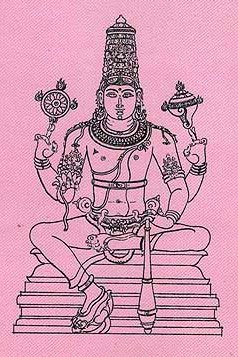
Pancaratra (पाञ्चरात्र, pāñcarātra) represents a tradition of Hinduism where Narayana is revered and worshipped. Closeley related to Vaishnavism, the Pancaratra literature includes various Agamas and tantras incorporating many Vaishnava philosophies.
India history and geography
Mihira (मिहिर) or Varāhamihira is another name for Varahimigi—one of the Siddhars (Siddhas) and Rishis mentioned by Rangarasa Desiga Swamigal in his Siddhargal Potri Thoguppu. Each name in the list starts with prefix ‘Om’ followed by the Siddhar’s names and ends with refrain ‘Thiruvadigal Potri’. For example for Varāha-mihira: ஓம் வராகிமிகி திருவடிகள் போற்றி [ōm varākimiki tiruvaṭikaḷ pōṟṟi].—These Siddhas experienced union with the ultimate reality and witnessed a spiritual transformation of their intellectual, mental, vital and ultimately, physical bodies.
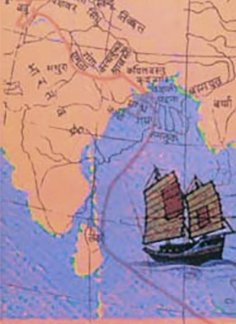
The history of India traces the identification of countries, villages, towns and other regions of India, as well as mythology, zoology, royal dynasties, rulers, tribes, local festivities and traditions and regional languages. Ancient India enjoyed religious freedom and encourages the path of Dharma, a concept common to Buddhism, Hinduism, and Jainism.
Languages of India and abroad
Sanskrit dictionary
Mihira (मिहिर).—[mih-kirac Uṇādi-sūtra 1.51]
1) The sun; मयि तावन्मिहिरोऽपि निर्दयोऽभूत् (mayi tāvanmihiro'pi nirdayo'bhūt) Bv.2.34; याते मय्यचिरान्निदाघमिहिर- ज्वालाशतैः शुष्कताम् (yāte mayyacirānnidāghamihira- jvālāśataiḥ śuṣkatām) 1.16; N.2.36;13.54.
2) A cloud.
3) The moon.
4) Wind, air.
5) An old man.
6) The Arka plant.
7) An epithet of Buddha; L. D. B.
Derivable forms: mihiraḥ (मिहिरः).
Mihira (मिहिर).—m.
(-raḥ) 1. The sun. 2. A sage. 3. A cloud. 4. Air, wind. 5. The moon. 6. An old man. E. mih to sprinkle or scatter, (radiance, &c.) Unadi aff. kirac .
Mihira (मिहिर).—m. 1. i. e. mih + ira, A cloud. 2. (borrowed from the Persian language), The sun. 3. The moon. 4. Wind. 5. A proper name.
Mihira (मिहिर).—[masculine] the sun.
Mihira (मिहिर) as mentioned in Aufrecht’s Catalogus Catalogorum:—See Varāhamihira. Vṛddhamihira astr. quoted twice in Kālamādhavīya.
1) Mihira (मिहिर):—m. ([according to] to [Uṇādi-sūtra i, 52 fr.] √1. mih, but [probably] the Persian مهر) the sun, [Mahābhārata; Kāvya literature] etc. ([cf. Lexicographers, esp. such as amarasiṃha, halāyudha, hemacandra, etc.] also ‘a cloud; wind; the moon; a sage’)
2) Name of an author (= varāha-m), [Catalogue(s)]
3) of a family, [Viṣṇu-purāṇa]
Mihira (मिहिर):—(raḥ) 1. m. The sun; a sage; the wind; a cloud; the moon.
Mihira (मिहिर):—[Uṇādisūtra 1, 52.] m.
1) = مِهْر die Sonne [Amarakoṣa.1,1,2,31.] [Trikāṇḍaśeṣa.1,1,99.] [Hemacandra’s Abhidhānacintāmaṇi 97.] [Anekārthasaṃgraha.3,595.] [Medinīkoṣa r. 205.] [Halāyudha.1,36.] [Mahābhārata.3,191.] [Spr. 3894.] [Kathāsaritsāgara 29,199.] [Gītagovinda 11,28.] [Mārkāṇḍeyapurāṇa 107,7.] [Bhaviṣyapurāna] in [Oxforder Handschriften 32,b,38.] —
2) Greis [Medinīkoṣa] [Śabdaratnāvalī im Śabdakalpadruma] buddha st. vṛddha [Hemacandra’s Anekārthasaṃgraha] —
3) Wolke (von mih) [Hemacandra’s Anekārthasaṃgraha] —
4) Wind. —
5) der Mond [Ratnamālā im Śabdakalpadruma] —
6) Nomen proprium als Abkürzung für varāhamihira [Oxforder Handschriften 279,a,16.] — Vgl. padma .
Mihira (मिहिर):—m. —
1) die Sonne. —
2) *Greis. —
3) *Wolke. —
4) *Wind. —
5) *der Mond. —
6) Nomen proprium — a) als Abkürzung von varāha. — b) einer Familie [Wilson's Uebersetzung des Viṣṇupurāṇa 5,382.]
Mihira (मिहिर) in the Sanskrit language is related to the Prakrit word: Mihira.
Mihira (in Sanskrit) can be associated with the following Chinese terms:
1) 迷企羅 [mí qǐ luó]: “Mihira” [name of a Deity].
Sanskrit, also spelled संस्कृतम् (saṃskṛtam), is an ancient language of India commonly seen as the grandmother of the Indo-European language family (even English!). Closely allied with Prakrit and Pali, Sanskrit is more exhaustive in both grammar and terms and has the most extensive collection of literature in the world, greatly surpassing its sister-languages Greek and Latin.
Hindi dictionary
Mihira (मिहिर) [Also spelled mihir]:—(nm) the sun; the moon; a cloud.
...
Prakrit-English dictionary
Mihira (मिहिर) in the Prakrit language is related to the Sanskrit word: Mihira.
Prakrit is an ancient language closely associated with both Pali and Sanskrit. Jain literature is often composed in this language or sub-dialects, such as the Agamas and their commentaries which are written in Ardhamagadhi and Maharashtri Prakrit. The earliest extant texts can be dated to as early as the 4th century BCE although core portions might be older.
Kannada-English dictionary
Mihira (ಮಿಹಿರ):—
1) [noun] the sun.
2) [noun] the moon.
3) [noun] a cloud.
4) [noun] air in motion; wind.
5) [noun] a man in his advanced age; an old man.
6) [noun] the plant Calotropis gigantea ( = C. procera) of Asclepiadaceae family.
Kannada is a Dravidian language (as opposed to the Indo-European language family) mainly spoken in the southwestern region of India.
Nepali dictionary
Mihira (मिहिर):—n. 1. the sun; 2. cloud; 3. the moon; 4. wind; air; 5. an old man;
Nepali is the primary language of the Nepalese people counting almost 20 million native speakers. The country of Nepal is situated in the Himalaya mountain range to the north of India.
See also (Relevant definitions)
Starts with (+0): Mihirabu, Mihiradatta, Mihirakula, Mihiralakshmi, Mihirana, Mihiranabibbila, Mihirapad, Mihirapura, Mihirarati, Mihirasamhita.
Full-text (+4534): Varahamihira, Mihirakula, Padmamihira, Mihirapad, Mihirapura, Mihiradatta, Mihirarati, Mi qi luo, Mahira, Avantimihira, Pancasiddhantika, Mihireshvara, Mihirana, Mihir, Channa, Yavanacarya, Tatkala, Kangu, Dhavala, Bhattotpala.
Relevant text
Search found 64 books and stories containing Mihira; (plurals include: Mihiras). You can also click to the full overview containing English textual excerpts. Below are direct links for the most relevant articles:
Amarakoshodghatana of Kshirasvamin (study) (by A. Yamuna Devi)
Atmosphere, space, direction, etc. < [Chapter 5 - Aspects of Nature]
The Sun-Worshipping Sakadvipiya Brahmanas (by Martina Palladino)
Appendix A - Ritual Objects in Nēryōsangh’s Sanskrit Translation of the Yasna
5. King Bhoja and the Sun cult < [Chapter 2 - Some Reflections on Topics Presented in the Purāṇas]
1. The Lexicon (related to the Magas/Bhojakas) < [Chapter 2 - Some Reflections on Topics Presented in the Purāṇas]
Notices of Sanskrit Manuscripts (by Rajendralala Mitra)
Brihat Samhita (by N. Chidambaram Iyer)
Appendix 1 - Calculations regarding Śaka and Jupiter (Bṛhaspati)
Appendix 7 - The five elementary principles that compose the physical man
Rasa Jala Nidhi, vol 5: Treatment of various afflictions (by Bhudeb Mookerjee)
Part 17 - Chemists of the Metallic School: Nagarjuna < [A Brief History of Indian Chemistry and Medicine]
Part 14 - Chemists of the Metallic School: Shambhu < [A Brief History of Indian Chemistry and Medicine]
Part 21 - Chemists of the Metallic School: Govinda or Bhikshu Govinda < [A Brief History of Indian Chemistry and Medicine]