Mei, Měi, Méi, Mèi: 54 definitions
Introduction:
Mei means something in Buddhism, Pali, biology. If you want to know the exact meaning, history, etymology or English translation of this term then check out the descriptions on this page. Add your comment or reference to a book if you want to contribute to this summary article.
Images (photo gallery)
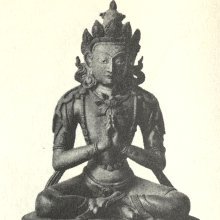
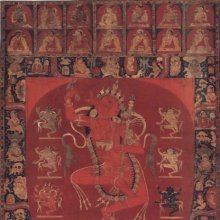
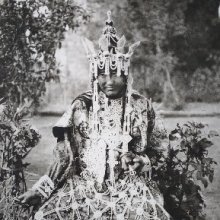
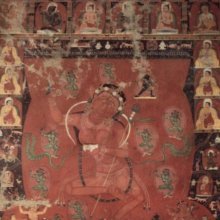
In Buddhism
Chinese Buddhism
1) 每 [mei]—Each, every.
2) 沒 [mei]—Sunk, gone; not; translit. m, mu, mo, mau, ma, bu, v, etc.
3) 眉 [mei]—Eyebrow, the eyebrows.
4) 美 [mei]—Fine, handsome, beautiful, admirable. madhura, sweet, pleasant.
5) 梅 [mei]—The plum.
6) 魅 [mei]—An ogre, evil spirit.
1) 沒 t = 没 s = méi p refers to [verb] “gone away; cyuta”; Domain: Buddhism 佛教 [fu jiao]; Notes: Sanskrit equivalent: cyuta, Japanese: botsu, or: bai, or: ba (BCSD '沒 [mei]', p. 710; MW 'cyuta'; SH '沒 [mei]', p. 241; Unihan '沒 [mei]').
2) 媚 ts = mèi p refers to [adjective] “amiable; prāsādika”; Domain: Buddhism 佛教 [fu jiao]; Notes: Sanskrit equivalent: prāsādika, Japanese: bi (BCSD '媚 [mei]', p. 367; MW 'prāsādika'; Unihan '媚 [mei]')..
3) 寐 ts = mèi p refers to [verb] “sleep; svap”; Domain: Buddhism 佛教 [fu jiao]; Notes: Sanskrit equivalent: svap, Japanese: bi (BCSD '寐 [mei]', p. 385; MW 'svap'; Unihan '寐 [mei]')..
4) 昧 ts = mèi p refers to [adjective] “sluggish; manda”; Domain: Buddhism 佛教 [fu jiao]; Notes: Sanskrit equivalent: manda, Japanese: mai (BCSD '昧 [mei]', p. 599; MW 'manda'; Unihan '昧 [mei]')..
5) 魅 ts = mèi p refers to [noun] “evil spirit; rākṣasa”; Domain: Buddhism 佛教 [fu jiao]; Notes: Sanskrit equivalent: rākṣasa, or: graha, Japanese: mi, or: bi (BCSD '魅 [mei]', p. 1291; MW 'graha'; SH '魅 [mei]', p. 446; Unihan '魅 [mei]')..
6) 每 ts = měi p refers to [pronoun] “every”; Domain: Buddhism 佛教 [fu jiao]; Notes: Japanese: mai, or: bai (BCSD '毀 [hui]', p. 696; SH '每 [mei]', p. 241; Unihan '每 [mei]')..
7) 眉 ts = méi p refers to [noun] “eyebrow; bhrū”; Domain: Buddhism 佛教 [fu jiao]; Notes: Sanskrit equivalent: bhrū, Japanese: bi, or: mi, Tibetan: smin ma (BCSD '眉 [mei]', p. 875; Mahāvyutpatti 'bhrūḥ'; MW 'bhrū'; SH '眉 [mei]', p. 309; Unihan '眉 [mei]')..
Chinese Buddhism (漢傳佛教, hanchuan fojiao) is the form of Buddhism that developed in China, blending Mahayana teachings with Daoist and Confucian thought. Its texts are mainly in Classical Chinese, based on translations from Sanskrit. Major schools include Chan (Zen), Pure Land, Tiantai, and Huayan. Chinese Buddhism has greatly influenced East Asian religion and culture.
Biology (plants and animals)
Mei in Pacific is the name of a plant defined with Artocarpus altilis in various botanical sources. This page contains potential references in Ayurveda, modern medicine, and other folk traditions or local practices It has the synonym Radermachia incisa Thunb. (among others).
Example references for further research on medicinal uses or toxicity (see latin names for full list):
· Amer. Journal of Botany (2001)
· Kongl. Vetenskaps Academiens Handlingar (1776)
· Journal of a voyage to the South Seas (1773)
· Journal of the Washington Academy of Sciences (1941)
· Char. Gen. Pl. (1775)
· Fieldiana, Botany (1946)
If you are looking for specific details regarding Mei, for example extract dosage, diet and recipes, chemical composition, pregnancy safety, health benefits, side effects, have a look at these references.

This sections includes definitions from the five kingdoms of living things: Animals, Plants, Fungi, Protists and Monera. It will include both the official binomial nomenclature (scientific names usually in Latin) as well as regional spellings and variants.
Languages of India and abroad
Chinese-English dictionary
[The following represents an unverified English translation. For all purposes consult the original Chinese text.]
沒 [méi] [mei]—
[動 [dong]] (Verb)
1. To sink [沉 [chen]] into water [水 [shui]]. For example: 「沉 [chen]」 (chénmò - to sink, to be submerged). From Southern Dynasties Song [南朝宋 [nan chao song]] period, Liu Yiqing's [劉義慶 [liu yi qing]] A New Account of the Tales of the World [《世說新語 [shi shuo xin yu]》], "Self-Renewal" [自新 [zi xin]]: "Zhou Chu [處 [chu]] then stabbed and killed the tiger [虎 [hu]], and also entered the water [入水 [ru shui]] to strike the flood dragon [蛟 [jiao]]. The flood dragon [蛟 [jiao]] would sometimes float [浮 [fu]] and sometimes sink [], traveling for tens of li [里 [li]], and Zhou Chu [處 [chu]] went with it."
2. To be buried [沉埋 [chen mai]], to be covered [掩覆 [yan fu]]. For example: 「積雪脛 [ji xue jing]」 (jīxuě mò jìng - snow [積雪 [ji xue]] accumulated to cover the shins [脛 [jing]]), 「水深膝 [shui shen xi]」 (shuǐ shēn mò xī - water [水 [shui]] deep enough to cover the knees [膝 [xi]]). From Tang Dynasty [唐 [tang]] period, Bai Juyi's [白居易 [bai ju yi]] "Spring Walk by Qiantang Lake" [〈錢唐湖春行 [qian tang hu chun xing]〉]: "Disordered flowers [亂花 [luan hua]] gradually want to dazzle one's eyes [迷人眼 [mi ren yan]], shallow grass [淺草 [qian cao]] can just barely cover the horses' hooves [馬蹄 [ma ti]]."
3. To disappear [消失 [xiao shi]], to be hidden from view [隱而不見 [yin er bu jian]]. For example: 「出 [chu]」 (chūmò - to appear and disappear, to haunt), 「湮 [yan]」 (yānmò - to be submerged and forgotten, to perish), 「泯 [min]」 (mǐnmò - to vanish, to be obliterated). From Selections of Literature [《文選 [wen xuan]》], Su Wu's [蘇武 [su wu]] "Poem Four of Four, No. 3": "Both Can [參 [can]] and Chen [辰 [chen]] (constellations) have already set [], I depart [去去 [qu qu]] from here [從此辭 [cong ci ci]]." From Song Dynasty [宋 [song]] period, Su Shi's [蘇軾 [su shi]] "To the Tide-Reaching Pavilion at Chengmai Post Station" [〈澄邁驛通潮閣 [cheng mai yi tong chao ge]〉], Poem Two of Two: "Far, far away the sky [天 [tian]] lowers where the falcon [鶻 [gu]] disappears [], a thread of green mountains [青山 [qing shan]] is the Central Plains [中原 [zhong yuan]]."
4. To end [終了 [zhong le]], to conclude [結束 [jie shu]]. For example: 「世 [shi]」 (mòshì - until death, for one's whole life). From Tang Dynasty [唐 [tang]] period, Yuan Zhen's [元稹 [yuan zhen]] The Story of Yingying [《鶯鶯傳 [ying ying chuan]》]: "Then the oath [誓 [shi]] sworn for life [身 [shen]] will have an end [有終 [you zhong]]!"
5. To confiscate [扣收 [kou shou]] property [財物 [cai wu]]. For example: 「收 [shou]」 (mòshōu - to confiscate), 「吞財物 [tun cai wu]」 (tūnmò cáiwù - to embezzle property [財物 [cai wu]]). From Records of the Three Kingdoms [《三國志 [san guo zhi]》], Volume 47, Book of Wu [吳書 [wu shu]], Biography of Emperor Sun Quan [吳主權傳 [wu zhu quan chuan]]: "Yuán [淵 [yuan]] indeed beheaded Mi [彌 [mi]] and others, sent their heads [首 [shou]] to Wei [魏 [wei]], and confiscated [] their military supplies [兵資 [bing zi]]."
6. To die [死 [si]]. Interchangeable with 「歿 [mo]」 (mò). From I Ching [《易經 [yi jing]》], "Appended Remarks, Part Two" [繫辭下 [xi ci xia]]: "When Fuxi [包犧氏 [bao xi shi]] died [], Shennong [神農 [shen nong]] arose." From Selections of Literature [《文選 [wen xuan]》], Jia Yi's [賈誼 [jia yi]] "On the Faults of Qin" [《過秦論 [guo qin lun]》]: "After the First Emperor [始皇 [shi huang]] died [], his remaining prestige [餘威 [yu wei]] still awed [震 [zhen]] the various tribes [殊俗 [shu su]]."
沒:[動]
1.沉入水中。如:「沉沒」。南朝宋.劉義慶《世說新語.自新》:「處即刺殺虎,又入水擊蛟,蛟或浮或沒,行數十里,處與之俱。」
2.沉埋、掩覆。如:「積雪沒脛」、「水深沒膝」。唐.白居易〈錢唐湖春行〉:「亂花漸欲迷人眼,淺草纔能沒馬蹄。」
3.消失、隱而不見。如:「出沒」、「湮沒」、「泯沒」。《文選.蘇武.詩四首之三》:「參辰皆已沒,去去從此辭。」宋.蘇軾〈澄邁驛通潮閣〉詩二首之二:「杳杳天低鶻沒處,青山一髮是中原。」
4.終了、結束。如:「沒世」。唐.元稹《鶯鶯傳》:「則沒身之誓,其有終矣!」
5.扣收財物。如:「沒收」、「吞沒財物」。《三國志.卷四十七.吳書.吳主權傳》:「淵果斬彌等,送其首于魏,沒其兵資。」
6.死。通「歿」。《易經.繫辭下》:「包犧氏沒,神農氏作。」《文選.賈誼.過秦論》:「始皇既沒,餘威震于殊俗。」
méi:[dòng]
1. chén rù shuǐ zhōng. rú: “chén méi” . nán cháo sòng. liú yì qìng < shì shuō xīn yǔ. zì xīn>: “chù jí cì shā hǔ, yòu rù shuǐ jī jiāo, jiāo huò fú huò méi, xíng shù shí lǐ, chù yǔ zhī jù.”
2. chén mái,, yǎn fù. rú: “jī xuě méi jìng” ,, “shuǐ shēn méi xī” . táng. bái jū yì 〈qián táng hú chūn xíng〉: “luàn huā jiàn yù mí rén yǎn, qiǎn cǎo cái néng méi mǎ tí.”
3. xiāo shī,, yǐn ér bù jiàn. rú: “chū méi” ,, “yān méi” ,, “mǐn méi” . < wén xuǎn. sū wǔ. shī sì shǒu zhī sān>: “cān chén jiē yǐ méi, qù qù cóng cǐ cí.” sòng. sū shì 〈chéng mài yì tōng cháo gé〉 shī èr shǒu zhī èr: “yǎo yǎo tiān dī gú méi chù, qīng shān yī fà shì zhōng yuán.”
4. zhōng le,, jié shù. rú: “méi shì” . táng. yuán zhěn < yīng yīng chuán>: “zé méi shēn zhī shì, qí yǒu zhōng yǐ! ”
5. kòu shōu cái wù. rú: “méi shōu” ,, “tūn méi cái wù” . < sān guó zhì. juǎn sì shí qī. wú shū. wú zhǔ quán chuán>: “yuān guǒ zhǎn mí děng, sòng qí shǒu yú wèi, méi qí bīng zī.”
6. sǐ. tōng “mò” . < yì jīng. xì cí xià>: “bāo xī shì méi, shén nóng shì zuò.” < wén xuǎn. jiǎ yì. guò qín lùn>: “shǐ huáng jì méi, yú wēi zhèn yú shū sú.”
mei:[dong]
1. chen ru shui zhong. ru: "chen mei" . nan chao song. liu yi qing < shi shuo xin yu. zi xin>: "chu ji ci sha hu, you ru shui ji jiao, jiao huo fu huo mei, xing shu shi li, chu yu zhi ju."
2. chen mai,, yan fu. ru: "ji xue mei jing" ,, "shui shen mei xi" . tang. bai ju yi
3. xiao shi,, yin er bu jian. ru: "chu mei" ,, "yan mei" ,, "min mei" . < wen xuan. su wu. shi si shou zhi san>: "can chen jie yi mei, qu qu cong ci ci." song. su shi
4. zhong le,, jie shu. ru: "mei shi" . tang. yuan zhen < ying ying chuan>: "ze mei shen zhi shi, qi you zhong yi! "
5. kou shou cai wu. ru: "mei shou" ,, "tun mei cai wu" . < san guo zhi. juan si shi qi. wu shu. wu zhu quan chuan>: "yuan guo zhan mi deng, song qi shou yu wei, mei qi bing zi."
6. si. tong "mo" . < yi jing. xi ci xia>: "bao xi shi mei, shen nong shi zuo." < wen xuan. jia yi. guo qin lun>: "shi huang ji mei, yu wei zhen yu shu su."
[The following represents an unverified English translation. For all purposes consult the original Chinese text.]
塺 [méi] [mei]—
Another pronunciation (音 [yin]) of 一 [yi] (一 [yi]).
塺:(一)之又音。
méi:(yī) zhī yòu yīn.
mei:(yi) zhi you yin.
[The following represents an unverified English translation. For all purposes consult the original Chinese text.]
沒 [méi] [mei]—
[動 [dong]] (Verb)
1. 無 [wu] (wú). To not have; to be without. For example: 没缘 [mei yuan] (méi yuán) (no fate/affinity), 没良心 [mei liang xin] (méi liángxīn) (no conscience). Tang (唐 [tang]) Dynasty, Wei Zhuang (韦庄 [wei zhuang]), in the poem (词 [ci]) "Nü Guan Zi (女冠子 [nu guan zi]) - April 17 (四月十七 [si yue shi qi])": "Except for the moon in the sky, no one (没人 [mei ren]) knows." Yuan (元 [yuan]) Dynasty, Zhong Sicheng (钟嗣成 [zhong si cheng]), in the song (曲 [qu]) "Yi Zhi Hua (一枝花 [yi zhi hua]) - Sheng Ju Tian Di Jian Tao (生居天地间套 [sheng ju tian de jian tao]) - Mu Yang Guan (牧羊关 [mu yang guan])": "An illness from the womb, no medicine (没药 [mei yao]) can cure."
2. 不如 [bu ru] (bù rú). Not as good as; not equal to. For example: "I am not as rich (没你有钱 [mei ni you qian]) as you," "You are not as fast (没我快 [mei wo kuai]) as me."
[副 [fu]] (Adverb)
未 [wei] (wèi). Not yet; did not. For example: 没来 [mei lai] (méi lái) (did not come), 没说 [mei shuo] (méi shuō) (did not say).
沒:[動]
1.無。如:「沒緣」、「沒良心」。唐.韋莊〈女冠子.四月十七〉詞:「除卻天邊月,沒人知。」元.鍾嗣成〈一枝花.生居天地間套.牧羊關〉曲:「胎中疾,沒藥醫。」
2.不如。如:「我沒你有錢」、「你沒我快」。
[副]
未。如:「沒來」、「沒說」。
méi:[dòng]
1. wú. rú: “méi yuán” ,, “méi liáng xīn” . táng. wéi zhuāng 〈nǚ guān zi. sì yuè shí qī〉 cí: “chú què tiān biān yuè, méi rén zhī.” yuán. zhōng sì chéng 〈yī zhī huā. shēng jū tiān de jiān tào. mù yáng guān〉 qū: “tāi zhōng jí, méi yào yī.”
2. bù rú. rú: “wǒ méi nǐ yǒu qián” ,, “nǐ méi wǒ kuài” .
[fù]
wèi. rú: “méi lái” ,, “méi shuō” .
mei:[dong]
1. wu. ru: "mei yuan" ,, "mei liang xin" . tang. wei zhuang
2. bu ru. ru: "wo mei ni you qian" ,, "ni mei wo kuai" .
[fu]
wei. ru: "mei lai" ,, "mei shuo" .
[The following represents an unverified English translation. For all purposes consult the original Chinese text.]
玫 [méi] [mei]—
Noun (名 [ming])
1. Beautiful stone (美石 [mei shi]). According to Shi Xuanying (釋玄應 [shi xuan ying]) in Yiqie Jing Yinyi (一切經音義 [yi qie jing yin yi]), Volume 2, Daban Niepan Jing (大般涅槃經 [da ban nie pan jing]) from the Tang Dynasty (唐 [tang]): "A stone that is beautiful is called '' (méi), and a stone that is round and beautiful is called '瑰 [gui]' (guī)."
2. See also the entry for '瑰 [gui]' (méiguī).
玫:[名]
1.美石。唐.釋玄應《一切經音義.卷二.大般涅槃經》:「石之美好曰:『玫』,圓好曰:『瑰』。」
2.參見「玫瑰」條。
méi:[míng]
1. měi shí. táng. shì xuán yīng < yī qiè jīng yīn yì. juǎn èr. dà bān niè pán jīng>: “shí zhī měi hǎo yuē: ‘méi’ , yuán hǎo yuē: ‘guī’ .”
2. cān jiàn “méi guī” tiáo.
mei:[ming]
1. mei shi. tang. shi xuan ying < yi qie jing yin yi. juan er. da ban nie pan jing>: "shi zhi mei hao yue: 'mei' , yuan hao yue: 'gui' ."
2. can jian "mei gui" tiao.
[The following represents an unverified English translation. For all purposes consult the original Chinese text.]
枚 [méi] [mei]—
[名 [ming]] Noun
1. Tree trunk.
Shijing (《詩經 [shi jing]》), Zhou Nan (《周南 [zhou nan]》), Ru Fen (《汝墳 [ru fen]》): "遵彼汝墳 [zun bi ru fen],伐其條 [fa qi tiao]。(Following that Ru Fen, cut down its branches and mei (- tree trunks).)"
Tang Dynasty (唐 [tang]) Du Fu's (杜甫 [du fu]) poem "Rain" (〈雨 [yu]〉): "鮫館如鳴杼 [jiao guan ru ming zhu],樵舟豈伐 [qiao zhou qi fa]。(The shark's dwelling is like a clattering loom, how can the woodcutter's boat cut down mei (- trees/trunks)?)"
2. In ancient times, during military marches, a chopstick-like object held horizontally in the mouth by soldiers to prevent talking. For example: "銜疾走 [xian ji zou] (xián méi jí zǒu - hold mei in mouth and march quickly, meaning to march silently and quickly)."
Shijing (《詩經 [shi jing]》), Bin Feng (《豳風 [bin feng]》), Dong Shan (《東山 [dong shan]》): "制彼裳衣 [zhi bi shang yi],勿士行 [wu shi xing]。(Make their clothes, do not let the soldiers march with mei (- in their mouths).)"
3. Classifier:
(1) A unit for counting small objects. Equivalent to "個 [ge] (gè - piece/item)." For example: "一銅板 [yi tong ban] (yī méi tóngbǎn - one mei copper coin)," "兩郵票 [liang you piao] (liǎng méi yóupiào - two mei stamps)."
Wen Xuan (《文選 [wen xuan]》), Xie Huilian's (謝惠連 [xie hui lian]) "Sacrifice to an Ancient Tomb" (〈祭古冢文 [ji gu zhong wen]〉): "棺上有五銖錢百餘 [guan shang you wu zhu qian bai yu]。(On the coffin were over a hundred mei (- coins) of Wuzhu coins.)"
The Scholars (《儒林外史 [ru lin wai shi]》), Chapter 2: "只有周 [zhi you zhou]、梅二位的茶杯裡有兩生紅棗 [mei er wei de cha bei li you liang sheng hong zao],其餘都是清茶 [qi yu dou shi qing cha]。(Only in the teacups of Zhou and Mei were two mei (- dates) of raw red dates, the rest was plain tea.)"
(2) A unit for counting rockets and ammunition. For example: "一炸彈 [yi zha dan] (yī méi zhàdàn - one mei bomb)," "兩火箭 [liang huo jian] (liǎng méi huǒjiàn - two mei rockets)."
4. A surname. For example, Mei Cheng (乘 [cheng]) existed in the Han Dynasty (漢代 [han dai]).
[副 [fu]] Adverb
One by one. For example: "不勝舉 [bu sheng ju] (bù shèng méi jǔ - too numerous to mention individually, literally 'cannot count them one by one')."
枚:[名]
1.樹幹。《詩經.周南.汝墳》:「遵彼汝墳,伐其條枚。」唐.杜甫〈雨〉詩:「鮫館如鳴杼,樵舟豈伐枚。」
2.古代行軍時,兵士橫銜於口中,以防止言語的箸。如:「銜枚疾走」。《詩經.豳風.東山》:「制彼裳衣,勿士行枚。」
3.量詞:(1)計算形體較小物品的單位。相當於「個」。如:「一枚銅板」、「兩枚郵票」。《文選.謝惠連.祭古冢文》:「棺上有五銖錢百餘枚。」《儒林外史》第二回:「只有周、梅二位的茶杯裡有兩枚生紅棗,其餘都是清茶。」(2)計算火箭、彈藥的單位。如:「一枚炸彈」、「兩枚火箭」。
4.姓。如漢代有枚乘。
[副]
一個一個的。如:「不勝枚舉」。
méi:[míng]
1. shù gàn. < shī jīng. zhōu nán. rǔ fén>: “zūn bǐ rǔ fén, fá qí tiáo méi.” táng. dù fǔ 〈yǔ〉 shī: “jiāo guǎn rú míng zhù, qiáo zhōu qǐ fá méi.”
2. gǔ dài xíng jūn shí, bīng shì héng xián yú kǒu zhōng, yǐ fáng zhǐ yán yǔ de zhù. rú: “xián méi jí zǒu” . < shī jīng. bīn fēng. dōng shān>: “zhì bǐ shang yī, wù shì xíng méi.”
3. liàng cí:(1) jì suàn xíng tǐ jiào xiǎo wù pǐn de dān wèi. xiāng dāng yú “gè” . rú: “yī méi tóng bǎn” ,, “liǎng méi yóu piào” . < wén xuǎn. xiè huì lián. jì gǔ zhǒng wén>: “guān shàng yǒu wǔ zhū qián bǎi yú méi.” < rú lín wài shǐ> dì èr huí: “zhǐ yǒu zhōu,, méi èr wèi de chá bēi lǐ yǒu liǎng méi shēng hóng zǎo, qí yú dōu shì qīng chá.” (2) jì suàn huǒ jiàn,, dàn yào de dān wèi. rú: “yī méi zhà dàn” ,, “liǎng méi huǒ jiàn” .
4. xìng. rú hàn dài yǒu méi chéng.
[fù]
yī gè yī gè de. rú: “bù shèng méi jǔ” .
mei:[ming]
1. shu gan. < shi jing. zhou nan. ru fen>: "zun bi ru fen, fa qi tiao mei." tang. du fu
2. gu dai xing jun shi, bing shi heng xian yu kou zhong, yi fang zhi yan yu de zhu. ru: "xian mei ji zou" . < shi jing. bin feng. dong shan>: "zhi bi shang yi, wu shi xing mei."
3. liang ci:(1) ji suan xing ti jiao xiao wu pin de dan wei. xiang dang yu "ge" . ru: "yi mei tong ban" ,, "liang mei you piao" . < wen xuan. xie hui lian. ji gu zhong wen>: "guan shang you wu zhu qian bai yu mei." < ru lin wai shi> di er hui: "zhi you zhou,, mei er wei de cha bei li you liang mei sheng hong zao, qi yu dou shi qing cha." (2) ji suan huo jian,, dan yao de dan wei. ru: "yi mei zha dan" ,, "liang mei huo jian" .
4. xing. ru han dai you mei cheng.
[fu]
yi ge yi ge de. ru: "bu sheng mei ju" .
[The following represents an unverified English translation. For all purposes consult the original Chinese text.]
苺 [méi] [mei]—
Same as '莓 [mei]'.
苺:同「莓」。
méi: tóng “méi” .
mei: tong "mei" .
[The following represents an unverified English translation. For all purposes consult the original Chinese text.]
梅 [méi] [mei]—
[Noun]
1. Plant name. A deciduous tree (落葉喬木 [luo ye qiao mu]) belonging to the Rosaceae family (薔薇科 [qiang wei ke]), Prunus genus (李屬 [li shu]). It is cold-hardy (性耐寒 [xing nai han]). Its leaves (葉 [ye]) are ovate (卵形 [luan xing]), with an acuminate apex (尾狀漸尖 [wei zhuang jian jian]) and serrated margins (鋸齒緣 [ju chi yuan]). Flowers (花 [hua]) bloom in early spring (早春 [zao chun]), are solitary (單生 [dan sheng]) or in pairs (二朵聚生 [er duo ju sheng]), have five petals (花瓣 [hua ban]), are red (紅 [hong]) or white (白 [bai]) in color (色 [se]), and are fragrant (芳香 [fang xiang]). The drupe (核果 [he guo]) is nearly spherical (近球形 [jin qiu xing]), covered with fine hairs (細毛 [xi mao]), sour (酸 [suan]) in taste (味 [wei]), and edible (可食 [ke shi]). It is cultivated (栽培 [zai pei]) in various regions (各地 [ge de]). This refers to the Plum.
2. Surname (姓 [xing]). Notable individuals include Mei Yaochen (堯臣 [yao chen]) of the Song Dynasty (宋代 [song dai]) and Mei Dingzuo (鼎祚 [ding zuo]) of the Ming Dynasty (明代 [ming dai]).
梅:[名]
1.植物名。薔薇科李屬,落葉喬木。性耐寒。葉卵形,先端尾狀漸尖,鋸齒緣。早春開花,花單生或二朵聚生,花瓣五片,色紅或白,芳香。核果近球形,外被細毛,味酸,可食。各地均有栽培。
2.姓。宋代有梅堯臣,明代有梅鼎祚。
méi:[míng]
1. zhí wù míng. qiáng wēi kē lǐ shǔ, luò yè qiáo mù. xìng nài hán. yè luǎn xíng, xiān duān wěi zhuàng jiàn jiān, jù chǐ yuán. zǎo chūn kāi huā, huā dān shēng huò èr duǒ jù shēng, huā bàn wǔ piàn, sè hóng huò bái, fāng xiāng. hé guǒ jìn qiú xíng, wài bèi xì máo, wèi suān, kě shí. gè de jūn yǒu zāi péi.
2. xìng. sòng dài yǒu méi yáo chén, míng dài yǒu méi dǐng zuò.
mei:[ming]
1. zhi wu ming. qiang wei ke li shu, luo ye qiao mu. xing nai han. ye luan xing, xian duan wei zhuang jian jian, ju chi yuan. zao chun kai hua, hua dan sheng huo er duo ju sheng, hua ban wu pian, se hong huo bai, fang xiang. he guo jin qiu xing, wai bei xi mao, wei suan, ke shi. ge de jun you zai pei.
2. xing. song dai you mei yao chen, ming dai you mei ding zuo.
[The following represents an unverified English translation. For all purposes consult the original Chinese text.]
莓 [méi] [mei]—
See the entry for strawberry (草 [cao]).
莓:參見「草莓」條。
méi: cān jiàn “cǎo méi” tiáo.
mei: can jian "cao mei" tiao.
[The following represents an unverified English translation. For all purposes consult the original Chinese text.]
脢 [méi] [mei]—
[Noun]
Tenderloin. Refers to the strip of lean meat on either side of the spine of cattle, pigs, etc. For example: "子肉 [zi rou]" (pork shoulder butt/collar butt).
脢:[名]
裡脊肉。指牛、豬等背脊兩旁條狀的瘦肉。如:「脢子肉」。
méi:[míng]
lǐ jí ròu. zhǐ niú,, zhū děng bèi jí liǎng páng tiáo zhuàng de shòu ròu. rú: “méi zi ròu” .
mei:[ming]
li ji rou. zhi niu,, zhu deng bei ji liang pang tiao zhuang de shou rou. ru: "mei zi rou" .
[The following represents an unverified English translation. For all purposes consult the original Chinese text.]
酶 [méi] [mei]—
An 有機物質 [you ji wu zhi] (organic substance) produced by 活細胞 [huo xi bao] (living cells). It possesses 催化力 [cui hua li] (catalytic power), and various complex 化學反應 [hua xue fan ying] (chemical reactions) in 生命現象 [sheng ming xian xiang] (life phenomena) rely on its assistance to proceed. Also known as 「酵素 [jiao su]」 (enzymes).
酶:[名]
由活細胞產生的有機物質。具有催化力,生命現象中的各種複雜化學反應,均賴其助而得以進行。也稱為「酵素」。
méi:[míng]
yóu huó xì bāo chǎn shēng de yǒu jī wù zhì. jù yǒu cuī huà lì, shēng mìng xiàn xiàng zhōng de gè zhǒng fù zá huà xué fǎn yīng, jūn lài qí zhù ér dé yǐ jìn xíng. yě chēng wèi “jiào sù” .
mei:[ming]
you huo xi bao chan sheng de you ji wu zhi. ju you cui hua li, sheng ming xian xiang zhong de ge zhong fu za hua xue fan ying, jun lai qi zhu er de yi jin xing. ye cheng wei "jiao su" .
[The following represents an unverified English translation. For all purposes consult the original Chinese text.]
霉 [méi] [mei]—
Noun: mold; mildew. A fungus (黴菌 [mei jun]) that grows on items such as clothing (衣物 [yi wu]) and food (食品 [shi pin]) due to damp heat (溼熱 [shi re]), sometimes appearing as small gray-black (灰黑色 [hui hei se]) spots (小點 [xiao dian]). For example: 發 [fa](to become moldy), 長 [zhang](to grow mold).
Verb: To become moldy; to grow mold (發 [fa]). From Dream of the Red Chamber (紅樓夢 [hong lou meng]), Chapter 40: "If they are all taken out sometimes, give two bolts to this in-law Liu (劉親家 [liu qin jia]), make one curtain (帳子 [zhang zi]) for me to hang, and the rest can be lined (裡子 [li zi]) and made into some padded vests (夾背心 [jia bei xin]) for the maids (丫頭 [ya tou]) to wear, otherwise they'll just be stored away and rot from mold (壞 [huai])."
霉:[名]
衣物、食品等因受溼熱所生的黴菌,有時為灰黑色的小點。如:「發霉」、「長霉」。
[動]
發霉。《紅樓夢》第四○回:「若有時都拿出來,送這劉親家兩疋,做一個帳子我掛,下剩的配上裡子,做些夾背心給丫頭們穿,白收著霉壞了。」
méi:[míng]
yī wù,, shí pǐn děng yīn shòu shī rè suǒ shēng de méi jūn, yǒu shí wèi huī hēi sè de xiǎo diǎn. rú: “fā méi” ,, “zhǎng méi” .
[dòng]
fā méi. < hóng lóu mèng> dì sì○huí: “ruò yǒu shí dōu ná chū lái, sòng zhè liú qīn jiā liǎng pǐ, zuò yī gè zhàng zi wǒ guà, xià shèng de pèi shàng lǐ zi, zuò xiē jiā bèi xīn gěi yā tóu men chuān, bái shōu zhe méi huài le.”
mei:[ming]
yi wu,, shi pin deng yin shou shi re suo sheng de mei jun, you shi wei hui hei se de xiao dian. ru: "fa mei" ,, "zhang mei" .
[dong]
fa mei. < hong lou meng> di si○hui: "ruo you shi dou na chu lai, song zhe liu qin jia liang pi, zuo yi ge zhang zi wo gua, xia sheng de pei shang li zi, zuo xie jia bei xin gei ya tou men chuan, bai shou zhe mei huai le."
[The following represents an unverified English translation. For all purposes consult the original Chinese text.]
鋂 [méi] [mei]—
[Noun]
1. A metal chain 金屬鎖鏈 [jin shu suo lian] formed by one large ring 大環 [da huan] passing through two small rings 小環 [xiao huan]. From the Classic of Poetry, Odes of Qi, Lu Ling 《詩經 [shi jing].齊風 [qi feng].盧令 [lu ling]》: "Lu 盧 [lu] is heavy with (mei), his person 其人 [qi ren] is beautiful 美 [mei] and strong 偲 [cai]." Han Dynasty 漢 [han]. Mao Heng 毛亨 [mao heng]. Commentary 傳 [chuan]: "(mei), one ring 一環 [yi huan] passes through 貫 [guan] two 二 [er]."
2. (americium, Am) A chemical element 化學元素 [hua xue yuan su]. Atomic number 原子序 [yuan zi xu] is 95. It is a synthetic 人造 [ren zao] radioactive element 放射性元素 [fang she xing yuan su], a silvery-white 銀白色 [yin bai se] crystalline solid 結晶形固體 [jie jing xing gu ti]. It can form compounds 化合物 [hua he wu] with oxygen 氧 [yang], halogens 鹵素 [lu su], lithium 鋰 [li], etc. It can be used in radiochemical 輻射化學 [fu she hua xue] research 研究 [yan jiu] and electronic instruments 電子儀器 [dian zi yi qi].
鋂:[名]
1.以一大環貫二小環而成的金屬鎖鏈。《詩經.齊風.盧令》:「盧重鋂,其人美且偲。」漢.毛亨.傳:「鋂,一環貫二。」
2.(americium,Am)化學元素。原子序為95。為人造的放射性元素,銀白色的結晶形固體。與氧、鹵素、鋰等能生成化合物。可用於輻射化學上的研究及電子儀器上。
méi:[míng]
1. yǐ yī dà huán guàn èr xiǎo huán ér chéng de jīn shǔ suǒ liàn. < shī jīng. qí fēng. lú lìng>: “lú zhòng méi, qí rén měi qiě cāi.” hàn. máo hēng. chuán: “méi, yī huán guàn èr.”
2. (americium,Am) huà xué yuán sù. yuán zi xù wèi95. wèi rén zào de fàng shè xìng yuán sù, yín bái sè de jié jīng xíng gù tǐ. yǔ yǎng,, lǔ sù,, lǐ děng néng shēng chéng huà hé wù. kě yòng yú fú shè huà xué shàng de yán jiū jí diàn zi yí qì shàng.
mei:[ming]
1. yi yi da huan guan er xiao huan er cheng de jin shu suo lian. < shi jing. qi feng. lu ling>: "lu zhong mei, qi ren mei qie cai." han. mao heng. chuan: "mei, yi huan guan er."
2. (americium,Am) hua xue yuan su. yuan zi xu wei95. wei ren zao de fang she xing yuan su, yin bai se de jie jing xing gu ti. yu yang,, lu su,, li deng neng sheng cheng hua he wu. ke yong yu fu she hua xue shang de yan jiu ji dian zi yi qi shang.
[The following represents an unverified English translation. For all purposes consult the original Chinese text.]
眉 [méi] [mei]—
[Noun]
1. The part connecting a person's forehead and upper eyelid, a horizontal, raised area with fine hair. E.g., 毛 [mao] (méi máo) (eyebrow), 八字 [ba zi](bā zì méi) (V-shaped eyebrows), 橫豎眼 [heng shu yan] (héng méi shù yǎn) (to scowl; to glare fiercely), 舉案齊 [ju an qi](jǔ àn qí méi) (to hold the tray to the level of the eyebrows; to show mutual respect in marriage).
2. Generally refers to the top part as (méi). E.g., 書 [shu](shū méi) (margin of a book).
3. A surname. For example, in the Spring and Autumn period, there was Mei Jianchi (間尺 [jian chi]).
眉:[名]
1.人的前額與上眼瞼連接處,橫形高超生有細毛的部分。如:「眉毛」、「八字眉」、「橫眉豎眼」、「舉案齊眉」。
2.泛稱上端為「眉」。如:「書眉」。
3.姓。如春秋時代有眉間尺。
méi:[míng]
1. rén de qián é yǔ shàng yǎn jiǎn lián jiē chù, héng xíng gāo chāo shēng yǒu xì máo de bù fēn. rú: “méi máo” ,, “bā zì méi” ,, “héng méi shù yǎn” ,, “jǔ àn qí méi” .
2. fàn chēng shàng duān wèi “méi” . rú: “shū méi” .
3. xìng. rú chūn qiū shí dài yǒu méi jiān chǐ.
mei:[ming]
1. ren de qian e yu shang yan jian lian jie chu, heng xing gao chao sheng you xi mao de bu fen. ru: "mei mao" ,, "ba zi mei" ,, "heng mei shu yan" ,, "ju an qi mei" .
2. fan cheng shang duan wei "mei" . ru: "shu mei" .
3. xing. ru chun qiu shi dai you mei jian chi.
[The following represents an unverified English translation. For all purposes consult the original Chinese text.]
湄 [méi] [mei]—
Noun.
Water's edge (水邊 [shui bian]), bank (岸邊 [an bian]). From Classic of Poetry (詩經 [shi jing]) · Airs of Qin (秦風 [qin feng]) · Reeds and Rushes (蒹葭 [jian jia]): "The one I seek, is at the water's edge (水之 [shui zhi])." From Yuan (元 [yuan]) dynasty's Zhou Mi (周密 [zhou mi])'s ci poem (詞 [ci]) "Embroidered Phoenixes and Flowers: On the Chu River's Edge" (繡鸞鳳花犯 [xiu luan feng hua fan].楚江 [chu jiang]): "At the Chu River's edge (楚江 [chu jiang]), the Xiang Goddess (湘娥 [xiang e]) suddenly appeared, silently shedding clear tears."
湄:[名]
水邊、岸邊。《詩經.秦風.蒹葭》:「所謂伊人,在水之湄。」元.周密〈繡鸞鳳花犯.楚江湄〉詞:「楚江湄,湘娥乍見,無言灑清淚。」
méi:[míng]
shuǐ biān,, àn biān. < shī jīng. qín fēng. jiān jiā>: “suǒ wèi yī rén, zài shuǐ zhī méi.” yuán. zhōu mì 〈xiù luán fèng huā fàn. chǔ jiāng méi〉 cí: “chǔ jiāng méi, xiāng é zhà jiàn, wú yán sǎ qīng lèi.”
mei:[ming]
shui bian,, an bian. < shi jing. qin feng. jian jia>: "suo wei yi ren, zai shui zhi mei." yuan. zhou mi
[The following represents an unverified English translation. For all purposes consult the original Chinese text.]
嵋 [méi] [mei]—
See (參見 [can jian]) the Emei Mountain (峨山 [e shan]) entry (條 [tiao]).
嵋:參見「峨嵋山」條。
méi: cān jiàn “é méi shān” tiáo.
mei: can jian "e mei shan" tiao.
[The following represents an unverified English translation. For all purposes consult the original Chinese text.]
郿 [méi] [mei]—
[N.]
Place Name:
(1) Mei Yi (邑 [yi]) during the Zhou Dynasty (周時 [zhou shi]), its former site is approximately located northeast of present-day Mei County (縣 [xian]), Shaanxi Province (陝西省 [shan xi sheng]), mainland China (大陸地區 [da lu de qu]).
(2) Lu Yi (魯邑 [lu yi]) during the Spring and Autumn Period (春秋時 [chun qiu shi]), its former site is approximately located within present-day Dongping County (東平縣 [dong ping xian]), Shandong Province (山東省 [shan dong sheng]), mainland China (大陸地區 [da lu de qu]).
郿:[名]
地名:(1)周時郿邑,故址約位在今大陸地區陝西省郿縣東北。(2)春秋時魯邑,故址約位於今大陸地區山東省東平縣境。
méi:[míng]
de míng:(1) zhōu shí méi yì, gù zhǐ yuē wèi zài jīn dà lù de qū shǎn xī shěng méi xiàn dōng běi.(2) chūn qiū shí lǔ yì, gù zhǐ yuē wèi yú jīn dà lù de qū shān dōng shěng dōng píng xiàn jìng.
mei:[ming]
de ming:(1) zhou shi mei yi, gu zhi yue wei zai jin da lu de qu shan xi sheng mei xian dong bei.(2) chun qiu shi lu yi, gu zhi yue wei yu jin da lu de qu shan dong sheng dong ping xian jing.
[The following represents an unverified English translation. For all purposes consult the original Chinese text.]
楣 [méi] [mei]—
N.
1. The fascia board (封簷板 [feng yan ban]) at the end of the rafters (椽端 [chuan duan]) of the eaves (屋簷口 [wu yan kou]). From Book of Song (宋書 [song shu]), Volume 67, Biography of Xie Lingyun (謝靈運傳 [xie ling yun chuan]): "As the rosy clouds (丹霞 [dan xia]) turn the fascia red (赬 [cheng]), and the green rafters (翠椽 [cui chuan]) cling to the blue clouds (碧雲 [bi yun])."
2. The upper horizontal part of a door frame (門框 [men kuang]). Such as "lintel" (門 [men]) or "unlucky" (倒 [dao]). From Chu Ci (楚辭 [chu ci]), Qu Yuan (屈原 [qu yuan]), Nine Songs (九歌 [jiu ge]), Lady Xiang (湘夫人 [xiang fu ren]): "Cinnamon beams (桂棟 [gui dong]) and orchid rafters (蘭橑 [lan lao]), magnolia lintels (辛夷 [xin yi]) and pepperwood chambers (藥房 [yao fang])." From Tang Dynasty (唐 [tang]) Chen Hong's (陳鴻 [chen hong]) The Story of Eternal Regret (長恨傳 [zhang hen chuan]): "The man did not become a marquis, the woman became a concubine; seeing the woman, she became the lintel above the door (門 [men])."
3. A horizontal timber (橫木 [heng mu]) erected between two pillars (兩柱 [liang zhu]), i.e., a roof beam (屋梁 [wu liang]). From Book of Etiquette and Ceremonial (儀禮 [yi li]), Village Archery Ceremony (鄉射禮 [xiang she li]): "In the porch (序 [xu]), the object should be aligned with the ridgepole (棟 [dong]); in the hall (堂 [tang]), the object should be aligned with the beam."
楣:[名]
1.屋簷口椽端的封簷板。《宋書.卷六七.謝靈運傳》:「因丹霞以赬楣,附碧雲以翠椽。」
2.門框的上橫部分。如:「門楣」、「倒楣」。《楚辭.屈原.九歌.湘夫人》:「桂棟兮蘭橑,辛夷楣兮藥房。」唐.陳鴻《長恨傳》:「男不封侯女作妃,看女卻為門上楣。」
3.兩柱之間所架的橫木,即屋梁。《儀禮.鄉射禮》:「序則物當棟,堂則物當楣。」
méi:[míng]
1. wū yán kǒu chuán duān de fēng yán bǎn. < sòng shū. juǎn liù qī. xiè líng yùn chuán>: “yīn dān xiá yǐ chēng méi, fù bì yún yǐ cuì chuán.”
2. mén kuāng de shàng héng bù fēn. rú: “mén méi” ,, “dào méi” . < chǔ cí. qū yuán. jiǔ gē. xiāng fū rén>: “guì dòng xī lán lǎo, xīn yí méi xī yào fáng.” táng. chén hóng < zhǎng hèn chuán>: “nán bù fēng hóu nǚ zuò fēi, kàn nǚ què wèi mén shàng méi.”
3. liǎng zhù zhī jiān suǒ jià de héng mù, jí wū liáng. < yí lǐ. xiāng shè lǐ>: “xù zé wù dāng dòng, táng zé wù dāng méi.”
mei:[ming]
1. wu yan kou chuan duan de feng yan ban. < song shu. juan liu qi. xie ling yun chuan>: "yin dan xia yi cheng mei, fu bi yun yi cui chuan."
2. men kuang de shang heng bu fen. ru: "men mei" ,, "dao mei" . < chu ci. qu yuan. jiu ge. xiang fu ren>: "gui dong xi lan lao, xin yi mei xi yao fang." tang. chen hong < zhang hen chuan>: "nan bu feng hou nu zuo fei, kan nu que wei men shang mei."
3. liang zhu zhi jian suo jia de heng mu, ji wu liang. < yi li. xiang she li>: "xu ze wu dang dong, tang ze wu dang mei."
[The following represents an unverified English translation. For all purposes consult the original Chinese text.]
媒 [méi] [mei]—
[Noun]
1. A person who introduces marriage. For example, 「妁 [shuo] (méi shuò)」, 「人 [ren] (méi rén)」. In "Liji - Fang Ji": "Therefore, men and women do not interact without a 「(méi)」 (matchmaker), nor do they meet without a gift." In Tang Dynasty, Qin Taoyu's poem "Poor Girl": "The humble family has not known the fragrance of silk and satin, intending to entrust a good 「良 [liang](liáng méi)」 (matchmaker) also brings self-pity."
2. By extension, something that connects two parties. For example, 「病 [bing](bìng méi)」 (vector of disease), 「蟲 [chong](chóng méi)」 (insect vector). In "Selections of Literature - Mei Cheng - Seven Exhortations": "The deep and quiet chamber, it is called the 「寒熱之 [han re zhi](hán rè zhī méi)」 (medium of cold and heat)." In Tang Dynasty, Han Yu's poem "Ode to Snow, presented to Zhang Ji": "Helping it stay, wind acts as its accomplice, persuading it to settle, fire acts as its 「(méi)」 (medium/agent)."
3. To introduce; to mediate. In Southern Dynasties, Liang, Liu Xie's "The Literary Mind and the Carving of Dragons - Disputing Sao": "Feng Long sought Mi Fei, the Zhen bird 「(méi)」 (introduced/mediated) Song Nü." In Song Dynasty, Yang Wanli's poem "Passing Baijia Ferry": "Garden flowers have all fallen, roadside flowers bloom, white and red, each 「(méi)」 (introducing/mediating itself)."
媒:[名]
1.介紹婚姻的人。如:「媒妁」、「媒人」。《禮記.坊記》:「故男女無媒不交,無幣不相見。」唐.秦韜玉〈貧女〉詩:「蓬門未識綺羅香,擬託良媒亦自傷。」
2.借指聯繫雙方的事物。如:「病媒」、「蟲媒」。《文選.枚乘.七發》:「洞房清宮,命曰寒熱之媒。」唐.韓愈〈詠雪贈張籍〉詩:「助留風作黨,勸坐火為媒。」
3.介紹。南朝梁.劉勰《文心雕龍.辨騷》:「豐隆求宓妃,鴆鳥媒娀女。」宋.楊萬里〈過百家渡〉詩:「園花落盡路花開,白白紅紅各自媒。」
méi:[míng]
1. jiè shào hūn yīn de rén. rú: “méi shuò” ,, “méi rén” . < lǐ jì. fāng jì>: “gù nán nǚ wú méi bù jiāo, wú bì bù xiāng jiàn.” táng. qín tāo yù 〈pín nǚ〉 shī: “péng mén wèi shí qǐ luó xiāng, nǐ tuō liáng méi yì zì shāng.”
2. jiè zhǐ lián xì shuāng fāng de shì wù. rú: “bìng méi” ,, “chóng méi” . < wén xuǎn. méi chéng. qī fā>: “dòng fáng qīng gōng, mìng yuē hán rè zhī méi.” táng. hán yù 〈yǒng xuě zèng zhāng jí〉 shī: “zhù liú fēng zuò dǎng, quàn zuò huǒ wèi méi.”
3. jiè shào. nán cháo liáng. liú xié < wén xīn diāo lóng. biàn sāo>: “fēng lóng qiú mì fēi, zhèn niǎo méi sōng nǚ.” sòng. yáng wàn lǐ 〈guò bǎi jiā dù〉 shī: “yuán huā luò jǐn lù huā kāi, bái bái hóng hóng gè zì méi.”
mei:[ming]
1. jie shao hun yin de ren. ru: "mei shuo" ,, "mei ren" . < li ji. fang ji>: "gu nan nu wu mei bu jiao, wu bi bu xiang jian." tang. qin tao yu
2. jie zhi lian xi shuang fang de shi wu. ru: "bing mei" ,, "chong mei" . < wen xuan. mei cheng. qi fa>: "dong fang qing gong, ming yue han re zhi mei." tang. han yu
3. jie shao. nan chao liang. liu xie < wen xin diao long. bian sao>: "feng long qiu mi fei, zhen niao mei song nu." song. yang wan li
[The following represents an unverified English translation. For all purposes consult the original Chinese text.]
煤 [méi] [mei]—
A carbon-containing substance (含碳物質 [han tan wu zhi]) formed from ancient plants (古代植物 [gu dai zhi wu]) buried underground and decomposed. Its main components are carbon (碳 [tan]), hydrogen (氫 [qing]), oxygen (氧 [yang]), and nitrogen (氮 [dan]). It is black in color and hard in texture. According to different formation stages and degrees of carbonization, it can be mainly divided into four types: peat (泥 [ni]), lignite (褐 [he]), bituminous coal (煙 [yan]), and anthracite (無煙 [wu yan]). It can be used as fuel (燃料 [ran liao]) and chemical raw material (化學原料 [hua xue yuan liao]). Also known as '石炭 [shi tan] (shítàn)' and '炭 [tan] (méitàn)'.
煤:[名]
古代植物埋藏地下,分解而成的含碳物質。主要成分是碳、氫、氧和氮。色黑、質堅。按形成階段和碳化程度的不同,主要可分為泥煤、褐煤、煙煤和無煙煤四種。可為燃料及化學原料。也稱為「石炭」、「煤炭」。
méi:[míng]
gǔ dài zhí wù mái cáng de xià, fēn jiě ér chéng de hán tàn wù zhì. zhǔ yào chéng fēn shì tàn,, qīng,, yǎng hé dàn. sè hēi,, zhì jiān. àn xíng chéng jiē duàn hé tàn huà chéng dù de bù tóng, zhǔ yào kě fēn wèi ní méi,, hè méi,, yān méi hé wú yān méi sì zhǒng. kě wèi rán liào jí huà xué yuán liào. yě chēng wèi “shí tàn” ,, “méi tàn” .
mei:[ming]
gu dai zhi wu mai cang de xia, fen jie er cheng de han tan wu zhi. zhu yao cheng fen shi tan,, qing,, yang he dan. se hei,, zhi jian. an xing cheng jie duan he tan hua cheng du de bu tong, zhu yao ke fen wei ni mei,, he mei,, yan mei he wu yan mei si zhong. ke wei ran liao ji hua xue yuan liao. ye cheng wei "shi tan" ,, "mei tan" .
[The following represents an unverified English translation. For all purposes consult the original Chinese text.]
腜 [měi] [mei]—
[Noun]
The early signs of a woman's pregnancy (婦女懷孕初的徵兆 [fu nu huai yun chu de zheng zhao]).
《說文解字 [shuo wen jie zi].肉部 [rou bu]》 (Shuowen Jiezi, Meat Radical): ", 婦孕始兆 [fu yun shi zhao] (the first signs of a woman's pregnancy)."
[Adjective]
Beautiful; good (美好 [mei hao]).
《文選 [wen xuan].左思 [zuo si].魏都賦 [wei dou fu]》 (Selections of Literature, Zuo Si, Rhapsody on the Wei Capital): "坰野 [jiong ye] (beautiful outskirts), 奕奕菑畝 [yi yi zai mu] (flourishing cultivated fields)."
腜:[名]
婦女懷孕初的徵兆。《說文解字.肉部》:「腜,婦孕始兆。」
[形]
美好。《文選.左思.魏都賦》:「腜腜坰野,奕奕菑畝。」
měi:[míng]
fù nǚ huái yùn chū de zhēng zhào. < shuō wén jiě zì. ròu bù>: “měi, fù yùn shǐ zhào.”
[xíng]
měi hǎo. < wén xuǎn. zuǒ sī. wèi dōu fù>: “měi měi jiōng yě, yì yì zāi mǔ.”
mei:[ming]
fu nu huai yun chu de zheng zhao. < shuo wen jie zi. rou bu>: "mei, fu yun shi zhao."
[xing]
mei hao. < wen xuan. zuo si. wei dou fu>: "mei mei jiong ye, yi yi zai mu."
[The following represents an unverified English translation. For all purposes consult the original Chinese text.]
禖 [méi] [mei]—
Noun
1. An ancient sacrifice for seeking a child. In "Yupian" (玉篇 [yu pian]), "Shi" Radical Section (示部 [shi bu]): "Méi means a sacrifice for seeking a child (求子祭 [qiu zi ji])."
2. The god worshipped for seeking a child. From "Book of Han" (漢書 [han shu]), Volume 63, "Biographies of Emperor Wu's Five Sons" (武五子傳 [wu wu zi chuan]), "Biography of Crown Prince Liú Jù" (戾太子劉據傳 [li tai zi liu ju chuan]): "Initially, the Emperor (上 [shang]) was twenty-nine years old when he finally obtained a crown prince (太子 [tai zi]), and was very pleased, so he established a temple for Méi." From Tang (唐 [tang]) Dynasty's Liǔ Zōngyuán (柳宗元 [liu zong yuan]), "Tian Dui" (天對 [tian dui]): "Emperor Kù (嚳 [ku]) and Dī (狄 [di]) prayed to Méi, and Qì (契 [qi]) took shape in the womb (胞 [bao])."
禖:[名]
1.古代求子的祭祀。《玉篇.示部》:「禖,求子祭。」
2.求子所祭之神。《漢書.卷六三.武五子傳.戾太子劉據傳》:「初,上年二十九乃得太子,甚喜,為立禖。」唐.柳宗元〈天對〉:「嚳、狄禱禖,契形於胞。」
méi:[míng]
1. gǔ dài qiú zi de jì sì. < yù piān. shì bù>: “méi, qiú zi jì.”
2. qiú zi suǒ jì zhī shén. < hàn shū. juǎn liù sān. wǔ wǔ zi chuán. lì tài zi liú jù chuán>: “chū, shàng nián èr shí jiǔ nǎi dé tài zi, shén xǐ, wèi lì méi.” táng. liǔ zōng yuán 〈tiān duì〉: “kù,, dí dǎo méi, qì xíng yú bāo.”
mei:[ming]
1. gu dai qiu zi de ji si. < yu pian. shi bu>: "mei, qiu zi ji."
2. qiu zi suo ji zhi shen. < han shu. juan liu san. wu wu zi chuan. li tai zi liu ju chuan>: "chu, shang nian er shi jiu nai de tai zi, shen xi, wei li mei." tang. liu zong yuan
[The following represents an unverified English translation. For all purposes consult the original Chinese text.]
塺 [méi] [mei]—
[Noun]
Fine dust (細塵 [xi chen]). From Chǔ Cí 《楚辭 [chu ci]》, Liu Xiang 劉向 [liu xiang], Jiǔ Tàn 《九歎 [jiu tan]》, Xī Xián 《惜賢 [xi xian]》: "Awaiting the clear and strong seasonal wind, the mist and haze (氛霧 [fen wu]) become increasingly like fine dust."
塺:[名]
細塵。《楚辭.劉向.九歎.惜賢》:「俟時風之清激兮,愈氛霧其如塺。」
méi:[míng]
xì chén. < chǔ cí. liú xiàng. jiǔ tàn. xī xián>: “qí shí fēng zhī qīng jī xī, yù fēn wù qí rú méi.”
mei:[ming]
xi chen. < chu ci. liu xiang. jiu tan. xi xian>: "qi shi feng zhi qing ji xi, yu fen wu qi ru mei."
[The following represents an unverified English translation. For all purposes consult the original Chinese text.]
黴 [méi] [mei]—
[名 [ming]]
Generally refers to a mycelium (菌絲體 [jun si ti]) formed by numerous interwoven hyphae (菌絲 [jun si]) on the surface of objects, commonly found on decaying (腐朽 [fu xiu]) animals and plants (動植物 [dong zhi wu]) or on damp (受潮 [shou chao]), contaminated (受汙 [shou wu]) food (食品 [shi pin]) and utensils (器物 [qi wu]). When first appearing, they are white hyphae, with a prominent stipe (菌柄 [jun bing]) on which spores (孢子 [bao zi]) grow, coming in colors such as red, yellow, green, and black. After maturing, they disperse with the wind.
[動 [dong]]
To spoil or deteriorate due to mold (發 [fa]). For example: "壞 [huai]" (méihuài) (to become moldy and ruined).
[形 [xing]]
Dark-faced or swarthy (黝黑 [you hei]). "Huainanzi (淮南子 [huai nan zi]) · Xiuwu (脩務 [xiu wu])": "Shennong (神農 [shen nong]) was haggard, Yao (堯 [yao]) was emaciated, Shun (舜 [shun]) was dark-faced (黑 [hei]), and Yu (禹 [yu]) had calluses (胼胝 [pian zhi])."
黴:[名]
泛指物體表面由許多菌絲錯綜而成的菌絲體,多見於腐朽的動植物上或受潮、受汙的食品、器物上。初生時為白色的菌絲,菌柄突出,上生孢子,有紅、黃、綠、黑等顏色。成熟後隨風飄散。
[動]
因發黴而敗壞。如:「黴壞」。
[形]
面部黝黑。《淮南子.脩務》:「神農憔悴,堯瘦臞,舜黴黑,禹胼胝。」
méi:[míng]
fàn zhǐ wù tǐ biǎo miàn yóu xǔ duō jūn sī cuò zōng ér chéng de jūn sī tǐ, duō jiàn yú fǔ xiǔ de dòng zhí wù shàng huò shòu cháo,, shòu wū de shí pǐn,, qì wù shàng. chū shēng shí wèi bái sè de jūn sī, jūn bǐng tū chū, shàng shēng bāo zi, yǒu hóng,, huáng,, lǜ,, hēi děng yán sè. chéng shú hòu suí fēng piāo sàn.
[dòng]
yīn fā méi ér bài huài. rú: “méi huài” .
[xíng]
miàn bù yǒu hēi. < huái nán zi. xiū wù>: “shén nóng qiáo cuì, yáo shòu qú, shùn méi hēi, yǔ pián zhī.”
mei:[ming]
fan zhi wu ti biao mian you xu duo jun si cuo zong er cheng de jun si ti, duo jian yu fu xiu de dong zhi wu shang huo shou chao,, shou wu de shi pin,, qi wu shang. chu sheng shi wei bai se de jun si, jun bing tu chu, shang sheng bao zi, you hong,, huang,, lu,, hei deng yan se. cheng shu hou sui feng piao san.
[dong]
yin fa mei er bai huai. ru: "mei huai" .
[xing]
mian bu you hei. < huai nan zi. xiu wu>: "shen nong qiao cui, yao shou qu, shun mei hei, yu pian zhi."
[The following represents an unverified English translation. For all purposes consult the original Chinese text.]
每 [měi] [mei]—
[形 [xing]] (Adjective)
Each, every. For example: 人 [ren] (each person), 件 [jian] (each piece/item), 時刻 [shi ke] (every moment).
[副 [fu]] (Adverb)
1. Often, usually. For example: 《文選 [wen xuan].諸葛亮 [zhu ge liang].出師表 [chu shi biao]》 (Wen Xuan. Zhuge Liang's Chu Shi Biao): "與臣論此事 [yu chen lun ci shi] (often discussed this matter with your servant)." 《晉書 [jin shu].卷六二 [juan liu er].祖逖傳 [zu ti chuan]》 (Jin Shu, Volume 62. Biography of Zu Ti): "祖逖 [zu ti] (Zu Ti), ...年十四五猶未知書 [nian shi si wu you wei zhi shu] (at fourteen or fifteen, still did not know how to read), 諸兄憂之 [zhu xiong you zhi] (his brothers were often worried about him)."
2. Whenever, as long as. For example: 逢佳節倍思親 [feng jia jie bei si qin] (Whenever a festive occasion arrives, one misses their loved ones even more). Song Dynasty. 歐陽修 [ou yang xiu] (Ouyang Xiu)'s 〈蝶戀花 [die lian hua].誰道閒情拋棄久 [shui dao xian qing pao qi jiu]〉 (Die Lian Hua. Who said idle feelings have been abandoned for a long time) ci poem: "誰道閒情拋棄久 [shui dao xian qing pao qi jiu] (Who said idle feelings have been abandoned for a long time). 到春來 [dao chun lai] (Whenever spring arrives), 惆悵還依舊 [chou chang hai yi jiu] (melancholy remains as before)."
[名 [ming]] (Noun)
Surname. For example, during the Han Dynasty, there was 當時 [dang shi] (Mei Dangshi).
每:[形]
各個。如:「每人」、「每件」、「每時每刻」。
[副]
1.常、往往。《文選.諸葛亮.出師表》:「每與臣論此事。」《晉書.卷六二.祖逖傳》:「祖逖,……年十四五猶未知書,諸兄每憂之。」
2.凡是、只要。如:「每逢佳節倍思親」。宋.歐陽修〈蝶戀花.誰道閒情拋棄久〉詞:「誰道閒情拋棄久。每到春來,惆悵還依舊。」
[名]
姓。如漢代有每當時。
měi:[xíng]
gè gè. rú: “měi rén” ,, “měi jiàn” ,, “měi shí měi kè” .
[fù]
1. cháng,, wǎng wǎng. < wén xuǎn. zhū gé liàng. chū shī biǎo>: “měi yǔ chén lùn cǐ shì.” < jìn shū. juǎn liù èr. zǔ tì chuán>: “zǔ tì,……nián shí sì wǔ yóu wèi zhī shū, zhū xiōng měi yōu zhī.”
2. fán shì,, zhǐ yào. rú: “měi féng jiā jié bèi sī qīn” . sòng. ōu yáng xiū 〈dié liàn huā. shuí dào xián qíng pāo qì jiǔ〉 cí: “shuí dào xián qíng pāo qì jiǔ. měi dào chūn lái, chóu chàng hái yī jiù.”
[míng]
xìng. rú hàn dài yǒu měi dāng shí.
mei:[xing]
ge ge. ru: "mei ren" ,, "mei jian" ,, "mei shi mei ke" .
[fu]
1. chang,, wang wang. < wen xuan. zhu ge liang. chu shi biao>: "mei yu chen lun ci shi." < jin shu. juan liu er. zu ti chuan>: "zu ti,......nian shi si wu you wei zhi shu, zhu xiong mei you zhi."
2. fan shi,, zhi yao. ru: "mei feng jia jie bei si qin" . song. ou yang xiu
[ming]
xing. ru han dai you mei dang shi.
[The following represents an unverified English translation. For all purposes consult the original Chinese text.]
挴 [měi] [mei]—
[動 [dong]] Verb
1. To covet; to be greedy. From Chu Ci (楚辭 [chu ci]), Qu Yuan (屈原 [qu yuan]), "Tian Wen" (天問 [tian wen]), below the line "King Mu skillfully Mei (穆王巧梅 [mu wang qiao mei])", Song Dynasty (宋 [song]) Hong Xingzu's (洪興祖 [hong xing zu]) supplementary annotation states: "Fangyan (方言 [fang yan]) says: 'Mei (梅 [mei]) means "greed" or "covetousness" (貪 [tan]). It is pronounced wáng gǎi qiè (亡改切 [wang gai qie]), and its character (referring to ) is formed with the hand radical (從手 [cong shou]).' "
2. To be ashamed. Han Dynasty (漢 [han]) Yang Xiong (揚雄 [yang xiong]), Fangyan (方言 [fang yan]), Volume 2: "Mei, ..., means 'shame' or 'ashamed' (愧 [kui])."
挴:[動]
1.貪求。《楚辭.屈原.天問》「穆王巧梅」句下宋.洪興祖.補注:「《方言》云:『梅,貪也,亡改切,其字從手。』」
2.慚愧。漢.揚雄《方言》卷二:「挴,……,愧也。」
měi:[dòng]
1. tān qiú. < chǔ cí. qū yuán. tiān wèn> “mù wáng qiǎo méi” jù xià sòng. hóng xìng zǔ. bǔ zhù: “ < fāng yán> yún: ‘méi, tān yě, wáng gǎi qiè, qí zì cóng shǒu.’ ”
2. cán kuì. hàn. yáng xióng < fāng yán> juǎn èr: “měi,……, kuì yě.”
mei:[dong]
1. tan qiu. < chu ci. qu yuan. tian wen> "mu wang qiao mei" ju xia song. hong xing zu. bu zhu: " < fang yan> yun: 'mei, tan ye, wang gai qie, qi zi cong shou.' "
2. can kui. han. yang xiong < fang yan> juan er: "mei,......, kui ye."
[The following represents an unverified English translation. For all purposes consult the original Chinese text.]
美 [měi] [mei]—
[Adjective]
1. Beautiful, good-looking. E.g., splendid (華 [hua]), beautiful in appearance (貌 [mao]), handsome man (男子 [nan zi]), "She looks very sweet and beautiful (甜 [tian])."
2. Good, virtuous. E.g., virtue (德 [de]), fresh and delicious (鮮 [xian]), perfect (完 [wan]), inexpensive but good quality (價廉物 [jia lian wu]), to be perfect (盡善盡 [jin shan jin]).
3. Proud, pleased with oneself. E.g., "Stop showing off (少臭了 [shao chou le])!"
[Noun]
1. A beautiful woman (漂亮的女子 [piao liang de nu zi]). As in "There is a beautiful person (有一人 [you yi ren]), with bright, beautiful eyes and graceful bearing (清揚婉兮 [qing yang wan xi])" from The Book of Odes (詩經 [shi jing]), Odes of Zheng (鄭風 [zheng feng]), "Wild Grasses" (野有蔓草 [ye you man cao]).
2. Generally refers to good virtues (好的德性 [hao de de xing]), things (事物 [shi wu]), etc. E.g., "A gentleman helps others achieve their good deeds (君子有成人之 [jun zi you cheng ren zhi])." As in "Then the beauty of heaven and earth (天地之 [tian de zhi]) arises" from Guanzi (管子 [guan zi]), "The Five Elements" (五行 [wu xing]).
3. Abbreviation for aesthetic education (育 [yu]). E.g., "Moral (德 [de]), intellectual (智 [zhi]), physical (體 [ti]), social (群 [qun]), and aesthetic education — all five aspects (五育 [wu yu]) should be equally emphasized (並重 [bing zhong])."
4. Abbreviation for the United States (國 [guo]). E.g., China (中 [zhong]), US, UK (英 [ying]), France (法 [fa]).
5. Abbreviation for the Americas (洲 [zhou]). E.g., South America (南 [nan]), North America (北 [bei]), European and American countries (歐國家 [ou guo jia]).
[Verb]
1. To praise (誇讚 [kua zan]), to commend (褒獎 [bao jiang]). E.g., to praise (讚 [zan]). As in "If there is someone today who praises the ways of Yao (堯 [yao]), Shun (舜 [shun]), Tang (湯 [tang]), Wu (武 [wu]), and Yu (禹 [yu]) (堯 [yao]、舜 [shun]、湯 [tang]、武 [wu]、禹之道 [yu zhi dao]) in the present age, they will surely be laughed at by the new sage (新聖 [xin sheng])" from Han Feizi (韓非子 [han fei zi]), "The Five Vermin" (五蠹 [wu du]).
2. To make good, to improve. E.g., to nourish the complexion and enhance beauty (養顏容 [yang yan rong]).
美:[形]
1.漂亮、好看。如:「華美」、「貌美」、「美男子」、「她長得十分甜美。」
2.好、善。如:「美德」、「鮮美」、「完美」、「價廉物美」、「盡善盡美」。
3.得意。如:「少臭美了!」
[名]
1.漂亮的女子。《詩經.鄭風.野有蔓草》:「有美一人,清揚婉兮。」
2.泛指好的德性、事物等。如:「君子有成人之美」。《管子.五行》:「然後天地之美生。」
3.美育的簡稱。如:「德、智、體、群、美,五育並重。」
4.美國的簡稱。如:「中、美、英、法。」
5.美洲的簡稱。如:「南美」、「北美」、「歐美國家」。
[動]
1.誇讚、褒獎。如:「讚美」。《韓非子.五蠹》:「然則今有美堯、舜、湯、武、禹之道於當今之世者,必為新聖笑矣。」
2.使變善變好。如:「養顏美容」。
měi:[xíng]
1. piào liàng,, hǎo kàn. rú: “huá měi” ,, “mào měi” ,, “měi nán zi” ,, “tā zhǎng dé shí fēn tián měi.”
2. hǎo,, shàn. rú: “měi dé” ,, “xiān měi” ,, “wán měi” ,, “jià lián wù měi” ,, “jǐn shàn jǐn měi” .
3. dé yì. rú: “shǎo chòu měi le! ”
[míng]
1. piào liàng de nǚ zi. < shī jīng. zhèng fēng. yě yǒu màn cǎo>: “yǒu měi yī rén, qīng yáng wǎn xī.”
2. fàn zhǐ hǎo de dé xìng,, shì wù děng. rú: “jūn zi yǒu chéng rén zhī měi” . < guǎn zi. wǔ xíng>: “rán hòu tiān de zhī měi shēng.”
3. měi yù de jiǎn chēng. rú: “dé,, zhì,, tǐ,, qún,, měi, wǔ yù bìng zhòng.”
4. měi guó de jiǎn chēng. rú: “zhōng,, měi,, yīng,, fǎ.”
5. měi zhōu de jiǎn chēng. rú: “nán měi” ,, “běi měi” ,, “ōu měi guó jiā” .
[dòng]
1. kuā zàn,, bāo jiǎng. rú: “zàn měi” . < hán fēi zi. wǔ dù>: “rán zé jīn yǒu měi yáo,, shùn,, tāng,, wǔ,, yǔ zhī dào yú dāng jīn zhī shì zhě, bì wèi xīn shèng xiào yǐ.”
2. shǐ biàn shàn biàn hǎo. rú: “yǎng yán měi róng” .
mei:[xing]
1. piao liang,, hao kan. ru: "hua mei" ,, "mao mei" ,, "mei nan zi" ,, "ta zhang de shi fen tian mei."
2. hao,, shan. ru: "mei de" ,, "xian mei" ,, "wan mei" ,, "jia lian wu mei" ,, "jin shan jin mei" .
3. de yi. ru: "shao chou mei le! "
[ming]
1. piao liang de nu zi. < shi jing. zheng feng. ye you man cao>: "you mei yi ren, qing yang wan xi."
2. fan zhi hao de de xing,, shi wu deng. ru: "jun zi you cheng ren zhi mei" . < guan zi. wu xing>: "ran hou tian de zhi mei sheng."
3. mei yu de jian cheng. ru: "de,, zhi,, ti,, qun,, mei, wu yu bing zhong."
4. mei guo de jian cheng. ru: "zhong,, mei,, ying,, fa."
5. mei zhou de jian cheng. ru: "nan mei" ,, "bei mei" ,, "ou mei guo jia" .
[dong]
1. kua zan,, bao jiang. ru: "zan mei" . < han fei zi. wu du>: "ran ze jin you mei yao,, shun,, tang,, wu,, yu zhi dao yu dang jin zhi shi zhe, bi wei xin sheng xiao yi."
2. shi bian shan bian hao. ru: "yang yan mei rong" .
[The following represents an unverified English translation. For all purposes consult the original Chinese text.]
渼 [měi] [mei]—
[Noun]
Ripples on the water (水 [shui]). From the "Water Radical" (水部 [shui bu]) section of the "Yupian" (玉篇 [yu pian]): "Mei means water ripples (水波 [shui bo])."
渼:[名]
水的波紋。《玉篇.水部》:「渼,水波也。」
měi:[míng]
shuǐ de bō wén. < yù piān. shuǐ bù>: “měi, shuǐ bō yě.”
mei:[ming]
shui de bo wen. < yu pian. shui bu>: "mei, shui bo ye."
[The following represents an unverified English translation. For all purposes consult the original Chinese text.]
鎂 [měi] [mei]—
[Noun]
(magnesium, Mg) A chemical element (化学元素 [hua xue yuan su]). Atomic number (原子序 [yuan zi xu]) 12. It is lightweight (质轻 [zhi qing]), silvery-white (色银白 [se yin bai]), and emits a strong light (强光 [qiang guang]) when burned in air. Magnesium powder (镁粉 [mei fen]) can be used for flares (照明弹 [zhao ming dan]), fireworks (烟火 [yan huo]), and photographic flash powder (照相用的闪光粉 [zhao xiang yong de shan guang fen]). Alloys of magnesium (镁 [mei]) and aluminum (铝 [lu]) are important materials (重要材料 [zhong yao cai liao]) for manufacturing aircraft (飞机 [fei ji]).
鎂:[名]
(magnesium,Mg)化學元素。原子序12。質輕,色銀白,在空氣中燃燒時會發出強光,鎂粉可用來做照明彈、煙火及照相用的閃光粉;鎂與鋁的合金則是製造飛機的重要材料。
měi:[míng]
(magnesium,Mg) huà xué yuán sù. yuán zi xù12. zhì qīng, sè yín bái, zài kōng qì zhōng rán shāo shí huì fā chū qiáng guāng, měi fěn kě yòng lái zuò zhào míng dàn,, yān huǒ jí zhào xiāng yòng de shǎn guāng fěn; měi yǔ lǚ de hé jīn zé shì zhì zào fēi jī de zhòng yào cái liào.
mei:[ming]
(magnesium,Mg) hua xue yuan su. yuan zi xu12. zhi qing, se yin bai, zai kong qi zhong ran shao shi hui fa chu qiang guang, mei fen ke yong lai zuo zhao ming dan,, yan huo ji zhao xiang yong de shan guang fen; mei yu lu de he jin ze shi zhi zao fei ji de zhong yao cai liao.
[The following represents an unverified English translation. For all purposes consult the original Chinese text.]
浼 [měi] [mei]—
[Verb]
1. To defile, to stain. From Mencius (孟子 [meng zi]), Wanzhang II (萬章下 [wan zhang xia]): "You are you, I am I; even if you bare your chest and are naked beside me, how can you defile me?"
2. To request, to entreat, to ask for help. From Strange Stories from a Chinese Studio (聊齋志異 [liao zhai zhi yi]), Volume 2, Nie Xiaoqian (聶小倩 [nie xiao qian]): "When I was young, I recited the Surangama Sutra (《楞嚴經 [leng yan jing]》), but now I have forgotten more than half of it. I beg you for a copy, so that when I have free time at night, I can use it to correct myself with your copy."
浼:[動]
1.玷汙。《孟子.萬章下》:「爾為爾,我為我,雖袒裼裸裎於我側,爾焉能浼我哉!」
2.請託、請求。《聊齋志異.卷二.聶小倩》:「妾少誦《楞嚴經》,今強半遺忘,浼求一卷,夜暇,就兄正之。」
měi:[dòng]
1. diàn wū. < mèng zi. wàn zhāng xià>: “ěr wèi ěr, wǒ wèi wǒ, suī tǎn tì luǒ chéng yú wǒ cè, ěr yān néng měi wǒ zāi! ”
2. qǐng tuō,, qǐng qiú. < liáo zhāi zhì yì. juǎn èr. niè xiǎo qiàn>: “qiè shǎo sòng < léng yán jīng>, jīn qiáng bàn yí wàng, měi qiú yī juǎn, yè xiá, jiù xiōng zhèng zhī.”
mei:[dong]
1. dian wu. < meng zi. wan zhang xia>: "er wei er, wo wei wo, sui tan ti luo cheng yu wo ce, er yan neng mei wo zai! "
2. qing tuo,, qing qiu. < liao zhai zhi yi. juan er. nie xiao qian>: "qie shao song < leng yan jing>, jin qiang ban yi wang, mei qiu yi juan, ye xia, jiu xiong zheng zhi."
[The following represents an unverified English translation. For all purposes consult the original Chinese text.]
媺 [měi] [mei]—
Adjective
Good. Same as "美 [mei]" (měi). Song Dynasty (宋 [song]). Lu You (陸游 [lu you]). "Record of the Wu Family Book Tower" (吳氏書樓記 [wu shi shu lou ji]): "Then the people (民 [min]) are prosperous (殷 [yin]) and the customs (俗 [su]) are `` (měi), weapons (兵 [bing]) cease (寢 [qin]) and punishments (刑 [xing]) are put aside (厝 [cuo]), like in the times of `唐虞 [tang yu]` (Táng Yú) and the `三代 [san dai]` (sān dài)."
媺:[形]
善。同「美」。宋.陸游〈吳氏書樓記〉:「則民殷俗媺,兵寢刑厝,如唐虞三代。」
měi:[xíng]
shàn. tóng “měi” . sòng. lù yóu 〈wú shì shū lóu jì〉: “zé mín yīn sú měi, bīng qǐn xíng cuò, rú táng yú sān dài.”
mei:[xing]
shan. tong "mei" . song. lu you
[The following represents an unverified English translation. For all purposes consult the original Chinese text.]
沬 [mèi] [mei]—
[Noun]
1. Place name. A settlement of Wey (衛 [wei]) during the Spring and Autumn period (春秋 [chun qiu]). Its old site is in modern-day Qi County (淇縣 [qi xian]), Henan Province (河南省 [he nan sheng]), mainland China (大陸地區 [da lu de qu]).
2. Faint light. From "Book of Changes (易經 [yi jing]), Hexagram Feng (豐卦 [feng gua]), Line Nine-three (九三 [jiu san])": "Its abundance is like a cloud, in the middle of the day, a faint light is seen." Lu Deming (陸德明 [lu de ming]) of the Tang Dynasty (唐 [tang]), "Classical Explanations of Texts (經典釋文 [jing dian shi wen]), Volume 2 (卷二 [juan er]), Sound and Meaning of the Book of Changes (周易音義 [zhou yi yin yi])": "Mei refers to a faint and dim light."
沬:[名]
1.地名。春秋時衛邑,故址在今大陸地區河南省淇縣。
2.微明之光。《易經.豐卦.九三》:「豐其沛,日中見沬。」唐.陸德明《經典釋文.卷二.周易音義》:「沬,微昧之光也。」
mèi:[míng]
1. de míng. chūn qiū shí wèi yì, gù zhǐ zài jīn dà lù de qū hé nán shěng qí xiàn.
2. wēi míng zhī guāng. < yì jīng. fēng guà. jiǔ sān>: “fēng qí pèi, rì zhōng jiàn mèi.” táng. lù dé míng < jīng diǎn shì wén. juǎn èr. zhōu yì yīn yì>: “mèi, wēi mèi zhī guāng yě.”
mei:[ming]
1. de ming. chun qiu shi wei yi, gu zhi zai jin da lu de qu he nan sheng qi xian.
2. wei ming zhi guang. < yi jing. feng gua. jiu san>: "feng qi pei, ri zhong jian mei." tang. lu de ming < jing dian shi wen. juan er. zhou yi yin yi>: "mei, wei mei zhi guang ye."
[The following represents an unverified English translation. For all purposes consult the original Chinese text.]
妹 [mèi] [mei]—
Noun
1. Term of address:
(1) A term of address for a younger female sibling born of the same parents as oneself. E.g., 么 [me](yāomèi, youngest sister), 姊 [zi](zǐmèi, sisters), 兄 [xiong](xiōngmèi, elder brother and younger sister). From "Ballad of Mulan" (Part 1 of 2) by an anonymous author during the Southern Dynasties, Liang Dynasty: "阿姊 [a zi] (āzǐ, elder sister) heard (mèi, younger sister) was coming, and she stood by the door arranging her makeup."
(2) A term of address for a younger female among one's peers. E.g., 表 [biao](biǎomèi, female cousin via a maternal aunt or paternal uncle's daughter), 堂 [tang](tángmèi, female cousin via a paternal uncle's daughter).
2. A self-deprecating term used by a woman when addressing her peers. E.g., "小 [xiao](xiǎomèi, this humble little sister) is young and ignorant, please give me more guidance."
3. Generally refers to a young girl or maiden. From Chapter 95 of "Journey to the West": "Beneath this precious banner is the 月宮太陰星君 [yue gong tai yin xing jun] (Yuègōng Tàiyīn Xīngjūn, Lunar Palace's Great Yin Star Lord), and the 仙 [xian](xiānmèi, immortal maidens) on both sides are 月裡嫦娥 [yue li chang e] (Yuèlǐ Cháng'é, Chang'e of the Moon)."
妹:[名]
1.稱謂:(1)對同父母所生而比自己年幼的女子的稱呼。如:「么妹」、「姊妹」、「兄妹」。南朝梁.無名氏〈木蘭詩〉二首之一:「阿姊聞妹來,當戶理紅妝。」(2)對同輩中較年幼的女子的稱呼。如:「表妹」、「堂妹」。
2.女子對同輩的自謙之詞。如:「小妹我年幼無知,請多多指教。」
3.泛指少女。《西遊記》第九五回:「這寶幢下乃月宮太陰星君,兩邊的仙妹是月裡嫦娥。」
mèi:[míng]
1. chēng wèi:(1) duì tóng fù mǔ suǒ shēng ér bǐ zì jǐ nián yòu de nǚ zi de chēng hū. rú: “me mèi” ,, “zǐ mèi” ,, “xiōng mèi” . nán cháo liáng. wú míng shì 〈mù lán shī〉 èr shǒu zhī yī: “ā zǐ wén mèi lái, dāng hù lǐ hóng zhuāng.” (2) duì tóng bèi zhōng jiào nián yòu de nǚ zi de chēng hū. rú: “biǎo mèi” ,, “táng mèi” .
2. nǚ zi duì tóng bèi de zì qiān zhī cí. rú: “xiǎo mèi wǒ nián yòu wú zhī, qǐng duō duō zhǐ jiào.”
3. fàn zhǐ shǎo nǚ. < xī yóu jì> dì jiǔ wǔ huí: “zhè bǎo chuáng xià nǎi yuè gōng tài yīn xīng jūn, liǎng biān de xiān mèi shì yuè lǐ cháng é.”
mei:[ming]
1. cheng wei:(1) dui tong fu mu suo sheng er bi zi ji nian you de nu zi de cheng hu. ru: "me mei" ,, "zi mei" ,, "xiong mei" . nan chao liang. wu ming shi
2. nu zi dui tong bei de zi qian zhi ci. ru: "xiao mei wo nian you wu zhi, qing duo duo zhi jiao."
3. fan zhi shao nu. < xi you ji> di jiu wu hui: "zhe bao chuang xia nai yue gong tai yin xing jun, liang bian de xian mei shi yue li chang e."
[The following represents an unverified English translation. For all purposes consult the original Chinese text.]
昧 [mèi] [mei]—
[形 [xing]] Adjective
1. Dim, unclear. For example: 曖 [ai](ambiguous). From Chu Ci (楚辭 [chu ci]), Li Sao (離騷 [li sao]) by Qu Yuan (屈原 [qu yuan]): "惟夫黨人之偷樂兮 [wei fu dang ren zhi tou le xi],路幽以險隘 [lu you yi xian ai]。" (Only those partisans who steal pleasure, their path is dark and narrow.)
2. Muddled, confused. For example: 愚 [yu](ignorant), 蒙 [meng](unenlightened).
[動 [dong]] Verb
1. To hide. For example: 拾金不 [shi jin bu](not pocketing money found).
2. To violate, to go against. For example: 不要著良心做事 [bu yao zhe liang xin zuo shi] (Don't do things against your conscience). From Water Margin (水滸傳 [shui hu chuan]), Chapter 44 (第四四回 [di si si hui]): "我想他回薊州探母參師 [wo xiang ta hui ji zhou tan mu can shi],期約百日便回 [qi yue bai ri bian hui]。今經日久 [jin jing ri jiu],不知信息 [bu zhi xin xi],莫非信不來 [mo fei xin bu lai]?" (I thought he would return to Jizhou (薊州 [ji zhou]) to visit his mother and teacher, promising to return in a hundred days. Now that much time has passed, there's no news. Could it be that he broke his promise and didn't come?)
3. To offend, to brave. For example: 冒 [mao](to take the liberty, presumptuous). From Han Feizi (韓非子 [han fei zi]), First Audience with Qin (初見秦 [chu jian qin]): "臣死 [chen si],願望見大王 [yuan wang jian da wang],言所以破天下之從 [yan suo yi po tian xia zhi cong]。" (I, your servant, braving death, wish to see Your Majesty and speak of how to break the alliance of the world.)
昧:[形]
1.昏暗、不明。如:「曖昧」。《楚辭.屈原.離騷》:「惟夫黨人之偷樂兮,路幽昧以險隘。」
2.糊塗。如:「愚昧」、「蒙昧」。
[動]
1.隱藏。如:「拾金不昧」。
2.違背。如:「不要昧著良心做事。」《水滸傳》第四四回:「我想他回薊州探母參師,期約百日便回。今經日久,不知信息,莫非昧信不來?」
3.冒犯、冒著。如:「冒昧」。《韓非子.初見秦》:「臣昧死,願望見大王,言所以破天下之從。」
mèi:[xíng]
1. hūn àn,, bù míng. rú: “ài mèi” . < chǔ cí. qū yuán. lí sāo>: “wéi fū dǎng rén zhī tōu lè xī, lù yōu mèi yǐ xiǎn ài.”
2. hú tú. rú: “yú mèi” ,, “méng mèi” .
[dòng]
1. yǐn cáng. rú: “shí jīn bù mèi” .
2. wéi bèi. rú: “bù yào mèi zhe liáng xīn zuò shì.” < shuǐ hǔ chuán> dì sì sì huí: “wǒ xiǎng tā huí jì zhōu tàn mǔ cān shī, qī yuē bǎi rì biàn huí. jīn jīng rì jiǔ, bù zhī xìn xī, mò fēi mèi xìn bù lái?”
3. mào fàn,, mào zhe. rú: “mào mèi” . < hán fēi zi. chū jiàn qín>: “chén mèi sǐ, yuàn wàng jiàn dà wáng, yán suǒ yǐ pò tiān xià zhī cóng.”
mei:[xing]
1. hun an,, bu ming. ru: "ai mei" . < chu ci. qu yuan. li sao>: "wei fu dang ren zhi tou le xi, lu you mei yi xian ai."
2. hu tu. ru: "yu mei" ,, "meng mei" .
[dong]
1. yin cang. ru: "shi jin bu mei" .
2. wei bei. ru: "bu yao mei zhe liang xin zuo shi." < shui hu chuan> di si si hui: "wo xiang ta hui ji zhou tan mu can shi, qi yue bai ri bian hui. jin jing ri jiu, bu zhi xin xi, mo fei mei xin bu lai?"
3. mao fan,, mao zhe. ru: "mao mei" . < han fei zi. chu jian qin>: "chen mei si, yuan wang jian da wang, yan suo yi po tian xia zhi cong."
[The following represents an unverified English translation. For all purposes consult the original Chinese text.]
眛 [mèi] [mei]—
Adjective
The appearance of 眼睛 [yan jing] (yǎnjīng) being unable to see clearly.
《說文解字 [shuo wen jie zi] (Shuōwén Jiězì).目部 [mu bu] (mù bù)》: "(mèi), eyes are not clear."
眛:[形]
眼睛看不清楚的樣子。《說文解字.目部》:「眛,目不明也。」
mèi:[xíng]
yǎn jīng kàn bù qīng chǔ de yàng zi. < shuō wén jiě zì. mù bù>: “mèi, mù bù míng yě.”
mei:[xing]
yan jing kan bu qing chu de yang zi. < shuo wen jie zi. mu bu>: "mei, mu bu ming ye."
[The following represents an unverified English translation. For all purposes consult the original Chinese text.]
寐 [mèi] [mei]—
Verb
To sleep. For example: `假 [jia]` (jiǎmèi) 'to nap', `夢以求 [meng yi qiu]` (mèngmèiyǐqiú) 'to long for something day and night / to dream of something'. From "The Book of Songs" (`《詩經 [shi jing]》`), "Minor Odes" (`《小雅 [xiao ya]》`), "Xiaowan" (`《小宛 [xiao wan]》`): "Rise early and sleep late (`夙興夜 [su xing ye]`), do not disgrace those who gave birth to you (`毋忝爾所生 [wu tian er suo sheng]`)." From "Gongyang Commentary" (`《公羊傳 [gong yang chuan]》`), "Duke Xi, Year 2" (`《僖公二年 [xi gong er nian]》`): "Last night, I (`寡人 [gua ren]`, the king) lay down but could not sleep (`寢而不 [qin er bu]`)."
寐:[動]
睡。如:「假寐」、「夢寐以求」。《詩經.小雅.小宛》:「夙興夜寐,毋忝爾所生。」《公羊傳.僖公二年》:「寡人夜者寢而不寐。」
mèi:[dòng]
shuì. rú: “jiǎ mèi” ,, “mèng mèi yǐ qiú” . < shī jīng. xiǎo yǎ. xiǎo wǎn>: “sù xìng yè mèi, wú tiǎn ěr suǒ shēng.” < gōng yáng chuán. xī gōng èr nián>: “guǎ rén yè zhě qǐn ér bù mèi.”
mei:[dong]
shui. ru: "jia mei" ,, "meng mei yi qiu" . < shi jing. xiao ya. xiao wan>: "su xing ye mei, wu tian er suo sheng." < gong yang chuan. xi gong er nian>: "gua ren ye zhe qin er bu mei."
[The following represents an unverified English translation. For all purposes consult the original Chinese text.]
魅 [mèi] [mei]—
[Noun]
In legends, a ghost or monster that causes trouble and harms people. Such as: chīmèi (魑 [chi]), guǐmèi (鬼 [gui]). From Selections of Literature (文選 [wen xuan]), Bao Zhao's (鮑照 [bao zhao]) 'Rhapsody on the Desolate City' (蕪城賦 [wu cheng fu]): "Tree spirits (木 [mu]) and mountain ghosts (山鬼 [shan gui]), wild rats and city foxes, wind howls and rain shrieks, seen at dusk and scurrying at dawn." From A Record of Buddhist Monasteries in Luoyang (洛陽伽藍記 [luo yang jia lan ji]), Volume 4, 'Fayun Temple' (法雲寺 [fa yun si]): "At that time, women wearing colorful clothes were all pointed out as fox spirits (狐 [hu])."
[Verb]
To bewitch, to mislead, to confuse. From Shuo Fu (說郛 [shuo fu]), Volume 60, 'Xuanzhong Ji' (玄中記 [xuan zhong ji]): "Able to know things a thousand li away, good at enchanting and bewitching (蠱 [gu]), causing people to be confused."
魅:[名]
傳說中作祟害人的鬼怪。如:「魑魅」、「鬼魅」。《文選.鮑照.蕪城賦》:「木魅山鬼,野鼠城狐,風嗥雨嘯,昏見晨趨。」《洛陽伽藍記.卷四.法雲寺》:「當時婦人著綵衣者,皆指其狐魅。」
[動]
迷惑。《說郛.卷六○.玄中記》:「能知千里外事,善蠱魅,使人迷惑。」
mèi:[míng]
chuán shuō zhōng zuò suì hài rén de guǐ guài. rú: “chī mèi” ,, “guǐ mèi” . < wén xuǎn. bào zhào. wú chéng fù>: “mù mèi shān guǐ, yě shǔ chéng hú, fēng háo yǔ xiào, hūn jiàn chén qū.” < luò yáng jiā lán jì. juǎn sì. fǎ yún sì>: “dāng shí fù rén zhe cǎi yī zhě, jiē zhǐ qí hú mèi.”
[dòng]
mí huò. < shuō fú. juǎn liù○. xuán zhōng jì>: “néng zhī qiān lǐ wài shì, shàn gǔ mèi, shǐ rén mí huò.”
mei:[ming]
chuan shuo zhong zuo sui hai ren de gui guai. ru: "chi mei" ,, "gui mei" . < wen xuan. bao zhao. wu cheng fu>: "mu mei shan gui, ye shu cheng hu, feng hao yu xiao, hun jian chen qu." < luo yang jia lan ji. juan si. fa yun si>: "dang shi fu ren zhe cai yi zhe, jie zhi qi hu mei."
[dong]
mi huo. < shuo fu. juan liu○. xuan zhong ji>: "neng zhi qian li wai shi, shan gu mei, shi ren mi huo."
[The following represents an unverified English translation. For all purposes consult the original Chinese text.]
袂 [mèi] [mei]—
Noun.
Sleeve. For example: "to go together" (literally, "sleeves joined, to proceed"). The term 連 [lian](lián mèi) implies going together. From Zuo Zhuan (《左傳 [zuo chuan]》), Duke Xuan, 14th Year (宣公十四年 [xuan gong shi si nian]): "When the King of Chu (楚子 [chu zi]) heard this, he threw aside his sleeve (投 [tou]) and rose." From Tang (唐 [tang]) Dynasty, Bai Juyi's (白居易 [bai ju yi]) "Song of Everlasting Sorrow" (〈長恨歌 [zhang hen ge]〉): "The wind blows the immortal's sleeves (仙 [xian]), making them flutter and rise, still resembling the Rainbow Skirt and Feathered Robe Dance (霓裳羽衣舞 [ni shang yu yi wu])."
袂:[名]
衣袖。如:「連袂前往」。《左傳.宣公十四年》:「楚子聞之,投袂而起。」唐.白居易〈長恨歌〉:「風吹仙袂飄飄舉,猶似霓裳羽衣舞。」
mèi:[míng]
yī xiù. rú: “lián mèi qián wǎng” . < zuǒ chuán. xuān gōng shí sì nián>: “chǔ zi wén zhī, tóu mèi ér qǐ.” táng. bái jū yì 〈zhǎng hèn gē〉: “fēng chuī xiān mèi piāo piāo jǔ, yóu shì ní shang yǔ yī wǔ.”
mei:[ming]
yi xiu. ru: "lian mei qian wang" . < zuo chuan. xuan gong shi si nian>: "chu zi wen zhi, tou mei er qi." tang. bai ju yi
[The following represents an unverified English translation. For all purposes consult the original Chinese text.]
痗 [mèi] [mei]—
[名 [ming]] Noun
病 [bing] (bìng). Illness.
唐 [tang] (Táng) Dynasty. 劉禹錫 [liu yu xi] (Liú Yǔxī), 〈謁柱山會禪師 [ye zhu shan hui chan shi]〉(Yè Zhùshān Huì Chánshī) poem: "How can I blame past events? I just want to get rid of my deep (mèi)." 《聊齋志異 [liao zhai zhi yi]》(Liáozhāi Zhìyì), Volume 7, 《梅女 [mei nu]》(Méi Nǚ): "At sixteen years old, no one came to ask for her hand in marriage, and her parents' worry and concern turned into (mèi)."
[動 [dong]] Verb
憂傷 [you shang] (yōushāng). To grieve, to be distressed.
《詩經 [shi jing]》(Shījīng), 衛風 [wei feng] (Wèi Fēng), 《伯兮 [bo xi]》(Bó Xī): "I think of my lord with longing, which makes my heart (mèi)."
痗:[名]
病。唐.劉禹錫〈謁柱山會禪師〉詩:「安能咎往事,且欲去沉痗。」《聊齋志異.卷七.梅女》:「年十六歲,無問名者,父母憂念成痗。」
[動]
憂傷。《詩經.衛風.伯兮》:「願言思伯,使我心痗。」
mèi:[míng]
bìng. táng. liú yǔ xī 〈yè zhù shān huì chán shī〉 shī: “ān néng jiù wǎng shì, qiě yù qù chén mèi.” < liáo zhāi zhì yì. juǎn qī. méi nǚ>: “nián shí liù suì, wú wèn míng zhě, fù mǔ yōu niàn chéng mèi.”
[dòng]
yōu shāng. < shī jīng. wèi fēng. bó xī>: “yuàn yán sī bó, shǐ wǒ xīn mèi.”
mei:[ming]
bing. tang. liu yu xi
[dong]
you shang. < shi jing. wei feng. bo xi>: "yuan yan si bo, shi wo xin mei."
[The following represents an unverified English translation. For all purposes consult the original Chinese text.]
媚 [mèi] [mei]—
[動 [dong]]
1. To flatter, to please, to curry favor. For example: "to fawn over" (諂 [chan]). Guoyu (國語 [guo yu]), Zhou Yu Shang (周語上 [zhou yu shang]): "If this is the case, then one can please the gods (於神 [yu shen]) and live in harmony with the people (和於民 [he yu min])." Shiji (史記 [shi ji]), Vol. 125, Preface to the Biographies of Favored Courtiers (佞幸傳 [ning xing chuan].序 [xu]): "It is not only women who please with their beauty, but male officials also do."
2. To love. Shijing (詩經 [shi jing]), Daya (大雅 [da ya]), Xiawu (下武 [xia wu]): "To love this one person (茲一人 [zi yi ren])." Three Kingdoms Wei (三國魏 [san guo wei]), Fan Qin's (繁欽 [fan qin]) poem "Ding Qing" (定情 [ding qing]): "Since I love your appearance (君姿 [jun zi]), you also delight in my countenance (悅我顏 [yue wo yan])."
[形 [xing]]
Charming and beautiful, lovely, adorable. For example: "charming and beautiful" (嬌 [jiao]), "alluring" (嫵 [wu]), "beautiful scenery" (風光明 [feng guang ming]). Wen Xuan (文選 [wen xuan]), Lu Ji's (陸機 [lu ji]) Wen Fu (文賦 [wen fu]): "Rocks (石 [shi]) that contain jade (韞玉 [yun yu]) make mountains (山 [shan]) shine (輝 [hui]), and waters (水 [shui]) that hold pearls (懷珠 [huai zhu]) make rivers (川 [chuan]) beautiful."
媚:[動]
1.奉承、取悅、討好。如:「諂媚」。《國語.周語上》:「若是,乃能媚於神而和於民。」《史記.卷一二五.佞幸傳.序》:「非獨女以色媚,而士宦亦有之。」
2.愛。《詩經.大雅.下武》:「媚茲一人。」三國魏.繁欽〈定情〉詩:「我既媚君姿,君亦悅我顏。」
[形]
嬌豔、美好、可愛。如:「嬌媚」、「嫵媚」、「風光明媚」。《文選.陸機.文賦》:「石韞玉而山輝,水懷珠而川媚。」
mèi:[dòng]
1. fèng chéng,, qǔ yuè,, tǎo hǎo. rú: “chǎn mèi” . < guó yǔ. zhōu yǔ shàng>: “ruò shì, nǎi néng mèi yú shén ér hé yú mín.” < shǐ jì. juǎn yī èr wǔ. nìng xìng chuán. xù>: “fēi dú nǚ yǐ sè mèi, ér shì huàn yì yǒu zhī.”
2. ài. < shī jīng. dà yǎ. xià wǔ>: “mèi zī yī rén.” sān guó wèi. fán qīn 〈dìng qíng〉 shī: “wǒ jì mèi jūn zī, jūn yì yuè wǒ yán.”
[xíng]
jiāo yàn,, měi hǎo,, kě ài. rú: “jiāo mèi” ,, “wǔ mèi” ,, “fēng guāng míng mèi” . < wén xuǎn. lù jī. wén fù>: “shí yùn yù ér shān huī, shuǐ huái zhū ér chuān mèi.”
mei:[dong]
1. feng cheng,, qu yue,, tao hao. ru: "chan mei" . < guo yu. zhou yu shang>: "ruo shi, nai neng mei yu shen er he yu min." < shi ji. juan yi er wu. ning xing chuan. xu>: "fei du nu yi se mei, er shi huan yi you zhi."
2. ai. < shi jing. da ya. xia wu>: "mei zi yi ren." san guo wei. fan qin
[xing]
jiao yan,, mei hao,, ke ai. ru: "jiao mei" ,, "wu mei" ,, "feng guang ming mei" . < wen xuan. lu ji. wen fu>: "shi yun yu er shan hui, shui huai zhu er chuan mei."
[The following represents an unverified English translation. For all purposes consult the original Chinese text.]
韎 [mèi] [mei]—
[動 [dong]]
To dye leather (皮革 [pi ge]) with madder (茜草 [qian cao]). Shuowen Jiezi (說文解字 [shuo wen jie zi]) Wei (韋 [wei]) section: "(mèi) means dyeing leather (韋 [wei]) with madder (茅蒐 [mao sou])."
[名 [ming]]
1. Madder (茜草 [qian cao]). Can be used as a dye (染料 [ran liao]). Yupian (玉篇 [yu pian]) Wei (韋 [wei]) section: "(mèi) means madder (茅蒐 [mao sou]), a dyeing plant (染草 [ran cao])." Book of Jin (晉書 [jin shu]), Volume 25, Treatise on Carriages and Dress (輿服志 [yu fu zhi]): "The leather cap (韋弁 [wei bian]) was similar in style to the leather cap (皮弁 [pi bian]), with a pointed top. It was dyed with madder (草 [cao]), and its color was like a light crimson (淺絳 [qian jiang])."
2. Ancient music of the Dongyi (東夷 [dong yi]). Rites of Zhou (周禮 [zhou li]), Spring Officials (春官 [chun guan]), Diliushi (鞮鞻氏 [di lou shi]): "The Diliushi (鞮鞻氏 [di lou shi]) is in charge of the music of the Four Barbarians (四夷 [si yi])." Han (漢 [han]) Dynasty, Zheng Xuan's (鄭玄 [zheng xuan]) commentary: "Among the music of the Four Barbarians (四夷 [si yi]), that of the East (東方 [dong fang]) is called (mèi), that of the South (南方 [nan fang]) is called 任 [ren] (rèn), that of the West (西方 [xi fang]) is called 株離 [zhu li] (zhūlí), and that of the North (北方 [bei fang]) is called 禁 [jin] (jìn)."
[形 [xing]]
Red. Zuo Zhuan (左傳 [zuo chuan]), 16th year of Duke Cheng (成公十六年 [cheng gong shi liu nian]): "When the affairs were flourishing, there were red leather (韋 [wei]) ankle coverings (跗注 [fu zhu]), indicating a gentleman (君子 [jun zi])." Jin (晉 [jin]) Dynasty, Du Yu's (杜預 [du yu]) commentary: "(mèi) means crimson (赤色 [chi se])."
韎:[動]
用茜草染皮革。《說文解字.韋部》:「韎,茅蒐染韋也。」
[名]
1.茜草。可作染料。《玉篇.韋部》:「韎,茅蒐,染草也。」《晉書.卷二五.輿服志》:「韋弁,制似皮弁,頂上尖,韎草染之,色如淺絳。」
2.古代東夷的樂音。《周禮.春官.鞮鞻氏》:「鞮鞻氏掌四夷之樂。」漢.鄭玄.注:「四夷之樂,東方曰韎,南方曰任,西方曰株離,北方曰禁。」
[形]
紅色的。《左傳.成公十六年》:「方事之殷也,有韎韋之跗注,君子也。」晉.杜預.注:「韎,赤色。」
mèi:[dòng]
yòng qiàn cǎo rǎn pí gé. < shuō wén jiě zì. wéi bù>: “mèi, máo sōu rǎn wéi yě.”
[míng]
1. qiàn cǎo. kě zuò rǎn liào. < yù piān. wéi bù>: “mèi, máo sōu, rǎn cǎo yě.” < jìn shū. juǎn èr wǔ. yú fú zhì>: “wéi biàn, zhì shì pí biàn, dǐng shàng jiān, mèi cǎo rǎn zhī, sè rú qiǎn jiàng.”
2. gǔ dài dōng yí de lè yīn. < zhōu lǐ. chūn guān. dī lóu shì>: “dī lóu shì zhǎng sì yí zhī lè.” hàn. zhèng xuán. zhù: “sì yí zhī lè, dōng fāng yuē mèi, nán fāng yuē rèn, xī fāng yuē zhū lí, běi fāng yuē jìn.”
[xíng]
hóng sè de. < zuǒ chuán. chéng gōng shí liù nián>: “fāng shì zhī yīn yě, yǒu mèi wéi zhī fū zhù, jūn zi yě.” jìn. dù yù. zhù: “mèi, chì sè.”
mei:[dong]
yong qian cao ran pi ge. < shuo wen jie zi. wei bu>: "mei, mao sou ran wei ye."
[ming]
1. qian cao. ke zuo ran liao. < yu pian. wei bu>: "mei, mao sou, ran cao ye." < jin shu. juan er wu. yu fu zhi>: "wei bian, zhi shi pi bian, ding shang jian, mei cao ran zhi, se ru qian jiang."
2. gu dai dong yi de le yin. < zhou li. chun guan. di lou shi>: "di lou shi zhang si yi zhi le." han. zheng xuan. zhu: "si yi zhi le, dong fang yue mei, nan fang yue ren, xi fang yue zhu li, bei fang yue jin."
[xing]
hong se de. < zuo chuan. cheng gong shi liu nian>: "fang shi zhi yin ye, you mei wei zhi fu zhu, jun zi ye." jin. du yu. zhu: "mei, chi se."
[The following represents an unverified English translation. For all purposes consult the original Chinese text.]
穈 [méi] [mei]—
Noun
A type of grain (穀類 [gu lei]) whose seedlings (幼苗 [you miao]) are crimson (赤紅色 [chi hong se]). According to 《Jiyun (集韻 [ji yun])》, Ping Sheng (平聲 [ping sheng]), Zhi Yun (脂韻 [zhi yun]): "Mian is a grain with crimson seedlings (赤苗 [chi miao])." From Song (宋 [song]) Dynasty. Shen Kuo (沈括 [chen kuo])'s 《Dream Pool Essays (夢溪筆談 [meng xi bi tan])》, Volume 26 (卷二六 [juan er liu]), "Discourse on Medicine (藥議 [yao yi])": "Ju (秬 [ju]), Pi (秠 [pi]), Mian, and Hao (𦬊 [𦬊]) all belong to the millet (黍 [shu]) family; they are distinguished by color. Crimson millet (丹黍 [dan shu]) is called Mian."
穈:[名]
一種幼苗為赤紅色的穀類。《集韻.平聲.脂韻》:「穈,赤苗曰穈。」宋.沈括《夢溪筆談.卷二六.藥議》:「秬、秠、穈、𦬊皆黍屬,以色為別,丹黍謂之穈。」
méi:[míng]
yī zhǒng yòu miáo wèi chì hóng sè de gǔ lèi. < jí yùn. píng shēng. zhī yùn>: “méi, chì miáo yuē méi.” sòng. chén kuò < mèng xī bǐ tán. juǎn èr liù. yào yì>: “jù,, pī,, méi,, 𦬊 jiē shǔ shǔ, yǐ sè wèi bié, dān shǔ wèi zhī méi.”
mei:[ming]
yi zhong you miao wei chi hong se de gu lei. < ji yun. ping sheng. zhi yun>: "mei, chi miao yue mei." song. chen kuo < meng xi bi tan. juan er liu. yao yi>: "ju,, pi,, mei,, 𦬊 jie shu shu, yi se wei bie, dan shu wei zhi mei."
[The following represents an unverified English translation. For all purposes consult the original Chinese text.]
蘪 [méi] [mei]—
蕪 [wu] (Míwú): A plant name. It is also known as 蘄茝 [qi chai] (Qíchǐ). It is an herbaceous plant belonging to the family 繖形科 [san xing ke] (Apiaceae) and the genus 假蛇床子屬 [jia she chuang zi shu] (Trachyspermum). It has a hollow stem and leaves that resemble celery leaves. It produces small white flowers in autumn, arranged in compound umbel inflorescences. As stated in Erya, "Explaining Plants" (《爾雅 [er ya].釋草 [shi cao]》): "蘄茝 [qi chai] (Qíchǐ), 蕪 [wu] (Míwú)."
蘪:[名]
蘪蕪:植物名。即蘄茝。繖形科假蛇床子屬,草本。莖中空,葉似芹葉。秋日開白色小花,複繖形花序。《爾雅.釋草》:「蘄茝,蘪蕪。」
méi:[míng]
méi wú: zhí wù míng. jí qí chǎi. sǎn xíng kē jiǎ shé chuáng zi shǔ, cǎo běn. jīng zhōng kōng, yè shì qín yè. qiū rì kāi bái sè xiǎo huā, fù sǎn xíng huā xù. < ěr yǎ. shì cǎo>: “qí chǎi, méi wú.”
mei:[ming]
mei wu: zhi wu ming. ji qi chai. san xing ke jia she chuang zi shu, cao ben. jing zhong kong, ye shi qin ye. qiu ri kai bai se xiao hua, fu san xing hua xu. < er ya. shi cao>: "qi chai, mei wu."
[The following represents an unverified English translation. For all purposes consult the original Chinese text.]
没 [méi] [mei]—
歿 [mo]
没:「沒」的異體字。
méi: “méi” de yì tǐ zì.
mei: "mei" de yi ti zi.
[The following represents an unverified English translation. For all purposes consult the original Chinese text.]
楳 [méi] [mei]—
Variant characters (異體字 [yi ti zi]) of '梅 [mei]' (梅 [mei]).
楳:「梅」的異體字。
méi: “méi” de yì tǐ zì.
mei: "mei" de yi ti zi.
[The following represents an unverified English translation. For all purposes consult the original Chinese text.]
槑 [méi] [mei]—
Variant character(s) (異體字 [yi ti zi]) of 梅 [mei] (méi).
槑:「梅」的異體字。
méi: “méi” de yì tǐ zì.
mei: "mei" de yi ti zi.
[The following represents an unverified English translation. For all purposes consult the original Chinese text.]
睂 [méi] [mei]—
Variant character(s) of 眉 [mei].
睂:「眉」的異體字。
méi: “méi” de yì tǐ zì.
mei: "mei" de yi ti zi.
[The following represents an unverified English translation. For all purposes consult the original Chinese text.]
凂 [měi] [mei]—
Variants of "浼 [mei]" (měi).
凂:「浼」的異體字。
měi: “měi” de yì tǐ zì.
mei: "mei" de yi ti zi.
[The following represents an unverified English translation. For all purposes consult the original Chinese text.]
坆 [méi] [mei]—
Variant character of 墳 [fen] (fén).
坆:「墳」的異體字。
méi: “fén” de yì tǐ zì.
mei: "fen" de yi ti zi.
1) 坆 ts = méi p refers to “variant of 墳 | 坟 [fen2]/grave/tomb”.
2) 坆 ts = méi p refers to “variant of 梅 [mei2]/plum”..
3) 堳 ts = méi p refers to “low wall”..
4) 妹 ts = mèi p refers to “younger sister”..
5) 娒 ts = méi p refers to “(used in personal names)”..
6) 娒 ts = méi p refers to “variant of 姆 [mu3]”..
7) 娒 ts = méi p refers to “variant of 侮 [wu3]”..
8) 媄 ts = měi p refers to “beautiful”..
9) 媒 ts = méi p refers to “medium/intermediary/matchmaker/go-between/abbr. for 媒體 | 媒体 [mei2 ti3], media, esp. news media”..
10) 媚 ts = mèi p refers to “(bound form) to flatter/(bound form) charming”..
11) 媺 ts = měi p refers to “beautiful”..
12) 寐 ts = mèi p refers to “to sleep soundly”..
13) 嵄 ts = měi p refers to “mountain/hill”..
14) 嵋 ts = méi p refers to “used in 峨嵋 [E2 mei2]”..
15) 旀 ts = mèi p refers to “phonetic "myeo" used in place names (Korean gugja)”..
16) 昧 ts = mèi p refers to “to conceal/dark”..
17) 枚 ts = méi p refers to “surname Mei”..
18) 枚 ts = méi p refers to “classifier for small objects: coins, badges, rings, carved seals, chess pieces, eggs, fingerprints etc (more formal than 個 | 个 [ge4])/classifier for bombs, missiles, satellites etc/(on product packaging) classifier for flat items (from Japanese 枚 "mai")/(old) stick used as a gag to prevent soldiers from talking while sneaking up on the enemy”..
19) 梅 ts = méi p refers to “surname Mei”..
20) 梅 ts = méi p refers to “plum/plum flower/Japanese apricot (Prunus mume)”..
21) 楣 ts = méi p refers to “lintel/crossbeam”..
22) 楳 t = 梅 s = méi p refers to “variant of 梅 [mei2]”..
23) 槑 t = 梅 s = méi p refers to “old variant of 梅 [mei2]”..
24) 槑 ts = méi p refers to “(Internet slang) emphatic variant of 呆 [dai1]”..
25) 毎 ts = měi p refers to “Japanese variant of 每”..
26) 每 ts = měi p refers to “each/every”..
27) 沒 t = 没 s = méi p refers to “(negative prefix for verbs) have not; not”..
28) 沒 t = 没 s = méi p refers to “drowned/to end/to die/to inundate”..
29) 沬 ts = mèi p refers to “dawn/place name”..
30) 浼 ts = měi p refers to “to ask a favor of”..
31) 渼 ts = měi p refers to “ripple pattern”..
32) 湄 ts = méi p refers to “(literary) shore; coast; bank”..
33) 煝 ts = mèi p refers to “be radiant/flaming/drought”..
34) 煤 ts = méi p refers to “coal/CL:塊 | 块 [kuai4]”..
35) 猸 ts = méi p refers to “used for ferret, badger or mongoose”..
36) 玫 ts = méi p refers to “(fine jade)/used in 玫瑰 [mei2 gui1]”..
37) 珻 ts = méi p refers to “old variant of 玫 [mei2]”..
38) 瑂 ts = méi p refers to “(stone which resembles jade)”..
39) 痗 ts = mèi p refers to “disease caused by anxiety”..
40) 眉 ts = méi p refers to “eyebrow/upper margin”..
41) 眛 ts = mèi p refers to “blind/imperceptive”..
42) 睂 ts = méi p refers to “old variant of 眉 [mei2]”..
43) 禖 ts = méi p refers to “heir-requesting sacrifice”..
44) 穈 ts = méi p refers to “porridge/rice sprouts”..
45) 篃 ts = mèi p refers to “a kind of bamboo”..
46) 美 ts = měi p refers to “(bound form) the Americas (abbr. for 美洲 [Mei3 zhou1])/(bound form) USA (abbr. for 美國 | 美国 [Mei3 guo2])”..
47) 美 ts = měi p refers to “beautiful/very satisfactory; good/to beautify/to be pleased with oneself”..
48) 脢 ts = méi p refers to “meat on the back of an animal”..
49) 腜 ts = měi p refers to “quickening of the fetus”..
50) 苺 ts = méi p refers to “variant of 莓, berry/strawberry”..
51) 莓 ts = méi p refers to “berry/strawberry”..
52) 袂 ts = mèi p refers to “sleeve of a robe”..
53) 郿 ts = méi p refers to “ancient place name”..
54) 酶 ts = méi p refers to “enzyme/ferment”..
55) 鋂 ts = méi p refers to “americium (chemistry) (Tw)/(archaic) metal chain”..
56) 鎂 t = 镁 s = měi p refers to “magnesium (chemistry)”..
57) 鎇 t = 镅 s = méi p refers to “americium (chemistry)”..
58) 霉 ts = méi p refers to “mold/mildew/to become moldy”..
59) 韎 ts = mèi p refers to “a grass that gives red dye”..
60) 魅 ts = mèi p refers to “demon/magic/to charm”..
61) 鶥 t = 鹛 s = méi p refers to “babbler (bird)”..
62) 黴 t = 霉 s = méi p refers to “variant of 霉 [mei2]”..
1) 沒 t = 没 s = méi p refers to [adverb] “not have”; Domain: Modern Chinese 现代汉语 [xian dai han yu] , Subdomain: Function Words; Notes: In the sense of 无 [wu]; for example, 他没别的办法 [ta mei bie de ban fa] 'He had no other way.' (Lao She, 2003, p. 175; Guoyu '沒 [mei]' méi v 1; Unihan '沒 [mei]'; XHZD '没 [mei]' méi 1).
2) 沒 t = 没 s = méi p refers to [adverb] “not”; Domain: Literary Chinese 文言文 [wen yan wen]; Notes: A negative prefix for action verbs (XHZD '没 [mei]' méi 2)..
3) 沒 t = 没 s = méi p refers to [verb] “to drown; to sink”; Domain: Literary Chinese 文言文 [wen yan wen]; Notes: In the sense of 沉入水 [chen ru shui]; as in 沉没 [chen mei] (Guoyu '沒 [mei]' v 1; Unihan '沒 [mei]'; XHZD '没 [mei]' mò 1)..
4) 沒 t = 没 s = méi p refers to [verb] “to overflow; to inundate”; Domain: Literary Chinese 文言文 [wen yan wen]; Notes: (XHZD '没 [mei]' mò 2)..
5) 沒 t = 没 s = méi p refers to [verb] “to confiscate; to impound”; Domain: Literary Chinese 文言文 [wen yan wen]; Notes: As in 沒收 [mei shou] (Guoyu '沒 [mei]' v 5; XHZD '没 [mei]' mò 3)..
6) 沒 t = 没 s = méi p refers to [verb] “to end; to the end”; Domain: Literary Chinese 文言文 [wen yan wen]; Notes: In the sense of 终了 [zhong le] or 结束 [jie shu] (Guoyu '沒 [mei]' v 4; XHZD '没 [mei]' mò 4)..
7) 沒 t = 没 s = méi p refers to [verb] “to die”; Domain: Literary Chinese 文言文 [wen yan wen]; Notes: As in 死 [si]; as a variant of 殁 [mo] (Guoyu '沒 [mei]' v 6; XHZD '没 [mei]' mò 5)..
8) 沒 t = 没 s = méi p refers to [verb] “deeply buried”; Domain: Literary Chinese 文言文 [wen yan wen]; Notes: In the sense of 沉埋 [chen mai] (Guoyu '沒 [mei]' v 2)..
9) 沒 t = 没 s = méi p refers to [verb] “to disappear”; Domain: Literary Chinese 文言文 [wen yan wen]; Notes: In the sense of 消失 [xiao shi] (Guoyu '沒 [mei]' v 3)..
10) 沒 t = 没 s = méi p refers to [verb] “not as good as”; Domain: Modern Chinese 现代汉语 [xian dai han yu] , Subdomain: Function Words; Notes: In the sense of 不如 [bu ru](Guoyu '沒 [mei]' méi v 2)..
11) 沒 t = 没 s = méi p refers to [verb] “not”; Domain: Modern Chinese 现代汉语 [xian dai han yu] , Subdomain: Function Words; Notes: A negative prefix for verbs; for example, 没来 [mei lai] 'did not come' (Sun 2006, loc. 1840; Guoyu '沒 [mei]' méi adv)..
12) 媚 ts = mèi p refers to [verb] “to flatter”; Domain: Literary Chinese 文言文 [wen yan wen]; Notes: (CC-CEDICT '媚 [mei]'; Guoyu '媚 [mei]' v 1; Unihan '媚 [mei]')..
13) 媚 ts = mèi p refers to [verb] “to be fond of”; Domain: Literary Chinese 文言文 [wen yan wen]; Notes: (Guoyu '媚 [mei]' v 2; Unihan '媚 [mei]')..
14) 媚 ts = mèi p refers to [adjective] “charming; attractive”; Domain: Literary Chinese 文言文 [wen yan wen]; Notes: (CC-CEDICT '媚 [mei]'; Guoyu '媚 [mei]' adj; Unihan '媚 [mei]')..
15) 嵋 ts = méi p refers to [proper noun] “Mei”; Domain: Places 地方 [de fang] , Subdomain: China , Concept: Mountain 山 [shan]; Notes: Mount Emei in Sichuan ..
16) 寐 ts = mèi p refers to [verb] “to sleep”; Domain: Literary Chinese 文言文 [wen yan wen]; Notes: (CC-CEDICT '寐 [mei]'; Guoyu '寐 [mei]' v; Unihan '寐 [mei]')..
17) 妹 ts = mèi p refers to [noun] “younger sister”; Domain: Modern Chinese 现代汉语 [xian dai han yu] , Subdomain: Family; Notes: (Unihan '妹 [mei]') ..
18) 郿 ts = méi p refers to [proper noun] “Mei”; Domain: Places 地方 [de fang] , Subdomain: China , Concept: County 县 [xian]; Notes: A county in Shaanxi province (Unihan '郿 [mei]') ..
19) 昧 ts = mèi p refers to [verb] “to conceal”; Domain: Literary Chinese 文言文 [wen yan wen]; Notes: (NCCED '昧 [mei]' 3)..
20) 昧 ts = mèi p refers to [adjective] “dark; dim”; Domain: Literary Chinese 文言文 [wen yan wen]; Notes: In the sense of 昏暗 [hun an] (GHC '昧 [mei]' 1; Kroll 2015 '昧 [mei]' 1; NCCED '昧 [mei]' 1)..
21) 昧 ts = mèi p refers to [adjective] “ignorant”; Domain: Literary Chinese 文言文 [wen yan wen]; Notes: In the sense of 愚昧 [yu mei] (GHC '昧 [mei]' 3; Kroll 2015 '昧 [mei]' 2; NCCED '昧 [mei]' 2)..
22) 昧 ts = mèi p refers to [verb] “to offend”; Domain: Literary Chinese 文言文 [wen yan wen]; Notes: In the sense of 违背 [wei bei] (GHC '昧 [mei]' 5; NCCED '昧 [mei]' 4)..
23) 昧 ts = mèi p refers to [verb] “to have clouded vision”; Domain: Literary Chinese 文言文 [wen yan wen]; Notes: (GHC '昧 [mei]' 2; Kroll 2015 '昧 [mei]' 1a)..
24) 昧 ts = mèi p refers to [adjective] “color blind”; Domain: Literary Chinese 文言文 [wen yan wen]; Notes: (Kroll 2015 '昧 [mei]' 2a)..
25) 昧 ts = mèi p refers to [verb] “to risk; to hazard”; Domain: Literary Chinese 文言文 [wen yan wen]; Notes: In the sense of 冒昧 [mao mei] (GHC '昧 [mei]' 7; Kroll 2015 '昧 [mei]' 4)..
26) 昧 ts = mèi p refers to [bound form] “widespread and spacious”; Domain: Literary Chinese 文言文 [wen yan wen]; Notes: In the term 昧莫 [mei mo] (Kroll 2015 '昧 [mei]' 5)..
27) 昧 ts = mèi p refers to [verb] “to covet”; Domain: Literary Chinese 文言文 [wen yan wen]; Notes: In the sense of 贪图 [tan tu] (GHC '昧 [mei]' 6)..
28) 昧 ts = mèi p refers to [verb] “to harm”; Domain: Literary Chinese 文言文 [wen yan wen]; Notes: In the sense of 害 [hai] (GHC '昧 [mei]' 9)..
29) 魅 ts = mèi p refers to [noun] “a demon”; Domain: Literary Chinese 文言文 [wen yan wen]; Notes: (Guoyu '魅 [mei]' n; Unihan '魅 [mei]')..
30) 魅 ts = mèi p refers to [verb] “to enchant; to charm”; Domain: Literary Chinese 文言文 [wen yan wen]; Notes: As in 魑魅 [chi mei] spirits and devils (CC-CEDICT '魅 [mei]'; Guoyu '魅 [mei]' v)..
31) 枚 ts = méi p refers to [measure word] “for coins, rings, badges, pearls, sporting medals, rockets, satellites etc”; Domain: Modern Chinese 现代汉语 [xian dai han yu] , Subdomain: Quantity; Notes: (Guoyu '枚 [mei]' n 3)..
32) 枚 ts = méi p refers to [noun] “a tree trunk”; Domain: Literary Chinese 文言文 [wen yan wen]; Notes: In the sense of 树干 [shu gan]; etymology: 枚 [mei]:榦也 [gan ye]。 from Shuo Wen (Guoyu '枚 [mei]' n 1; Unihan '枚 [mei]')..
33) 枚 ts = méi p refers to [adverb] “one by one; one after another”; Domain: Literary Chinese 文言文 [wen yan wen]; Notes: (Guoyu '枚 [mei]' adv)..
34) 枚 ts = méi p refers to [noun] “a gag”; Domain: Literary Chinese 文言文 [wen yan wen]; Notes: To stop somebody from speaking (Guoyu '枚 [mei]' n 2)..
35) 枚 ts = méi p refers to [proper noun] “Mei”; Domain: Modern Chinese 现代汉语 [xian dai han yu] , Subdomain: Names , Concept: Surname 姓氏 [xing shi]; Notes: (Guoyu '枚 [mei]' n 4)..
36) 每 ts = měi p refers to [pronoun] “each; every”; Domain: Modern Chinese 现代汉语 [xian dai han yu] , Subdomain: Function Words , Concept: Demonstrative Pronoun 指示代词 [zhi shi dai ci]; Notes: Also classified as a determiner. 每 [mei] is used in this sense in both modern and Literary Chinese. It is used to quantify the action rather than the subject of the sentence. It is frequently used in the initial time clause of a sentence (Pulleyblank 1995, p. 130). For example, 每人而悅之 [mei ren er yue zhi] 'to please everybody' (Mengzi: 8.2/40/30, translation by Legge; CC-CEDICT '每 [mei]'; Unihan '每 [mei]'; XHZD '每 [mei]' 1, p. 493)...
37) 每 ts = měi p refers to [adverb] “each; every”; Domain: Modern Chinese 现代汉语 [xian dai han yu] , Subdomain: Quantity; Notes: (Guoyu '每 [mei]' adv 1; Kroll 2015 '每 [mei]' 1, p. 299; XHZD '每 [mei]' 2, p. 493)..
38) 每 ts = měi p refers to [adverb] “very often; nearly always”; Domain: Literary Chinese 文言文 [wen yan wen]; Notes: (Kroll 2015 '每 [mei]' 1a, p. 299)..
39) 每 ts = měi p refers to [adverb] “even if”; Domain: Literary Chinese 文言文 [wen yan wen]; Notes: (Guoyu '每 [mei]' adv 2; Kroll 2015 '每 [mei]' 2, p. 299)..
40) 每 ts = měi p refers to [proper noun] “Mei”; Domain: Modern Chinese 现代汉语 [xian dai han yu] , Subdomain: Names , Concept: Surname 姓氏 [xing shi]; Notes: (Guoyu '每 [mei]' n)..
41) 眉 ts = méi p refers to [noun] “eyebrows”; Domain: Modern Chinese 现代汉语 [xian dai han yu]; Notes: (CC-CEDICT '眉 [mei]'; Guoyu '眉 [mei]' n 1; Unihan '眉 [mei]')..
42) 眉 ts = méi p refers to [noun] “the upper margin”; Domain: Literary Chinese 文言文 [wen yan wen]; Notes: Especially, the upper margin of a book (CC-CEDICT '眉 [mei]'; Guoyu '眉 [mei]' n 2; Unihan '眉 [mei]')..
43) 眉 ts = méi p refers to [proper noun] “Mei”; Domain: Modern Chinese 现代汉语 [xian dai han yu] , Subdomain: Names , Concept: Surname 姓氏 [xing shi]; Notes: (Guoyu '眉 [mei]' n 3)..
1) 昧 [mèi] refers to: “dark”.
昧 is further associated with the following language/terms:
[Related Chinese terms] 冥然; 昏昧; 晦; 深玄; 蔽闇; 黑冥; 黑闇; 默; 黯黕.
[Vietnamese] muội.
[Korean] 매 / mae.
[Japanese] マイ / mai.
2) 每 [měi] refers to: “each”.
每 is further associated with the following language/terms:
[Related Chinese terms] 各; 各各; 各自; 皆各; 箇.
[Vietnamese] mỗi.
[Korean] 매 / mae.
[Japanese] マイ / mai.
3) 眉 [méi] refers to: “eyebrows”.
眉 is further associated with the following language/terms:
[Related Chinese terms] 眉毛.
[Tibetan] smin; smin ma.
[Vietnamese] mi.
[Korean] 미 / mi.
[Japanese] ミ / mi.
4) 美 [měi] refers to: “fine”.
美 is further associated with the following language/terms:
[Related Chinese terms] 細柔; 綢; 妙; 樂; 遊戲; 天甘露食; 天食; 甘露; 白; 白土; 蘇陀; 須陀.
[Sanskrit] abhirūpayā prasādikayā darśanīyayā; lāḍita; sudhā.
[Tibetan] bsngags pa; dang ba; mnyen pa; snyan pa.
[Vietnamese] mĩ.
[Korean] 미 / mi.
[Japanese] ミ / mi.
5) 媚 [mèi] refers to: “flatter”.
媚 is further associated with the following language/terms:
[Related Chinese terms] 佞諂; 嚕; 引導; 誑; 退捨.
[Sanskrit] pralobhayati.
[Vietnamese] mị.
[Korean] 미 / mi.
[Japanese] ビ / ミ.
6) 魅 [mèi] refers to: “ogre”.
魅 is further associated with the following language/terms:
[Vietnamese] mị.
[Korean] 매 / mae.
[Japanese] ミ / mi.
7) 梅 [méi] refers to: “plum”.
梅 is further associated with the following language/terms:
[Related Chinese terms] 李.
[Vietnamese] mai.
[Korean] 매 / mae.
[Japanese] バイ / bai.
8) 沒 [méi] refers to: (1) “sink”; (2) “submerged”.
沒 is further associated with the following language/terms:
[Related Chinese terms] 沈; 沈沒; 沈淪; 沉; 没; 浸; 不涅槃; 不可轉; 不起; 消盡; 還入; 隱; 隱沒; 內有; 滅; 出; 可滅; 壞; 散滅; 斷; 斷除; 除; 失; 往; 測; 能達; 退屈; 退沒; 驚疑; 恭敬禮拜; 謙下; 陷; 陷下; 臨命終時; 閉; 所捨; 所滅; 曾滅; 越; 屈; 憂; 溺; 迷謬; 退轉; 住; 內住; 唯除; 安; 安住; 安置; 布; 生; 留; 能住; 能安立; 著; 悔; 得離; 散; 除遣; 下生; 壽盡; 壽終; 歿; 現滅; 安坐; 迷沒.
[Sanskrit] adho √gam; anabhinirvṛtti; antar-dhā; antar-dhāni; antar-√dhā; antara-gata; asta-gama; astaṃ-gama; astaṃ-gamana; astaṃ-gata; ava-√gāh; ava-√lī; ava-√nam; cyavamāna; janmāntardhi; nimiñjita; nirodhita; saṃ-√lī; saṃ-√sad; sthāpayati; va-√gāh; vi-ṣad (√sad); vi-√gam; vi-√pad; √cyu; √sad.
[Tibetan] nub pa, med par 'gyur ba.
[Vietnamese] một.
[Korean] 몰 / mol.
[Japanese] モツ / motsu.
9) 没 [méi] refers to: “sink”.
没 is further associated with the following language/terms:
[Related Chinese terms] 沈; 沈沒; 沈淪; 沉; 沒; 浸.
[Vietnamese] một.
[Korean] 몰 / mol.
[Japanese] ボツ / botsu.
10) 眛 [mèi] refers to: “totally obscure”.
眛 is further associated with the following language/terms:
[Vietnamese] muội.
[Korean] 매 / mae.
[Japanese] マイ / mai.
11) 妹 [mèi] refers to: “younger sister”.
妹 is further associated with the following language/terms:
[Sanskrit] kanīyo-bhaginī.
[Vietnamese] muội.
[Korean] 매 / mae.
[Japanese] マイ / mai.
12) 寐 [mèi] refers to: “to sleep”.
寐 is further associated with the following language/terms:
[Sanskrit] √svap.
[Tibetan] nyal bar byed pa.
[Vietnamese] mị.
[Korean] 매 / mae.
[Japanese] ビ / bi.
13) 媒 [méi] refers to: “matchmaking”.
媒 is further associated with the following language/terms:
[Vietnamese] mối.
[Korean] 매 / mae.
[Japanese] バイ / bai.
Chinese language.
See also (Relevant definitions)
Starts with (+25): Mei bytengdoh, Mei chocho, Mei deng mu, Mei guo bo he, Mei guo shan he tao, Mei hua cao, Mei hua cao shu, Mei hua cao ye hu er cao, Mei hua yu huang cao, Mei hurjarap, Mei jynriew, Mei kole, Mei li jue ming, Mei li leng zi qin, Mei li zhang ya cai, Mei lieh, Mei lizai, Mei longkhasaw, Mei mai gao ben, Mei nap.
Full-text (+36480): Mei shi, Yan mei, Mei mei, Mo, E, Wu mei, Mei li, Mei yu, Mei zhi, Xian mei, Yi mei, Mei yan, Mei tian, Ji mei, Jiao mei, Mei ren, Yao mei, Qi mei, Mei zi, Bao mei.
Relevant text
Search found 189 books and stories containing Mei, Měi, Méi, Mèi, Mò, Mo, 凂, 坆, 堳, 塺, 妹, 娒, 媄, 媒, 媚, 媺, 寐, 嵄, 嵋, 挴, 旀, 昧, 枚, 梅, 楣, 楳, 槑, 毎, 每, 沒, 没, 沬, 浼, 渼, 湄, 煝, 煤, 猸, 玫, 珻, 瑂, 痗, 眉, 眛, 睂, 禖, 穈, 篃, 美, 脢, 腜, 苺, 莓, 蘪, 袂, 郿, 酶, 鋂, 鎂, 鎇, 镁, 镅, 霉, 韎, 魅, 鶥, 鹛, 黴; (plurals include: Meis, Měis, Méis, Mèis). You can also click to the full overview containing English textual excerpts. Below are direct links for the most relevant articles:
Taisho: Chinese Buddhist Canon
Sutta 50: King Ikshvaku and the Dragon King < [Part 152 - Discourse of the Collection of the Six Perfections]
Chapter 28: Udayin Chapter < [Part 187 - Lalitavistara (translated by Divakara)]
Chapter 28: Udayin Chapter < [Part 186 - Lalitavistara (translated by Dharmaraksha)]
Sustainability in Industry 4.0: Edge Computing Microservices as a New Approach < [Volume 16, Issue 24 (2024)]
Analysis of Regional Characteristics of Climate Change Factors Affecting... < [Volume 17, Issue 2 (2025)]
Total Factor Energy Efficiency, Carbon Emission Efficiency, and Technology Gap < [Volume 12, Issue 4 (2020)]
International Journal of Environmental Research and Public Health (MDPI)
A Nationwide Survey on Working Hours and Working Environment among Hospital... < [Volume 17, Issue 23 (2020)]
Long-Term Non-Users of Transcutaneous Auditory Implants < [Volume 20, Issue 13 (2023)]
Epigenomic and Other Evidence for Cannabis-Induced Aging Contextualized in a... < [Volume 19, Issue 24 (2022)]
Maha Prajnaparamita Sastra (by Gelongma Karma Migme Chödrön)
Bodhisattva quality 2: the three concentrations (samādhi) < [Chapter X - The Qualities of the Bodhisattvas]
Act 10.9: The transformed Sahā universe compared with the Padmāvatī universe < [Chapter XV - The Arrival of the Bodhisattvas of the Ten Directions]
Buddhas of the present: Preliminary note (6) < [Part 7 - Seeing, hearing and understanding all the Buddhas of the present]
A Historical Review of the Comparative Study of Mohism and Christianity... < [Volume 15, Issue 2 (2024)]
Religious Vocabulary on Creation: Eriugena, Hildegard of Bingen, Eckhart < [Volume 14, Issue 8 (2023)]
The Hainanese Temples of Singapore < [Volume 11, Issue 7 (2020)]
Ban Zhao's Nu jie compared to Dobson's Late Han Chinese. < [Volume 33 (1971)]
An annotated syllabary of Sathewok Hakka < [Volume 28 (1963)]
The phonemes and the phonological structure of the Yangzhou dialect < [Volume 38 (1977)]