Matsaryasamyojana, Mātsaryasaṃyojana, Matsarya-samyojana: 2 definitions
Introduction:
Matsaryasamyojana means something in Buddhism, Pali, Hinduism, Sanskrit. If you want to know the exact meaning, history, etymology or English translation of this term then check out the descriptions on this page. Add your comment or reference to a book if you want to contribute to this summary article.
In Buddhism
Mahayana (major branch of Buddhism)
Mātsaryasaṃyojana (मात्सर्यसंयोजन) refers to “fetter of avarice”, according to the 2nd century Mahāprajñāpāramitāśāstra chapter 46.—Accordingly, “Generosity destroys the fetter of avarice (mātsaryasaṃyojana), favors the beneficiary, drives away malice and suppresses jealousy. The person who honors his beneficiary drives out his own pride and, by giving with a settled mind, breaks the thread of his own doubt. Knowing the fruits of retribution of generosity, he drives away wrong views and destroys ignorance. Suppressing all the passions in this way, he opens the doorway to nirvāṇa”.
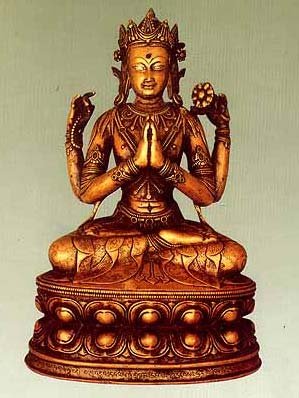
Mahayana (महायान, mahāyāna) is a major branch of Buddhism focusing on the path of a Bodhisattva (spiritual aspirants/ enlightened beings). Extant literature is vast and primarely composed in the Sanskrit language. There are many sūtras of which some of the earliest are the various Prajñāpāramitā sūtras.
Languages of India and abroad
Sanskrit dictionary
Mātsaryasaṃyojana (in Sanskrit) can be associated with the following Chinese terms:
1) 慳結 [qiān jié]: “bond of parsimony”.
Note: mātsaryasaṃyojana can be alternatively written as: mātsarya-saṃyojana.
Sanskrit, also spelled संस्कृतम् (saṃskṛtam), is an ancient language of India commonly seen as the grandmother of the Indo-European language family (even English!). Closely allied with Prakrit and Pali, Sanskrit is more exhaustive in both grammar and terms and has the most extensive collection of literature in the world, greatly surpassing its sister-languages Greek and Latin.
See also (Relevant definitions)
Relevant text
Search found 3 books and stories containing Matsaryasamyojana, Mātsaryasaṃyojana, Mātsarya-saṃyojana, Matsarya-samyojana; (plurals include: Matsaryasamyojanas, Mātsaryasaṃyojanas, saṃyojanas, samyojanas). You can also click to the full overview containing English textual excerpts. Below are direct links for the most relevant articles:
Anguttara Nikaya (Numbered Discourses)
Discourse 7.10: Macchariya-sutta < [Dhana-vagga: Wealth]
Digha Nikaya (Long Discourses)
2.1. The Story of Gopikā < [Discourse 21: Sakka’s Questions]
Maha Prajnaparamita Sastra (by Gelongma Karma Migme Chödrön)
III. Exhortations to the practice of the six perfections (pāramitā) < [Part 3 - Establishing beings in the six perfections]