Mahasatva, Mahāsatva: 4 definitions
Introduction:
Mahasatva means something in Buddhism, Pali, Hinduism, Sanskrit. If you want to know the exact meaning, history, etymology or English translation of this term then check out the descriptions on this page. Add your comment or reference to a book if you want to contribute to this summary article.
In Hinduism
Purana and Itihasa (epic history)
Mahāsatva (महासत्व).—A god of the Prasūta group.*
- * Brahmāṇḍa-purāṇa II. 36. 71.

The Purana (पुराण, purāṇas) refers to Sanskrit literature preserving ancient India’s vast cultural history, including historical legends, religious ceremonies, various arts and sciences. The eighteen mahapuranas total over 400,000 shlokas (metrical couplets) and date to at least several centuries BCE.
In Buddhism
Mahayana (major branch of Buddhism)
Mahāsatva (महासत्व) refers to a “great being” and is used to describe Bodhisattva Gaganagañja, according to the Gaganagañjaparipṛcchā: the eighth chapter of the Mahāsaṃnipāta (a collection of Mahāyāna Buddhist Sūtras).—Accordingly: “At that time, there were five hundred men who were in danger of being killed [by robbers]. When they were led to their death, a voice resonated in open space: ‘You should do homage to the Bodhisattva Gaganagañja, who provides fearlessness to the frightened. Then you will be saved from death’. Then all those, terrified with the fear of death, said together in one voice: ‘Homage to the Bodhisattva, the great being (mahāsatva) Gaganagañja!’ [...]”.
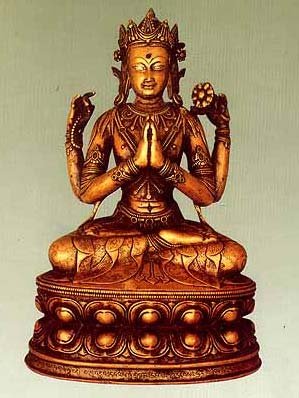
Mahayana (महायान, mahāyāna) is a major branch of Buddhism focusing on the path of a Bodhisattva (spiritual aspirants/ enlightened beings). Extant literature is vast and primarely composed in the Sanskrit language. There are many sūtras of which some of the earliest are the various Prajñāpāramitā sūtras.
Languages of India and abroad
Sanskrit dictionary
Mahāsatva (महासत्व).—mfn.
(-tvaḥ-tvā-tvaṃ) Good, virtuous, just. E. mahā and satva purity.
Mahāsatva (महासत्व):—[mahā-satva] (tvaḥ) 1. m. Kuvera.
Sanskrit, also spelled संस्कृतम् (saṃskṛtam), is an ancient language of India commonly seen as the grandmother of the Indo-European language family (even English!). Closely allied with Prakrit and Pali, Sanskrit is more exhaustive in both grammar and terms and has the most extensive collection of literature in the world, greatly surpassing its sister-languages Greek and Latin.
See also (Relevant definitions)
Partial matches (+0): Maha, Satva.
Full-text (+0): Mahasanna, Mahasattvata, Garudamantra.
Relevant text
Search found 10 books and stories containing Mahasatva, Maha-satva, Mahā-satva, Mahāsatva; (plurals include: Mahasatvas, satvas, Mahāsatvas). You can also click to the full overview containing English textual excerpts. Below are direct links for the most relevant articles:
Dictionaries of Indian languages (Kosha)
Page 72 < [Bengali-Hindi-English, Volume 2]
A Descriptive Catalogue of the Sanskrit Manuscripts, Madras (by M. Seshagiri Sastri)
Page 392 < [Volume 27 (1937)]
Shringara-manjari Katha (translation and notes) (by Kumari Kalpalata K. Munshi)
Appendix 2 - General Maxims in the Shringara-manjari-katha
Section 7.6 - shashti lavanyasundari-kathanika < [Sanskrit text]
The Sanskrit Buddhist Literature of Nepal (by Rajendralala Mitra)
Page 289 < [The Sanskrit Buddhist Literature of Nepal (pages)]
Hanuman Nataka (critical study) (by Nurima Yeasmin)
9.1. The character of Rāma < [Chapter 4]
An introduction to Buddhist monasteries of Kathmandu Valley (by Min Bahadur Shakya)