Mahalakshmisamudbhuti, Mahālakṣmīsamudbhūti, Mahalakshmi-samudbhuti: 1 definition
Introduction:
Mahalakshmisamudbhuti means something in Hinduism, Sanskrit. If you want to know the exact meaning, history, etymology or English translation of this term then check out the descriptions on this page. Add your comment or reference to a book if you want to contribute to this summary article.
The Sanskrit term Mahālakṣmīsamudbhūti can be transliterated into English as Mahalaksmisamudbhuti or Mahalakshmisamudbhuti, using the IAST transliteration scheme (?).
In Hinduism
Pancaratra (worship of Nārāyaṇa)
Mahālakṣmīsamudbhūti (महालक्ष्मीसमुद्भूति) (lit. “how Mahālakṣmī came into being”) is the name of chapter 4 of the Lakṣmītantra: a Pāñcarātra text comprising some 3600 Sanskrit verses exclusively devoted to Goddess Lakṣmī or Śrī (the consort of Viṣṇu) besides dealing with cosmology and practical regarding Vaishnava priests and temple-building programs.
Description of the chapter [mahālakṣmīsamudbhūti]: Although Lakṣmī expresses her creative energies in Saṃkarṣaṇa, Pradyumna and Aniruddha, before they ever came into being she existed as Vāsudeva (1-12). As Vāsudeva, Lakṣmī existed simultaneously as the six guṇas; in her forms as the three vyūhas, she exists emphatically in complements of these six qualities paired off in their peculiar ways, and thus in these combinations she acts directly as pralayakartā and śāstropadeśakartā, as sṛṣṭikartā and śāstrapracāraka and phalanakartā and śāstraphalanirvāhaka (13-20 [with the help of commentator’s notes in Adyar edition]). But even these various forms she takes are eternal (21-26). Moreover, she exists in a twelve-fold mode as the activating power in Keśava, et. al., as well as the abiding and sanctifying power in arcā-forms (27-31). Since she is Pure Activity itself it is not surprising that she participates and co-ordinates all the activities and interactivities of the entire creation as it involves by means of the dynamic interaction of the guṇas, etc. Whatever Form she assumes, whatever weapons she wields, by whatever name she is called, these are explained in terms of how she is the overseer, protector, pervader, etc. of all creation (32-67).
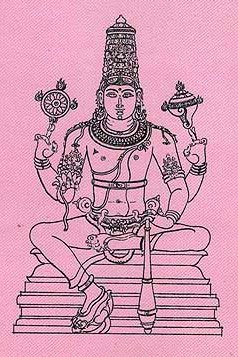
Pancaratra (पाञ्चरात्र, pāñcarātra) represents a tradition of Hinduism where Narayana is revered and worshipped. Closeley related to Vaishnavism, the Pancaratra literature includes various Agamas and tantras incorporating many Vaishnava philosophies.
See also (Relevant definitions)
Partial matches (+0): Mahalakshmi, Samudbhuti.
Full-text (+0): Samudbhuti, Pralayakarta, Shastropadeshakarta, Phalanakarta, Shastraphalanirvahaka, Shastrapracaraka, Srishtikartri.
Relevant text
No search results for Mahalakshmisamudbhuti, Mahālakṣmīsamudbhūti, Mahālakṣmī-samudbhūti, Mahalakshmi-samudbhuti, Mahalaksmisamudbhuti, Mahalaksmi-samudbhuti; (plurals include: Mahalakshmisamudbhutis, Mahālakṣmīsamudbhūtis, samudbhūtis, samudbhutis, Mahalaksmisamudbhutis) in any book or story.