Langula, Lamgula, Lāṅgula, Lāṅgūla, Laṅgula: 19 definitions
Introduction:
Langula means something in Hinduism, Sanskrit, Buddhism, Pali, Marathi. If you want to know the exact meaning, history, etymology or English translation of this term then check out the descriptions on this page. Add your comment or reference to a book if you want to contribute to this summary article.
In Hinduism
Natyashastra (theatrics and dramaturgy)
One of the Twenty-eight Single Hands (hasta):—Lāṅgula (tail): the third finger of the Padmakośa hand isbent. Usage: lakuca-fruit, breast of a young girl, white water-Kly (kalhāra), partridge, areca-nut, little bells, pill, cātaka.
According to another book: the thumb, middle and forefinger held like the eye of a coconut, the third finger bent, and the littlefinger erect. It is derived from Śiva when he made a pellet of the poison that sprang from the sea of milk. Its sage is Krauñca,its race Siddha, its colour golden, its patron deity Padma. Usage: grapes, rudrākṣa seeds, holding the chin, breast-bud (kucapraroha), areca-nut, bells, blue lotus, fruit, coral, a mouthful, asterism (nakṣatra), jujube fruit, circle, partridge, cātaka, anything small, hailstone, Siddha caste, myrobalan fruit, gold.
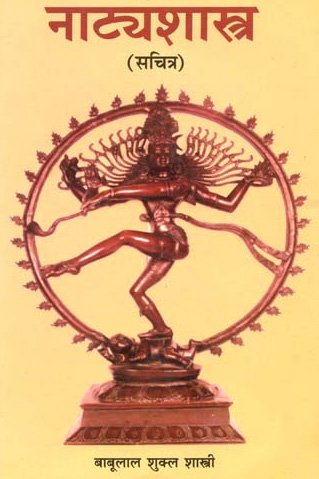
Natyashastra (नाट्यशास्त्र, nāṭyaśāstra) refers to both the ancient Indian tradition (shastra) of performing arts, (natya—theatrics, drama, dance, music), as well as the name of a Sanskrit work dealing with these subjects. It also teaches the rules for composing Dramatic plays (nataka), construction and performance of Theater, and Poetic works (kavya).
Ayurveda (science of life)
Agriculture (Krishi) and Vrikshayurveda (study of Plant life)
Lāṅgūla (लाङ्गूल) refers to the “tail” (of Hanumān), according to Surapāla’s Vṛkṣāyurveda chapter 5.—Accordingly, [while describing an incantation (mantra) to protect the field from certain creatures]: “Thus may it be well: from Kiṣkindhā, the great Lord, the great devotee of Viṣṇu, one who has revealed his valour, one who has conquered the orb of Sun and bears the sacred thread, the illustrious God Hanumān’s victorious feet threatens the rats, locusts, mouths etc. That by seeing the document of royal order you will leave this field and go elsewhere. If they do not obey the order, the (you Hanumān), kill them rend them here with your vast moving hard tail (lāṅgūla).—haṃ, phaṭ, svāhā”.
Unclassified Ayurveda definitions
Lāṅgūla (लाङ्गूल) is a Sanskrit word for a species of rice (śāli) which is said to have a superior quality, according to Caraka in his Carakasaṃhitā sūtrasthāna (chapter 27), a classical Ayurvedic work. The literal translation of the word “tail”. The plant Lāṅgūla is part of the Śūkadhānyavarga group of medicinal plants, referring to the “group of awned grains”. Caraka defined such groups (vargas) based on the dietic value of the plant.

Āyurveda (आयुर्वेद, ayurveda) is a branch of Indian science dealing with medicine, herbalism, taxology, anatomy, surgery, alchemy and related topics. Traditional practice of Āyurveda in ancient India dates back to at least the first millenium BC. Literature is commonly written in Sanskrit using various poetic metres.
Jyotisha (astronomy and astrology)
Lāṅgūla (लाङ्गूल) (Cf. Śikha, Cūla) refers to the “tail” of a lion, and is used to describe the “Bhava” type of Ketus (i.e., luminous bodies such as comets and meteors), according to the Bṛhatsaṃhitā (chapter 11), an encyclopedic Sanskrit work written by Varāhamihira mainly focusing on the science of ancient Indian astronomy astronomy (Jyotiṣa).— Accordingly, “Jala Ketu is a comet which appears in the west with a raised tail; it is glossy, when it appears there will be prosperity in the land for 9 months, and the world will be freed from all miseries. Bhava Ketu is a comet visible only for a single night and in the east, possessing a small disc; it is glossy; the tail is bent like that of a lion [i.e., hari-lāṅgūla]. There will be unprecedented happiness in the land for as many months as the number of hours for which it continues to be visible; if it should be fearful to look at, fatal diseases will afflict mankind”.
Jyotisha (ज्योतिष, jyotiṣa or jyotish) refers to ‘astronomy’ or “Vedic astrology” and represents the fifth of the six Vedangas (additional sciences to be studied along with the Vedas). Jyotisha concerns itself with the study and prediction of the movements of celestial bodies, in order to calculate the auspicious time for rituals and ceremonies.
Languages of India and abroad
Pali-English dictionary
laṅgula : (nt.) tail.
Laṅgula, (nt.) (cp. Sk. lāṅgula & lāṅgūla; also the ordinary P. forms naṅgula & naṅguṭṭha, to lag) the tail of an animal Mhvs 6, 6 (lāḷento laṅgulaṃ; v. l. naṅgulaṃ). See also naṅgula & (concerning l›n) landhati (=nandhati); nalāṭa (for laḷāta). (Page 579)

Pali is the language of the Tipiṭaka, which is the sacred canon of Theravāda Buddhism and contains much of the Buddha’s speech. Closeley related to Sanskrit, both languages are used interchangeably between religions.
Marathi-English dictionary
laṅgūla (लंगूल).—n S A tail.
--- OR ---
lāṅgūla (लांगूल).—n S (Common in poetry.) A tail. Ex. lāṃ0 ubhārūna dhāvinnalā vṛṣabha ||.
laṅgūla (लंगूल).—n A tail.
--- OR ---
lāṅgūla (लांगूल).—n A tail.
Marathi is an Indo-European language having over 70 million native speakers people in (predominantly) Maharashtra India. Marathi, like many other Indo-Aryan languages, evolved from early forms of Prakrit, which itself is a subset of Sanskrit, one of the most ancient languages of the world.
Sanskrit dictionary
Laṅgūla (लङ्गूल).—The tail of an animal; cf. लाङ्गूल (lāṅgūla).
Derivable forms: laṅgūlam (लङ्गूलम्).
--- OR ---
Lāṅgula (लाङ्गुल).—
1) A tail.
2) Membrum virile.
Derivable forms: lāṅgulam (लाङ्गुलम्).
--- OR ---
Lāṅgūla (लाङ्गूल).—[laṅg-ūlac pṛṣo° Un.4.96]
1) A tail; लाङ्गूलचालनमधश्चरणावपातं (lāṅgūlacālanamadhaścaraṇāvapātaṃ)... श्वा पिण्डदस्य कुरुते (śvā piṇḍadasya kurute) Bhartṛhari 2.31 'wags his tail'.
2) The membrum virile.
3) A granary.
Derivable forms: lāṅgūlam (लाङ्गूलम्).
Lāṅgula (लाङ्गुल).—(in this meaning only Sanskrit Lex.), penis: °la-chinnaḥ Mahāvyutpatti 8868 = Tibetan pho mtshan (chad pa).
Laṅgūla (लङ्गूल).—n.
(-laṃ) The tail of an animal. E. lagi to go, ūlac aff., more commonly lāṅgūla .
--- OR ---
Lāṅgula (लाङ्गुल).—n.
(-laṃ) A horse’s tail. E. lagi to go, aff. ulav: see the next.
--- OR ---
Lāṅgūla (लाङ्गूल).—n.
(-laṃ) 1. A hairy tail, (as a horse’s, &c.) 2. The penis. 3. A granary, a basket or shed for holding corn or grain. E. lagi to go, Unadi aff. ulac, and the radical vowel made long.
Laṅgūla (लङ्गूल).— (vb. lag), n. The tail of an animal (cf. lāṅgūla).
--- OR ---
Lāṅgula (लाङ्गुल).—lāṅgūla (vb. lag, properly, To hang), n. A tail, [Pañcatantra] 259, 7 (ū); [Hitopadeśa] i. [distich] 170, M.M.
Lāṅgula can also be spelled as Lāṅgūla (लाङ्गूल).
Lāṅgula (लाङ्गुल).—[neuter] tail.
--- OR ---
Lāṅgūla (लाङ्गूल).—[neuter] tail.
1) Laṅgūlā (लङ्गूला):—f. = lāṅgūla (q.v.), [cf. Lexicographers, esp. such as amarasiṃha, halāyudha, hemacandra, etc.]
2) Lāṅgula (लाङ्गुल):—n. = lāṅgūla, [Pañcatantra; Bhāgavata-purāṇa]
3) membrum virile, [cf. Lexicographers, esp. such as amarasiṃha, halāyudha, hemacandra, etc.]
4) Lāṅgūla (लाङ्गूल):—[from lāṅgula] n. ([Uṇādi-sūtra iv, 90 [Scholiast or Commentator]]) a tail, hairy tail, [Śāṅkhāyana-śrauta-sūtra; Mahābhārata] etc.
5) [v.s. ...] membrum virile, [cf. Lexicographers, esp. such as amarasiṃha, halāyudha, hemacandra, etc.]
1) Laṅgūla (लङ्गूल):—(laṃ) 1. n. The tail of an animal.
2) Lāṅgula (लाङ्गुल):—(laṃ) 1. n. A horse’s tail.
3) Lāṅgūla (लाङ्गूल):—(laṃ) 1. n. A hairy tail; penis; granary; a basket.
Laṅgūla (लङ्गूल):—n. = lāṅgūla [Uṇādikoṣa im Śabdakalpadruma]
--- OR ---
Lāṅgula (लाङ्गुल):—n. = lāṅgūla
1) Schweif, Schwanz [Sārasundarī] zu [Amarakoṣa 2, 8, 2, 18.] [Medinīkoṣa l. 127] (lāṅgūla [Śabdakalpadruma] nach ders. Aut.). [Spr. 756.] [Hitopadeśa 76, 6] ([ed. JOHNS.] lāṅgūla). śva [Bhāgavatapurāṇa 6, 9, 21.] lāṅgulegṛhya (absol.) v. l. im gaṇa mayūravyaṃsakādi zu [Pāṇini’s acht Bücher 2, 1, 72.] —
2) das männliche Glied [Hemacandra’s Abhidhānacintāmaṇi 126.] [Medinīkoṣa] — Vgl. go .
--- OR ---
Lāṅgūla (लाङ्गूल):—[UJJVAL.] zu [Uṇādisūtra 4, 90.]
1) n. a) Schweif, Schwanz [Yāska’s Nirukta 6, 26.] [Amarakoṣa 2, 8, 2, 18.] [Hemacandra’s Abhidhānacintāmaṇi 1244.] [Anekārthasaṃgraha 3, 680.] [Halāyudha 2, 286. 3, 23. 5, 69.] [Śāṅkhāyana’s Śrautasūtrāṇi 17, 5, 10.] [Mahābhārata 4, 1438. 13, 5998.] [Rāmāyaṇa 5, 16, 22. 49, 3.] [Suśruta 2, 281, 14.] [Varāhamihira’s Bṛhajjātaka S. 11, 47. 62, 1. 72, 1.] [Bhāgavatapurāṇa 5, 23, 5.] [Mārkāṇḍeyapurāṇa 83, 21.] [Pañcatantra 259, 7.] cālana [Mahābhārata 5, 2651.] [Spr. 2663.] lāṅgūlāni vicikṣipuḥ [Rāmāyaṇa 6, 69, 22.] vikṣepa [Kumārasaṃbhava 1, 13.] lāṅgūlamudyamya [Bhāgavatapurāṇa 4, 16, 23.] ucchrita [Rāmāyaṇa 5, 55, 27.] kuñcitāyatadīrgha ebend. samuddhata [Hitopadeśa ed. JOHNS. 1614.] samāvidhyata lāṅgūlam [Rāmāyaṇa 5, 3, 1. 5, 25. 38, 37.] lāṅgūlagṛhya (absol.) gaṇa mayūravyaṃsakādi zu [Pāṇini’s acht Bücher 2, 1, 72.] — b) das männliche Glied [Hemacandra’s Abhidhānacintāmaṇi 126.] [Hemacandra’s Anekārthasaṃgraha] — c) Kornkammer Comm. zu [Die Uṇādi-Affixe 4, 92]; fehlerhaft, wie aus [Uṇādisūtra 4, 90.] zu ersehen ist. —
2) f. ī Uraria lagopodioides Dec., eine glückbringende Pflanze, [Suśruta 1, 71, 11.] — Vgl. go (unter golāṅgula, eine Affenart [MĀLATĪM. 152, 10]), śuno und lāṅgula .
Laṅgūla (लङ्गूल):—n. = lāṅgūla.
--- OR ---
Lāṅgula (लाङ्गुल):—n. —
1) Schweif , Schwanz. —
2) *penis.
--- OR ---
Lāṅgūla (लाङ्गूल):——
1) n. — a) Schweif , Schwanz. Am Ende eines adj. Comp. f. ā [Hemādri’s Caturvargacintāmaṇi 1,436,22.] — b) *penis. — c) *Kornkammer (fehlerhaft). —
2) f. ī Uraria lagopodioides.
Lāṅgula (लाङ्गुल) in the Sanskrit language is related to the Prakrit words: Ṇaṃgala, Ṇaṃgūla.
Sanskrit, also spelled संस्कृतम् (saṃskṛtam), is an ancient language of India commonly seen as the grandmother of the Indo-European language family (even English!). Closely allied with Prakrit and Pali, Sanskrit is more exhaustive in both grammar and terms and has the most extensive collection of literature in the world, greatly surpassing its sister-languages Greek and Latin.
Kannada-English dictionary
Lāṃgūla (ಲಾಂಗೂಲ):—
1) [noun] the flexible appendage to the trunk of some animals; a tail; ಲಾಂಗೂಲಚಾಲನ [lamgulacalana] laṃgūla cālana a waving or wagging of one’s tail (as a dog).
2) [noun] (fig.) the quality or fact of being a servile or menial follower of another for a favour.
Kannada is a Dravidian language (as opposed to the Indo-European language family) mainly spoken in the southwestern region of India.
See also (Relevant definitions)
Starts with (+0): Lamgulakartana, Langulacalana, Langulagrihya, Langulavikshepa.
Full-text (+50): Golangula, Shunolangula, Mrityulangula, Vakralangula, Langulagrihya, Langulavikshepa, Langulacalana, Ullangula, Lolalangula, Golavalangula, Lamgulakartana, Ancitalangula, Samunnatalangula, Samuddhatalangula, Langala, Shukalangala, Nangula, Languli, Langulin, Carv.
Relevant text
Search found 28 books and stories containing Langula, Lamgula, Laṃgūla, Lāṃgūla, Lāṅgula, Lāṅgūla, Laṅgula, Laṅgūla, Laṅgūlā, Lāngūla; (plurals include: Langulas, Lamgulas, Laṃgūlas, Lāṃgūlas, Lāṅgulas, Lāṅgūlas, Laṅgulas, Laṅgūlas, Laṅgūlās, Lāngūlas). You can also click to the full overview containing English textual excerpts. Below are direct links for the most relevant articles:
Kathasaritsagara [Sanskrit/English] (by C. H. Tawney)
Shiva Purana [sanskrit/english]
Dictionaries of Indian languages (Kosha)
Page 294 < [Gujarati-Hindi-English, Volume 3]
Page 306 < [Bengali-Hindi-English, Volume 2]
Page 778 < [Hindi-Marathi-English Volume 2]
Anguttara Nikaya (Numbered Discourses)
Discourse 4.246: Seyyā-sutta < [Āpattibhaya-vagga: Perils of Offenses]
Charaka Samhita (English translation) (by Shree Gulabkunverba Ayurvedic Society)
Chapter 27a - The group of awned cereals (Shukadhanya—monocotyledons) < [Sutrasthana (Sutra Sthana) — General Principles]
Canons of Orissan Architecture (by R. Chatterjee)