Lakara, Lakāra: 15 definitions
Introduction:
Lakara means something in Hinduism, Sanskrit, Buddhism, Pali, the history of ancient India, Hindi. If you want to know the exact meaning, history, etymology or English translation of this term then check out the descriptions on this page. Add your comment or reference to a book if you want to contribute to this summary article.
Images (photo gallery)

In Hinduism
Vyakarana (Sanskrit grammar)
1) Lakāra (लकार).—The consonant ल् (l); see ल् (l) above;
2) Lakāra.—The personal endings affixed to roots; see ल् (l)
2) Lakāra.—.
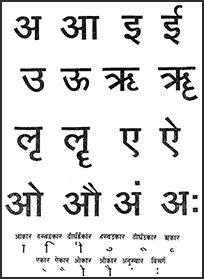
Vyakarana (व्याकरण, vyākaraṇa) refers to Sanskrit grammar and represents one of the six additional sciences (vedanga) to be studied along with the Vedas. Vyakarana concerns itself with the rules of Sanskrit grammar and linguistic analysis in order to establish the correct context of words and sentences.
Yoga (school of philosophy)
Lakāra (लकार) refers to the “syllable la”, according to the twelfth-century Vivekamārtaṇḍa 158.—Accordingly, “Having become absorbed in the earth element, which is bright like orpiment and gold, yellow, endowed with the syllable la [i.e., lakāra-anvita], presided over by Brahmā, square [in shape] and located in the heart, [the Yogin] should hold his breath and mind in it for two hours. This dhāraṇā on the earth [element] makes [the Yogin] constantly steady and a master of the earth [element]”.
Yoga is originally considered a branch of Hindu philosophy (astika), but both ancient and modern Yoga combine the physical, mental and spiritual. Yoga teaches various physical techniques also known as āsanas (postures), used for various purposes (eg., meditation, contemplation, relaxation).
India history and geography
Lakāra.—(IE 7-1-2), ‘ten’. Note: lakāra is defined in the “Indian epigraphical glossary” as it can be found on ancient inscriptions commonly written in Sanskrit, Prakrit or Dravidian languages.
The history of India traces the identification of countries, villages, towns and other regions of India, as well as mythology, zoology, royal dynasties, rulers, tribes, local festivities and traditions and regional languages. Ancient India enjoyed religious freedom and encourages the path of Dharma, a concept common to Buddhism, Hinduism, and Jainism.
Languages of India and abroad
Pali-English dictionary
lakāra : (m.) a sail.
Lakāra, (for alaṅkāra, lit. “fitting up, ” cp. Hindī & Marāthī langara, Tamil ilankaran “in meaning anchor. ”) a sail J. II, 112; Miln. 378; Dāvs. IV, 42; Vism. 137 (v. l. BB. laṅkāra). (Page 578)
lakāra (လကာရ) [(pu) (ပု)]—
[a+kāra.la+kara+ṇa.]
[လ+ကာရ။ လ+ကရ+ဏ။]
[Pali to Burmese]
lakāra—
(Burmese text): (၁) လ-အက္ခရာ။ (၂) (လှေ,သင်္ဘောတို့၏) ရွက်=လင်းယဉ်။ (၃) ရွက်တိုင်=လင်းယဉ်တိုင်။
(Auto-Translation): (1) Moon letter. (2) Leaf (of boat, ship) = Clear page. (3) Leaf stalk = Clear page stalk.
Pali is the language of the Tipiṭaka, which is the sacred canon of Theravāda Buddhism and contains much of the Buddha’s speech. Closeley related to Sanskrit, both languages are used interchangeably between religions.
Sanskrit dictionary
Lakāra (लकार).—[masculine] the sound la.
Lakāra (लकार) as mentioned in Aufrecht’s Catalogus Catalogorum:—See Daśalakāra.
Lakāra (लकार):—[=la-kāra] [from la] m. the letter or sound la, [Atharvaveda-prātiśākhya] (applied in naming the 10 tenses and moods as above, [Pāṇini 3-4, 77 [Scholiast or Commentator]])
Lakāra (लकार):—m.
1) der Buchstab la [Prātiśākha zum Atharvaveda 1, 5. 39. 46 u.s.w.] [Oxforder Handschriften 97], a, b. anukūlāṃ vimalāṅgīṃ kulajāṃ kuśalāṃ suśīlasaṃpannām . pañcalakārāṃ bhāryāṃ puruṣaḥ puṇyodayāllabhate .. [PRASAṄGĀBH. 13,b.] —
2) der gemeinschaftliche Name für alle Tempora und Modi (vgl. [Pāṇini’s acht Bücher 3, 4, 77]), verbum finitum [Oxforder Handschriften 177,a, Nalopākhyāna 1.] viśeṣārthanirūpaṇa [177,a,26.] lakārārthaprakriyā [163,a, No. 358. 164,b, No. 363. 165,b, No. 367.] [Weber’s Verzeichniss No. 736.] vāda [HALL 59.]
Lakāra (लकार):—m. —
1) der Laut la. Am Ende eines adj. Comp. f. ā. —
2) = la
1) vāda m. , viśeṣārthanirūpaṇa n. und lakārārthaprakriyā f. Titel darüber handelnder Kapitel in einer Grammatik.
Sanskrit, also spelled संस्कृतम् (saṃskṛtam), is an ancient language of India commonly seen as the grandmother of the Indo-European language family (even English!). Closely allied with Prakrit and Pali, Sanskrit is more exhaustive in both grammar and terms and has the most extensive collection of literature in the world, greatly surpassing its sister-languages Greek and Latin.
Hindi dictionary
Lakāra (लकार):—(nm) the letter [la] and its sound; ~[rāṃta] word ending in [l].
...
Kannada-English dictionary
Lakāra (ಲಕಾರ):—[noun] the letter 'ಲ [la]' (usu. pronounced with the vowel 'ಅ [a]').
--- OR ---
Ḷakāra (ಳಕಾರ):—[noun] the letter or the sound of 'ಳ [ḷa]' (usu. pronounced with the vowel 'ಅ [a]'.
--- OR ---
Ḻakāra (ೞಕಾರ):—[noun] the letter or the sound of 'ೞ [ḻa]' (usu. pronounced with the vowel 'ಅ [a]'.
Kannada is a Dravidian language (as opposed to the Indo-European language family) mainly spoken in the southwestern region of India.
Nepali dictionary
1) Lakara (लकर):—n. locker;
2) Lakāra (लकार):—n. the letter /ल/ and its sound;
Nepali is the primary language of the Nepalese people counting almost 20 million native speakers. The country of Nepal is situated in the Himalaya mountain range to the north of India.
See also (Relevant definitions)
Partial matches (+0): A, La, Kara.
Starts with (+0): Lakaradvaya, Lakaram, Lakaramrthavada, Lakararthaprakriya, Lakararthavada, Lakaras, Lakaravada, Lakaravilha, Lakaravishesharthanirupana.
Full-text (+127): Akara, Karana, Karakara, Kana, Karala, Lakaram, Lakaravada, Vatakara, Karapalika, Viyakara, Kara, Lakaras, Viyakamsu, Lun-lakara, Byakaritabba, Paccakata, Byakaritum, Nirakaroti, Byakata, Byakarimsu.
Relevant text
Search found 58 books and stories containing Lakara, A-kara, A-kāra, La-kara, La-kāra, Lakāra, Ḷakāra, Ḻakāra; (plurals include: Lakaras, karas, kāras, Lakāras, Ḷakāras, Ḻakāras). You can also click to the full overview containing English textual excerpts. Below are direct links for the most relevant articles:
Vasudevavijaya of Vasudeva (Study) (by Sajitha. A)
Lakāra-artha < [Chapter 3 - Vāsudevavijaya—A Grammatical Study]
Sugalārthamālā of Peruntānam Nārāyaṇan Nampūtiri < [Chapter 1 - Śāstrakāvyas—A Brief Survey]
Subhadrāharaṇa of Brahmadatta Nārāyaṇa < [Chapter 1 - Śāstrakāvyas—A Brief Survey]
Agni Purana (by N. Gangadharan)
Shat-cakra-nirupana (the six bodily centres) (by Arthur Avalon)
A Study of Asiddha in the Ashtadhyayi (by Sanhita L. Joshi)
Part (B).1 - Cases of “utsargalaksanabhava” < [Chapter 4 - Application of Asiddha principle in the “abhiya” section]
Part 1.1 - The “siddhatva” of the augments vuk and yut < [Chapter 5 - Cases of exception and irregularity of the Asiddha principle]
Part 2.1 - Structure and Nature of upadhikaras < [Chapter 3 - Nature of the Abhiya section]
A Descriptive Catalogue of the Sanskrit Manuscripts, Madras (by M. Seshagiri Sastri)
Notices of Sanskrit Manuscripts (by Rajendralala Mitra)