Kwa, Kva: 16 definitions
Introduction:
Kwa means something in Hinduism, Sanskrit, Buddhism, Pali, the history of ancient India, biology. If you want to know the exact meaning, history, etymology or English translation of this term then check out the descriptions on this page. Add your comment or reference to a book if you want to contribute to this summary article.
Images (photo gallery)
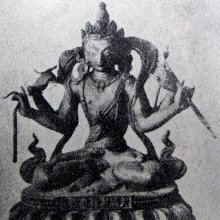
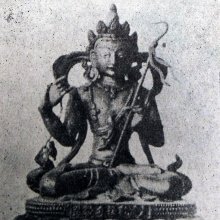
India history and geography
1) Kva-bahal (in Sanskrit: Maitripura) refers to one of the Eighteen major Bahals (Vihāras) or “enclosed courtyards” found in the area of Old Kathmandu, situated in the Nepal Mandala (lit. “circle or country of Nepal”), the ancient name for the Kathmandu Valley. A Bahal is a type of ‘sacred monastery’ or ‘courtyard’ constructed according to traditional Newari Architecture and hence found primarily in Nepal amongst Newar communities. These buildings play a big role in maintaining the norms of their society and lifestyle. There is a common list of eighteen major such Temples (bahals) found in Old Kathmandu. For example Kva-bahal, which is also known by its Sanskrit name Maitripura-Mahāvihāra.
2) Kva-bahal also refers to one of the various Bahals found in Patan and is known in Sanskrit as Bhāskaradeva-saṃskārita-hiraṇyavarṇa.
1) Kwa-nani (situated in Baregaum) is the name of a Bahī (i.e., a sacred courtyard in the Newari community where Buddhist priests reside) situated in Patan.—The valley of Kathmandu is known as “Nepal Mandala”, encircling the three cities of Kathmandu (northwest), Patan (Lalitpur) (south) and Bhaktapur (east). The Vihāras, Bāhās and Bahīs were, and still are, the centre for Buddhist activities and also dwelling place of the monks or monastics. For example, the Kwa-nani. These monstaries, courtyards and other buildings possess a central place in Buddhism and were mostly situated within the vicinity of these three cities.
2) Kwa-bahal (in Sanskrit: Maitrīpura-mahāvihāra) is the name of a Bāhā situated in Kathmandu.

The history of India traces the identification of countries, villages, towns and other regions of India, as well as mythology, zoology, royal dynasties, rulers, tribes, local festivities and traditions and regional languages. Ancient India enjoyed religious freedom and encourages the path of Dharma, a concept common to Buddhism, Hinduism, and Jainism.
Biology (plants and animals)
Kwa [ꯀ꯭ꯋꯥ] in the Manipuri language is the name of a plant identified with Piper betle L. from the Piperaceae (Pepper) family having the following synonyms: Piper chawya, Piper malamiris, Piper densum. For the possible medicinal usage of kwa, you can check this page for potential sources and references, although be aware that any some or none of the side-effects may not be mentioned here, wether they be harmful or beneficial to health.
1) Kwa in Cameroon is the name of a plant defined with Strychnos elaeocarpa in various botanical sources. This page contains potential references in Ayurveda, modern medicine, and other folk traditions or local practices.
2) Kwa in Central Africa is also identified with Xylopia aethiopica It has the synonym Xylopicrum aethiopicum Kuntze (etc.).
3) Kwa in India is also identified with Areca catechu It has the synonym Areca faufel Gaertn. (etc.).
Example references for further research on medicinal uses or toxicity (see latin names for full list):
· Journal of Ethnopharmacology (2011)
· Pl. Bequaert. (1922)
· African Journal of Biotechnology (2008)
· Monographie de la famille des Anonacées (1817)
· Historia Fisica Politica y Natural de la Isla de Cuba, Botanica (1845)
· Hist. Nat. Palm. (1836)
If you are looking for specific details regarding Kwa, for example chemical composition, extract dosage, diet and recipes, side effects, health benefits, pregnancy safety, have a look at these references.
This sections includes definitions from the five kingdoms of living things: Animals, Plants, Fungi, Protists and Monera. It will include both the official binomial nomenclature (scientific names usually in Latin) as well as regional spellings and variants.
Languages of India and abroad
Pali-English dictionary
kva : (ind.) where ?
kva (ကွ) [(bya) (ဗျ)]—
[kiṃ+va]
[ကိံ+ဝ]
[Pali to Burmese]
kva—
(Burmese text): (က) အဘယ်၌၊ အဘယ်အရပ်၌။ (ခ) အဘယ်သို့၊ အဘယ်အရပ်သို့။
(Auto-Translation): (a) Where, in what place. (b) How, to what place.

Pali is the language of the Tipiṭaka, which is the sacred canon of Theravāda Buddhism and contains much of the Buddha’s speech. Closeley related to Sanskrit, both languages are used interchangeably between religions.
Sanskrit dictionary
Kva (क्व).—ind.
1) Whither, where; क्व तेऽन्योन्यं यत्नाः क्व च नु गहनाः कौतुकरसाः (kva te'nyonyaṃ yatnāḥ kva ca nu gahanāḥ kautukarasāḥ) Uttararāmacarita 6.33; क्व-क्व (kva-kva) when repeated in co-ordinate sentences imply 'great difference' or 'incougruity'; क्व रुजा हृदयप्रमाथिनी क्व च ते विश्वसनीयमायुधम् (kva rujā hṛdayapramāthinī kva ca te viśvasanīyamāyudham) M.3.2; क्व सूर्य- प्रभवो वंशः क्व चाल्पविषया मतिः (kva sūrya- prabhavo vaṃśaḥ kva cālpaviṣayā matiḥ) R.1.2; Kirātārjunīya 1.6; Ś.2.19.
2) Sometimes क्व (kva) is used in the sense of the loc. of किम् (kim); क्व प्रदेशे (kva pradeśe) i. e. कस्मिन्प्रदेशे (kasminpradeśe). क्वचन (kvacana) Somewhere; क्वचन पतनयोग्यं देशमन्विष्यताधः (kvacana patanayogyaṃ deśamanviṣyatādhaḥ) N.; यत्र क्वचन वत्स्यामि (yatra kvacana vatsyāmi) Bhāgavata 1.17.36. न-क्व-च (na-kva-ca) Nowhere, never; नानुभूतं क्व चानेन देहेनादृष्टमश्रुतम् (nānubhūtaṃ kva cānena dehenādṛṣṭamaśrutam) Bhāgavata 4. 29.65. न क्वचन (na kvacana) Nowhere; Mahābhārata (Bombay) 14. (a) With a following अपि (api) it means (1) somewhere, anywhere; (2) sometimes. (b) With a following चित् (cit) it means (1) in some places; प्रस्निग्धाः क्वचिदिङ्गुदीफलभिदः सूच्यन्त एवोपलाः (prasnigdhāḥ kvacidiṅgudīphalabhidaḥ sūcyanta evopalāḥ) Ś.1.14; Ṛtusaṃhāra 1.2. R.1.41; (2) in some cases; क्वचिद् गोचरः क्वचिन्न गोचरोऽर्थः (kvacid gocaraḥ kvacinna gocaro'rthaḥ). क्वचित्-क्वचित् (kvacit-kvacit) (a) in one place-in another place, here-here; क्वचिद्वीणावाद्यं क्वचिदपि च हाहेति रुदितम् (kvacidvīṇāvādyaṃ kvacidapi ca hāheti ruditam) Bhartṛhari 3.125,1.4. (b) now-now (referring to time); क्वचित् पथा संचरते सुराणां क्वचित् घनानां पततां क्वचिच्च (kvacit pathā saṃcarate surāṇāṃ kvacit ghanānāṃ patatāṃ kvacicca) R.13.19.
Kva (क्व).—ind. Where, in what place or degree.
Kva (क्व).—i. e. ka + va (cf. i + va), from kim, adv. 1. = loc. sing. of kim. In whom, [Mānavadharmaśāstra] 10, 66. 2. Where, [Rāmāyaṇa] 5, 34, 21. 3. Whither, [Pañcatantra] 36, 21. 4. kva
— kva denotes the greatest difference: kva vayaṃ kva parokṣamanmatho mṛgaśāvaiḥ samam edhito janaḥ, What communion could there be between me and a girl grown up among young fawns and disinclined to love? [Śākuntala, (ed. Böhtlingk.)] [distich] 51. 5. How much less, [Rāmāyaṇa] 1, 67, 10. 6. With following api, Somewhere, [Hitopadeśa] pr. [distich] 17; [Pañcatantra] 96, 5; with na, Nowhere, [Nala] 16, 6. 7. With na
— ca, Not anywhere, [Bhāgavata-Purāṇa, (ed. Burnouf.)] 4, 29, 64. 8. With na
— ca na, Nowhere, Mahābhārata 14, 650. 9. With following cid, a. In some, [Pañcatantra] 118, 14. b. Somewhere, [Lassen, Anthologia Sanskritica.] 6, 17; [Kathāsaritsāgara, (ed. Brockhaus.)] 4, 131; c. With na, or another negative particle, Nowhere, [Mānavadharmaśāstra] 2, 56; [Rāmāyaṇa] 3, 60, 5. [distich] kva cid
— kva cid, Here and there, [Rāmāyaṇa] 2, 100, 6; kva cid
— kva cid, Here
— there, [Kathāsaritsāgara, (ed. Brockhaus.)] 6, 26; 27; now
— now, [Rāmāyaṇa] 3, 50, 7; with na, Never, [Mānavadharmaśāstra] 2, 180. e. Some time, [Nala] 14, 6. 10. With preceding yatra, a. and following api, or ca, or vā, Wherever, [Bhartṛhari, (ed. Bohlen.)] 3, 91; [Bhāgavata-Purāṇa, (ed. Burnouf.)] 8, 12, 34; 1, 17, 36; b. and following ca na, Wherever, [Brāhmaṇavilāpa] 3, 12; whenever, [Bhagavadgītā, (ed. Schlegel.)] P. 5, 21, 9.
Kva (क्व).—[adverb] where? wither? how? Used also as [locative] of 1 ka. Often connected [with] aha, id, iva, nu, svid, [with] the latter also = somewhere. — With cid & (later) api somewhere, anywhere, at or to a cert. place. kva cid — kva cid here—there, now—now. kva [with] negation & api, cida, ca, or cana nowhere, in no place. kva—kva where is this? where is that? i.e. how distant or different is this from that.
1) Kva (क्व):—ind. ([from] 1. ku, [Pāṇini 5-3, 12; 5-2, 105]) [locative case] of 2. ka = kasmin, or katarasmin, [Manu-smṛti x, 66] (kva śreyas-tvam, in whom is the preference?), [Kathāsaritsāgara lxxxiii, 36]
2) where? in what place? whither? [Ṛg-veda] (sometimes connected with particles aha, id, iva, svid) etc.
3) (connected with nu), [Nalopākhyāna; Mālavikāgnimitra]
4) (with nu khalu), [Śakuntalā]
5) (with √bhū, √as) how is it with? what has become of? id est. it is done with, [Ṛg-veda i, 161, 4; vii, 88, 5; Atharva-veda x, 8, 7; Śatapatha-brāhmaṇa; Pāṇini 3-1, 12], [vArttika] 1, [Patañjali]
6) (with gata) how is it with? [Nalopākhyāna; Daśakumāra-carita] (kva gatas tava mayy anurāgaḥ, what has become of your affection for me ?)
7) or kva alone may have the same meaning (e. [gana] kva sukham, where is happiness? id est. there is no such thing as happiness, [Śāntiśataka]), [Pañcatantra; Naiṣadha-carita i, 20]
8) (after a negative phrase) how much less? [Rāmāyaṇa i, 67, 10]
9) [kva-kva] or kutra-kva (implying excessive incongruity) where is this? where is that? how distant is this from that? how little does this agree with that? (e.g. kva sūrya-prabhavo vaṃśaḥ kva cālpa-viṣayā matiḥ, how can my limited intellect describe the solar race? [Raghuvaṃśa i, 2]), [Mahābhārata; Rāmāyaṇa] etc.
10) kvāpi, anywhere, somewhere, to some place, in a certain place, [Nalopākhyāna; Pañcatantra; Kathāsaritsāgara]
11) sometimes, [Sāhitya-darpaṇa; Hitopadeśa]
12) na kva ca, nowhere, never, [Bhāgavata-purāṇa iv, 29, 64]
13) na kva cana, nowhere, [Mahābhārata xiv, 560]
14) kva cid = kasminiś-cid, [Pañcatantra]
15) anywhere, somewhere, to any place, in a certain place, [Manu-smṛti; Rāmāyaṇa; Śakuntalā] etc.
16) in a certain case, at some time, once upon a time, [Nalopākhyāna; Pañcatantra] etc.
17) sometimes [commentator or commentary]
18) [kvacid-kvacid], here there, here and there, in various places, [Mahābhārata i]
19) now then, now and then, [Rāmāyaṇa iii, 50, 7; Bhartṛhari i, 4]
20) na kvacid, nowhere, never, by no means, [Manu-smṛti; Yājñavalkya; Nalopākhyāna] etc.
21) kvacid api na idem, [Meghadūta]
22) yatra kvāpi, wherever, in whatsoever place, [Bhartṛhari iii, 91]
23) [yatra kva-ca] idem, [Śatapatha-brāhmaṇa; Chāndogya-upaniṣad; Lāṭyāyana; Bhāgavata-purāṇa]
24) [yatra kva-cana], in or to whatsoever place
25) in any case or matter whatever, [Manu-smṛti ix, 233]
26) whenever, [Bhāgavata-purāṇa v, 21, 9]
27) [yatra kva vātha-tatra tatrāpi], wherever-there, [Bhāgavata-purāṇa i, 17, 36.]
Kva (क्व):—adv. Where.
Kva (क्व):—
--- OR ---
Kva (क्व):—
4) [Z. 4] lies sūryaprabhavo . —
8) c) [Spr. 3517.] —
10) c) bisweilen [Prātiśākha zum Atharvaveda 3, 54.]
Kva (क्व):—( kua ) Adv. —
1) = Loc. von 1. ka [131,26.] —
2) wo? wohin? in directer und in indirecter Frage. Die nachfolgenden Partikeln aha , id , iva , nu , nu khalu und svid heben die Frage stärker hervor. —
3) wie? [Śatapathabrāhmaṇa 12,4,1,11.] In Verbindung mit bhū und as wie stehen mit — ? was werden aus — ? so v.a. geschehen sein um , aus sein mit. Auch hier folgen bisweilen id oder svid. kva tadgatam wie steht es damit? Ohne Verbum wie steht es damit? so v.a. davon kann nicht die Rede sein [Indische sprüche 2795.] Nach einer Negation im vorangehenden Satze noch weniger kann die Rede von — sein [Rāmāyaṇa 1,67,10.] Insbesondere werden durch zwei oder mehrere kva Gegensätze hervorgehoben (so v.a. wie wenig stimmt dieses zu jenem ) [Böhtlingk’s Sanskrit-Chresthomathie 129,30.] Statt des einfachen kva findet man auch kva ca (auch schon an erster Stelle) ; auch wechselt kutra mit kva. —
4) irgendwo (mit folgendem svid). —
5) zu einem wahren Indefinitum wird kva durch verschiedene nachfolgende Partikeln. — a) api (spät) — α) = kasminnapi. — β) irgendwo , -wohin , an einem bestimmten Orte , an einen b. O. (den man nicht näher bezeichnen kann oder will). Mit einer Negation nirgends. Mit vorangehendem yatra wo es auch sei. — γ) bisweilen. — b) ca — α) mit einer Negation nirgends oder niemals. — β) mit vorangehendem yatra wo immer. Eine andere Bedeutung von ca s.u. 3). — c) cana — α) mit einer Negation nirgends. — β) mit vorangehendem yatra in welcher Sache es auch sei ; wohin es auch sei ; wann immer , jedesmal wann. — d) cid — α) = kasmiṃścit [166,7.] — β) irgendwo , -wohin , an einem bestimmten Orte , an einen b. O. (den man nicht näher bezeichnen will oder kann). Mit einer Negation nirgends , — wohin. In demselben Satze wiederholt hier und da , in zwei verschiedenen Sätzen hier — dort. — γ) irgendeinmal , — wann , eines Tages ; bisweilen. [Indische studien von Weber 10,422.] In einem Fragesatze jemals. Mit einer Negation niemals , in keinem Falle , nie und nimmer. In demselben Satze wiederholt dann und wann , in verschiedenen Sätzen bald — bald. auf cid folgt bisweilen api , an zweiter und einer ferneren Stelle auch api ca. —
6) yatra kva vātha tatra tatrāpi wo immer — da [Bhāgavatapurāṇa]
Kva (क्व) in the Sanskrit language is related to the Prakrit words: Kao, Kattha, Kahi, Kahiā, Kahiṃ.
Sanskrit, also spelled संस्कृतम् (saṃskṛtam), is an ancient language of India commonly seen as the grandmother of the Indo-European language family (even English!). Closely allied with Prakrit and Pali, Sanskrit is more exhaustive in both grammar and terms and has the most extensive collection of literature in the world, greatly surpassing its sister-languages Greek and Latin.
See also (Relevant definitions)
Partial matches (+0): Kim, Va.
Starts with (+6): Kwa fufya, Kwa qaba cycad, Kwaa, Kwaai, Kwaao khruea, Kwabako, Kwabedwaa, Kwabohori, Kwadaggaya, Kwadwo amanin, Kwadwuma, Kwaensa, Kwagoue, Kwai, Kwai-angma-tso, Kwailu, Kwak-sa-ke, Kwake, Kwakenge, Kwakengue.
Full-text (+255): Kuvam, Kva-bahal, Apakva, Supakva, Snehapakva, Aparipakva, Kandupakva, Agnipakva, Sthalipakva, Pakva, Kalapakva, Vidva, Vipakva, Kvastha, Paripakva, Kvanivasa, Kvatya, Nishpakka, Nishpakva, Kvaci.
Relevant text
Search found 170 books and stories containing Kwa, Kiṃ-va, Kim-va, Kva, Kvā, Kwā; (plurals include: Kwas, vas, Kvas, Kvās, Kwās). You can also click to the full overview containing English textual excerpts. Below are direct links for the most relevant articles:
Kathasaritsagara [Sanskrit/English] (by C. H. Tawney)
Hari-bhakti-kalpa-latikā (by Sarasvati Thkura)
Text 5 < [First Stabaka]
Analysis on the Optimal Recycling Path of Chinese Lead-Acid Battery under the... < [Volume 14, Issue 9 (2022)]
Powering the Commercial Sector in Nigeria Using Urban Swarm Solar... < [Volume 12, Issue 10 (2020)]
Assessment of the Properties of Rapeseed Oil Enriched with Oils Characterized... < [Volume 11, Issue 20 (2019)]
Uttaradhyayana Sutra [prakrit]
Verse 12.43 < [Chapter 12. Hariesa]
Abhijnana Sakuntalam (with translation and notes) (by Bidhubhusan Goswami)
Chapter 3 - Tritiya-anka (tritiyo'nkah) < [Abhijnana Sakuntalam, text and notes]
Chapter 5 - Pancama-anka (pancamo'nkah) < [Abhijnana Sakuntalam, text and notes]
Chapter 6 - Shashtha-anka (sastho'nkah) < [Abhijnana Sakuntalam, text and notes]
Harshacharita (socio-cultural Study) (by Mrs. Nandita Sarmah)
Part 2: Profession of Women < [Chapter 4 - Status of Women]