Kutagara, Kūṭāgāra, Kuta-agara: 19 definitions
Introduction:
Kutagara means something in Buddhism, Pali, Hinduism, Sanskrit. If you want to know the exact meaning, history, etymology or English translation of this term then check out the descriptions on this page. Add your comment or reference to a book if you want to contribute to this summary article.
In Hinduism
Yoga (school of philosophy)
Kūṭāgāra (कूटागार) refers to a “multi-storied palace”, according to the Amṛtasiddhi, a 12th-century text belonging to the Haṭhayoga textual tradition.—Accordingly, “[...] Bindu resides in Kāmarūpa in the hollow of the multi-storied palace (kūṭāgāra). Through pleasurable contact at Pūrṇagiri it travels along the Central Channel. Rajas resides in the great sacred field in the perineal region. It is as red as a javā flower and is supported by the Goddess element. [...]”.
Note: Kūṭāgāra is a common term in the Pali Canon, meaning “a building with a peaked roof or pinnacles, possibly gabled; or with an upper storey” (Rhys Davis and Stede 1921–1925, s.v. kūṭāgāra). It is also found in several Vajrayāna texts, where it refers to a “multi-storeyed palace” in the middle of a maṇḍala (Reigle 2012, 442). It is not found in Śaiva texts and is not recognised by the later north Indian and Nepali witnesses of the Amṛtasiddhi.

Yoga is originally considered a branch of Hindu philosophy (astika), but both ancient and modern Yoga combine the physical, mental and spiritual. Yoga teaches various physical techniques also known as āsanas (postures), used for various purposes (eg., meditation, contemplation, relaxation).
In Buddhism
Mahayana (major branch of Buddhism)
Kūṭāgāra (कूटागार) refers to a “pavilion”, according to the Gaganagañjaparipṛcchā: the eighth chapter of the Mahāsaṃnipāta (a collection of Mahāyāna Buddhist Sūtras).—Accordingly, “When the Lord revealed the exposition of the dharma, A Chapter of the Great Collection to Bodhisattvas, the great beings, the whole assembly thought that I am sitting in a pavilion [i.e., kūṭāgāra] in the vault of the sky”.
Note: Sanskrit: kūṭāgāra, Tibetan: khaṅ pa brtsegs pa; in Vedic, kūṭa means horn, bone of the forehead, prominence, point; in Pāli, kūṭāgāra means a building with a peaked roof or pinnacles, possibly gabled; or an upper story (PTSD: 225). For a discussion on the etymology of kūṭāgāra, see Vreese 1947: 323-325. The image of pavilions shining in the sky seems to be used for dramatic purpose, emphasizing the symbol of the text, namely the sky (gagana), in the introduction. The Sgm, the fifth chapter of the Msp, starts with a great flood as a symbolic event.
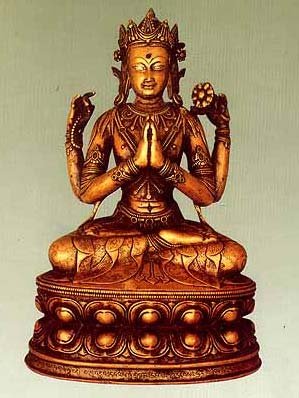
Mahayana (महायान, mahāyāna) is a major branch of Buddhism focusing on the path of a Bodhisattva (spiritual aspirants/ enlightened beings). Extant literature is vast and primarely composed in the Sanskrit language. There are many sūtras of which some of the earliest are the various Prajñāpāramitā sūtras.
Tibetan Buddhism (Vajrayana or tantric Buddhism)
Kūṭāgāra (कूटागार) refers to a “divine castle”, according to the 10th-century Ḍākārṇava-tantra: one of the last Tibetan Tantric scriptures belonging to the Buddhist Saṃvara tradition consisting of 51 chapters.—Accordingly, “[...] Then, after [those whose] intrinsic natures are the five seeds, he should visualize a divine castle (kūṭāgāra) [at the top of them], and, afterward, the Causal Vajra-holder [in that castle placed] on a lotus on Mount Meru clearly. [...]”.
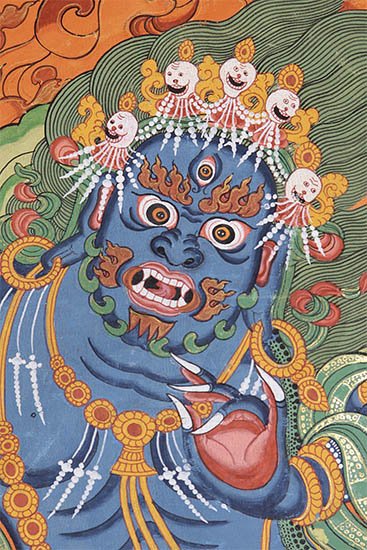
Tibetan Buddhism includes schools such as Nyingma, Kadampa, Kagyu and Gelug. Their primary canon of literature is divided in two broad categories: The Kangyur, which consists of Buddha’s words, and the Tengyur, which includes commentaries from various sources. Esotericism and tantra techniques (vajrayāna) are collected indepently.
Languages of India and abroad
Pali-English dictionary
kūṭāgāra : (nt.) a pinnacle building, or such a temporary construction; a catafalque.
Kūṭāgāra refers to: (nt.) a building with a peaked roof or pinnacles, possibly gabled; or with an upper storey Vin. I, 268; S. II, 103= V. 218; III, 156; IV, 186; V, 43, 75, 228; A. I, 101, 261; III, 10, 364; IV, 231; V, 21; Pv III, 17; 221; Vv 82 (=ratanamayakaṇṇikāya bandhaketuvanto VvA. 50); VvA. 6 (upari°, with upper storey) v. l. kuṭṭhāgāra; PvA. 282 (°dhaja with a flag on the summit); DhA. IV, 186. In cpds. : —° matta as big as an upper chamber J. I, 273; Miln. 67;—°sālā a pavilion (see description of Maṇḍalamāḷa at DA. I, 43) Vin. III, 15, 68, 87; IV, 75; D. I, 150; S. II, 103=V. 218; IV, 186.
Note: kūṭāgāra is a Pali compound consisting of the words kūṭa and agāra.
1) kūṭāgāra (ကူဋာဂါရ) [(na) (န)]—
[kūṭāgāra+gabbha]
[ကူဋာဂါရ+ဂဗ္ဘ]
2) kūṭāgāra (ကူဋာဂါရ) [(na) (န)]—
[kūṭa+agāra]
[ကူဋ+အဂါရ]
[Pali to Burmese]
1) kūṭāgāra—
(Burmese text): (၁) အထွတ်တပ်သော-အိမ်-ကျောင်း-ဆောင်-ပြာသာဒ်။ (တိ) (၂) အထွတ်တပ်သော အဆောင်ရှိသော။
(Auto-Translation): (1) Detached - house - school - building. (2) Having a detached building.
2) kūṭāgāra—
(Burmese text): အထွတ်တပ်သော အိမ်၏ တိုက်ခန်း။
(Auto-Translation): The apartment of a broken house.
Kūṭāgāra (in Pali) can be associated with the following Chinese terms:
1) 樓閣 [lóu gé]: “tower”.
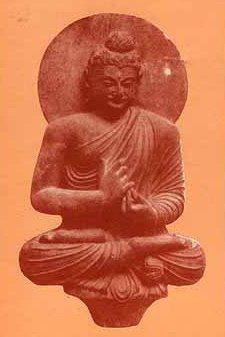
Pali is the language of the Tipiṭaka, which is the sacred canon of Theravāda Buddhism and contains much of the Buddha’s speech. Closeley related to Sanskrit, both languages are used interchangeably between religions.
Sanskrit dictionary
Kūṭāgāra (कूटागार).—an apartment on the top of a house; कूटागारैश्च संपूर्णामि- न्द्रस्येवामरावतीम् (kūṭāgāraiśca saṃpūrṇāmi- ndrasyevāmarāvatīm) Rām.1.5.15.
Derivable forms: kūṭāgāram (कूटागारम्).
Kūṭāgāra is a Sanskrit compound consisting of the terms kūṭa and agāra (अगार).
Kūṭāgāra (कूटागार).—nt., name of a city (in the south): Gaṇḍavyūha 185.24 etc.
Kūṭāgāra (कूटागार).—n.
(-raṃ) An upper room, an apartment on the top of a house. E. kūṭa a peak, āgāra a house.
Kūṭāgāra (कूटागार).—n. an apartment on the top of a house, [Rāmāyaṇa] 5, 12, 45.
Kūṭāgāra is a Sanskrit compound consisting of the terms kūṭa and āgāra (आगार).
Kūṭāgāra (कूटागार).—[masculine] [neuter] upper room pleasure-house.
Kūṭāgāra (कूटागार):—[from kūṭa] m. n. an upper room, apartment on the top of a house, [Rāmāyaṇa; Mṛcchakaṭikā; Caraka] etc.
Kūṭāgāra (कूटागार):—[kūṭā+gāra] (raṃ) 1. n. An upper room.
Kūṭāgāra (कूटागार):—(1. kūṭa 3. + āgāra) n. Dachzimmer, Belvedere [Trikāṇḍaśeṣa 2, 2, 6.] kūṭāgāraśatairyuktaṃ gandharvanagaropamam (Rāvaṇa’s Palast) [Rāmāyaṇa 5, 12, 45.] kūṭāgāre baddha āryakanāmā tvayā mocitaḥ [Mṛcchakaṭikā 174, 25.] [Burnouf 74.] [Lot. de Lassen’s Anthologie b. l. 422.]
Kūṭāgāra (कूटागार):—m. n. Dachzimmer , Belvedere , Lusthaus [Carakasaṃhitā 1,14.Vp.8,3,36.] [Lalitavistarapurāṇa 73M.3,4.] [Kāraṇḍavyūha 7,9.66,11.]
Kūṭāgāra (in Sanskrit) can be associated with the following Chinese terms:
1) 重閣講堂 [zhòng gé jiǎng táng]: “Kūṭāgāra”; “Kūṭāgāra-sālā”; “Kūṭāgāra-śālā” [Sanskrit place name]; Alternatively: “double-storied lecture hall”.
2) 七寶交露 [qī bǎo jiāo lù]: “jewel-strewn curtain made of the seven jewels”.
3) 七寶臺 [qī bǎo tái]: “high building made of the seven jewels”.
4) 交露帳 [jiāo lù zhàng]: “jewel-strewn curtain”.
5) 堂殿 [táng diàn]: “pavilion”.
6) 妙帳 [miào zhàng]: “wonderful curtain”.
7) 臺閣 [tái gé]: “gabled hall”.
8) 重閣精舍 [zhòng gé jīng shě]: “two-story temple”.
2) Kūṭāgārā (in Sanskrit) can be associated with the following Chinese terms:
1) 樓 [lóu]: “multi-floored high palace or castle”.
Sanskrit, also spelled संस्कृतम् (saṃskṛtam), is an ancient language of India commonly seen as the grandmother of the Indo-European language family (even English!). Closely allied with Prakrit and Pali, Sanskrit is more exhaustive in both grammar and terms and has the most extensive collection of literature in the world, greatly surpassing its sister-languages Greek and Latin.
Kannada-English dictionary
Kūṭāgāra (ಕೂಟಾಗಾರ):—
1) [noun] a room where the husband and wife sleep.
2) [noun] a room atop a building.
Kannada is a Dravidian language (as opposed to the Indo-European language family) mainly spoken in the southwestern region of India.
See also (Relevant definitions)
Partial matches (+0): Kutagara, Agara, Gabbha, Kuta, Kitta.
Starts with (+5): Kutagarabhimukha, Kutagaradvara, Kutagaragabbha, Kutagaragabbhasata, Kutagaragata, Kutagarakannika, Kutagarakara, Kutagarakucchi, Kutagarakucchipamana, Kutagaramahagehacchaya, Kutagaramatthaka, Kutagarappamana, Kutagarasahassa, Kutagarasala, Kutagarasalaniyama, Kutagarasalasankhepa, Kutagarasama, Kutagarasanthana, Kutagarasata, Kutagarathupika.
Full-text (+42): Kutagarasala, Ratanamayakutagara, Kannikakutagaravara, Kambalakutagara, Kutagaragabbha, Tucchakutagara, Kutagarasahassa, Kutagarasata, Kutagarakara, Kutagarasanthana, Kutagarayana, Kutagarasama, Kutagaravara, Mahakutagara, Kutagarathupika, Kutagarupama, Kutagaradvara, Kutagarakannika, Kutagarabhimukha, Kutagaramatthaka.
Relevant text
Search found 23 books and stories containing Kutagara, Kuta-agara, Kūṭa-agāra, Kūṭa-āgāra, Kūṭāgāra, Kuṭāgāra, Kūṭāgārā, Kutagara-gabbha, Kūṭāgāra-gabbha; (plurals include: Kutagaras, agaras, agāras, āgāras, Kūṭāgāras, Kuṭāgāras, Kūṭāgārās, gabbhas). You can also click to the full overview containing English textual excerpts. Below are direct links for the most relevant articles:
Digha Nikaya (Long Discourses) (by Bhikkhu Sujato)
5. Attaining Absorption < [Discourse 17: King Mahāsudassana]
7. The Visit of Queen Subhaddā < [Discourse 17: King Mahāsudassana]
8. Rebirth in the Realm of Divinity < [Discourse 17: King Mahāsudassana]
Maha Prajnaparamita Sastra (by Gelongma Karma Migme Chödrön)
Mahāsudassana-suttanta < [Part 14 - Generosity and the other virtues]
Act 7.5: Scattering of flowers over the Buddha < [Chapter XIV - Emission of rays]
Sixth comparison or upamāna: A city of the Gandharvas < [Bodhisattva quality 19: the ten upamānas]
Stupas in Orissa (Study) (by Meenakshi Chauley)
After Buddha’s Mahaparinirvana < [Chapter 2]
Guide to Tipitaka (by U Ko Lay)
(c) Admission Of Bhikkhunis Into The Order < [Chapter I - What Is Vinaya Pitaka?]
Dipavamsa (study) (by Sibani Barman)
Sanskrit Words In Southeast Asian Languages (by Satya Vrat Shastri)
Page 298 < [Sanskrit words in the Southeast Asian Languages]