Kulacarya, Kula-acarya, Kulācārya: 11 definitions
Introduction:
Kulacarya means something in Hinduism, Sanskrit, Marathi. If you want to know the exact meaning, history, etymology or English translation of this term then check out the descriptions on this page. Add your comment or reference to a book if you want to contribute to this summary article.
Alternative spellings of this word include Kulacharya.
In Hinduism
Shaktism
Kulācārya (कुलाचार्य) refers to a “teacher in the Kula”, according to the Manthānabhairavatantra, a vast sprawling work that belongs to a corpus of Tantric texts concerned with the worship of the goddess Kubjikā.—Accordingly, [while describing the Eight Kulas]—“[...] He who knows the omnipresent Kula is a teacher in the Kula (kulācārya). He who says that Kulakaula is devoid of the knowledge of the planes (of existence) does not have liberation and he wanders in the world of transmigration full of the wombs (within which he is reborn)”.
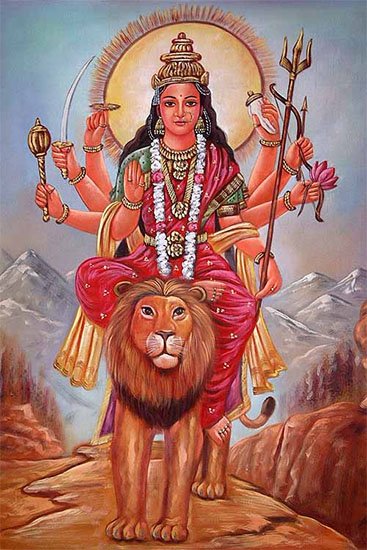
Shakta (शाक्त, śākta) or Shaktism (śāktism) represents a tradition of Hinduism where the Goddess (Devi) is revered and worshipped. Shakta literature includes a range of scriptures, including various Agamas and Tantras, although its roots may be traced back to the Vedas.
Purana and Itihasa (epic history)
Kulācārya (कुलाचार्य) refers to a “family preceptor”, according to the Śivapurāṇa 2.5.29 (“The previous birth of Śaṅkhacūḍa”).—Accordingly, [after Śaṅkhacūḍa married Tulasī]: “[...] On seeing the family preceptor, Śaṅkhacūḍa, son of Dambha bowed to him with devotion and prostrated before him with respect. After conferring his excellent benediction, Śukra, the family preceptor (kulācārya), narrated the tales of the gods and Dānavas. He expatiated on the natural enmity of the two, the invariable defeat of the Asuras, the victory of the gods and the help rendered by Bṛhaspati. [...]”.

The Purana (पुराण, purāṇas) refers to Sanskrit literature preserving ancient India’s vast cultural history, including historical legends, religious ceremonies, various arts and sciences. The eighteen mahapuranas total over 400,000 shlokas (metrical couplets) and date to at least several centuries BCE.
Languages of India and abroad
Marathi-English dictionary
kulācārya (कुलाचार्य).—m (S) A family priest or spiritual director.
Marathi is an Indo-European language having over 70 million native speakers people in (predominantly) Maharashtra India. Marathi, like many other Indo-Aryan languages, evolved from early forms of Prakrit, which itself is a subset of Sanskrit, one of the most ancient languages of the world.
Sanskrit dictionary
Kulācārya (कुलाचार्य).—
1) a family priest or teacher.
2) a geneologist.
Derivable forms: kulācāryaḥ (कुलाचार्यः).
Kulācārya is a Sanskrit compound consisting of the terms kula and ācārya (आचार्य). See also (synonyms): kulaguru.
Kulācārya (कुलाचार्य) or Kulācāryya.—m.
(-ryaḥ) 1. A family priest. 2. A geneologist. E. kula and ācārya teacher.
Kulācārya (कुलाचार्य).—m. a family priest, [Bhāgavata-Purāṇa, (ed. Burnouf.)] 9, 1, 9.
Kulācārya is a Sanskrit compound consisting of the terms kula and ācārya (आचार्य).
1) Kulācārya (कुलाचार्य):—[from kula] m. a family teacher, family priest, [Bhāgavata-purāṇa; Viṣṇu-purāṇa]
2) [v.s. ...] a person well versed in pedigrees and customs of different families and employed to contract marriages between them, [cf. Lexicographers, esp. such as amarasiṃha, halāyudha, hemacandra, etc.]
3) [v.s. ...] a genealogist, [Horace H. Wilson]
Kulācārya (कुलाचार्य):—[kulā+cārya] (ryyaḥ) 1. m. Family priest.
Kulācārya (कुलाचार्य):—(kula + ācārya) m.
1) Lehrer der Familie [Bhāgavatapurāṇa 9, 1, 9.] —
2) Genealog [Wilson’s Wörterbuch] [Śabdakalpadruma] unter kulīna .
Kulācārya (कुलाचार्य):—m. —
1) Lehrer der Familie , Familienpriester [Viṣṇupurāṇa 4,2,6.] —
2) *Genealog.
Sanskrit, also spelled संस्कृतम् (saṃskṛtam), is an ancient language of India commonly seen as the grandmother of the Indo-European language family (even English!). Closely allied with Prakrit and Pali, Sanskrit is more exhaustive in both grammar and terms and has the most extensive collection of literature in the world, greatly surpassing its sister-languages Greek and Latin.
Kannada-English dictionary
Kulācārya (ಕುಲಾಚಾರ್ಯ):—
1) [noun] a person who is or regarded to be, the preceptor for several generations of a family; a family-teacher.
2) [noun] a family priest.
Kannada is a Dravidian language (as opposed to the Indo-European language family) mainly spoken in the southwestern region of India.
See also (Relevant definitions)
Partial matches (+0): Acarya, Kula, Kola.
Full-text (+0): Kulacaryya, Kulaguru, Bhumikajnana, Jnananirmukta, Yonisamkula, Ghataka.
Relevant text
Search found 2 books and stories containing Kulacarya, Kula-acarya, Kula-ācārya, Kulācārya, Kulācarya; (plurals include: Kulacaryas, acaryas, ācāryas, Kulācāryas, Kulācaryas). You can also click to the full overview containing English textual excerpts. Below are direct links for the most relevant articles:
Yasastilaka and Indian culture (Study) (by Krishna Kanta Jandiqui)
8. The Kulacaryas and Trikamata doctrines < [Chapter 8 - Philosophical doctrines]
1. Introduction: Schools of thought discussed in Yasastilaka < [Chapter 9 - Schools of Thought]
Lakulisha-Pashupata (Philosophy and Practice) (by Geetika Kaw Kher)
Traces of Lakulisa-Pasupata order in North India < [Chapter 2 - Spread and Transition]