Kalinatha, Kalinātha: 6 definitions
Introduction:
Kalinatha means something in Hinduism, Sanskrit, the history of ancient India. If you want to know the exact meaning, history, etymology or English translation of this term then check out the descriptions on this page. Add your comment or reference to a book if you want to contribute to this summary article.
India history and geography
Kalinātha (कलिनाथ) [=bhūcarakalinātha] is the name of a Nātha-Siddha (as well as Rasa‐Siddha), mentioned in the Kalleśvara inscription.—One important piece of epigraphical evidence is from the thirteenth century, namely the Kalleśvara inscription (AD 1279, 21st September, Thursday) from, Jagalur tāluka, Karnataka. This inscription records the donation of a village to a “kula-guru śiva-yogī yogī-cakravartī (world-conquerer)” named Prasādadeva on the occasion of a lunar eclipse (EC 1903: 87,154-5, 232-4). [...] In this inscription, we find what appears to be an enumeration of Prasādadeva’s lineage. The list of Siddhas in the inscription mentions, for example, Bhūcara-Kalinātha, [...]. The Kalleśvara inscription also records that these Siddhas were masters of rasāyana (alchemy) i.e. rasa, rasāyana, ghuṭikāñjana, mukhāñjana. They hold high rank of ‘mahā‐gaṇācāra’ on the earth and had mastered the science of magic, the art of creating illusions, etc.
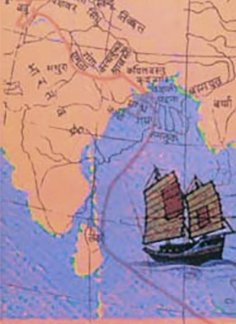
The history of India traces the identification of countries, villages, towns and other regions of India, as well as mythology, zoology, royal dynasties, rulers, tribes, local festivities and traditions and regional languages. Ancient India enjoyed religious freedom and encourages the path of Dharma, a concept common to Buddhism, Hinduism, and Jainism.
Languages of India and abroad
Sanskrit dictionary
Kalinātha (कलिनाथ) as mentioned in Aufrecht’s Catalogus Catalogorum:—son of Lakṣmaṇācārya: Saṃgītaratnākarakalānidhi, a
—[commentary] on Śarṅgadeva’s Saṃgītaratnākara. He is quoted by Dāmodara Oxf. 201^a, by Rāmānanda Oxf. 72^b.
Kalinātha (कलिनाथ):—[=kali-nātha] [from kali] m. Name of a writer on music.
Kalinātha (कलिनाथ):—(kali + nātha) m. Nomen proprium eines Autors über Musik [WEBER. Lit. 240.]
Kalinātha (कलिनाथ):—m. Nomen proprium eines Autors über Musik.
Sanskrit, also spelled संस्कृतम् (saṃskṛtam), is an ancient language of India commonly seen as the grandmother of the Indo-European language family (even English!). Closely allied with Prakrit and Pali, Sanskrit is more exhaustive in both grammar and terms and has the most extensive collection of literature in the world, greatly surpassing its sister-languages Greek and Latin.
Kannada-English dictionary
Kāḷinātha (ಕಾಳಿನಾಥ):—[noun] Śiva, the consort of K āḷi, the Mother-Goddess.
Kannada is a Dravidian language (as opposed to the Indo-European language family) mainly spoken in the southwestern region of India.
See also (Relevant definitions)
Partial matches (+0): Natha, Kali.
Full-text (+0): Bhucarakalinatha, Kalanidhi, Samgitaratnakara.
Relevant text
Search found 1 books and stories containing Kalinatha, Kalinātha, Kali-natha, Kali-nātha, Kāḷinātha; (plurals include: Kalinathas, Kalināthas, nathas, nāthas, Kāḷināthas). You can also click to the full overview containing English textual excerpts. Below are direct links for the most relevant articles:
Notices of Sanskrit Manuscripts (by Rajendralala Mitra)