Kaita, Kaiṭa, Kaitā: 8 definitions
Introduction:
Kaita means something in Hinduism, Sanskrit, the history of ancient India, biology, Tamil. If you want to know the exact meaning, history, etymology or English translation of this term then check out the descriptions on this page. Add your comment or reference to a book if you want to contribute to this summary article.
India history and geography
Source: Shodhganga: Vernacular architecture of Assam with special reference to Brahmaputra ValleyKaita is an Assamese term referring to “a variety of tamal”.—It appears in the study dealing with the vernacular architecture (local building construction) of Assam whose rich tradition is backed by the numerous communities and traditional cultures.
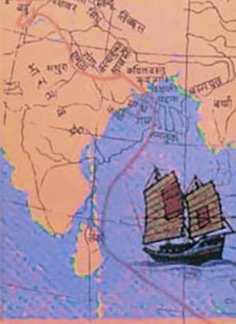
The history of India traces the identification of countries, villages, towns and other regions of India, as well as mythology, zoology, royal dynasties, rulers, tribes, local festivities and traditions and regional languages. Ancient India enjoyed religious freedom and encourages the path of Dharma, a concept common to Buddhism, Hinduism, and Jainism.
Biology (plants and animals)
Source: Google Books: CRC World Dictionary (Regional names)Kaita in India is the name of a plant defined with Pandanus odorifer in various botanical sources. This page contains potential references in Ayurveda, modern medicine, and other folk traditions or local practices It has the synonym Marquartia leucacantha Hassk. (among others).
Example references for further research on medicinal uses or toxicity (see latin names for full list):
· Pacific Sci. (1961)
· Revisio Generum Plantarum (1891)
· Pacific Sci. (1963)
· Journal of Botany, British and Foreign (1867)
· Gard. Bull. Singapore (1967)
· Sandakania (1993)
If you are looking for specific details regarding Kaita, for example extract dosage, diet and recipes, pregnancy safety, chemical composition, side effects, health benefits, have a look at these references.
This sections includes definitions from the five kingdoms of living things: Animals, Plants, Fungi, Protists and Monera. It will include both the official binomial nomenclature (scientific names usually in Latin) as well as regional spellings and variants.
Languages of India and abroad
Sanskrit dictionary
Source: DDSA: The practical Sanskrit-English dictionaryKaiṭa (कैट).—a. Coming from an insect or worm.
Source: Cologne Digital Sanskrit Dictionaries: Monier-Williams Sanskrit-English DictionaryKaiṭa (कैट):—mfn. ([from] kīṭa), coming from an insect, [Suśruta]
[Sanskrit to German]
Sanskrit, also spelled संस्कृतम् (saṃskṛtam), is an ancient language of India commonly seen as the grandmother of the Indo-European language family (even English!). Closely allied with Prakrit and Pali, Sanskrit is more exhaustive in both grammar and terms and has the most extensive collection of literature in the world, greatly surpassing its sister-languages Greek and Latin.
Kannada-English dictionary
Source: Alar: Kannada-English corpusKaita (ಕೈತ):—
1) [noun] an action; a doing.
2) [noun] a thing done; a deed; an act.
3) [noun] the way in which something is constructed; manner or method of building; construction; structure.
4) [noun] a movement or movements collectively, of the body or of part of the body, to express or emphasize ideas, emotions, etc.
5) [noun] the act of cultivating; cultivation; farming.
--- OR ---
Kaita (ಕೈತ):—[noun] the act, practice or an instance of cheating; deception.
Kannada is a Dravidian language (as opposed to the Indo-European language family) mainly spoken in the southwestern region of India.
Tamil dictionary
Source: DDSA: University of Madras: Tamil LexiconKaitā (கைதா) [kaitātal [kaitarutal]] [kai-tā] intransitive verb < idem. +.
1. To render help, save, rescue, as from poverty, danger, etc.; வறுமை இடுக்கண் முத லியவற்றில் உதவிபுரிதல். காவலனார் பெருங்கருணை கைதந்தபடியென்று [varumai idukkan mutha liyavarril uthavipurithal. kavalanar perungarunai kaithanthapadiyenru] (பெரியபுராணம் திருஞான. [periyapuranam thirugnana.] 1118).
2. To give assurance; உறுதி செய்தல். எய்தவல்லை யேற் கைதருக [uruthi seythal. eythavallai yer kaitharuga] (மகாபாரதம் குருகுல. [magaparatham kurugula.] 44).
3. To marry; மணம்புரிதல். கோதையா லுறவுகொண்டு கைதரல் குறித்த கோமகன் [manamburithal. kothaiya luravugondu kaitharal kuritha komagan] (மகாபாரதம் குருகுல. [magaparatham kurugula.] 131).
4. To increase; மிகுதல். உவகை கைதர [miguthal. uvagai kaithara] (கம்பராமாயணம் மீட்சி. [kambaramayanam midsi.] 268).
Tamil is an ancient language of India from the Dravidian family spoken by roughly 250 million people mainly in southern India and Sri Lanka.
See also (Relevant definitions)
Starts with (+44): Kai-talaivai, Kai-tankiati, Kai-tankiulu, Kai-tattivai, Kaitaale, Kaitabatahe, Kaitabh, Kaitabha, Kaitabhabhid, Kaitabhadvish, Kaitabhahan, Kaitabhajit, Kaitabhardana, Kaitabhari, Kaitabharipu, Kaitabheshvaralakshana, Kaitabheshvari, Kaitaccakka, Kaitachchakka, Kaitadavu.
Ends with: Airoppakkaita, Anaikaita, Ceriyakaita, Cheriyakaita, Dakaita, Eroppakaita, Kanakkaita, Nattukaita, Pukkaita, Talai-kaita, Valakkaita, Vishalkaita.
Full-text (+3): Kaida, Kaitha, Kaida-tsjeria, Kattu kaitha, Khulikaida, Le gu zi, Perin-kaida-taddi, Kaida-taddi, Sakta-majuri, Baithi Kaida, Kaith, Baithi-thepa, Ketaki, Kaidi, Binamajuri, Katou-kaida-maravara, Talai-kaita, Kaid, Tikakitavadi, Tikadi.
Relevant text
Search found 3 books and stories containing Kaita, Kai-tā, Kai-ta, Kaida, Kaidha, Kaiṭa, Kaitā, Kaitha, Kaithaa; (plurals include: Kaitas, tās, tas, Kaidas, Kaidhas, Kaiṭas, Kaitās, Kaithas, Kaithaas). You can also click to the full overview containing English textual excerpts. Below are direct links for the most relevant articles:
Tiruvaymoli (Thiruvaimozhi): English translation (by S. Satyamurthi Ayyangar)
Pasuram 2.9.2 < [Section 9 - Ninth Tiruvaymoli (Em ma vittu)]
Vernacular architecture of Assam (by Nabajit Deka)
Techniques (c): Bamboo Tying Strand (Tamal) < [Chapter 4]
List of Mahabharata tribes (by Laxman Burdak)