Kacci, Kācci: 13 definitions
Introduction:
Kacci means something in Hinduism, Sanskrit, Buddhism, Pali, the history of ancient India, Marathi, Jainism, Prakrit, biology, Tamil. If you want to know the exact meaning, history, etymology or English translation of this term then check out the descriptions on this page. Add your comment or reference to a book if you want to contribute to this summary article.
Images (photo gallery)


In Hinduism
Purana and Itihasa (epic history)
Kacci or Kanchi refers to one of the 108 divyadesas according to Priyavaccan Pillai’s compendium of the Ramayana based on the Nalayirativviyappirapantam.—Kacci is foremost among the divyadesas, and within the City, not less than fourteen are found.

The Purana (पुराण, purāṇas) refers to Sanskrit literature preserving ancient India’s vast cultural history, including historical legends, religious ceremonies, various arts and sciences. The eighteen mahapuranas total over 400,000 shlokas (metrical couplets) and date to at least several centuries BCE.
India history and geography
Kacci (கச்சி) (in Tamil) refers to Kāñci in Sanskrit, and represents one of the proper nouns mentioned in the Kanchipuranam, which narrates the Shaivite Legends of Kanchipuram—an ancient and sacred district in Tamil Nadu (India). The Kanchipuranam (mentioning Kacci) reminds us that Kanchipuram represents an important seat of Hinduism where Vaishnavism and Shaivism have co-existed since ancient times.
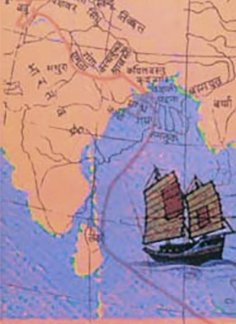
The history of India traces the identification of countries, villages, towns and other regions of India, as well as mythology, zoology, royal dynasties, rulers, tribes, local festivities and traditions and regional languages. Ancient India enjoyed religious freedom and encourages the path of Dharma, a concept common to Buddhism, Hinduism, and Jainism.
Biology (plants and animals)
Kacci [கச்சி] in the Tamil language is the name of a plant identified with Tinospora cordifolia from the Menispermaceae (Moonseed) family. For the possible medicinal usage of kacci, you can check this page for potential sources and references, although be aware that any some or none of the side-effects may not be mentioned here, wether they be harmful or beneficial to health.
1) Kacci in India is the name of a plant defined with Acalypha fruticosa in various botanical sources. This page contains potential references in Ayurveda, modern medicine, and other folk traditions or local practices It has the synonym Ricinocarpus fruticosus (Forssk.) Kuntze.
2) Kacci is also identified with Cajanus cajan It has the synonym Phaseolus balicus L. (etc.).
Example references for further research on medicinal uses or toxicity (see latin names for full list):
· African Study Monographs (2003)
· Cytologia (1998)
· (Report) Botanical Society and Exchange Club of the British Isles (1916)
· Trop. Crops, Dicotyl. (1968)
· Flora of the Lesser Antilles: Leeward and Windward Islands (1988)
· Pharmaceutical Biology (2001)
If you are looking for specific details regarding Kacci, for example extract dosage, diet and recipes, side effects, pregnancy safety, chemical composition, health benefits, have a look at these references.
This sections includes definitions from the five kingdoms of living things: Animals, Plants, Fungi, Protists and Monera. It will include both the official binomial nomenclature (scientific names usually in Latin) as well as regional spellings and variants.
Languages of India and abroad
Pali-English dictionary
kacci : (ind.) an indefinite interrogative particle expressing doubt. (Often it is followed by some other particle such as nu, nukho).
Kacci, & kaccid (indecl.) (Sk. kaccid=kad+cid, see kad°) indef. interrog. particle expressing doubt or suspense, equivalent to Gr. a)/n, Lat. ne, num, nonne: then perhaps; I doubt whether, I hope, I am not sure, etc., Vin. I, 158, 350; D. I, 50 (k. maṃ na vañcesi I hope you do not deceive me), 106; S. III, 120, 125; Sn. 335, 354, p. 87; J. I, 103, 279; V, 373; DhA. II, 39 (k. tumhe gatā “have you not gone, ” answer: āma “yes”); PvA. 27 (k. tan dānaṃ upakappati does that gift really benefit the dead?), 178 (k. vo piṃḍapāto laddho have you received any alms?). Cp. kin.—Often combined with other indef. particles, e.g. kacci nu Vin. I, 41; J. III, 236; VI, 542; k. nu kho “perhaps” (Ger. etwa, doch nicht) J. I, 279; k. pana J. I, 103.—When followed by nu or su the original d reappears according to rules of Sandhi: kaccinnu J. II, 133; V, 174, 348; VI, 23; kaccissu Sn. 1045, 1079 (see Nd2 186). (Page 175)
kacci (ကစ္စိ) [(bya) (ဗျ)]—
a.
အသို့နည်း။
[Pali to Burmese]
kacci—
(Burmese text):
အသို့နည်း။
(Auto-Translation): To one another.
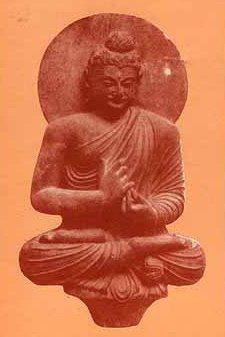
Pali is the language of the Tipiṭaka, which is the sacred canon of Theravāda Buddhism and contains much of the Buddha’s speech. Closeley related to Sanskrit, both languages are used interchangeably between religions.
Marathi-English dictionary
kaccī (कच्ची).—f A term at Songṭya or draughts. Revived and come again into play--a killed piece. 2 fig. Exposure or disgrace; derided or dishonored condition.
--- OR ---
kaccī (कच्ची).—& kaccīḍhēlī or kaccīḍhēlīcā See kacī & kacīḍhēlī.
Marathi is an Indo-European language having over 70 million native speakers people in (predominantly) Maharashtra India. Marathi, like many other Indo-Aryan languages, evolved from early forms of Prakrit, which itself is a subset of Sanskrit, one of the most ancient languages of the world.
Prakrit-English dictionary
Kacci (कच्चि) in the Prakrit language is related to the Sanskrit word: Kaccit.
Prakrit is an ancient language closely associated with both Pali and Sanskrit. Jain literature is often composed in this language or sub-dialects, such as the Agamas and their commentaries which are written in Ardhamagadhi and Maharashtri Prakrit. The earliest extant texts can be dated to as early as the 4th century BCE although core portions might be older.
Kannada-English dictionary
Kacci (ಕಚ್ಚಿ):—[noun] (a nursery term) any (biting) insect.
Kannada is a Dravidian language (as opposed to the Indo-European language family) mainly spoken in the southwestern region of India.
Tamil dictionary
Kacci (கச்சி) noun
1. probably from guḍūcī. Gulancha. See சீந்தில். (வைத்திய மூலிகை) [sinthil. (vaithiya muligai)]
2. Indian shrubby Copper leaf. See சின்னி. (வைத்திய மூலிகை) [sinni. (vaithiya muligai)]
--- OR ---
Kacci (கச்சி) noun < காய்ச்சி. [kaychi.]
1. Coconut shell; கொட்டாங்கச்சி. [kottangachi.] (W.)
2. Half of a dried palmyra-nut; ஊமற்பிளவு. (யாழ்ப்பாணத்து மானிப்பாயகராதி) [umarpilavu. (yazhppanathu manippayagarathi)]
--- OR ---
Kacci (கச்சி) noun < Pkt. kañci < kāñcī. The city of Conjeevaram; காஞ்சீபுரம். [kanchipuram.] (மணிமேகலை பதி. [manimegalai pathi.] 90.)
--- OR ---
Kācci (காச்சி) noun perhaps from காய்²-. [kay²-.] Common dhal; துவரை. (வைத்திய மலையகராதி) [thuvarai. (vaithiya malaiyagarathi)]
Tamil is an ancient language of India from the Dravidian family spoken by roughly 250 million people mainly in southern India and Sri Lanka.
Nepali dictionary
Kaccī (कच्ची):—adj. 1. raw; 2. not fast; 3. not enduring;
Nepali is the primary language of the Nepalese people counting almost 20 million native speakers. The country of Nepal is situated in the Himalaya mountain range to the north of India.
See also (Relevant definitions)
Starts with (+20): Kacci-appacivacariyar, Kacci-appamunivar, Kacci-Attikiri, Kacci-ghara, Kacci-imta, Kacci-ranga, Kacci-sadaka, Kacci-tamka, Kacciasami, Kaccibaju, Kaccibuti, Kaccid, Kaccihundi, Kaccijapti, Kaccikabha, Kaccikacceti, Kaccikam, Kaccikamavishi, Kaccikara, Kaccike.
Full-text (+72): Kashi, Kaccijapti, Kaccihundi, Kaccikkilanku, Kacci-tamka, Kacci-ghara, Kacci-ranga, Kacci-sadaka, Kacci-imta, Kaccippetu, Ottankacci, Kacci-appacivacariyar, Kottankacci, Mancatkacci, Umarkacci, Kottaikkacci, Kachi-ghar, Kachi-taanka, Kachi-rang, Kachi-sadak.
Relevant text
Search found 32 books and stories containing Kacci, Kaccī, Kachi, Kācci, Kaachi; (plurals include: Kaccis, Kaccīs, Kachis, Kāccis, Kaachis). You can also click to the full overview containing English textual excerpts. Below are direct links for the most relevant articles:
108 Tirupathi Anthathi (English translation) (by Sri Varadachari Sadagopan)
Verse 85: Thirukkalvanoor (Divya Desam)
Verse 74: Hasthigiri (or, Thirukachi Divya Desam)
Indian Antiquary (a journal of oriental research) (by Jas Burgess)
Notes on castes in the Dekhan (2) Sankar-jatya, or mixed castes < [Volume 3 (1874)]
MEDICINAL PLANT WEALTH OF ANDHRA PRADESH – Part II < [Volume 7 (issue 1), Jul-Sep 1987]
Tribal medicinal plants of chittoor < [Volume 16 (issue 4), Apr-Jun 1997]
Dictionaries of Indian languages (Kosha)
Page 513 < [Tamil-English-Malayalam (1 volume)]
Page 723 < [Marathi-Hindi-English, Volume 1]
Page 92 < [Malayalam-English (1 volume)]
Digha Nikaya (Long Discourses) (by Bhikkhu Sujato)
2. A Discussion With Jīvaka Komārabhacca < [Discourse 2: The Fruits of the Ascetic Life]
7. Seeing the Two Marks < [Discourse 3: With Ambaṭṭha]
2.12. The Simile of the Dung-Carrier < [Discourse 23: With Pāyāsi]
Maha Buddhavamsa—The Great Chronicle of Buddhas (by Ven. Mingun Sayadaw)