Jaladhivasa, Jala-adhivasa, Jalādhivāsa: 5 definitions
Introduction:
Jaladhivasa means something in Hinduism, Sanskrit. If you want to know the exact meaning, history, etymology or English translation of this term then check out the descriptions on this page. Add your comment or reference to a book if you want to contribute to this summary article.
In Hinduism
Pancaratra (worship of Nārāyaṇa)
Jalādhivāsa (जलाधिवास) [=jalādhivāsaḥ] is the name of the fourteenth chapter of the Aniruddhasaṃhitā: an ancient Pāñcarātra Āgama scripture in thirty-four chapters dealing with the varieties of worships, administration of sciences, rājadharma, town planning, expiation, installation of images, the rules regarding the construction of images, etc.
1) Jalādhivāsa (जलाधिवास) or “immersion ceremonies (for idols)” is the name of the fourteenth chapter of the Aniruddhasaṃhitā, an ancient Pāñcarātra Āgama text dealing with the annual festivals of temples and regular temple worship routines.—Description of the chapter [jalādhivāsa]: Other steps in the sanctification ceremonies [pratiṣṭhā] for an idol include an immersion in vessels of water (1-17), a ritual “opening of the eyes” [netronmīlana] (18-23), and several types of baths in mud, water, sandal-paste, etc., [abhiṣeka, snāna] (24-50). At the finish of these rituals the idol is laid to rest [śayana] (51a).
2) Jalādhivāsa (जलाधिवास) refers to the “bath of consecration ceremony”, as discussed in the eighteenth chapter of the Īśvarasaṃhitā (printed edition), a Pāñcarātra work in 8200 verses and 24 chapters dealing with topics such as routines of temple worship, major and minor festivals, temple-building and initiation.—Description of the chapter [pratiṣṭhāvidhanā]: For the consecration of all idols with mantras, elaborate preparations are necessary: a special maṇḍapa is to be constructed (2-68a) and the idol to be consecrated (or its substitute) is to be brought to the maṇḍapa in a chariot and there made ready for its consecration bath (68b-84). The bath of consecration is called “jalādhivāsa”, and the rites connected with this may take from one to three to five days; how jalādhivāsa is done for a wood, metal and stone icon is told (85-131, 152b-167), and how it is done by a method called “chāyādhivāsana” when icons cannot be immersed in water is also told (132-149, 159). [...]
3) Jalādhivāsa (जलाधिवास) refers to “immersion rites”, as discussed in chapter 26 (Kriyāpāda) of the Padmasaṃhitā: the most widely followed of Saṃhitā covering the entire range of concerns of Pāñcarātra doctrine and practice (i.e., the four-fold formulation of subject matter—jñāna, yoga, kriyā and caryā) consisting of roughly 9000 verses.—Description of the chapter [jalādhivāsa-vidhi]: [...] Regular jalādhivāsa-immersion is then described (41-83a) for icons made of wood, stone and metal—all of which may be safely put in water. Among the preliminary ceremonies are dhānyādhivāsa, wherein the icon is placed on a bed of grains while the pedestal is prepared; then moving the icon to the pedestal it is fixed to it by śilpins; and next it is taken in procession around the village (up to 59). After this only is the icon brought back to the maṇḍapa and actual jalādhivāsa rites begun. While it is preferable to do these immersions in a river or a tank or at a waterfall, the directions given here are for more normal circumstances. A small prapā-hut is prepared around the tub into which the icon will be immersed, and it is decorated with four gates, lights, etc. The icon is taken into it and, while mantras are chanted, the icon is lowered into the tubful of water in a reclining position (śayana—with head to the East and face to the North). There it will remain for from 1 to 3 nights or, if this is not possible, at least part of one yāma-period. Once it is in the water, cakramudrā and rakṣāmudrā are done while appropriate mantras are intoned. The ceremonies wind up with chantings from the 3 Vedas and with music.
4) Jalādhivāsa (जलाधिवास) refers to “immersion of the icon in water”, as discussed in chapter 15 of the Puruṣottamasaṃhitā.—Description of the chapter [jalādhivāsa-vidhi]: [...] After śāntihoma is offered, the icon is paraded through the streets in a palanquin and taken to the temple (28-37). The rite of jalādhivāsa is then taken up: where it is to be done (38-45a), the pandal [prapā] to be erected for the occasion (45b-47), and how the service progresses step-by-step (48-55). After the icon is contemplated as constituted of the five elements [tattvasaṃhāra] (56-61), the icon’s position in the water is changed when, after wrapping it in a white cloth, it is laid down with its face toward the East and its head toward the North (62-93). [...]
5) Jalādhivāsa (जलाधिवास) refers to the “ceremony of placing the Lord into the waiting waters”, as discussed in chapter 4 of the Bhāradvājasaṃhitā or “Bhāradvāja-kaṇva-saṃhitā”.—Description of chapter [jalādhivāsa-anukramaṇikā]: [...] Jalādhivāsa should then be done by placing the Lord into the waiting waters; this act is to be accompanied by abhiṣeka-rites and by recitations of several mantras including the rāmagāyatrī-mantra. Other matters will be taken care of before the icon is removed from the jalādhivāsa-bath.
6) Jalādhivāsa (जलाधिवास) refers to “soaking rites”, as discussed in chapter 24 of the Śrīpraśnasaṃhitā.—Description of the chapter [jalādhivāsa-ādi-pratiṣṭhā-anta-vidhi]: This chapter outlines, with good detail, the various activities from the evening of the first day through the third, and last, day of the usual pratiṣṭhā-rites in a temple. On the evening of the first day, the karmabera-icon along with the icons of the Lord’s consorts will be taken to a tank or river. There in a maṇḍapa the first jalādhivāsa-soaking rites are attended to, while at the same time the devout also bathe. After pūjā is duly celebrated there, a procession forms sometime before daybreak to accompany the icon back to the temple again. There, the icon is put into the maṇḍapa and with it the Ācārya stays, keeping vigil (1-187). [...]
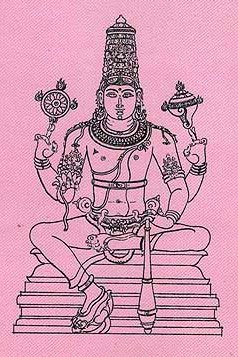
Pancaratra (पाञ्चरात्र, pāñcarātra) represents a tradition of Hinduism where Narayana is revered and worshipped. Closeley related to Vaishnavism, the Pancaratra literature includes various Agamas and tantras incorporating many Vaishnava philosophies.
Vastushastra (architecture)
Jalādhivāsa (जलाधिवास) refers to “placing the idol in water for a stipulated time” and represents one of the ceremonies succeeding the preliminary rituals for re-installation of damaged idols from the temple, according to Kerala ritual texts such as the Śaivāgamanibandhana, Prayogamañjarī and the Īśanagurudevapaddhati.—[...] Then certain necessary rituals meant for the new idol should be performed [e.g., placing the idol in water for a stipulated time (jalādhivāsa)] [...] Then the new idol should be kept in a bed facing the sanctum. Next, the worshipping of the tattvakalaśa pot takes place followed by a fire ritual named saṃhāratattvahoma. [...]
Vastushastra (वास्तुशास्त्र, vāstuśāstra) refers to the ancient Indian science (shastra) of architecture (vastu), dealing with topics such architecture, sculpture, town-building, fort building and various other constructions. Vastu also deals with the philosophy of the architectural relation with the cosmic universe.
Shilpashastra (iconography)
Jalādhivāsa (जलाधिवास) refers to “submerging the icon (with its head toward the east)” which is performed during the purification of divine icons (bimba), as discussed in chapter 16 of the Viṣṇusaṃhitā: a Sanskrit text written in 2600 verses which covers typical Pāñcarātra topics through a narrative dialogue between Aupagāyana and Siddha Sumati.—Description of the chapter [bimba-śuddhi]: [...] That afternoon the icon is taken to a water-spot—or else pots are to be used-where, after varuṇapūjā, the icon is submerged with its head toward the East [jalādhivāsa]. After this has been attended to, the icon is brought back in procession to the temple and nyāsas are done to it (33-40). [...]
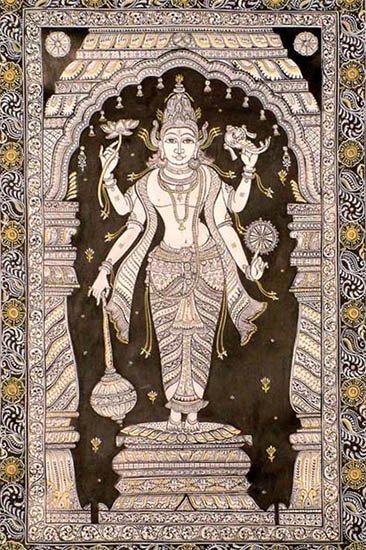
Shilpashastra (शिल्पशास्त्र, śilpaśāstra) represents the ancient Indian science (shastra) of creative arts (shilpa) such as sculpture, iconography and painting. Closely related to Vastushastra (architecture), they often share the same literature.
Languages of India and abroad
Kannada-English dictionary
Jalādhivāsa (ಜಲಾಧಿವಾಸ):—[noun] a religious rite of keeping the idol of a deity in water for a few days before being establishing in a temple.
Kannada is a Dravidian language (as opposed to the Indo-European language family) mainly spoken in the southwestern region of India.
See also (Relevant definitions)
Partial matches (+0): Adhivasa, Jala.
Starts with (+0): Jaladhivasadipratishthantavidhi, Jaladhivasana, Jaladhivasanukramanika, Jaladhivasavidhi, Jalativacam.
Full-text (+19): Jaladhivasana, Jaladhivasanukramanika, Jalativacam, Ramagayatri, Ramagayatrimantra, Anukramanika, Rakshakumbha, Jaladhivasavidhi, Dhanyadhivasa, Chayadhivasa, Kurca, Vastupurusha, Prapa, Sutra, Darbha, Darpanadhivasa, Paryagnikarana, Nayana, Shuddhi, Unmilana.
Relevant text
Search found 5 books and stories containing Jaladhivasa, Jala-adhivāsa, Jala-adhivasa, Jalādhivāsa; (plurals include: Jaladhivasas, adhivāsas, adhivasas, Jalādhivāsas). You can also click to the full overview containing English textual excerpts. Below are direct links for the most relevant articles:
Temple worship and Rituals as per Shaiva Agamas (by Gayathri Balasubramanian)
Part 3.4 - The Retreat ritual (Adhivasa) < [Chapter 3 - Temple Rituals]
Part 11.2 - The ritual of Punah-Pratishtha (Reconsecration) < [Chapter 1 - Introduction]
A Descriptive Catalogue of the Sanskrit Manuscripts, Madras (by M. Seshagiri Sastri)
Isanasivagurudeva Paddhati (study) (by J. P. Prajith)
11. Description of Pratishtha-vidhi (installation rites) < [Chapter 4 - Worship of Gods and Goddesses]
23. Pratishtha and Nityotsava-vidhi of Durga < [Chapter 4 - Worship of Gods and Goddesses]
Expiatory Rites in Keralite Tantra (by T. S. Syamkumar)
1.6. Expiatory Rites in Puṭayūrbhāṣa < [Chapter 3 - Expiatory Rites in Kerala Tantric Ritual Manuals]
Diksha (initiation) in Pancharatra (by Shanta Srinivasan)
2. Description of Adhivasa Diksha < [Chapter 3 - The preliminary rites of Diksha]