Histrionic representation: 1 definition
Introduction:
Histrionic representation means something in Hinduism, Sanskrit. If you want to know the exact meaning, history, etymology or English translation of this term then check out the descriptions on this page. Add your comment or reference to a book if you want to contribute to this summary article.
In Hinduism
Natyashastra (theatrics and dramaturgy)
The Histrionic Representation (in Sanskrit Dramas) is conveyed through Āṅgikābhinaya: one of the four divisions of Abhinaya or “ways to convey or represent one’s emotion to others”, according to the Nāṭyaśāstra and the Viṣṇudharmottarapurāṇa, an ancient Sanskrit text which (being encyclopedic in nature) deals with a variety of cultural topics such as arts, architecture, music, grammar and astronomy.—The āṅgikābhinaya includes the histrionic representation of the limbs which is simply known as physical gestures. In the Nāṭyaśāstra, three kinds of physical gestures are accepted. The gestures expressed with major classification of the body parts are termed as śarīra i.e., physical expression, mukhaja i.e., facial expression and ceṣṭākṛta i.e., different movements of the entire body. The movements of the aṅgas fall in the śarīra type of gesture and the expressions of upāṅgas fall under the mukhaja type of gesture.
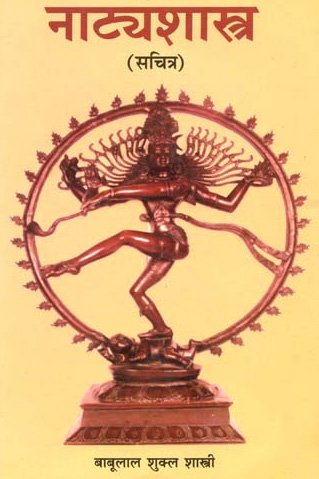
Natyashastra (नाट्यशास्त्र, nāṭyaśāstra) refers to both the ancient Indian tradition (shastra) of performing arts, (natya—theatrics, drama, dance, music), as well as the name of a Sanskrit work dealing with these subjects. It also teaches the rules for composing Dramatic plays (nataka), construction and performance of Theater, and Poetic works (kavya).
See also (Relevant definitions)
Full-text (+253): Abhinaya, Socchvasa, Vikuṇita, Manda, Samunnata, Prakampita, Nirbhugna, Abhugna, Apasrita, Aharyabhinaya, Vacikabhinaya, Vikrishta, Angikabhinaya, Vivartita, Kampita, Nivritta, Prasarita, Vidhuta, Vivartana, Nattana.
Relevant text
Search found 6 books and stories containing Histrionic representation, Histrionic representations; (plurals include: Histrionic representations, Histrionic representationses). You can also click to the full overview containing English textual excerpts. Below are direct links for the most relevant articles:
Gati in Theory and Practice (by Dr. Sujatha Mohan)
Literary and dramatic elements in Nāṭyaśāstra < [Chapter 1 - Nāṭya]
Analysis of technical terms: Tāṇḍava and Lāsya < [Chapter 1 - Nāṭya]
Observations based on Nāṭyaśāstra < [Chapter 5 - Conclusion]
Natyashastra (English) (by Bharata-muni)
Chapter VIII - Gestures of Minor Limbs (upāṅga)
Chapter VI - Sentiments (rasa)
Hastalaksanadipika a critical edition and study (by E. K. Sudha)
5. study of Balaramabharata < [Chapter 3 - Later developments of dramatic techniques]
Arts in the Puranas (study) (by Meena Devadatta Jeste)
3. Four types of Abhinaya < [Chapter 2 - Dance in the Puranas]
5. The concepts of Riti, Vritti and Pravritti < [Chapter 6 - Literature in the Puranas]
4. General topics of Poetics < [Chapter 6 - Literature in the Puranas]
Vishnudharmottara Purana (Art and Architecture) (by Bhagyashree Sarma)
1.3. Elements of Drama (c): Bodily Movements < [Chapter 3 - Drama and Dance]
Theology of Music and Hindu Religion: From Divine Origins to Classical Songs < [Volume 12, Issue 8 (2021)]