Hataka, Hāṭaka, Hāṭakā: 22 definitions
Introduction:
Hataka means something in Hinduism, Sanskrit, Buddhism, Pali, Marathi, Hindi. If you want to know the exact meaning, history, etymology or English translation of this term then check out the descriptions on this page. Add your comment or reference to a book if you want to contribute to this summary article.
Alternative spellings of this word include Hatak.
Images (photo gallery)


In Hinduism
Shaivism
Hāṭakā (हाटका, “golden”):—One of the nine Dūtī presided over by one of the nine bhaivaravas named Yogeśa (emanation of Ananta, who is the central presiding deity of Dūtīcakra), according to the Kubjikāmata-tantra and the Ṣaṭsāhasrasaṃhitā.
Hāṭaka (हाटक) refers to the name of Śiva sitting upon a golden throne (pīṭha) and presiding over the seven pātālas (subterranean paradise), according to Parākhyatantra 5.55. His throne is set with jewels and shines like the rays of glistening gems.
According to Parākhyatantra, “on that throne of excellent gold sits the Śiva (hara) Hāṭaka; he is kindly (susaumya), generous (varada), peaceful (śānta), adorned with all ornaments. Hāṭaka is venerated by countless armies. Since this pātāla, rich in lovely women, shines forcefully (haṭhāt), therefore, plainly, it is called Hāṭaka, a space for meetings for sacrifices, full of ponds and arka shrubs, dense with ...pleasure.”
The Parākhyatantra is an old Śaiva-siddhānta tantra dating from before the 10th century.
Hāṭaka (हाटक) refers to “gold”, according to the Śrīmatottara-tantra, an expansion of the Kubjikāmatatantra: the earliest popular and most authoritative Tantra of the Kubjikā cult. Accordingly, “O goddess, Svacchanda is in the middle, within the abode of the triangle. Very powerful, he has five faces with three times five flaming eyes. [...] He sits on a great lotus and is adorned with a belt on his hips. He is adorned with small bells and a garland of gems. There are anklets on his feet and they are well adorned with necklaces of pearls. He sits on Ananta as a seat and is like heated gold [i.e., tapta-hāṭaka-sannibha]. On Ananta’s seat are seventy billion mantras. He is beautiful, divine, (white) like the stars, snow and the moon.]. [...]”.
Hāṭaka (हाटक) or Hāṭakāgama refers to one of upāgamas (supplementary scriptures) of the Vīrāgama which is one of the twenty-eight Siddhāntāgama: a classification of the Śaiva division of Śaivāgamas. The Śaivāgamas represent the wisdom that has come down from lord Śiva, received by Pārvatī and accepted by Viṣṇu. The purpose of revealing upāgamas (e.g., Hāṭaka Āgama) is to explain more elaborately than that of mūlāgamas (e.g., Vīra-āgama) and to include any new idea if not dealt in mūlāgamas.
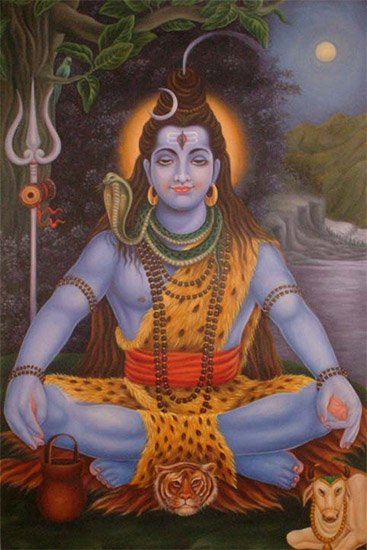
Shaiva (शैव, śaiva) or Shaivism (śaivism) represents a tradition of Hinduism worshiping Shiva as the supreme being. Closely related to Shaktism, Shaiva literature includes a range of scriptures, including Tantras, while the root of this tradition may be traced back to the ancient Vedas.
Purana and Itihasa (epic history)
Hāṭaka (हाटक).—A region to the north of the Himālayas, where the guhyakas lived. Arjuna, during his triumphal tour in the north made the guhyakas his allies. (Sabhā Parva, Chapter 28, Verse 3).
Hāṭaka (हाटक) refers to “gold”, according to the Śivapurāṇa 2.5.2 (“The Prayer of the gods).—Accordingly, as the Gods eulogized Śiva: “[...] Among the mountains you are the Himālaya mountain. Among the cows you are the Kāmadhenu, Among the oceans you are the milk ocean. Among the metals you are gold (hāṭaka). Among the four castes you are the brahmin. O Śiva, among men you are the king. Among holy centres of salvation you are Kāśī. Among the sacred rivers you are the supreme sacred river. [...]”.
1a) Hāṭaka (हाटक).—A liquid by administering which a person feels rejuvenated; used in Atala.*
- * Bhāgavata-purāṇa V. 24. 16.
1b) The gold found in Vitala.*
- * Bhāgavata-purāṇa V. 24. 17.
Hāṭaka (हाटक) is a name mentioned in the Mahābhārata (cf. II.25.3, II.25.5) and represents one of the many proper names used for people and places. Note: The Mahābhārata (mentioning Hāṭaka) is a Sanskrit epic poem consisting of 100,000 ślokas (metrical verses) and is over 2000 years old.
The Purana (पुराण, purāṇas) refers to Sanskrit literature preserving ancient India’s vast cultural history, including historical legends, religious ceremonies, various arts and sciences. The eighteen mahapuranas total over 400,000 shlokas (metrical couplets) and date to at least several centuries BCE.
Languages of India and abroad
Pali-English dictionary
hāṭaka : (nt.) a kind of gold.
Hāṭaka, (nt.) (cp. Sk. hāṭaka, connected with hari; cp. Goth. gulp=E. gold) gold A.I, 215; IV, 255, 258, 262 (where T reads haṭaka, with sātaka as v. l. at all passages); Th.2, 382; J.V, 90. (Page 730)
Pali is the language of the Tipiṭaka, which is the sacred canon of Theravāda Buddhism and contains much of the Buddha’s speech. Closeley related to Sanskrit, both languages are used interchangeably between religions.
Marathi-English dictionary
haṭaka (हटक).—f Calling. Hence (quasi calling to one on his way) stopping or detaining or hindering. v lāva & lāga.
--- OR ---
hāṭaka (हाटक).—n S (Poetry.) Gold.
haṭaka (हटक).—f Calling.
--- OR ---
hāṭaka (हाटक).—n Gold.
Marathi is an Indo-European language having over 70 million native speakers people in (predominantly) Maharashtra India. Marathi, like many other Indo-Aryan languages, evolved from early forms of Prakrit, which itself is a subset of Sanskrit, one of the most ancient languages of the world.
Sanskrit dictionary
Hataka (हतक).—a. [hata iva naṣṭaprāyatvāt kan] Miserable, ill-bred, wretched, low, vile; (mostly at the end of comp.); न खलु विदितास्ते तत्र निवसन्तश्चाणक्यहतकेन (na khalu viditāste tatra nivasantaścāṇakyahatakena) Mu.2; दूषिताः स्थ परिभूताः स्य रामहतकेन (dūṣitāḥ stha paribhūtāḥ sya rāmahatakena) Uttararāmacarita 1.
-kaḥ A low person, coward.
--- OR ---
Hāṭaka (हाटक).—a. (-kī f.) Golden.
-kam 1 Gold; नवहाटकेष्टकचितं ददर्श सः क्षितिपस्य पस्त्यमथ तत्र संसदि (navahāṭakeṣṭakacitaṃ dadarśa saḥ kṣitipasya pastyamatha tatra saṃsadi) Śiśupālavadha 13.63.
2) The thorn-apple.
3) A kind of magical drink; या वै विलायनं प्रविष्टं पुरुषं रसेन हाटकाख्येन साधयित्वा (yā vai vilāyanaṃ praviṣṭaṃ puruṣaṃ rasena hāṭakākhyena sādhayitvā) Bhāgavata 5.24.16.
Hataka (हतक).—m.
(-kaḥ) A coward, a poltroon. f.
(-kā) Adj. Miserable, ill-bred, (generally used at the end of compounds.) E. hata slain, kan aff.
--- OR ---
Hāṭaka (हाटक).—mfn.
(-kaḥ-kā or -kī-kaṃ) Golden, of gold, (as a weight or coin.) n.
(-kaṃ) Gold. E. haṭ to shine, ṇvul aff.
Hataka (हतक).—[hata + ka] (vb. han), I. adj. Miserable (?), [Mālatīmādhava, (ed. Calc.)] 87, 3. Ii. m. A coward, [Uttara Rāmacarita, 2. ed. Calc., 1862.] 30, 7.
--- OR ---
Hāṭaka (हाटक).—I. adj. Golden, [Rāmāyaṇa] 3, 49, 8. Ii. n. Gold, [Pañcatantra] 184. 16.
Hataka (हतक).—[adjective] smitten, slain; cursed, wretched, miserable.
--- OR ---
Hāṭaka (हाटक).—[masculine] sgl. & [plural] [Name] of a country & its inhabitants, [neuter] gold; as adj. ([feminine] ī) golden.
1) Haṭaka (हटक):—[wrong reading] for hāṭaka.
2) Hataka (हतक):—[from han] mf(ikā)n. struck, hit, afflicted by (ifc.; See daiva-)
3) [v.s. ...] cursed, wretched, miserable (ifc. e.g. cāṇakya-h, ‘the wretched Cāṇakya’), [Mṛcchakaṭikā; Mudrārākṣasa] etc.
4) [v.s. ...] m. a low person, coward, [cf. Lexicographers, esp. such as amarasiṃha, halāyudha, hemacandra, etc.]
5) Hāṭaka (हाटक):—m. (said to be [from] √haṭ; perhaps connected with hiraṇya) Name of a country and people, [Mahābhārata]
6) a [particular] magical drink, [Bhāgavata-purāṇa]
7) n. ‘found in Hāṭaka’, gold, [Mahābhārata; Kāvya literature] etc.
8) mf(ī)n. = next, [Śiśupāla-vadha]
1) Hataka (हतक):—(kaḥ) 1. m. A coward.
2) Hāṭaka (हाटक):—[(kaḥ-kā-kaṃ) a.] Of gold. n. Gold.
Hataka (हतक):—(von hata) adj. (f. hatikā) geschlagen, getroffen: daiva vom Schicksal getroffen so v. a. unglückselig [morgenländischen Gesellschaft 27, 58.] von Personen so v. a. nichtsnutzig, verwünscht, verflucht [Trikāṇḍaśeṣa.3,1,25.] [Halāyudha.2,223.] [Oxforder Handschriften 259,a,19.] am Ende eines comp. nach dem verwünschten Personennamen [GAṆARATNAM.] zu [Pāṇini’s acht Bücher 2, 1, 53.] cārudatta (so ist zu schreiben) [Mṛcchakaṭikā 63, 12.] rāma [UTTARAR. 22, 15 (30, 7. 8).] [MĀLATĪM. 87, 4.] [Sāhityadarpana 162, 10. 181, 3.] [Prabodhacandrodaja 67, 15. 69, 9. 70, 12. 85, 17.] daiva das verwünschte Schicksal [89, 17.] — Vgl. mataṅga .
--- OR ---
Hāṭaka (हाटक):—
1) m. pl. Nomen proprium eines Volkes [Mahābhārata 2, 1042.] sg. Name des von ihm bewohnten Landes [1040.] —
2) n. (aus Hāṭaka gewonnenes) Gold [Amarakoṣa 2, 9, 94.] [Hemacandra’s Abhidhānacintāmaṇi 1043.] [Halāyudha 2, 18.] [Ratnamālā 87.] [Mahābhārata 6, 781. 12, 6398.] [Rāmāyaṇa 1, 14, 25] (haṭaka gedr.). [?45, 42. 3, 49, 8. 50, 2. 79, 8. 4, 2, 15. 6, 19, 44. 7, 23, 5, 37. Śiśupālavadha 13, 63. Varāhamihira’s Bṛhajjātaka 27 (25), 27. Rājataraṅgiṇī 1, 110. 3, 529. Bhāgavatapurāṇa 4, 22, 6. 5, 24, 17] (mythische Erklärung). [PAÑCAR.3,15,6.] [Pañcatantra 184,16. 236,6.] [Oxforder Handschriften 82,a, No. 138,] [Śloka 2. 234,b,22.] —
3) adj. oxyt. golden [Pāṇini’s acht Bücher 4, 3, 153, Scholiast] —
4) m. ein best. Zaubertrank [Bhāgavatapurāṇa 5, 24, 16.] —
5) f. ī Nomen proprium eines mythischen Flusses in der Unterwelt [Bhāgavatapurāṇa 5, 24, 17.] — Vgl. kara, pari .
Sanskrit, also spelled संस्कृतम् (saṃskṛtam), is an ancient language of India commonly seen as the grandmother of the Indo-European language family (even English!). Closely allied with Prakrit and Pali, Sanskrit is more exhaustive in both grammar and terms and has the most extensive collection of literature in the world, greatly surpassing its sister-languages Greek and Latin.
Hindi dictionary
1) Hataka (हतक) [Also spelled hatak]:—(nf) insult; defamation; —[ijjata] defamation.
2) Hāṭaka (हाटक):—(nm) gold.
...
Kannada-English dictionary
Hataka (ಹತಕ):—[noun] an iniquitous, wicked man.
--- OR ---
Hāṭaka (ಹಾಟಕ):—
1) [noun] gold.
2) [noun] the fruit of certain hawthorn trees of the genus Crataegus; hawthorn; thorn apple.
--- OR ---
Hātaka (ಹಾತಕ):—[noun] a sinful act, as transgression of religious, moral rules; a sin.
Kannada is a Dravidian language (as opposed to the Indo-European language family) mainly spoken in the southwestern region of India.
Nepali dictionary
1) Haṭaka (हटक):—n. 1. prohibition; expulsion; objection; 2. outlasting; boycotting;
2) Hataka (हतक):—adj. 1. dead; 2. mean; trivial; wicked;
Nepali is the primary language of the Nepalese people counting almost 20 million native speakers. The country of Nepal is situated in the Himalaya mountain range to the north of India.
See also (Relevant definitions)
Starts with (+3): Hatakadi, Hatakagiri, Hatakahadika, Hatakahataka, Hatakalmasha, Hatakam, Hatakama, Hatakamaya, Hatakambara, Hatakampari, Hatakana, Hatakanem, Hatakanka, Hatakantaka, Hatakaprabhasa, Hatakaravata, Hatakaravati, Hatakari, Hatakarina, Hatakavettu.
Full-text (+21): Hatakeshvara, Hatakamaya, Hatakeshana, Parihataka, Hatakesha, Daivahataka, Hatakagiri, Hatakam, Bandhudagdha, He zha jia, Atakan, Hata, Hatakahadika, Hatak, Hatakaprabhasa, A luo po, Matangahataka, Hatakiya, Hataki, Hatakeshvaramahatmya.
Relevant text
Search found 40 books and stories containing Hataka, Hāṭaka, Hāṭakā, Haṭaka, Hātaka; (plurals include: Hatakas, Hāṭakas, Hāṭakās, Haṭakas, Hātakas). You can also click to the full overview containing English textual excerpts. Below are direct links for the most relevant articles:
Shiva Purana [sanskrit/english]
Anguttara Nikaya (Numbered Discourses)
Discourse 8.42: Vitthatūposatha-sutta < [Uposatha-vagga: Sabbath]
Discourse 8.45: Bojjha-sutta < [Uposatha-vagga: Sabbath]
Discourse 8.43: Visākhā-sutta < [Uposatha-vagga: Sabbath]
Alchemy in India and China (by Vijaya Jayant Deshpande)
1. Introduction (the history of Alchemy in India) < [Chapter 2 - Alchemy in India]
2. The Philosophy of Mercury < [Chapter 2 - Alchemy in India]
4. Buddhist Monks and Their Interests in Alchemy < [Chapter 5 - Transmission of Alchemical and Chemical ideas]
Kathasaritsagara [Sanskrit/English] (by C. H. Tawney)
List of Mahabharata people and places (by Laxman Burdak)
Sahitya-kaumudi by Baladeva Vidyabhushana (by Gaurapada Dāsa)
Text 10.81 < [Chapter 10 - Ornaments of Meaning]