Grihakshata, Gṛhakṣata, Griha-kshata: 4 definitions
Introduction:
Grihakshata means something in Hinduism, Sanskrit. If you want to know the exact meaning, history, etymology or English translation of this term then check out the descriptions on this page. Add your comment or reference to a book if you want to contribute to this summary article.
The Sanskrit term Gṛhakṣata can be transliterated into English as Grhaksata or Grihakshata, using the IAST transliteration scheme (?).
In Hinduism
Vastushastra (architecture)
Gṛhakṣata (गृहक्षत) refers to one of the deities to be installed in the ground plan for the construction of houses, according to the Bṛhatkālottara, chapter 112 (the vāstuyāga-paṭala).—The plan for the construction is always in the form of a square. That square is divided into a grid of cells (padas). [...] Once these padas have been laid out, deities [e.g., Gṛhakṣata] are installed in them. In the most common pattern 45 deities are installed.
Gṛhakṣata as a doorway deity is associated with the Nakṣatra called Mūla and the consequence is mṛtyu. [...] The Mayasaṃgraha (verse 5.156-187) describes a design for a 9-by-9-part pura, a residential complex for a community and its lead figure. [...] This record lists a place for a store room at Gṛhakṣata.
Gṛhakṣata (गृहक्षत) is the presiding deity the building-plot associated with the object Śrī, as discussed in the thesis entitled “concept of ritual deposit of Khmer temples in northeastern Thailand from 10th-13th century A.D.” by Naiyana Munparn.—(Also see: Acharya, Architecture of Mānasāra, 111).
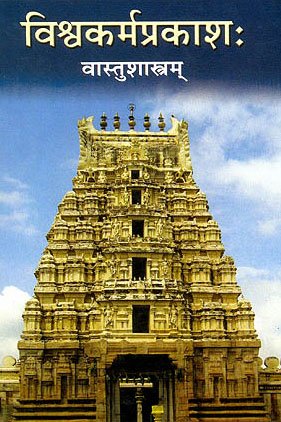
Vastushastra (वास्तुशास्त्र, vāstuśāstra) refers to the ancient Indian science (shastra) of architecture (vastu), dealing with topics such architecture, sculpture, town-building, fort building and various other constructions. Vastu also deals with the philosophy of the architectural relation with the cosmic universe.
Languages of India and abroad
Sanskrit dictionary
Gṛhakṣata (गृहक्षत):—[=gṛha-kṣata] [from gṛha > gṛbh] m. a kind of divine being, [Vāstuvidyā; Hemādri’s Caturvarga-cintāmaṇi]
Gṛhakṣata (गृहक्षत):—m. ein best. Genius [Hemādri’s Caturvargacintāmaṇi 1,651,18.654,8.] [Viśvakarma’s Vāstuvidyā 510.]
Sanskrit, also spelled संस्कृतम् (saṃskṛtam), is an ancient language of India commonly seen as the grandmother of the Indo-European language family (even English!). Closely allied with Prakrit and Pali, Sanskrit is more exhaustive in both grammar and terms and has the most extensive collection of literature in the world, greatly surpassing its sister-languages Greek and Latin.
See also (Relevant definitions)
Partial matches (+0): Kshata, Griha.
Full-text (+21): Catushtaya, Gayaka, Dhanus, Khadga, Sthana, Samyamin, Sutavriddhi, Panavriddhi, Bhakshyavriddhi, Vyakhyana, Atmalokana, Alokanasiddhi, Vipulamatha, Alokana, Samshraya, Gayakasthana, Vyakhyanasamshraya, Saukhya, Cara, Sukha.
Relevant text
Search found 8 books and stories containing Grihakshata, Gṛha-kṣata, Grha-ksata, Gṛhakṣata, Grhaksata, Griha-kshata; (plurals include: Grihakshatas, kṣatas, ksatas, Gṛhakṣatas, Grhaksatas, kshatas). You can also click to the full overview containing English textual excerpts. Below are direct links for the most relevant articles:
Manasara (English translation) (by Prasanna Kumar Acharya)
Chapter 32 - The temples of attendant deities (parivāra)
Chapter 36 - The situation and measurement of dwelling houses (gṛha-māna-sthāna)
Agni Purana (by N. Gangadharan)
Architectural data in the Puranas (by Sharda Devi)
64 and 81 squares diagrams < [Chapter 2 - What is Vastu]
Mayamata and Building Construction (study) (by Ripan Ghosh)
Part 3.5 - Sandhidoṣa (Error in the joinery) < [Chapter 5 - Core Construction of the Building]
Part 8.14 - Distribution of other appurtenances < [Chapter 5 - Core Construction of the Building]
Part 8.8 - Arrangement of Annālaya and others < [Chapter 5 - Core Construction of the Building]
Vastu-shastra (Introduction to Indian architecture) (by D. N. Shukla)
Chapter 5 - Planning of Śālās: The House Plans and Building Byelaws < [Volume 3 - House Architecture]
Chapter 7 - The Principal Components < [Volume 3 - House Architecture]
Chapter 5 - Folk-Planning (Jātivarṇa-adhivāsa) < [Volume 2 - Town Planning]
Temple worship and Rituals as per Shaiva Agamas (by Gayathri Balasubramanian)