Gasha, Gāśā: 5 definitions
Introduction:
Gasha means something in Buddhism, Pali, Marathi, Jainism, Prakrit, Hindi. If you want to know the exact meaning, history, etymology or English translation of this term then check out the descriptions on this page. Add your comment or reference to a book if you want to contribute to this summary article.
The Sanskrit term Gāśā can be transliterated into English as Gasa or Gasha, using the IAST transliteration scheme (?).
Alternative spellings of this word include Gash.
Images (photo gallery)

In Buddhism
Mahayana (major branch of Buddhism)
Source: archive.org: Bulletin of the French School of the Far East (volume 5)1) Gaśa (गश) (in Chinese: Kia-chö) [=Kāśī/Khaṣa?] refers to one of the fifty-five kingdoms enumerated in chapter 17 of the Candragarbha: the 55th section of the Mahāsaṃnipāta-sūtra, a large compilation of Sūtras (texts) in Mahāyāna Buddhism partly available in Sanskrit, Tibetan and Chinese.—In the Candragarbhasūtra, the Bhagavat invites all classes of Gods and Deities to protect the Law [dharma?] and the faithful in their respective districts.—In Gaśa, the following deities are appointed (among others): The Gandharva Mahoraga; the Goddess Aruṇī.
2) Gaṣa (गष) [?] (in Chinese: Kia-cha) is the name of an ancient kingdom associated with Viśākhā or Viśākhānakṣatra, as mentioned in chapter 18.
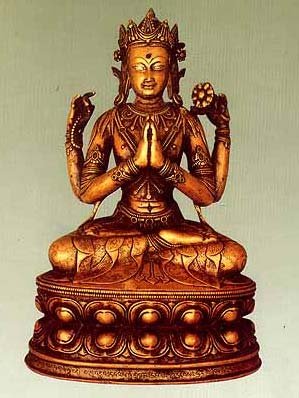
Mahayana (महायान, mahāyāna) is a major branch of Buddhism focusing on the path of a Bodhisattva (spiritual aspirants/ enlightened beings). Extant literature is vast and primarely composed in the Sanskrit language. There are many sūtras of which some of the earliest are the various Prajñāpāramitā sūtras.
Languages of India and abroad
Marathi-English dictionary
Source: DDSA: The Molesworth Marathi and English Dictionarygāśā (गाशा).—m ( A) A small sitting cloth; made usually of cotton cloth overlaid with broad cloth. Used esp. as housings or ornamental covering over the saddle. gāśā guṇḍāḷaṇēṃ To gather up and depart; viz. to run away; or to die.
Source: DDSA: The Aryabhusan school dictionary, Marathi-Englishgāśā (गाशा).—m A small sitting cloth used esp. as housings or ornamental covering over the saddle. gāśā guṇḍāḷaṇēṃ Gather up and depart; viz. run away; or die.
Marathi is an Indo-European language having over 70 million native speakers people in (predominantly) Maharashtra India. Marathi, like many other Indo-Aryan languages, evolved from early forms of Prakrit, which itself is a subset of Sanskrit, one of the most ancient languages of the world.
Hindi dictionary
Source: DDSA: A practical Hindi-English dictionaryGaśa (गश) [Also spelled gash]:—(nm) swoon, fainting fit; —[ānā/khānā] to faint, to swoon.
...
Prakrit-English dictionary
Source: DDSA: Paia-sadda-mahannavo; a comprehensive Prakrit Hindi dictionary1) Gasa (गस) in the Prakrit language is related to the Sanskrit word: Gras.
2) Gāsa (गास) also relates to the Sanskrit word: Grāsa.
3) Gāsa (गास) also relates to the Sanskrit word: Grāsa.
Prakrit is an ancient language closely associated with both Pali and Sanskrit. Jain literature is often composed in this language or sub-dialects, such as the Agamas and their commentaries which are written in Ardhamagadhi and Maharashtri Prakrit. The earliest extant texts can be dated to as early as the 4th century BCE although core portions might be older.
See also (Relevant definitions)
Starts with: Gasha-gasha, Gasha-gasha-chedi, Gasha-gasha-tol, Gashagasha, Gashapu.
Ends with: Baragasha, Garagasha, Gasha-gasha, Gashagasha, Lingasha, Pingasha, Pitangasha, Pravibhagasha, Umukagasha, Vibhagasha.
Full-text: Gasha-gasha-chedi, Gasha-gasha, Gasha-gasha-tol, Gasa kigere, Grasa, Gras, Gash, Tangi, Aruṇi, Mahoraga, Vishakha, Agasa.
Relevant text
Search found 1 books and stories containing Gasha, Gāśā, Gāsa, Gasa, Gaśa, Gaṣa; (plurals include: Gashas, Gāśās, Gāsas, Gasas, Gaśas, Gaṣas). You can also click to the full overview containing English textual excerpts. Below are direct links for the most relevant articles:
Indian Medicinal Plants (by Kanhoba Ranchoddas Kirtikar)
58. Papaver rhoeas, Linn. < [Papaveraceae (poppy family)]
60. Papaver somniferum, Linn. < [Papaveraceae (poppy family)]