Ekajati, Eka-jati, Ekajāti: 12 definitions
Introduction:
Ekajati means something in Buddhism, Pali, Hinduism, Sanskrit. If you want to know the exact meaning, history, etymology or English translation of this term then check out the descriptions on this page. Add your comment or reference to a book if you want to contribute to this summary article.
In Hinduism
Purana and Itihasa (epic history)
Ekajāti (एकजाति).—Śūdras.*
- * Matsya-purāṇa 227. 72, 82.

The Purana (पुराण, purāṇas) refers to Sanskrit literature preserving ancient India’s vast cultural history, including historical legends, religious ceremonies, various arts and sciences. The eighteen mahapuranas total over 400,000 shlokas (metrical couplets) and date to at least several centuries BCE.
In Buddhism
Mahayana (major branch of Buddhism)
Ekajāti (एकजाति) refers to “one birth”, according to the Gaganagañjaparipṛcchā: the eighth chapter of the Mahāsaṃnipāta (a collection of Mahāyāna Buddhist Sūtras).—Accordingly, “What then, son of good family, is the recollection of gods (devānusmṛti), which is authorized by the Lord for Bodhisattvas? It is the recollection of two assemblies of gods. What are these two? The gods of the Pure Abode, and the Bodhisattvas hindered by only one birth (ekajāti-pratibaddha-bodhisattva), who dwell in the Tuṣita Heaven. In that the Bodhisattva recollects the gods of the Pure Abode. Further, the Bodhisattvas who are hindered by only one birth, and who dwell in the Tuṣita Heaven recollect ten qualities as the summit. What are those ten qualities?”
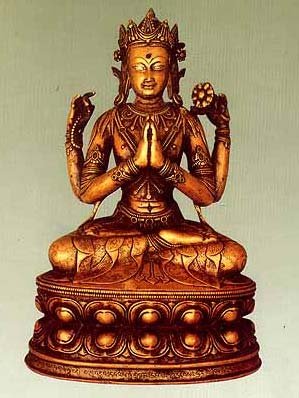
Mahayana (महायान, mahāyāna) is a major branch of Buddhism focusing on the path of a Bodhisattva (spiritual aspirants/ enlightened beings). Extant literature is vast and primarely composed in the Sanskrit language. There are many sūtras of which some of the earliest are the various Prajñāpāramitā sūtras.
Languages of India and abroad
Sanskrit dictionary
Ekajāti (एकजाति).—a.
1) once born.
2) belonging to the same family or caste.
-tiḥ a Śūdra (opp. dvijanman); ब्राह्मणः क्षत्रियो वैश्यस्त्रयो वर्णा द्विजातयः । चतुर्थ एकजातिस्तु शूद्रो नास्ति तु पञ्चमः (brāhmaṇaḥ kṣatriyo vaiśyastrayo varṇā dvijātayaḥ | caturtha ekajātistu śūdro nāsti tu pañcamaḥ) || Manusmṛti 1.4;8.27.
Ekajāti is a Sanskrit compound consisting of the terms eka and jāti (जाति).
Ekajaṭī (एकजटी) or Ekajaṭā.—(1): Mahāvyutpatti 4277 (compare Tārā 4280).
Ekajāti (एकजाति).—mfn. (-tiḥ-tiḥ-ti) 1. Of the same caste. 2. Once born. m.
(-taḥ) A Sudra. E. eka one, and jāti birth or caste: not being regenerated by investiture, &c.
Ekajāti (एकजाति).—1. adj. having only one birth, [Mānavadharmaśāstra] 10, 4. 2. belonging to the same kind, [Suśruta] 2, 289, 12. Ii. m. a Śūdra, [Mānavadharmaśāstra] 8, 270.
Ekajāti is a Sanskrit compound consisting of the terms eka and jāti (जाति).
Ekajāti (एकजाति).—[adjective] having (only) one birth (cf. dvijāti) or belonging to the same family.
1) Ekajāti (एकजाति):—[=eka-jāti] [from eka] mfn. once-born (as a Śūdra), [Gautama-dharma-śāstra x, 50; Manu-smṛti x, 4]
2) [v.s. ...] of the same species or kind (as animals), [Suśruta]
3) [v.s. ...] m. a Śūdra, [Manu-smṛti viii, 270.]
Ekajāti (एकजाति):—[eka-jāti] (tiḥ-tiḥ-ti) a. Of the same caste. m. A Sūdra.
Ekajāti (एकजाति):—(eka + jāti) adj.
1) nur eine Geburt habend: brāhmaṇaḥ kṣatriyo vaiśyastrayo varṇā dvijātayaḥ . caturtha ekajātistu śūdro nāsti tu pañcamaḥ .. [Manu’s Gesetzbuch 10, 4.] subst. ein Śūdra: ekajātirdvijātīṃstu vācā dāruṇayā kṣipan [8, 270.] —
2) zu einem und demselben Geschlecht —, zu einer und derselben Art gehörig (kīṭa) [Suśruta 2, 289, 12. 291, 4. 20] (jātī).
Ekajāti (एकजाति):——
1) Adj. — a) nur eine Geburt habend (Gegens. dvijāti [Gautama's Dharmaśāstra] — b) zu einem und demselben Geschlecht — zu einer und derselben Art gehörig. —
2) m. ein Śūdra.
Sanskrit, also spelled संस्कृतम् (saṃskṛtam), is an ancient language of India commonly seen as the grandmother of the Indo-European language family (even English!). Closely allied with Prakrit and Pali, Sanskrit is more exhaustive in both grammar and terms and has the most extensive collection of literature in the world, greatly surpassing its sister-languages Greek and Latin.
Kannada-English dictionary
Ēkajāti (ಏಕಜಾತಿ):—
1) [adjective] that is born only once; not having multiple births or birth-like religious consecration or sanctification.
2) [adjective] of or belonging to the same type, class, quality, family order, etc.
--- OR ---
Ēkajāti (ಏಕಜಾತಿ):—[noun] a man belonging to Śudra class in Hindu social system.
Kannada is a Dravidian language (as opposed to the Indo-European language family) mainly spoken in the southwestern region of India.
See also (Relevant definitions)
Partial matches (+0): Eka, Jati.
Starts with (+0): Ekajatibaddha, Ekajatiekamati, Ekajatipratibaddha, Ekajatitantra, Ekajatiya.
Full-text (+0): Ekajatipratibaddha, Yi sheng bu chu, Ekajatibaddha, Ekajatitantra, Ekajatiya, Yi ji luo sha fa, Ekajata, Zui hou shen, Xi shu yi sheng, Yi sheng suo xi, Zui hou shen pu sa, Abhisheka, Yi sheng bu chu pu sa, Yi ji luo sha nu, Pratibaddha, Mennagde, Candishvari, Yi ji luo sha wang pu sa, Ye dao ming qi.
Relevant text
Search found 9 books and stories containing Ekajati, Eka-jati, Eka-jāti, Ekajāti, Ekajaṭī, Ēkajāti; (plurals include: Ekajatis, jatis, jātis, Ekajātis, Ekajaṭīs, Ēkajātis). You can also click to the full overview containing English textual excerpts. Below are direct links for the most relevant articles:
Dictionaries of Indian languages (Kosha)
Page 487 < [Bengali-Hindi-English, Volume 2]
Page 393 < [Hindi-Kannada-English Volume 2]
Page 514 < [Hindi-Malayalam-English Volume 1]
Manusmriti with the Commentary of Medhatithi (by Ganganatha Jha)
Verse 8.270 < [Section XLI - Verbal Assault (Abuse and Defamation)]
Kailash: Journal of Himalayan Studies
Part 48 - Guide to Candiswari < [A Buddhist Guide to the Power Places of the Kathmandu Valley]
Part 41 - Guide to Sankhu Bajra Jogini < [A Buddhist Guide to the Power Places of the Kathmandu Valley]
Part 9 - Guide to the Karnadip cremation ground < [A Buddhist Guide to the Power Places of the Kathmandu Valley]
Chaitanya Bhagavata (by Bhumipati Dāsa)
Verse 2.23.253 < [Chapter 23 - Wandering about Navadvīpa On the Day the Lord Delivered the Kazi]
Verse 1.2.58 < [Chapter 2 - The Lord’s Appearance]
Blue Annals (deb-ther sngon-po) (by George N. Roerich)
Chapter 6 - First incarnation series (vi): rang byung rdo rje (Karmapa III) < [Book 8 - The famous Dakpo Kagyü (traditions)]
Chapter 1 - The first lineage (brgyud pa dang po’i skabs) < [Book 12 - Peace-Making Lineages]
Chapter 3 - Guhyasamāja-tantra system of Jñānapāda < [Book 7 - The preaching of the Tantras]
A Dictionary Of Chinese Buddhist Terms (by William Edward Soothill)