Dvivacana, Dvi-vacana: 13 definitions
Introduction:
Dvivacana means something in Hinduism, Sanskrit, Buddhism, Pali, Marathi. If you want to know the exact meaning, history, etymology or English translation of this term then check out the descriptions on this page. Add your comment or reference to a book if you want to contribute to this summary article.
Alternative spellings of this word include Dvivachana.
In Hinduism
Vyakarana (Sanskrit grammar)
Dvivacana (द्विवचन).—A case affix of the dual number; dual number; a word in the dual number; cf M. Bh. on I. -1,11, I. 4.21 etc.: cf. द्वयोरर्थयोर्वचनं द्विवचनम् (dvayorarthayorvacanaṃ dvivacanam) Kas. on P. V. 3.57.
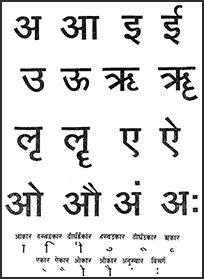
Vyakarana (व्याकरण, vyākaraṇa) refers to Sanskrit grammar and represents one of the six additional sciences (vedanga) to be studied along with the Vedas. Vyakarana concerns itself with the rules of Sanskrit grammar and linguistic analysis in order to establish the correct context of words and sentences.
Languages of India and abroad
Marathi-English dictionary
dvivacana (द्विवचन).—n S In grammar. The dual.
dvivacana (द्विवचन).—n The dual.
Marathi is an Indo-European language having over 70 million native speakers people in (predominantly) Maharashtra India. Marathi, like many other Indo-Aryan languages, evolved from early forms of Prakrit, which itself is a subset of Sanskrit, one of the most ancient languages of the world.
Sanskrit dictionary
Dvivacana (द्विवचन).—the dual number in grammar.
Derivable forms: dvivacanam (द्विवचनम्).
Dvivacana is a Sanskrit compound consisting of the terms dvi and vacana (वचन).
Dvivacana (द्विवचन).—[neuter] the dual & its endings ([grammar]).
Dvivacana (द्विवचन):—[=dvi-vacana] [from dvi] n. the dual and its endings, [Pāṇini 1-4, 102 etc.]
Dvivacana (द्विवचन):—(dvi + va) n. der Dual, die Casus und Personalendungen des Duals [Prātiśākhya zur Vājasaneyisaṃhitā 1, 93. 5, 28.] [Pāṇini’s acht Bücher 1, 4, 102. fg. 22. 1, 11. 2, 63. 7, 1, 77. 2, 92.]
--- OR ---
Dvivacana (द्विवचन):—[Prātiśākha zum Atharvaveda 1, 75. 2, 47.]
Dvivacana (द्विवचन):—und vacas n. Dual , die Casusund Personalendungen des Duals.
Dvivacana (द्विवचन) in the Sanskrit language is related to the Prakrit word: Duvayaṇa.
Sanskrit, also spelled संस्कृतम् (saṃskṛtam), is an ancient language of India commonly seen as the grandmother of the Indo-European language family (even English!). Closely allied with Prakrit and Pali, Sanskrit is more exhaustive in both grammar and terms and has the most extensive collection of literature in the world, greatly surpassing its sister-languages Greek and Latin.
Kannada-English dictionary
Dvivacana (ದ್ವಿವಚನ):—[noun] (gram.) the grammatical number referring to two persons, animals, things, etc as in Saṃskṛta.
Kannada is a Dravidian language (as opposed to the Indo-European language family) mainly spoken in the southwestern region of India.
Nepali dictionary
Dvivacana (द्विवचन):—n. Gram. dual number;
Nepali is the primary language of the Nepalese people counting almost 20 million native speakers. The country of Nepal is situated in the Himalaya mountain range to the north of India.
Pali-English dictionary
dvivacana (ဒွိဝစန) [(na) (န)]—
[dvi+vacana]
[ဒွိ+ဝစန]
[Pali to Burmese]
dvivacana—
(Burmese text): (၁) ၂-ကြိမ်-၂-ခါ-ဆိုခြင်း (အာမေဍိတ်စကား)။ (တိ) (၂) ဝုစ် ၂-ပါးရှိသော (ပုဒ်)။
(Auto-Translation): (1) Two-time saying (amathetic speech). (specifically) (2) Having two parts (phrase).

Pali is the language of the Tipiṭaka, which is the sacred canon of Theravāda Buddhism and contains much of the Buddha’s speech. Closeley related to Sanskrit, both languages are used interchangeably between religions.
See also (Relevant definitions)
Partial matches (+0): Dvi, Vacana.
Starts with (+0): Dvivacananta.
Full-text (+0): Dvivacananta, Dwivachan, Sattva, Dvaivacana, Tuvivacanam, Vacana, Duvayana, Vaivacana, Sasamkhya, Dvi, Atishayika.
Relevant text
Search found 8 books and stories containing Dvivacana, Dvi-vacana; (plurals include: Dvivacanas, vacanas). You can also click to the full overview containing English textual excerpts. Below are direct links for the most relevant articles:
Dictionaries of Indian languages (Kosha)
Page 538 < [Malayalam-English-Kannada (1 volume)]
Page 430 < [Kannada-English-Malayalam (1 volume)]
Page 221 < [Telugu-English-Malayalam (1 volume)]
Sahitya-kaumudi by Baladeva Vidyabhushana (by Gaurapada Dāsa)
Text 7.55 < [Chapter 7 - Literary Faults]
Notices of Sanskrit Manuscripts (by Rajendralala Mitra)
Chaitanya Bhagavata (by Bhumipati Dāsa)
Verse 1.1.1 < [Chapter 1 - Summary of Lord Gaura’s Pastimes]
A Study of Asiddha in the Ashtadhyayi (by Sanhita L. Joshi)
Part 1.3 - Remarks on the word “abhat” < [Chapter 3 - Nature of the Abhiya section]
Soundarya Lahari of Shri Shankara (Study) (by Seetha N.)
Shri Shankara’s works < [The author, his life, date and contributions]