Dvaparayuga, Dvapara-yuga, Dvāparayuga, Dwapar-yug: 11 definitions
Introduction:
Dvaparayuga means something in Buddhism, Pali, Hinduism, Sanskrit, the history of ancient India. If you want to know the exact meaning, history, etymology or English translation of this term then check out the descriptions on this page. Add your comment or reference to a book if you want to contribute to this summary article.
Images (photo gallery)

In Hinduism
Purana and Itihasa (epic history)
Dvāparayuga (द्वापरयुग).—See under Yuga.
Dvāparayuga (द्वापरयुग) refers to a time period consisting of two times the amount of one Kaliyuga, according to the Nīlamatapurāṇa. The passage of the sun through one sign of the zodiac, we are informed, is called a solar month. Two months make a season, three seasons an Ayana and two Ayanas a year. Four lacs and thirty two thousand years make Kaliyuga. Twice as much as Kaliyuga is Dvāpara, thrice is Tretā and four yugas make one Caturyuga and seventy one Caturyugas make one Manvantara.
The Purana (पुराण, purāṇas) refers to Sanskrit literature preserving ancient India’s vast cultural history, including historical legends, religious ceremonies, various arts and sciences. The eighteen mahapuranas total over 400,000 shlokas (metrical couplets) and date to at least several centuries BCE.
Vaishnavism (Vaishava dharma)
Dvāparayuga (द्वापरयुग) refers to “one of the four ages: Satya, Treta, Dvāpara and Kali. In Dvāpara-yuga people attained perfection by performing excellent worship of the deity incarnation of the Lord”. (cf. Glossary page from Śrīmad-Bhagavad-Gītā).
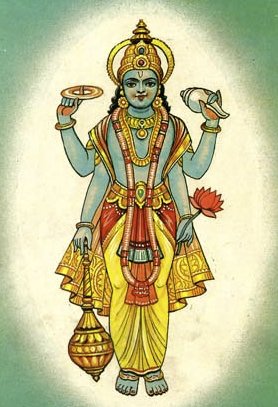
Vaishnava (वैष्णव, vaiṣṇava) or vaishnavism (vaiṣṇavism) represents a tradition of Hinduism worshipping Vishnu as the supreme Lord. Similar to the Shaktism and Shaivism traditions, Vaishnavism also developed as an individual movement, famous for its exposition of the dashavatara (‘ten avatars of Vishnu’).
Shaktism
Dvāparayuga (द्वापरयुग) or Dvāpara refers to the age associated with Pūrṇagiri, one of the sacred seats (pīṭha), according to the Manthānabhairavatantra, a vast sprawling work that belongs to a corpus of Tantric texts concerned with the worship of the goddess Kubjikā.—The Kumārikākhaṇḍa displays most of the many new developments that took place after the revelation of the Kubjikāmatatantra including those concerning the sacred seats. [...] Although the seats are the same five described in the Kubjikāmatatantra and its expansions, their contents [i.e., the Dvāparayuga] and the beings who inhabit them are quite different.
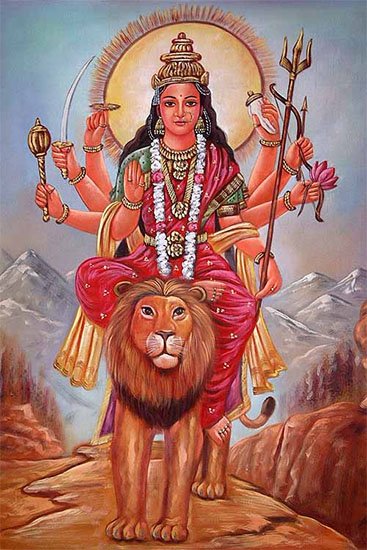
Shakta (शाक्त, śākta) or Shaktism (śāktism) represents a tradition of Hinduism where the Goddess (Devi) is revered and worshipped. Shakta literature includes a range of scriptures, including various Agamas and Tantras, although its roots may be traced back to the Vedas.
Ayurveda (science of life)
Veterinary Medicine (The study and treatment of Animals)
Dvāparayuga (द्वापरयुग) refers to the “third age” (during which certain elephants appeared), according to the 15th century Mātaṅgalīlā composed by Nīlakaṇṭha in 263 Sanskrit verses, dealing with elephantology in ancient India, focusing on the science of management and treatment of elephants.—[Cf. chapter 1, “on the origin of elephants”]: “[...] ‘State’ elephants, furnished with their characteristic marks, were produced (prevailingly) in the (‘golden’) kṛta age; elephants of the ‘slow’ caste in the (second) treta; in the (third) age called dvāpara (=dvāparayuga) [dvāparākhye yuge ca], these elephants known as ‘deer’; in this very kali age those of ‘mixed’ caste. Here the production of elephants according to their different castes is set forth, each appropriate to its association with (its respective) world age”.
Āyurveda (आयुर्वेद, ayurveda) is a branch of Indian science dealing with medicine, herbalism, taxology, anatomy, surgery, alchemy and related topics. Traditional practice of Āyurveda in ancient India dates back to at least the first millenium BC. Literature is commonly written in Sanskrit using various poetic metres.
General definition (in Hinduism)
Dvapara Yuga (द्वापर युग) is the third out of four yugas, or ages, described in the scriptures of Hinduism. This yuga comes after Treta Yuga and before Kali Yuga. According to the Puranas this yuga ended at the moment when Krishna returned to his eternal abode of Vaikuntha. According to the Bhagavata Purana, the Dvapara Yuga lasts 864,000 years.
There are only two pillars left of religion in the Dvapara Yuga: Compassion and Truthfulness. Lord Vishnu assumes the colour yellow and the Vedas are categorized into four parts that is Rig, Sama, Yajur and Atharva. During these times the Brahmins are knowledgeable of two, sometimes three Vedas, but rarely have studied all the four Vedas thoroughly. Accordingly, because of this categorization, different actions and activities come into existence.
In Buddhism
Tibetan Buddhism (Vajrayana or tantric Buddhism)
Dvaparayuga (द्वपरयुग) refers to one of the “Four Ages” (in Indic mythology) which are known in Tibetan as: dus bzhi.—The full list is: kṛta, treta, dvapara and kali-yugas.
Tibetan Buddhism includes schools such as Nyingma, Kadampa, Kagyu and Gelug. Their primary canon of literature is divided in two broad categories: The Kangyur, which consists of Buddha’s words, and the Tengyur, which includes commentaries from various sources. Esotericism and tantra techniques (vajrayāna) are collected indepently.
General definition (in Buddhism)
Dvāparayuga (द्वापरयुग) or simply Dvāpara refers to the “twofold age” and represents the third of the “four ages” (yuga) as defined in the Dharma-saṃgraha (section 88). The Dharma-samgraha (Dharmasangraha) is an extensive glossary of Buddhist technical terms in Sanskrit (e.g., dvāpara-yuga). The work is attributed to Nagarjuna who lived around the 2nd century A.D.
India history and geography
The dvaparayuga refers to the third of the four yugas.—The anniversary of the first day ot the Dvapara-yuga falls on the thirteenth of the waning moon in the mouth of Bhadra (August-September) of which Shri Krishna and Buddhi were the incarnations.
The history of India traces the identification of countries, villages, towns and other regions of India, as well as mythology, zoology, royal dynasties, rulers, tribes, local festivities and traditions and regional languages. Ancient India enjoyed religious freedom and encourages the path of Dharma, a concept common to Buddhism, Hinduism, and Jainism.
Languages of India and abroad
Kannada-English dictionary
Dvāparayuga (ದ್ವಾಪರಯುಗ):—[noun] = ದ್ವಾಪರ - [dvapara -] 1.
Kannada is a Dravidian language (as opposed to the Indo-European language family) mainly spoken in the southwestern region of India.
Sanskrit dictionary
Dvāparayuga (in Sanskrit) can be associated with the following Chinese terms:
1) 二時 [èr shí]: “two time periods”.
Note: dvāparayuga can be alternatively written as: dvā-para-yuga.
Sanskrit, also spelled संस्कृतम् (saṃskṛtam), is an ancient language of India commonly seen as the grandmother of the Indo-European language family (even English!). Closely allied with Prakrit and Pali, Sanskrit is more exhaustive in both grammar and terms and has the most extensive collection of literature in the world, greatly surpassing its sister-languages Greek and Latin.
See also (Relevant definitions)
Partial matches (+0): Dvapara, Yug, Dva, Yuga, Para.
Full-text (+50): Dvapara, Yuga, Vedavyasa, Four ages, Tretayuga, Jambavat, Vyasa, Krishna, Mahijit, Droni, Upodghatapada, Tapasya, Nandapura, Vijaya, Caturyuga, Meshanatha, Tantra, Agama, Satyayuga, Yugavatara.
Relevant text
Search found 96 books and stories containing Dvaparayuga, Dvā-para-yuga, Dva-para-yuga, Dvapara yugas, Dvapara-yuga, Dvāpara-yuga, Dvāparayuga, Dwapar-yug, Dwapar-yuga, Dwaparyug, Dwaparyuga; (plurals include: Dvaparayugas, yugas, Dvapara yugases, Dvāparayugas, yugs, Dwaparyugs, Dwaparyugas). You can also click to the full overview containing English textual excerpts. Below are direct links for the most relevant articles:
Song 15 < [Paugaṇḍa-līlā (Ages 6-10—Pastimes)]
Song 7 < [Grantharambha (the book begins)]
Song 12 < [Grantharambha (the book begins)]
108 Tirupathi Anthathi (English translation) (by Sri Varadachari Sadagopan)
Devi Bhagavata Purana (by Swami Vijñanananda)
Chapter 3 - On praising the Purāṇas and on each Vyāsa of every Dvāpara Yuga < [Book 1]
Chapter 11 - On the ascertainment of Dharma < [Book 6]
Chapter 16 - On the incarnation of Mahā Lakṣmī in the house of Kuśadhvaja < [Book 9]
A Manual of Khshnoom (by Phiroz Nasarvanji Tavaria)
Appendix I < [Appendices]
Later Chola Temples (by S. R. Balasubrahmanyam)
Temples in Melakkadambur < [Chapter II - Temples of Kulottunga I’s Time]
Temples in Kumbakonam < [Chapter IV - Temples of Vikrama Chola’s Time]
Puranic encyclopaedia (by Vettam Mani)