Dhyanabindupanishad, Dhyānabindūpaniṣad, Dhyanabindu-upanishad, Dhyānabindūpaniṣat: 4 definitions
Introduction:
Dhyanabindupanishad means something in Hinduism, Sanskrit. If you want to know the exact meaning, history, etymology or English translation of this term then check out the descriptions on this page. Add your comment or reference to a book if you want to contribute to this summary article.
The Sanskrit terms Dhyānabindūpaniṣad and Dhyānabindūpaniṣat can be transliterated into English as Dhyanabindupanisad or Dhyanabindupanishad or Dhyanabindupanisat or Dhyanabindupanishat, using the IAST transliteration scheme (?).
In Hinduism
Yoga (school of philosophy)
Dhyānabindūpaniṣad (ध्यानबिन्दूपनिषद्) represents one of the various 18th-century Yoga-Upaniṣads from the 18th-century (dealing with Yoga).—These so-called Yoga Upaniṣads are part of a recent recension compiled in South India in the first half of the eighteenth century and commented on by Upaniṣadbrahmayogin (See Bouy 1994). They include [e.g., the Dhyānabindūpaniṣad].
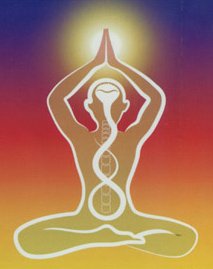
Yoga is originally considered a branch of Hindu philosophy (astika), but both ancient and modern Yoga combine the physical, mental and spiritual. Yoga teaches various physical techniques also known as āsanas (postures), used for various purposes (eg., meditation, contemplation, relaxation).
Languages of India and abroad
Sanskrit dictionary
1) Dhyānabindūpaniṣad (ध्यानबिन्दूपनिषद्) as mentioned in Aufrecht’s Catalogus Catalogorum:—Io. 269. 1726. 3182. Oxf. 394^b. L. 97. Khn. 16. Kh. 58. B. 1, 88. Haug. 18. NW. 7. Oudh. Iv, 5. Np. V, 152. Brl. 62. Bhr. 10. 487. Oppert. 8023. Peters. 3, 384. Sb. 387. Dīpikā. B. 1, 90.
—by Nārāyaṇa. Bhk. 7. Bhr. 233.
2) Dhyānabindūpaniṣad (ध्यानबिन्दूपनिषद्):—add Bik. 7.
3) Dhyānabindūpaniṣad (ध्यानबिन्दूपनिषद्):—Gov. Or. Libr. Madras 39. Rgb. 3. Stein 29. Dīpikā by Nārāyaṇa. Stein 29. 30.
4) Dhyānabindūpaniṣad (ध्यानबिन्दूपनिषद्):—Ulwar 455. Dīpikā by Nārāyaṇa. ibid.
5) Dhyānabindūpaniṣad (ध्यानबिन्दूपनिषद्):—Av. As p. 4. 5. Dīpikā by Nārāyaṇa. As p. 22. 88.
Dhyānabindūpaniṣad (ध्यानबिन्दूपनिषद्):—[=dhyāna-bindūpaniṣad] [from dhyāna > dhyai] f. Name of an, [Upaniṣad]
Dhyānabindūpaniṣad (ध्यानबिन्दूपनिषद्):—f. Titel einer Upaniṣad.
Sanskrit, also spelled संस्कृतम् (saṃskṛtam), is an ancient language of India commonly seen as the grandmother of the Indo-European language family (even English!). Closely allied with Prakrit and Pali, Sanskrit is more exhaustive in both grammar and terms and has the most extensive collection of literature in the world, greatly surpassing its sister-languages Greek and Latin.
See also (Relevant definitions)
Partial matches (+0): Upanishat, Upanishad.
Full-text (+0): Raktagaura, Tribrahman, Avagja, Trirakshara, Trimarga, Tristhana, Shatabja, Yogapada, Tailadhara, Shatasahasra, Mahakaya, Trilocana, Yogopanishad, Mahakala, Shatapattra, Gandha, Shabda, Mahavira.
Relevant text
Search found 13 books and stories containing Dhyanabindupanishad, Dhyānabindūpaniṣad, Dhyanabindupanisad, Dhyanabindu-upanishad, Dhyānabindūpaniṣat, Dhyānabindu-upaniṣad, Dhyānabindu-upaniṣat, Dhyanabindu-upanishat, Dhyanabindopanishat, Dhyanabindupanisat, Dhyanabindu-upanisad, Dhyanabindu-upanisat; (plurals include: Dhyanabindupanishads, Dhyānabindūpaniṣads, Dhyanabindupanisads, upanishads, Dhyānabindūpaniṣats, upaniṣads, upaniṣats, upanishats, Dhyanabindopanishats, Dhyanabindupanisats, upanisads, upanisats). You can also click to the full overview containing English textual excerpts. Below are direct links for the most relevant articles:
The concept of Yoga in Yoga Upanishads (by Philomina T.L)
3. The Significance of the Upaniṣads < [Chapter 1 - Introduction]
18.2. The Concept of Praṇava < [Chapter 4 - The contents of the Yogopaniṣads]
1. Introduction—The contents of the Yogopaniṣads < [Chapter 4 - The contents of the Yogopaniṣads]
A Descriptive Catalogue of the Sanskrit Manuscripts, Madras (by M. Seshagiri Sastri)
Page 169 < [Volume 1, Part 3 (1905)]
Page 170 < [Volume 1, Part 3 (1905)]
Page 171 < [Volume 1, Part 3 (1905)]
Yoga Upanishads (study) (by Heena B. Kotak)
Part 4.4 - Description of the Plexus (Cakra) < [Chapter 3 - Analytical and Critical study of 20 Yoga-Upanishads]
Part 6.2 - Description of the Uddiyana-bandha technique < [Chapter 3 - Analytical and Critical study of 20 Yoga-Upanishads]
Part 1.11 - Description of Dhyana Yoga < [Chapter 3 - Analytical and Critical study of 20 Yoga-Upanishads]
The concept of Yoga according to Yoga Upanisads (by Jeong Soo Lee)
2.5. The concept of Dhyana (in Yoga) < [Chapter 7 - Hatha, Laya, and Mantra Yoga in the Yogopanisads]
1.3. The concept of Prana (according to Yoga) < [Chapter 7 - Hatha, Laya, and Mantra Yoga in the Yogopanisads]
9. Description of Yoga in Yoga-Upanisads < [Chapter 1 - The Origin of Yoga and its Evolution]
Yoga and its relevance in Modern Times (by Gitanjali Devi)
Part 3.2 - The concept of Yoga according to various Yoga-Upaniṣads < [Chapter 2 - Yoga philosophy in ancient times]
Part 6 - List of Yoga literature and associated Upaniṣads < [Chapter 1b - An account of the Yoga system]
The concept of Oneness in the Upanishads (study) (by Chandra Shekhar Upadhyaya)
Classification of the Upaniṣad < [Chapter 1 - Introduction]