Deva-cchanda, Devacchanda, Devacchamda: 6 definitions
Introduction:
Deva-cchanda means something in Hinduism, Sanskrit, the history of ancient India. If you want to know the exact meaning, history, etymology or English translation of this term then check out the descriptions on this page. Add your comment or reference to a book if you want to contribute to this summary article.
Alternative spellings of this word include Devachchhanda.
India history and geography
Source: Cologne Digital Sanskrit Dictionaries: Indian Epigraphical GlossaryDeva-cchanda.—(SII 2), name of a jewel. Note: deva-cchanda is defined in the “Indian epigraphical glossary” as it can be found on ancient inscriptions commonly written in Sanskrit, Prakrit or Dravidian languages.
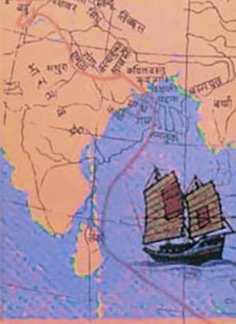
The history of India traces the identification of countries, villages, towns and other regions of India, as well as mythology, zoology, royal dynasties, rulers, tribes, local festivities and traditions and regional languages. Ancient India enjoyed religious freedom and encourages the path of Dharma, a concept common to Buddhism, Hinduism, and Jainism.
Languages of India and abroad
Sanskrit dictionary
Source: Cologne Digital Sanskrit Dictionaries: Monier-Williams Sanskrit-English DictionaryDevacchanda (देवच्छन्द):—[=deva-cchanda] [from deva] m. a necklace of pearls (composed of 100 or 103 or 81 or 108 strings), [Varāha-mihira’s Bṛhat-saṃhitā lxxxi, 32; cf. Lexicographers, esp. such as amarasiṃha, halāyudha, hemacandra, etc.]
Source: Cologne Digital Sanskrit Dictionaries: Yates Sanskrit-English DictionaryDevacchanda (देवच्छन्द):—(ndaḥ) 1. m. A garland or necklace of pearls of 100 strings.
[Sanskrit to German]
Sanskrit, also spelled संस्कृतम् (saṃskṛtam), is an ancient language of India commonly seen as the grandmother of the Indo-European language family (even English!). Closely allied with Prakrit and Pali, Sanskrit is more exhaustive in both grammar and terms and has the most extensive collection of literature in the world, greatly surpassing its sister-languages Greek and Latin.
Kannada-English dictionary
Source: Alar: Kannada-English corpusDēvacchaṃda (ದೇವಚ್ಛಂದ):—[noun] a
Kannada is a Dravidian language (as opposed to the Indo-European language family) mainly spoken in the southwestern region of India.
See also (Relevant definitions)
Starts with: Devacchandas, Devacchandasa.
Full-text: Devacchandas, Devacchanda, Devacchandaprasada.
Relevant text
Search found 4 books and stories containing Deva-cchanda, Devacchanda, Devacchamda, Dēvacchaṃda, Dēvacchanda, Dēva-cchanda; (plurals include: cchandas, Devacchandas, Devacchamdas, Dēvacchaṃdas, Dēvacchandas). You can also click to the full overview containing English textual excerpts. Below are direct links for the most relevant articles:
Amarakoshodghatana of Kshirasvamin (study) (by A. Yamuna Devi)
Daily Life (2): Dress and Ornaments < [Chapter 3 - Social Aspects]
Cosmetics, Costumes and Ornaments in Ancient India (by Remadevi. O.)
2.4. Neck Ornaments (d): Pearl Necklaces < [Chapter 3 - Ornaments]
The Skanda Purana (by G. V. Tagare)
Chapter 28 - Kriyā-Yoga: Meditation on the Forms of Rādhā and Kṛṣṇa < [Section 9 - Vāsudeva-māhātmya]
Trishashti Shalaka Purusha Caritra (by Helen M. Johnson)
Appendix 6.2: new and rare words < [Appendices]