Dauvarika, Dauvārika: 16 definitions
Introduction:
Dauvarika means something in Hinduism, Sanskrit, the history of ancient India, Hindi. If you want to know the exact meaning, history, etymology or English translation of this term then check out the descriptions on this page. Add your comment or reference to a book if you want to contribute to this summary article.
Alternative spellings of this word include Dauvarik.
In Hinduism
Purana and Itihasa (epic history)
1a) Dauvārika (दौवारिक).—To be worshipped in house-building.*
- * Matsya-purāṇa 253. 26.
1b) Palace officials.*
- * Matsya-purāṇa 215. 30.

The Purana (पुराण, purāṇas) refers to Sanskrit literature preserving ancient India’s vast cultural history, including historical legends, religious ceremonies, various arts and sciences. The eighteen mahapuranas total over 400,000 shlokas (metrical couplets) and date to at least several centuries BCE.
Shaktism
Dauvārika (दौवारिक) refers to one of the 53 gods to be worshipped in the western quarter and given pāyasa (rice boiled in milk) according to the Vāstuyāga rite in Śaktism (cf. Śāradātilaka-tantra III-V). The worship of these 53 gods happens after assigning them to one of the 64 compartment while constructing a Balimaṇḍapa. Vāstu is the name of a prodigious demon, who was killed by 53 gods (e.g., Dauvārika).
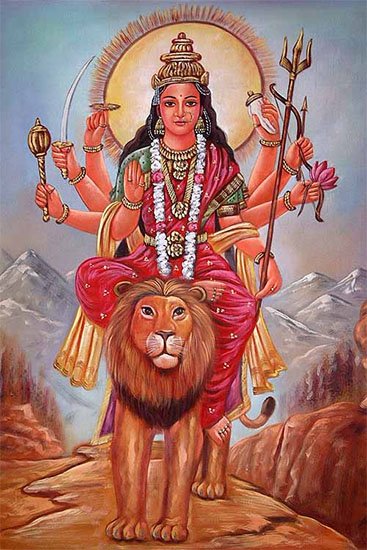
Shakta (शाक्त, śākta) or Shaktism (śāktism) represents a tradition of Hinduism where the Goddess (Devi) is revered and worshipped. Shakta literature includes a range of scriptures, including various Agamas and Tantras, although its roots may be traced back to the Vedas.
Vastushastra (architecture)
Dauvārika (दौवारिक) (or Dauvāri) refers to one of the deities to be installed in the ground plan for the construction of houses, according to the Bṛhatkālottara, chapter 112 (the vāstuyāga-paṭala).—The plan for the construction is always in the form of a square. That square is divided into a grid of cells (padas). [...] Once these padas have been laid out, deities [e.g., Dauvārika] are installed in them. In the most common pattern 45 deities are installed.
Dauvārika as a doorway deity is associated with the Nakṣatra called Pūrvabhadraka and the consequence is vratabandha. [...] The Mayasaṃgraha (verse 5.156-187) describes a design for a 9-by-9-part pura, a residential complex for a community and its lead figure. [...] This record lists a place for betel, etc., at Dauvārika.
Dauvārika (दौवारिक) is the presiding deity the building-plot associated with the object Lavaṅga, as discussed in the thesis entitled “concept of ritual deposit of Khmer temples in northeastern Thailand from 10th-13th century A.D.” by Naiyana Munparn.—(Also see: Acharya, Architecture of Mānasāra, 111).
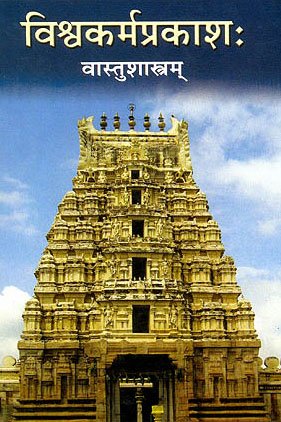
Vastushastra (वास्तुशास्त्र, vāstuśāstra) refers to the ancient Indian science (shastra) of architecture (vastu), dealing with topics such architecture, sculpture, town-building, fort building and various other constructions. Vastu also deals with the philosophy of the architectural relation with the cosmic universe.
India history and geography
Dauvārika.—(EI 28; SII 1; ASLV; BL; HD), a door-keeper; a gate-keeper. See Arthaśāstra, I. 12; Lalitavistara, p. 136; Viṣṇudharmottara, II. 24. 30. Note: dauvārika is defined in the “Indian epigraphical glossary” as it can be found on ancient inscriptions commonly written in Sanskrit, Prakrit or Dravidian languages.

The history of India traces the identification of countries, villages, towns and other regions of India, as well as mythology, zoology, royal dynasties, rulers, tribes, local festivities and traditions and regional languages. Ancient India enjoyed religious freedom and encourages the path of Dharma, a concept common to Buddhism, Hinduism, and Jainism.
Languages of India and abroad
Sanskrit dictionary
Dauvārika (दौवारिक).—(-kī f.) A door-keeper, warder; दौवारिकी देवसरूपमेत्य (dauvārikī devasarūpametya) R.6.59.
Derivable forms: dauvārikaḥ (दौवारिकः).
Dauvārika (दौवारिक).—m.
(-kaḥ) A warder, a porter. E. du bad, vāra impediment, and ṭhak aff.
Dauvārika (दौवारिक).—i. e. drāra + ika, m. and f. kī, A warder, a porter, [Pañcatantra] 156, 16; [Raghuvaṃśa, (ed. Stenzler.)] 6, 59.
Dauvārika (दौवारिक).—[masculine] ī [feminine] door-keeper, porter.
1) Dauvārika (दौवारिक):—m. ([from] dvār, or dvāra) door-keeper, warder, porter, [Śakuntalā; Pañcatantra; Rājataraṅgiṇī] (f(kī). , [Raghuvaṃśa vi, 59])
2) a kind of demon or genius, [Varāha-mihira; Hemādri’s Caturvarga-cintāmaṇi]
Dauvārika (दौवारिक):—(kaḥ) 1. m. A warder.
Dauvārika (दौवारिक):—(von dvār oder dvāra) m. Thürsteher, Kämmerer [Pāṇini’s acht Bücher.7,3,4, Scholiast] [Siddhāntakaumudī 234,b,4.] [Vopadeva’s Grammatik.7,4. 18.] [Hemacandra’s Abhidhānacintāmaṇi 721.] [Vyutpatti oder Mahāvyutpatti 96.] [Śākuntala 22,23.] [Pañcatantra 156,16.] [Rājataraṅgiṇī.5,28.] f. kī [Raghuvaṃśa 6, 59.] der himmlische Thürhüter (?): pitṛdauvārikasugrīvakusumadantāmbupatyasurāḥ [Varāhamihira’s Bṛhajjātaka S. 52, 44.]
Dauvārika (दौवारिक):——
1) m. — a) Thürsteher , Kämmerer. — b) ein best. Genius [Varāhamihira’s Bṛhatsaṃhitā 53,44.] [Hemādri’s Caturvargacintāmaṇi 1,651,20.654,10.] —
2) f. ī Thürsteherin.
Dauvārika (दौवारिक) in the Sanskrit language is related to the Prakrit words: Duvāria, Dovārijja, Dovāriya.
Sanskrit, also spelled संस्कृतम् (saṃskṛtam), is an ancient language of India commonly seen as the grandmother of the Indo-European language family (even English!). Closely allied with Prakrit and Pali, Sanskrit is more exhaustive in both grammar and terms and has the most extensive collection of literature in the world, greatly surpassing its sister-languages Greek and Latin.
Hindi dictionary
Dauvārika (दौवारिक) [Also spelled dauvarik]:—(nm) a door-keeper, gateman.
...
Kannada-English dictionary
Dauvārika (ದೌವಾರಿಕ):—[noun] a man guarding the entrance of a house or other building; a door-keeper.
Kannada is a Dravidian language (as opposed to the Indo-European language family) mainly spoken in the southwestern region of India.
See also (Relevant definitions)
Full-text (+9): Rajadauvarika, Devadauvarika, Dauvarik, Tuvarikan, Dovarijja, Dovariya, Dvarapala, Duvaria, Ripuvriddhi, Duvarika, Dvaradi, Dovarika, Clove, Lavanga, Sahaya, Kanphlu, Sampatti, Vriddhi, Dauvari, Ripuvidya.
Relevant text
Search found 30 books and stories containing Dauvarika, Dauvārika; (plurals include: Dauvarikas, Dauvārikas). You can also click to the full overview containing English textual excerpts. Below are direct links for the most relevant articles:
Jivanandana of Anandaraya Makhin (Study) (by G. D. Jayalakshmi)
Analysis of Prāṇa (Pratīhārī / Dauvārika) < [Chapter 6 - Dramatic aspects of the Jīvanandana Nāṭaka]
Analysis of Galagaṇḍa < [Chapter 6 - Dramatic aspects of the Jīvanandana Nāṭaka]
Act III (Summary) < [Chapter 3 - Summary of the Play Jīvānandana Nāṭaka]
Samyuta Nikaya (Linked Discourses)
Discourse 35.245: Kiṃsukopama-sutta < [35.19. Āsīvisa-vagga: the Simile of the Vipers]
Discourse 47.12: Nālanda-sutta < [47.2. Nālanda-vagga: The Chapter at Nālandā]
Digha Nikaya (Long Discourses)
21–22. Indigo Eyes < [Discourse 30: The Marks of a Great Man]
23. Crown Like a Turban < [Discourse 30: The Marks of a Great Man]
24–25. One Hair Per Pore, and a Tuft < [Discourse 30: The Marks of a Great Man]
Agni Purana (by N. Gangadharan)
Chapter 356 - The formation of taddhita (secondary nominal bases)
Chapter 247 - The characteristics of a site for Building (vāstu-lakṣaṇa)
Harshacharita (socio-cultural Study) (by Mrs. Nandita Sarmah)
Part 3: Other Office Bearers of the Government < [Chapter 5 - Political Aspects]
Kailash: Journal of Himalayan Studies
Part 3 - The Licchavi land system < [The Land System of the Licchavis in Nepal]
Part 1 - Politics and Administration of the ancient Licchavi society < [Ancient and Medieval Nepal (Part 2)]
Part 2 - The Kirati legacy and Kirata land system < [The Land System of the Licchavis in Nepal]