Damiya: 3 definitions
Introduction:
Damiya means something in the history of ancient India, Jainism, Prakrit, biology. If you want to know the exact meaning, history, etymology or English translation of this term then check out the descriptions on this page. Add your comment or reference to a book if you want to contribute to this summary article.
Images (photo gallery)

India history and geography
Damiya is the name of an ancient village mentioned Mihintale tablets of Mahinda IV (956-972). It represents a locality that once existed in the ancient kingdom of Anurādhapura, Ceylon (Sri Lanka). Damgamiya or Damiya was a village assigned for the maintenance of Katu-mahasāya and the lay officials.
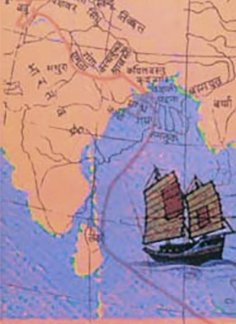
The history of India traces the identification of countries, villages, towns and other regions of India, as well as mythology, zoology, royal dynasties, rulers, tribes, local festivities and traditions and regional languages. Ancient India enjoyed religious freedom and encourages the path of Dharma, a concept common to Buddhism, Hinduism, and Jainism.
Biology (plants and animals)
Damiya [ਦਮੀਯਾ] in the Punjabi language is the name of a plant identified with Fagonia schweinfurthii (Hadidi) Hadidi from the Zygophyllaceae (Caltrop) family having the following synonyms: Fagonia indica var. schweinfurthii, Fagonia arabica var. schweinfurthii. For the possible medicinal usage of damiya, you can check this page for potential sources and references, although be aware that any some or none of the side-effects may not be mentioned here, wether they be harmful or beneficial to health.

This sections includes definitions from the five kingdoms of living things: Animals, Plants, Fungi, Protists and Monera. It will include both the official binomial nomenclature (scientific names usually in Latin) as well as regional spellings and variants.
Languages of India and abroad
Prakrit-English dictionary
Dāmiya (दामिय) in the Prakrit language is related to the Sanskrit word: Dāmita.
Prakrit is an ancient language closely associated with both Pali and Sanskrit. Jain literature is often composed in this language or sub-dialects, such as the Agamas and their commentaries which are written in Ardhamagadhi and Maharashtri Prakrit. The earliest extant texts can be dated to as early as the 4th century BCE although core portions might be older.
See also (Relevant definitions)
Starts with (+0): Damiyana, Damiyate, Tamiyal, Tamiyam, Tamiyan, Tamiyatti.
Relevant text
Search found 5 books and stories containing Damiya, Dāmiya; (plurals include: Damiyas, Dāmiyas). You can also click to the full overview containing English textual excerpts. Below are direct links for the most relevant articles:
Dictionaries of Indian languages (Kosha)
Page 799 < [Hindi-Bengali-English Volume 1]
World Journal of Pharmaceutical Research
Physico-chemical standardization studies of an important unani drug < [2023: Volume 12, October issue 17]
Assam–an asset of unani medicine < [2023: Volume 12, October issue 17]
Historical topograhpy of ancient and medieval Ceylon (by C. W. Nicholas)
Appendix 1 - Index of Ancient Pali and Sinhalese Names
Chapter 19 - The Anuradhapura district (ancient history and topography)
Society in Mediaeval Ceylon (by M. B. Ariyapala)
Between Rocks and ‘High Places’ < [Volume 12, Issue 9 (2021)]
Israelite Temples: Where Was Israelite Cult Not Practiced, and Why < [Volume 10, Issue 2 (2019)]