Dahan, Dǎ hān, Da han, Dǎ hán, Dǎ hǎn, Dà hàn, Dà hán, Dà hǎn: 16 definitions
Introduction:
Dahan means something in the history of ancient India, Hindi, biology. If you want to know the exact meaning, history, etymology or English translation of this term then check out the descriptions on this page. Add your comment or reference to a book if you want to contribute to this summary article.
Ambiguity: Although Dahan has separate glossary definitions below, it also represents an alternative spelling of the word Dahana.
India history and geography
Dahan (in the Newari language) translates to “Lake” (in English); as mentioned in the appendix of the translation of the Vanshavali or Bansawali (“history and genealogical accounts of Nepal”). The Newari word ‘Dahan’ is known in the Parbatiya language as Tal.
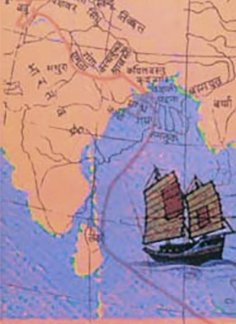
The history of India traces the identification of countries, villages, towns and other regions of India, as well as mythology, zoology, royal dynasties, rulers, tribes, local festivities and traditions and regional languages. Ancient India enjoyed religious freedom and encourages the path of Dharma, a concept common to Buddhism, Hinduism, and Jainism.
Biology (plants and animals)
Dahan [दहन] in the Marathi language is the name of a plant identified with Toddalia asiatica (L.) Lam. from the Rutaceae (Lemon) family having the following synonyms: Toddalia nitida, Toddalia aculeata, Cranzia asiatica. For the possible medicinal usage of dahan, you can check this page for potential sources and references, although be aware that any some or none of the side-effects may not be mentioned here, wether they be harmful or beneficial to health.
Dahan [दहाण] in the Marathi language is the name of a plant identified with Tricholepis glaberrima DC. from the Asteraceae (Sunflower) family.
Dahan [दहाण] in the Marathi language is the name of a plant identified with Tricholepis amplexicaulis C.B.Clarke from the Asteraceae (Sunflower) family.
Dahan in India is the name of a plant defined with Toddalia asiatica in various botanical sources. This page contains potential references in Ayurveda, modern medicine, and other folk traditions or local practices It has the synonym Aralia labordei H. Lév. (among others).
Example references for further research on medicinal uses or toxicity (see latin names for full list):
· Plantae Asiaticae Rariores (Wallich) (1832)
· Systema Vegetabilium, ed. 15 (1819)
· Bulletin de la Société Botanique de France (1945)
· Journal of the Arnold Arboretum (1980)
· Species Plantarum (1753)
· Silvae Genet. (1973)
If you are looking for specific details regarding Dahan, for example diet and recipes, health benefits, side effects, chemical composition, pregnancy safety, extract dosage, have a look at these references.

This sections includes definitions from the five kingdoms of living things: Animals, Plants, Fungi, Protists and Monera. It will include both the official binomial nomenclature (scientific names usually in Latin) as well as regional spellings and variants.
Languages of India and abroad
Hindi dictionary
Dahan in Hindi refers in English to:—(nm) burning, combustion; ~[shila] combustible; ~[shilata] combustibility..—dahan (दहन) is alternatively transliterated as Dahana.
...
Nepali dictionary
Dahan is another spelling for दहन [dahana].—n. 1. burning; consumption by fire; 2. fire;
Nepali is the primary language of the Nepalese people counting almost 20 million native speakers. The country of Nepal is situated in the Himalaya mountain range to the north of India.
Chinese-English dictionary
[The following represents an unverified English translation. For all purposes consult the original Chinese text.]
打鼾 [dǎ hān] [da han]—
To emit a loud and heavy breathing sound (呼吸聲響 [hu xi sheng xiang]) during sleep, due to the relaxation of the laryngeal muscles (喉頭肌肉 [hou tou ji rou]). From "Jingben Tongsu Xiaoshuo (京本通俗小說 [jing ben tong su xiao shuo]) - Aoshan Gong (拗相公 [ao xiang gong])": "He wanted to call the old woman (老嫗 [lao yu]) to ask her, but he heard the sound of snoring from next door. Jiang Ju (江居 [jiang ju]) and the others, weary from their journey (馬上辛苦 [ma shang xin ku]), had all fallen asleep."
打鼾:睡覺時由於喉頭肌肉鬆弛,而發出粗重的呼吸聲響。《京本通俗小說.拗相公》:「欲喚老嫗問之,聞隔壁打鼾之聲,江居等馬上辛苦,俱已睡去。」
dǎ hān: shuì jué shí yóu yú hóu tóu jī ròu sōng chí, ér fā chū cū zhòng de hū xī shēng xiǎng. < jīng běn tōng sú xiǎo shuō. ǎo xiāng gōng>: “yù huàn lǎo yù wèn zhī, wén gé bì dǎ hān zhī shēng, jiāng jū děng mǎ shàng xīn kǔ, jù yǐ shuì qù.”
da han: shui jue shi you yu hou tou ji rou song chi, er fa chu cu zhong de hu xi sheng xiang. < jing ben tong su xiao shuo. ao xiang gong>: "yu huan lao yu wen zhi, wen ge bi da han zhi sheng, jiang ju deng ma shang xin ku, ju yi shui qu."
[The following represents an unverified English translation. For all purposes consult the original Chinese text.]
打寒 [dǎ hán] [da han]—
Contracted malaria (患瘧疾 [huan nue ji]). From Chapter 58 of Jin Ping Mei (《金瓶梅 [jin ping mei]》): "Mama (媽媽 [ma ma]) then fell ill from anger (氣了一場病 [qi le yi chang bing]), had chills (打了寒 [da le han]), and slept on the kang (炕 [kang]) for half a month."
打寒:患瘧疾。《金瓶梅》第五八回:「媽媽便氣了一場病,打了寒,睡在炕上半個月。」
dǎ hán: huàn nüè jí. < jīn píng méi> dì wǔ bā huí: “mā mā biàn qì le yī chǎng bìng, dǎ le hán, shuì zài kàng shàng bàn gè yuè.”
da han: huan nue ji. < jin ping mei> di wu ba hui: "ma ma bian qi le yi chang bing, da le han, shui zai kang shang ban ge yue."
[The following represents an unverified English translation. For all purposes consult the original Chinese text.]
打罕 [dǎ hǎn] [da han]—
Feeling strange and puzzled (感到奇怪 [gan dao qi guai]、納悶 [na men]). From The Bonds of Matrimony (《醒世姻緣傳 [xing shi yin yuan chuan]》), Chapter 81: "Speaking of Guan Yu and Zhang Fei (關張 [guan zhang]) getting angry, or Guan Zhong and Bao Shuya (管鮑 [guan bao]) having a rare quarrel. They only care about spending money together when they have it, but disregard each other and suffer individually when they have none (只顧有錢同日使 [zhi gu you qian tong ri shi],不顧沒錢各自捱 [bu gu mei qian ge zi ai])."
打罕:感到奇怪、納悶。《醒世姻緣傳》第八一回:「說起關張生氣,提起管鮑打罕。只顧有錢同日使,不顧沒錢各自捱。」
dǎ hǎn: gǎn dào qí guài,, nà mèn. < xǐng shì yīn yuán chuán> dì bā yī huí: “shuō qǐ guān zhāng shēng qì, tí qǐ guǎn bào dǎ hǎn. zhǐ gù yǒu qián tóng rì shǐ, bù gù méi qián gè zì ái.”
da han: gan dao qi guai,, na men. < xing shi yin yuan chuan> di ba yi hui: "shuo qi guan zhang sheng qi, ti qi guan bao da han. zhi gu you qian tong ri shi, bu gu mei qian ge zi ai."
[The following represents an unverified English translation. For all purposes consult the original Chinese text.]
大汗 [dà hàn] [da han]—
Titles for monarchs (君王 [jun wang]) in the ancient Western Regions (西域 [xi yu]) and various northern countries (北方各國 [bei fang ge guo]). For example: Genghis Khan (成吉思汗 [cheng ji si han]) was a famous Great Khan among the Mongol (蒙古 [meng gu]) people.
大汗:古代西域和北方各國對君王的稱呼。如:「成吉思汗是蒙古一族中有名的大汗。」
dà hàn: gǔ dài xī yù hé běi fāng gè guó duì jūn wáng de chēng hū. rú: “chéng jí sī hàn shì méng gǔ yī zú zhōng yǒu míng de dà hàn.”
da han: gu dai xi yu he bei fang ge guo dui jun wang de cheng hu. ru: "cheng ji si han shi meng gu yi zu zhong you ming de da han."
[The following represents an unverified English translation. For all purposes consult the original Chinese text.]
大寒 [dà hán] [da han]—
1. Severe cold (酷寒 [ku han]), extreme cold (極寒 [ji han]). From Wuzi (吳子 [wu zi]), 'Estimating the Enemy' (料敵 [liao di]) chapter: "First, [when there are] strong winds (疾風 [ji feng]) and extreme cold, one should rise early and move (早興寤遷 [zao xing wu qian]), break ice to cross water (剖冰濟水 [pou bing ji shui]), and not shrink from difficulties (不憚艱難 [bu dan jian nan])."
2. One of the Twenty-Four Solar Terms (二十四節氣 [er shi si jie qi]). Occurring around January 20th or 21st on the Gregorian calendar (國曆 [guo li]).
大寒:1.酷寒、極寒。《吳子.料敵》:「一曰疾風大寒,早興寤遷,剖冰濟水,不憚艱難。」
2.二十四節氣之一。國曆一月二十日或二十一日。
dà hán:1. kù hán,, jí hán. < wú zi. liào dí>: “yī yuē jí fēng dà hán, zǎo xìng wù qiān, pōu bīng jì shuǐ, bù dàn jiān nán.”
2. èr shí sì jié qì zhī yī. guó lì yī yuè èr shí rì huò èr shí yī rì.
da han:1. ku han,, ji han. < wu zi. liao di>: "yi yue ji feng da han, zao xing wu qian, pou bing ji shui, bu dan jian nan."
2. er shi si jie qi zhi yi. guo li yi yue er shi ri huo er shi yi ri.
[The following represents an unverified English translation. For all purposes consult the original Chinese text.]
大喊 [dà hǎn] [da han]—
To shout loudly (大聲叫喊 [da sheng jiao han]). For example: "That woman (女子 [nu zi]) yelled loudly: 'Catch the thief (捉賊 [zhuo zei])! Catch the thief (捉賊 [zhuo zei])!'" From Romance of the Three Kingdoms (《三國演義 [san guo yan yi]》), Chapter 71: "Yun (雲 [yun]) gave a loud shout (一聲 [yi sheng]), leveled his spear and spurred his horse (挺槍驟馬 [ting qiang zhou ma]), and charged into the heavy encirclement (重圍 [zhong wei])."
大喊:大聲叫喊。如:「那女子大喊著:『捉賊啊!捉賊啊!』」《三國演義》第七一回:「雲大喊一聲,挺槍驟馬,殺入重圍。」
dà hǎn: dà shēng jiào hǎn. rú: “nà nǚ zi dà hǎn zhe: ‘zhuō zéi a! zhuō zéi a! ’ ” < sān guó yǎn yì> dì qī yī huí: “yún dà hǎn yī shēng, tǐng qiāng zhòu mǎ, shā rù zhòng wéi.”
da han: da sheng jiao han. ru: "na nu zi da han zhe: 'zhuo zei a! zhuo zei a! ' " < san guo yan yi> di qi yi hui: "yun da han yi sheng, ting qiang zhou ma, sha ru zhong wei."
[The following represents an unverified English translation. For all purposes consult the original Chinese text.]
大汗 [dà hàn] [da han]—
To describe the appearance of sweating profusely (汗流不停 [han liu bu ting]). For example: "The little boy (小男孩 [xiao nan hai]) ran back and forth (跑來跑去 [pao lai pao qu]) upstairs and downstairs (樓上樓下 [lou shang lou xia]), getting drenched in sweat (滿身 [man shen])."
大汗:形容汗流不停的樣子。如:「小男孩樓上樓下跑來跑去,弄得滿身大汗。」
dà hàn: xíng róng hàn liú bù tíng de yàng zi. rú: “xiǎo nán hái lóu shàng lóu xià pǎo lái pǎo qù, nòng dé mǎn shēn dà hàn.”
da han: xing rong han liu bu ting de yang zi. ru: "xiao nan hai lou shang lou xia pao lai pao qu, nong de man shen da han."
[The following represents an unverified English translation. For all purposes consult the original Chinese text.]
大漢 [dà hàn] [da han]—
1. A tall man. Yuan (元 [yuan]) Dynasty. Zhang Guobin's (張國賓 [zhang guo bin]) He Hanshan (合汗衫 [he han shan]), Act 1: "Now the master blames me, I'll call him out and drive him away, what's wrong with that? You, big fellow, come out!"
2. An honorific term for China, the Han Dynasty (漢代 [han dai]), or the Han ethnic group (漢族 [han zu]). Wen Xuan (文選 [wen xuan]). Ban Gu's (班固 [ban gu]) Inscription on Mount Yanran (封燕然山銘 [feng yan ran shan ming]): "Below, to secure the descendants, expand the territory, and spread the heavenly prestige of the great Han."
大漢:1.身材高大的男子。元.張國賓《合汗衫》第一折:「如今大主人家怪我,我喚他出來,趕將他出去,有何不可?兀那大漢你出來。」
2.對中國、漢代或漢族的尊稱。《文選.班固.封燕然山銘》:「下以安固後嗣,恢拓境宇,振大漢之天聲。」
dà hàn:1. shēn cái gāo dà de nán zi. yuán. zhāng guó bīn < hé hàn shān> dì yī zhé: “rú jīn dà zhǔ rén jiā guài wǒ, wǒ huàn tā chū lái, gǎn jiāng tā chū qù, yǒu hé bù kě? wù nà dà hàn nǐ chū lái.”
2. duì zhōng guó,, hàn dài huò hàn zú de zūn chēng. < wén xuǎn. bān gù. fēng yàn rán shān míng>: “xià yǐ ān gù hòu sì, huī tà jìng yǔ, zhèn dà hàn zhī tiān shēng.”
da han:1. shen cai gao da de nan zi. yuan. zhang guo bin < he han shan> di yi zhe: "ru jin da zhu ren jia guai wo, wo huan ta chu lai, gan jiang ta chu qu, you he bu ke? wu na da han ni chu lai."
2. dui zhong guo,, han dai huo han zu de zun cheng. < wen xuan. ban gu. feng yan ran shan ming>: "xia yi an gu hou si, hui ta jing yu, zhen da han zhi tian sheng."
1) 大喊 ts = dà hǎn p refers to “to shout”.
2) 大寒 ts = dà hán p refers to “Great Cold, 24th of the 24 solar terms 二十四節氣 | 二十四节气 20th January-3rd February”..
3) 大汗 ts = dà hàn p refers to “supreme khan”..
4) 大汗 ts = dà hàn p refers to “profuse perspiration”..
5) 大漢 t = 大汉 s = dà hàn p refers to “Han Dynasty”..
6) 大漢 t = 大汉 s = dà hàn p refers to “burly fellow”..
7) 打鼾 ts = dǎ hān p refers to “to snore”..
1) 大漢 t = 大汉 s = dà hàn p refers to [proper noun] “the Han dynasty”; Domain: History 历史 [li shi] , Subdomain: China; Notes: (CC-CEDICT '大漢 [da han]').
2) 大漢 t = 大汉 s = dà hàn p refers to [phrase] “big person”; Domain: Literary Chinese 文言文 [wen yan wen]; Notes: (CC-CEDICT '大漢 [da han]')..
大旱 [dà hàn] refers to: “great drought”.
大旱 is further associated with the following language/terms:
[Vietnamese] đại hạn.
[Korean] 대한 / daehan.
[Japanese] ダイカン / daikan.
Chinese language.
See also (Relevant definitions)
Partial matches (+0): Han, Da, Ta.
Starts with (+17): Dahana, Dahanabahula, Dahanabhaya, Dahanadarurasi, Dahanadeha, Dahanagarbha, Dahanaguru, Dahanah, Dahanajvala, Dahanakala, Dahanakalpa, Dahanakamma, Dahanakarman, Dahanaketana, Dahanakicca, Dahanakriye, Dahanakumda, Dahanamudra, Dahanaprakhya, Dahanapriya.
Full-text (+214): Da han wang yun ni, Da han lin, Da han da jiao, Da han di guo, Tie mu er da han, Man tou da han, Da han yun ni, Biao xing da han, Da han lin sheng nan na tuo luo ni jing, Dahanakarman, Da han zu zhu yi, Bu da han, Da han lin li, Da han zhi wang yun ni, Da han fu jiao cao xi zong, Da han jin, Hou sheng, Da han lin fu mu, Da hu lu, Da han cen cen.
Relevant text
Search found 36 books and stories containing Dahan, Dǎ hān, Da han, Dǎ hán, Dǎ hǎn, Dà hàn, Dà hán, Dà hǎn, Dǎhān, Dǎhán, Dǎhǎn, Dàhàn, Dàhán, Dàhǎn, 大喊, 大寒, 大旱, 大汉, 大汗, 大漢, 打寒, 打罕, 打鼾; (plurals include: Dahans, Dǎ hāns, Da hans, Dǎ háns, Dǎ hǎns, Dà hàns, Dà háns, Dà hǎns, Dǎhāns, Dǎháns, Dǎhǎns, Dàhàns, Dàháns, Dàhǎns). You can also click to the full overview containing English textual excerpts. Below are direct links for the most relevant articles:
Taisho: Chinese Buddhist Canon
Sutta 19: The (Swan Mother) and Her Filial Offspring < [Part 152 - Discourse of the Collection of the Six Perfections]
Chapter 27: The Chapter on Praising Nirvana < [Part 192 - Buddhacarita (translated by Dharmakshema)]
Chapter 15: Chapter on Renunciation < [Part 187 - Lalitavistara (translated by Divakara)]
Hualin International Journal of Buddhist Studies
Precepts and the Calculation of Time: The Case of the Buddhist Monk Yixing < [Hualin International Journal of Buddhist Studies 5.2 (2022)]
Zen, Motorcycles and Burning Buddhas < [Hualin International Journal of Buddhist Studies 3.2 (2020)]
International Ayurvedic Medical Journal
Dahan effect of agnikarma for management of charmakeel – a case report < [2022, Issue 5, May]
Dahan chikitsha in kadar wsr planter corn < [2014, Issue V Sep-Oct]
A critical review on kshara- dosha < [2023, Issue 10. October]
International Journal of Environmental Research and Public Health (MDPI)
Applying the Taguchi Method to River Water Pollution Remediation Strategy... < [Volume 11, Issue 4 (2014)]
Cooling Effect of Rivers on Metropolitan Taipei Using Remote Sensing < [Volume 11, Issue 2 (2014)]
Using Benthic Macroinvertebrate and Fish Communities as Bioindicators of the... < [Volume 11, Issue 7 (2014)]
Community-Based Adaptation to Climate Change < [Volume 13, Issue 4 (2021)]
Rapid-Survey Methodology to Assess Litter Volumes along Large River Systems—A... < [Volume 13, Issue 16 (2021)]
Alternate Data Stream Attack Framework to Perform Stealth Attacks on Active... < [Volume 14, Issue 19 (2022)]
Archives of Social Sciences of Religions
Daniel Dahan, Agounot : « Les femmes entravées ». Problèmes et solutions du droit matrimonial hébraïque < [Volume 184 (2018)]
Raphaël Draï, Le mythe de la Loi du Talion < [Volume 184 (2018)]
Christian Latin Authors on Jews and Judaism in the Middle Ages < [Volume 142 (2008)]