Cycle of rebirth: 1 definition
Introduction:
Cycle of rebirth means something in Hinduism, Sanskrit. If you want to know the exact meaning, history, etymology or English translation of this term then check out the descriptions on this page. Add your comment or reference to a book if you want to contribute to this summary article.
Images (photo gallery)

In Hinduism
Yoga (school of philosophy)
The Cycle of Rebirth is denoted by the Sanskrit term Saṃsāra, according to the Amanaska Yoga treatise dealing with meditation, absorption, yogic powers and liberation.—Accordingly, as Īśvara says to Vāmadeva: “[...] When the mind is moving, the cycle of rebirth [prevails]. When [the mind] is not moving, liberation arises. Therefore, [the Yogin] makes his mind steady; he is devoted to [the practice of complete] detachment. [...]”.
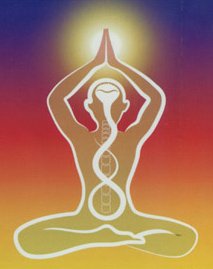
Yoga is originally considered a branch of Hindu philosophy (astika), but both ancient and modern Yoga combine the physical, mental and spiritual. Yoga teaches various physical techniques also known as āsanas (postures), used for various purposes (eg., meditation, contemplation, relaxation).
See also (Relevant definitions)
Partial matches (+0): Rebirth, The, The, Cycle, Te.
Full-text (+334): Vattupaccheda, Paticcasamuppada, Thullaccayagami, Avasesasamapattivutthana, Panga, Magna, Pankamagna, Samsarapanka, Durantagadha, Varatikkama, Asubhanimittanuyoga, Dhatu, Duhprapya, Pancadhatu, Samvega Vatthu, Mulayaka, Durgatisvarupa, Samsaracarita, Ragapapanca, Asubhabhavananuyoga.
Relevant text
Search found 82 books and stories containing Cycle of rebirth, Cycle of rebirths, The cycle of rebirths; (plurals include: Cycle of rebirths, Cycle of rebirthses, The cycle of rebirthses). You can also click to the full overview containing English textual excerpts. Below are direct links for the most relevant articles:
Dhammapada (Illustrated) (by Ven. Weagoda Sarada Maha Thero)
Verse 63 - The Story of Two Pick-pockets < [Chapter 5 - Bāla Vagga (Fools)]
Verse 216 - The Story of a Brāhmin < [Chapter 16 - Piya Vagga (Affection)]
Verse 182 - The Story of Erakapatta the Nāga King < [Chapter 14 - Buddha Vagga (The Buddha)]
Maha Buddhavamsa—The Great Chronicle of Buddhas (by Ven. Mingun Sayadaw)
Part 12 - What is The Synopsis of The Pāramīs < [Chapter 7 - On Miscellany]
Part 26 - Thirty-seven Factors of the Perpetuation of the Teaching < [Chapter 40 - The Buddha Declared the Seven Factors of Non-Decline for Rulers]
Notes (d): What are the Benefits of Morality < [Chapter 6 - On Pāramitā]
Karmic Astrology—a Study (by Sunita Anant Chavan)
Part 3.3 - Karma in the Upaniṣad Period < [Chapter 3 - Development of Jyotiḥśāstra and Karman in the Literature]
Part 2.5 - The Place of Jyotiṣa in the Literature < [Chapter 2 - Jyotiḥśāstra and the Concept of Karman]
Part 3.3 - Jyotiṣa and Karman: Knowledge Form < [Chapter 4 - Constructive Survey of the Correlation of Jyotiḥśāstra and Karman]
Abhidhamma in Daily Life (by Ashin Janakabhivamsa) (by Ashin Janakabhivamsa)
Factor 5 - Lobha (greed) < [Chapter 2 - On akusala cetasikas (unwholesome mental factors)]
Part 5 - Can We Reform Or Not? < [Chapter 7 - Kamma]
Factor 7 - Amoha or paññá (wisdom) < [Chapter 3 - On kusala cetasikas (wholesome mental factors)]
Trishashti Shalaka Purusha Caritra (by Helen M. Johnson)
Tattva 6: Saṃvara (methods of impeding karma) < [Appendix 1.4: The nine tattvas]
Vasudevahindi (cultural history) (by A. P. Jamkhedkar)
31. Schools of Philosophy < [Chapter 5 - Religion and Philosophy]