Cheng, Chéng, Chēng, Chèng, Chěng, Shèng, Sheng: 59 definitions
Introduction:
Cheng means something in Buddhism, Pali. If you want to know the exact meaning, history, etymology or English translation of this term then check out the descriptions on this page. Add your comment or reference to a book if you want to contribute to this summary article.
Images (photo gallery)
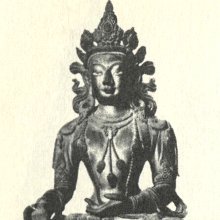
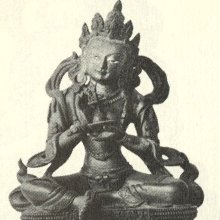
In Buddhism
Chinese Buddhism
1) 成 [cheng]—See under seven strokes.
2) 成 [cheng]—Complete, finish, perfect, become.
3) 承 [cheng]—Receive, succeed to, undertake, serve.
4) 城 [cheng]—See under Ten Strokes.
5) 乘 [cheng]—Yāna 衍 [yan]; 野那 [ye na] a vehicle, wain, any means of conveyance; a term applied to Buddhism as carrying men to salvation. The two chief divisions are the 小乘 [xiao cheng] Hīnayāna and 大乘 [da cheng] Mahāyāna; but there are categories of one, two, three, four, and five sheng q.v., and they have further subdivisions.
6) 城 [cheng]—A city (or defensive) wall; a city, a walled and moat and all they contain.
7) 誠 [cheng]—See under Fourteen Strokes.
8) 稱 [cheng]—To call, style, invoke; to weigh; a steelyard, scale; to suit, tally with.
9) 誠 [cheng]—Truthful, true, truth; real; sincere, sincerity.
10) 澄 [cheng]—Clear, limpid.
[The following represents an unverified English translation. For all purposes consult the original Chinese text.]
乘 [cheng]—(chéng) — [Term] Sanskrit, formerly translated as 衍 [yan] (yǎn), now as 野那 [ye na] (Yāna). (chéng) means "to ride" or "to carry." It is used to name the Dharma (行法 [xing fa] - Buddhist teachings/practices) because it carries practitioners to their fruit (果地 [guo de] - enlightenment/liberation). There are distinctions such as One Vehicle (一 [yi]), Two Vehicles (二 [er]), Three Vehicles (三 [san]), Four Vehicles (四 [si]), and Five Vehicles (五 [wu]). Among these, One Vehicle (一 [yi]) has two types, Two Vehicles (二 [er]) has two types, Three Vehicles (三 [san]) has three types, Four Vehicles (四 [si]) has four types, and Five Vehicles (五 [wu]) has five types. See their respective entries: One Vehicle (一 [yi]), Two Vehicles (二 [er]), Three Vehicles (三 [san]), Four Vehicles (四 [si]), Five Vehicles (五 [wu]).
乘—【術語】梵語,舊曰衍。新曰野那 Yāna。乘者乘載之義,以名行法,乘行人使至其果地之意。有一乘、二乘、三乘、四乘、五乘之別。其中一乘有二種,二乘有二種,三乘有三種,四乘有四種,五乘有五種。各見本項。(一乘)(二乘)(三乘)(四乘)(五乘)
[shù yǔ] fàn yǔ, jiù yuē yǎn. xīn yuē yě nà Yāna. chéng zhě chéng zài zhī yì, yǐ míng xíng fǎ, chéng xíng rén shǐ zhì qí guǒ de zhī yì. yǒu yī chéng,, èr chéng,, sān chéng,, sì chéng,, wǔ chéng zhī bié. qí zhōng yī chéng yǒu èr zhǒng, èr chéng yǒu èr zhǒng, sān chéng yǒu sān zhǒng, sì chéng yǒu sì zhǒng, wǔ chéng yǒu wǔ zhǒng. gè jiàn běn xiàng.(yī chéng)(èr chéng)(sān chéng)(sì chéng)(wǔ chéng)
[shu yu] fan yu, jiu yue yan. xin yue ye na Yana. cheng zhe cheng zai zhi yi, yi ming xing fa, cheng xing ren shi zhi qi guo de zhi yi. you yi cheng,, er cheng,, san cheng,, si cheng,, wu cheng zhi bie. qi zhong yi cheng you er zhong, er cheng you er zhong, san cheng you san zhong, si cheng you si zhong, wu cheng you wu zhong. ge jian ben xiang.(yi cheng)(er cheng)(san cheng)(si cheng)(wu cheng)
1) 稱 t = 称 s = chēng p refers to [verb] “mentioned; āmnāta”; Domain: Buddhism 佛教 [fu jiao]; Notes: Sanskrit equivalent: āmnāta, Japanese: shou (BCSD '種 [zhong]', p. 903; Mahāvyutpatti 'āmnātaḥ'; MW 'āmnāta'; SH '種 [zhong]', p. 426; Unihan '稱 [cheng]').
2) 成 ts = chéng p refers to [verb] “Become”; Domain: Buddhism 佛教 [fu jiao] , Subdomain: Fo Guang Shan; Notes: (Glossary of Humanistic Buddhism)..
3) 成 ts = chéng p refers to [verb] “becoming; bhāva”; Domain: Buddhism 佛教 [fu jiao]; Notes: Sanskrit equivalent: bhāva, or: nirhāra, Japanese: sei, or: jou, Tibetan: sgrub pa (BCSD '成 [cheng]', p. 514; Mahāvyutpatti 'nirhāra'; MW 'bhāva'; SH '成 [cheng]', p. 237; Unihan '成 [cheng]')..
4) 盛 ts = shèng p refers to [adjective] “flourishing; sphīta”; Domain: Buddhism 佛教 [fu jiao]; Notes: Sanskrit equivalent: sphīta, Japanese: sei, or: jou (BCSD '盛 [sheng]', p. 867; MW 'sphīta'; Unihan '盛 [sheng]')..
5) 乘 ts = chéng p refers to [noun] “vehicle; a school of teaching; yana”; Domain: Buddhism 佛教 [fu jiao]; Notes: Sanskrit equivalent: yāna, Pali: yāna, Japanese: jō, Tibetan: theg pa; 乘 [cheng] is a teaching or vehicle for arriving at knowledge, such as the 大乘 [da cheng] mahāyāna 'great vehicle' (BCSD '乘 [cheng]', p. 76; BL 'yāna', p. 1020; Edgerton 1953 'yāna', p. 446; Guoyu '乘 [cheng]' shèng n 3; Kroll 2015 '乘 [cheng] shèng' 2, p. 48; Mathews 1931 '乘 [cheng]', p. 52; MW 'yāna'; SH '乘 [cheng]'', p. 320)..
6) 乘 ts = chéng p refers to [adjective] “mounted; ārūḍha”; Domain: Buddhism 佛教 [fu jiao]; Notes: Sanskrit equivalent: ārūḍha (BCSD '乘 [cheng]', p. 76; MW 'ārūḍha')..
7) 承 ts = chéng p refers to [adjective] “appointed; adhiṣṭhita”; Domain: Buddhism 佛教 [fu jiao]; Notes: Sanskrit equivalent: adhiṣṭhita, Japanese: jō, or: shō (BCSD '承 [cheng]', p. 540; DJBT '承 [cheng]', p. 425; MW 'adhiṣṭhita'; SH '承 [cheng]', p. 260)..
8) 承 ts = chéng p refers to [adjective] “supported; dhārita”; Domain: Buddhism 佛教 [fu jiao]; Notes: Sanskrit equivalent: dhārita (BCSD '承 [cheng]', p. 540; MW 'dhārita'; SH '承 [cheng]', p. 260)..
9) 誠 t = 诚 s = chéng p refers to [noun] “Sincerity”; Domain: Buddhism 佛教 [fu jiao] , Subdomain: Fo Guang Shan; Notes: (Glossary of Humanistic Buddhism)..
10) 誠 t = 诚 s = chéng p refers to [noun] “honesty; ārjava”; Domain: Buddhism 佛教 [fu jiao]; Notes: Sanskrit equivalent: ārjava, Japanese: sei, or: jou (BCSD '誠 [cheng]', p. 1078; Edgerton 1953 'ārjava', p. 104; MW 'ārjava'; Unihan '誠 [cheng]')..
11) 澄 ts = chéng p refers to [adjective] “clear; accha”; Domain: Buddhism 佛教 [fu jiao]; Notes: Sanskrit equivalent: accha, Japanese: chou (BCSD '澄 [cheng]', p. 746; MW 'accha'; SH '澄 [cheng]', p. 439; Unihan '澄 [cheng]')..
12) 城 ts = chéng p refers to [noun] “city; nagara”; Domain: Buddhism 佛教 [fu jiao]; Notes: Sanskrit equivalent: nagara, or: nagarī, Japanese: jō, Tibetan: grong khyer (BCSD '城 [cheng]', p. 294; DJBT '城 [cheng]', p. 424; Mahāvyutpatti 'nagaram'; MW 'nagara'; SH '城 [cheng]', p. 323)..
Chinese Buddhism (漢傳佛教, hanchuan fojiao) is the form of Buddhism that developed in China, blending Mahayana teachings with Daoist and Confucian thought. Its texts are mainly in Classical Chinese, based on translations from Sanskrit. Major schools include Chan (Zen), Pure Land, Tiantai, and Huayan. Chinese Buddhism has greatly influenced East Asian religion and culture.
Languages of India and abroad
Chinese-English dictionary
[The following represents an unverified English translation. For all purposes consult the original Chinese text.]
秤 [chèng] [cheng]—
Noun: A tool (工具 [gong ju]) for measuring (衡量 [heng liang]) the weight (輕重 [qing zhong]) of objects (物體 [wu ti]). For example: 天 [tian](tiānchèng).
秤:[名]
衡量物體輕重的工具。如:「天秤」。
chèng:[míng]
héng liàng wù tǐ qīng zhòng de gōng jù. rú: “tiān chèng” .
cheng:[ming]
heng liang wu ti qing zhong de gong ju. ru: "tian cheng" .
[The following represents an unverified English translation. For all purposes consult the original Chinese text.]
澄 [chéng] [cheng]—
[Verb] To make it settle (沉澱 [chen dian], chén diàn) and become clear (清澈 [qing che], qīng chè). For example: "(chéng) this basin of water (盆水 [pen shui], pén shuǐ)" (meaning to clarify it by letting it settle).
澄:[動]
使沉澱、清澈。如:「把這盆水澄一澄。」
chéng:[dòng]
shǐ chén diàn,, qīng chè. rú: “bǎ zhè pén shuǐ chéng yī chéng.”
cheng:[dong]
shi chen dian,, qing che. ru: "ba zhe pen shui cheng yi cheng."
[The following represents an unverified English translation. For all purposes consult the original Chinese text.]
朾 [chéng] [cheng]—
Place name. A territory of the State of Song (宋國 [song guo]) during the Spring and Autumn (春秋 [chun qiu]) period. Its former site is approximately in the northwest of Huaiyang County (淮陽縣 [huai yang xian]), Henan Province (河南省 [he nan sheng]), in present-day mainland China (大陸地區 [da lu de qu]).
朾:[名]
地名。春秋時宋國屬地。故址約在今大陸地區河南省淮陽縣西北。
chéng:[míng]
de míng. chūn qiū shí sòng guó shǔ de. gù zhǐ yuē zài jīn dà lù de qū hé nán shěng huái yáng xiàn xī běi.
cheng:[ming]
de ming. chun qiu shi song guo shu de. gu zhi yue zai jin da lu de qu he nan sheng huai yang xian xi bei.
[The following represents an unverified English translation. For all purposes consult the original Chinese text.]
湞 [chēng] [cheng]—
See the entry for '水 [shui]'.
湞:參見「湞水」條。
chēng: cān jiàn “chēng shuǐ” tiáo.
cheng: can jian "cheng shui" tiao.
[The following represents an unverified English translation. For all purposes consult the original Chinese text.]
脀 [chéng] [cheng]—
[Noun]
Cooked meat served in `鼎俎 [ding zu]` (dǐngzǔ). From `明 [ming]` (Míng) Dynasty `張自烈 [zhang zi lie]` (Zhāng Zìliè)'s `《正字通 [zheng zi tong].肉部 [rou bu]》` (`Zhèngzìtōng. Ròubù`): "The contents of `鼎俎 [ding zu]` (dǐngzǔ) – all sacrificial animals that are cooked, dismembered and have their bones cut and placed into `鼎 [ding]` (dǐng), or have their bones broken and meat cut into pieces and placed onto `俎 [zu]` (zǔ) – are all called `` (zhēng)."
脀:[名]
盛裝在鼎俎中的熟肉。明.張自烈《正字通.肉部》:「鼎俎之實,凡牲烹熟,體解骨切而載諸鼎,骨折臠割而升之俎者,皆曰脀。」
chéng:[míng]
shèng zhuāng zài dǐng zǔ zhōng de shú ròu. míng. zhāng zì liè < zhèng zì tōng. ròu bù>: “dǐng zǔ zhī shí, fán shēng pēng shú, tǐ jiě gǔ qiè ér zài zhū dǐng, gǔ zhé luán gē ér shēng zhī zǔ zhě, jiē yuē chéng.”
cheng:[ming]
sheng zhuang zai ding zu zhong de shu rou. ming. zhang zi lie < zheng zi tong. rou bu>: "ding zu zhi shi, fan sheng peng shu, ti jie gu qie er zai zhu ding, gu zhe luan ge er sheng zhi zu zhe, jie yue cheng."
[The following represents an unverified English translation. For all purposes consult the original Chinese text.]
稱 [chēng] [cheng]—
Another pronunciation (又音 [you yin]) of (二 [er]).
稱:(二)之又音。
chēng:(èr) zhī yòu yīn.
cheng:(er) zhi you yin.
[The following represents an unverified English translation. For all purposes consult the original Chinese text.]
偁 [chēng] [cheng]—
Same as 稱 [cheng] (chēng). Regarding the character (chēng) in 《說文解字 [shuo wen jie zi].人部 [ren bu]》 (Shuowen Jiezi, Ren Bu), 段玉裁 [duan yu cai] (Duan Yucai)'s commentary from the 清 [qing] (Qing) Dynasty states: "In ancient times, all characters used for 舉 [ju] (chēngjǔ) and 謂 [wei] (chēngwèi) were written as (chēng); ...since 稱 [cheng] (chēng) became prevalent, (chēng) has fallen into disuse."
偁:同「稱」。《說文解字.人部》「偁」字.清.段玉裁.注:「凡古偁舉、偁謂字皆如此作,……自稱行而偁廢矣。」
chēng: tóng “chēng” . < shuō wén jiě zì. rén bù> “chēng” zì. qīng. duàn yù cái. zhù: “fán gǔ chēng jǔ,, chēng wèi zì jiē rú cǐ zuò,……zì chēng xíng ér chēng fèi yǐ.”
cheng: tong "cheng" . < shuo wen jie zi. ren bu> "cheng" zi. qing. duan yu cai. zhu: "fan gu cheng ju,, cheng wei zi jie ru ci zuo,......zi cheng xing er cheng fei yi."
[The following represents an unverified English translation. For all purposes consult the original Chinese text.]
稱 [chēng] [cheng]—
Verb [動 [dong]]
1. To weigh with a scale (秤 [cheng]) to measure (計量 [ji liang]) weight (輕重 [qing zhong]). For example: "Weigh this bag of rice (米 [mi])."
2. To call (叫 [jiao]), to be called (叫做 [jiao zuo]). For example: "to address (呼 [hu])", "to address each other as brothers (兄道弟 [xiong dao di])."
3. To state (述說 [shu shuo]). For example: "This place (此地 [ci de]) is said (據 [ju]) to have mineral resources (礦產 [kuang chan])." From Records of the Grand Historian (史記 [shi ji]), Volume 84 (卷八四 [juan ba si]), Biography of Qu Yuan and Jia Sheng (屈原賈生傳 [qu yuan jia sheng chuan]): "He spoke of Emperor Ku (帝嚳 [di ku]) above, narrated (道 [dao]) about Duke Huan of Qi (齊桓 [qi huan]) below, and described (述 [shu]) Tang (湯 [tang]) and Wu (武 [wu]) in the middle, to criticize (刺 [ci]) current affairs (世事 [shi shi])."
4. To praise (讚頌 [zan song]), to commend (讚譽 [zan yu]). For example: "to praise (揚 [yang])", "to commend (美 [mei])." From Analects (論語 [lun yu]), Xian Wen (憲問 [xian wen]): "A fine horse (驥 [ji]) is not praised for its strength (力 [li]), but for its virtue (德 [de])."
5. To declare oneself (自認 [zi ren]), to assume a title (自封 [zi feng]). For example: "to declare oneself emperor (帝 [di])", "to dominate (霸 [ba])", "to bow down and acknowledge oneself a subject (俯首臣 [fu shou chen])."
6. To lift (舉 [ju]). For example: "to raise an army and revolt (兵起義 [bing qi yi])." From Classic of Poetry (詩經 [shi jing]), Odes of Bin (豳風 [bin feng]), Seventh Month (七月 [qi yue]): "Raise that rhinoceros horn cup (兕觥 [si gong]), ten thousand years of boundless life (萬壽無疆 [wan shou wu jiang])."
Noun [名 [ming]]
1. Name (名號 [ming hao]), appellation (名目 [ming mu]). For example: "name (名 [ming])", "alias (別 [bie])", "common name (通 [tong])."
2. Reputation (名聲 [ming sheng]), renown (聲譽 [sheng yu]). From Book of Later Han (後漢書 [hou han shu]), Volume 52 (卷五二 [juan wu er]), Biography of Cui Yin (崔駰傳 [cui yin chuan]): "This gentleman (大人 [da ren]) had an excellent reputation (英 [ying]) in his youth, and held various high official positions (卿守 [qing shou]); commentators (論者 [lun zhe]) did not say he was unfit to be one of the Three Ducal Ministers (三公 [san gong])."
稱:[動]
1.用秤計量輕重。如:「把這包米稱一稱。」
2.叫、叫做。如:「稱呼」、「稱兄道弟」。
3.述說。如:「此地據稱有礦產。」《史記.卷八四.屈原賈生傳》:「上稱帝嚳,下道齊桓,中述湯武,以刺世事。」
4.讚頌、讚譽。如:「稱揚」、「稱美」。《論語.憲問》:「驥不稱其力,稱其德也。」
5.自認、自封。如:「稱帝」、「稱霸」、「俯首稱臣」。
6.舉。如:「稱兵起義」。《詩經.豳風.七月》:「稱彼兕觥,萬壽無疆。」
[名]
1.名號、名目。如:「名稱」、「別稱」、「通稱」。
2.名聲、聲譽。《後漢書.卷五二.崔駰傳》:「大人少有英稱,歷位卿守,論者不謂不當為三公。」
chēng:[dòng]
1. yòng chèng jì liàng qīng zhòng. rú: “bǎ zhè bāo mǐ chēng yī chēng.”
2. jiào,, jiào zuò. rú: “chēng hū” ,, “chēng xiōng dào dì” .
3. shù shuō. rú: “cǐ de jù chēng yǒu kuàng chǎn.” < shǐ jì. juǎn bā sì. qū yuán jiǎ shēng chuán>: “shàng chēng dì kù, xià dào qí huán, zhōng shù tāng wǔ, yǐ cì shì shì.”
4. zàn sòng,, zàn yù. rú: “chēng yáng” ,, “chēng měi” . < lùn yǔ. xiàn wèn>: “jì bù chēng qí lì, chēng qí dé yě.”
5. zì rèn,, zì fēng. rú: “chēng dì” ,, “chēng bà” ,, “fǔ shǒu chēng chén” .
6. jǔ. rú: “chēng bīng qǐ yì” . < shī jīng. bīn fēng. qī yuè>: “chēng bǐ sì gōng, wàn shòu wú jiāng.”
[míng]
1. míng hào,, míng mù. rú: “míng chēng” ,, “bié chēng” ,, “tōng chēng” .
2. míng shēng,, shēng yù. < hòu hàn shū. juǎn wǔ èr. cuī yīn chuán>: “dà rén shǎo yǒu yīng chēng, lì wèi qīng shǒu, lùn zhě bù wèi bù dāng wèi sān gōng.”
cheng:[dong]
1. yong cheng ji liang qing zhong. ru: "ba zhe bao mi cheng yi cheng."
2. jiao,, jiao zuo. ru: "cheng hu" ,, "cheng xiong dao di" .
3. shu shuo. ru: "ci de ju cheng you kuang chan." < shi ji. juan ba si. qu yuan jia sheng chuan>: "shang cheng di ku, xia dao qi huan, zhong shu tang wu, yi ci shi shi."
4. zan song,, zan yu. ru: "cheng yang" ,, "cheng mei" . < lun yu. xian wen>: "ji bu cheng qi li, cheng qi de ye."
5. zi ren,, zi feng. ru: "cheng di" ,, "cheng ba" ,, "fu shou cheng chen" .
6. ju. ru: "cheng bing qi yi" . < shi jing. bin feng. qi yue>: "cheng bi si gong, wan shou wu jiang."
[ming]
1. ming hao,, ming mu. ru: "ming cheng" ,, "bie cheng" ,, "tong cheng" .
2. ming sheng,, sheng yu. < hou han shu. juan wu er. cui yin chuan>: "da ren shao you ying cheng, li wei qing shou, lun zhe bu wei bu dang wei san gong."
[The following represents an unverified English translation. For all purposes consult the original Chinese text.]
琤 [chēng] [cheng]—
Noun
The sound produced when jade objects (玉器 [yu qi]) strike each other.
《Shuowen Jiezi》 (說文解字 [shuo wen jie zi]), Jade Section (玉部 [yu bu]): "Chēng is the sound of jade (玉聲 [yu sheng])."
琤:[名]
玉器相擊所發出的聲音。《說文解字.玉部》:「琤,玉聲也。」
chēng:[míng]
yù qì xiāng jī suǒ fā chū de shēng yīn. < shuō wén jiě zì. yù bù>: “chēng, yù shēng yě.”
cheng:[ming]
yu qi xiang ji suo fa chu de sheng yin. < shuo wen jie zi. yu bu>: "cheng, yu sheng ye."
[The following represents an unverified English translation. For all purposes consult the original Chinese text.]
牚 [chēng] [cheng]—
Noun
Diagonal support (斜柱 [xie zhu]). `Guangyun` (《廣韻 [guang yun]》), `Qusheng` (去聲 [qu sheng]) tone, `Yingyun` (映韻 [ying yun]) rhyme group: "`Chēng` is a `xiézhù` (邪柱 [xie zhu]) (diagonal support)." From `Wen Xuan` (《文選 [wen xuan]》), `Wang Yanshou's` (王延壽 [wang yan shou]) `Rulinguangdian Fu` (魯靈光殿賦 [lu ling guang dian fu]): "Branches `chēng` (prop) and `chāyá` (杈枒 [cha ya]) (crisscross) while `xiéjù` (斜據 [xie ju]) (leaning diagonally)." `Li Shan's` (李善 [li shan]) commentary quotes `Zhang Zai` (張載 [zhang zai]) as saying: "`Chēng` is above the `méiliáng` (眉梁 [mei liang]) (crossbeam), each `sān chǐ` (三尺 [san chi]) (three chi) long."
牚:[名]
斜柱。《廣韻.去聲.映韻》:「牚,邪柱也。」《文選.王延壽.魯靈光殿賦》:「枝牚杈枒而斜據。」李善注引張載曰:「牚,眉梁之上也,各長三尺。」
chēng:[míng]
xié zhù. < guǎng yùn. qù shēng. yìng yùn>: “chēng, xié zhù yě.” < wén xuǎn. wáng yán shòu. lǔ líng guāng diàn fù>: “zhī chēng chā yā ér xié jù.” lǐ shàn zhù yǐn zhāng zài yuē: “chēng, méi liáng zhī shàng yě, gè zhǎng sān chǐ.”
cheng:[ming]
xie zhu. < guang yun. qu sheng. ying yun>: "cheng, xie zhu ye." < wen xuan. wang yan shou. lu ling guang dian fu>: "zhi cheng cha ya er xie ju." li shan zhu yin zhang zai yue: "cheng, mei liang zhi shang ye, ge zhang san chi."
[The following represents an unverified English translation. For all purposes consult the original Chinese text.]
撐 [chēng] [cheng]—
[動 [dong]] (Verb)
1. To support, to prop up, to hold up against. For example: "撑持 [cheng chi]" (chēngchí) - to support, to hold on. In Chapter 83 of "《红楼梦 [hong lou meng]》" (Hónglóu Mèng, Dream of the Red Chamber): "别说是女人当不来 [bie shuo shi nu ren dang bu lai],就是三头六臂的男人 [jiu shi san tou liu bi de nan ren],还撑不住呢 [hai cheng bu zhu ne]!" (Let alone a woman can't handle it, even a man with three heads and six arms couldn't hold on!)
2. To propel a boat forward by pushing a bamboo pole against the water or riverbed. For example: "撑篙 [cheng gao]" (chēnggāo) - to punt (a boat); "撑船 [cheng chuan]" (chēngchuán) - to pole a boat.
3. To open, to spread out. For example: "撑伞 [cheng san]" (chēngsǎn) - to open an umbrella; "撑线 [cheng xian]" (chēngxiàn) - to string up a line.
[形 [xing]] (Adjective)
1. Full, bloated, filled (especially from eating too much). For example: "吃多了 [chi duo le],撑得难过 [cheng de nan guo]。" (chī duō le, chēng de nánguò, Ate too much, feeling uncomfortably full.) In Act 1 of "《任风子 [ren feng zi]》" (Rèn Fēngzǐ) by "马致远 [ma zhi yuan]" (Mǎ Zhìyuǎn) from the Yuan Dynasty: "吃的来眼又睁 [chi de lai yan you zheng],撑的来气又喘 [cheng de lai qi you chuan]。" (Ate so much that eyes are wide open, bloated so much that gasping for breath.)
撐:[動]
1.支持、抵住。如:「撐持」。《紅樓夢》第八三回:「別說是女人當不來,就是三頭六臂的男人,還撐不住呢!」
2.用竹篙撥水使船前進。如:「撐篙」、「撐船」。
3.張開。如:「撐傘」、「撐線」。
[形]
1.飽、充滿。如:「吃多了,撐得難過。」元.馬致遠《任風子》第一折:「吃的來眼又睜,撐的來氣又喘。」
chēng:[dòng]
1. zhī chí,, dǐ zhù. rú: “chēng chí” . < hóng lóu mèng> dì bā sān huí: “bié shuō shì nǚ rén dāng bù lái, jiù shì sān tóu liù bì de nán rén, hái chēng bù zhù ne! ”
2. yòng zhú gāo bō shuǐ shǐ chuán qián jìn. rú: “chēng gāo” ,, “chēng chuán” .
3. zhāng kāi. rú: “chēng sǎn” ,, “chēng xiàn” .
[xíng]
1. bǎo,, chōng mǎn. rú: “chī duō le, chēng dé nán guò.” yuán. mǎ zhì yuǎn < rèn fēng zi> dì yī zhé: “chī de lái yǎn yòu zhēng, chēng de lái qì yòu chuǎn.”
cheng:[dong]
1. zhi chi,, di zhu. ru: "cheng chi" . < hong lou meng> di ba san hui: "bie shuo shi nu ren dang bu lai, jiu shi san tou liu bi de nan ren, hai cheng bu zhu ne! "
2. yong zhu gao bo shui shi chuan qian jin. ru: "cheng gao" ,, "cheng chuan" .
3. zhang kai. ru: "cheng san" ,, "cheng xian" .
[xing]
1. bao,, chong man. ru: "chi duo le, cheng de nan guo." yuan. ma zhi yuan < ren feng zi> di yi zhe: "chi de lai yan you zheng, cheng de lai qi you chuan."
[The following represents an unverified English translation. For all purposes consult the original Chinese text.]
橕 [chēng] [cheng]—
[動 [dong]]
To support (支撐 [zhi cheng]), to prop up; to get stuck (卡住 [ka zhu]), to jam. Same as 「撐 [cheng]」 (chēng). From the Tang Dynasty (唐 [tang]) poem "Joint Poem on a Stone Cauldron" (石鼎聯句 [shi ding lian ju]) by Han Yu (韓愈 [han yu]), Liu Shifu (劉師服 [liu shi fu]), Hou Xi (侯喜 [hou xi]), and Xuanyuan Miming (軒轅彌明 [xuan yuan mi ming]): "On the side, there are two pierced ears (旁有雙耳穿 [pang you shuang er chuan]); on top, a lone bun-like protrusion serves as a support (上有孤髻 [shang you gu ji])."
[名 [ming]]
A slanting pillar (斜柱 [xie zhu]) or prop. Interchangeable with 「撐 [cheng]」 (chēng). Examples: "roof prop" (屋 [wu]), "dam prop" (隄 [di]).
橕:[動]
支撐、卡住。同「撐」。唐.韓愈、劉師服、侯喜、軒轅彌明〈石鼎聯句〉:「旁有雙耳穿,上有孤髻橕。」
[名]
斜柱。通「撐」。如:「屋橕」、「隄橕」。
chēng:[dòng]
zhī chēng,, kǎ zhù. tóng “chēng” . táng. hán yù,, liú shī fú,, hóu xǐ,, xuān yuán mí míng 〈shí dǐng lián jù〉: “páng yǒu shuāng ěr chuān, shàng yǒu gū jì chēng.”
[míng]
xié zhù. tōng “chēng” . rú: “wū chēng” ,, “dī chēng” .
cheng:[dong]
zhi cheng,, ka zhu. tong "cheng" . tang. han yu,, liu shi fu,, hou xi,, xuan yuan mi ming
[ming]
xie zhu. tong "cheng" . ru: "wu cheng" ,, "di cheng" .
[The following represents an unverified English translation. For all purposes consult the original Chinese text.]
赬 [chēng] [cheng]—
[名 [ming]]
Pinkish red. 《爾雅 [er ya].釋器 [shi qi]》 (Erya, Explanation of Utensils): "再染謂之 [zai ran wei zhi]" (To dye a second time is called 'cheng'). 晉 [jin].郭璞 [guo pu] (Guo Pu of the Jin Dynasty) noted: "(cheng), 淺赤 [qian chi] (light red)."
[形 [xing]]
Pinkish red. 《詩經 [shi jing].周南 [zhou nan].汝墳 [ru fen]》 (Classic of Poetry, Zhou Nan, Ru Fen): "魴魚尾 [fang yu wei],王室如燬 [wang shi ru hui]" (The bream has a (pinkish-red) tail, the royal house is like a fire). 唐 [tang].李白 [li bai]〈明唐賦 [ming tang fu]〉 (Li Bai of the Tang Dynasty, Ode to Ming Tang): "欄各落 [lan ge luo],偃蹇霄漢 [yan jian xiao han]" (The (pinkish-red) railings are scattered, towering into the sky).
赬:[名]
淺紅色。《爾雅.釋器》:「再染謂之赬。」晉.郭璞.注:「赬,淺赤。」
[形]
淺紅的。《詩經.周南.汝墳》:「魴魚赬尾,王室如燬。」唐.李白〈明唐賦〉:「赬欄各落,偃蹇霄漢。」
chēng:[míng]
qiǎn hóng sè. < ěr yǎ. shì qì>: “zài rǎn wèi zhī chēng.” jìn. guō pú. zhù: “chēng, qiǎn chì.”
[xíng]
qiǎn hóng de. < shī jīng. zhōu nán. rǔ fén>: “fáng yú chēng wěi, wáng shì rú huǐ.” táng. lǐ bái 〈míng táng fù〉: “chēng lán gè luò, yǎn jiǎn xiāo hàn.”
cheng:[ming]
qian hong se. < er ya. shi qi>: "zai ran wei zhi cheng." jin. guo pu. zhu: "cheng, qian chi."
[xing]
qian hong de. < shi jing. zhou nan. ru fen>: "fang yu cheng wei, wang shi ru hui." tang. li bai
[The following represents an unverified English translation. For all purposes consult the original Chinese text.]
瞠 [chēng] [cheng]—
[Verb]
To stare straight with wide eyes. For example: "目結舌 [mu jie she]" (chēngmùjiéshé) – to stare with wide eyes and be tongue-tied. From "醉歌 [zui ge]" (Zuì Gē) by 陸游 [lu you] (Lù Yóu) of the 宋 [song] (Sòng) Dynasty: "Drunk and fallen on the village road, a child helps me home, I stare with wide eyes (目 [mu]) not recognizing, and ask 'Who is this?'"
[Adverb]
To look in surprise. From "小問 [xiao wen]" (Xiǎo Wèn) in 《管子 [guan zi]》 (Guǎnzi): "桓公 [huan gong] (Huán Gōng) attacked 孤竹 [gu zhu] (Gūzhú) to the north. Ten li before reaching 卑耳之谿 [bei er zhi xi] (Bēi'ěr zhī Xī), he suddenly stopped. He stared in surprise (然視 [ran shi]), took his bow to shoot, pulled it back but dared not release it." 唐 [tang] (Táng) Dynasty's 尹知章 [yin zhi zhang] (Yǐn Zhīzhāng) annotated: "(chēng) means to look in surprise."
瞠:[動]
瞪著眼睛直看。如:「瞠目結舌」。宋.陸游〈醉歌〉:「醉倒村路兒扶歸,瞠目不識問是誰?」
[副]
驚視。《管子.小問》:「桓公北伐孤竹,未至卑耳之谿十里,闟然止.瞠然視,援弓將射,引而未敢發也。」唐.尹知章.注:「瞠,驚視貌。」
chēng:[dòng]
dèng zhe yǎn jīng zhí kàn. rú: “chēng mù jié shé” . sòng. lù yóu 〈zuì gē〉: “zuì dào cūn lù ér fú guī, chēng mù bù shí wèn shì shuí?”
[fù]
jīng shì. < guǎn zi. xiǎo wèn>: “huán gōng běi fá gū zhú, wèi zhì bēi ěr zhī xī shí lǐ, xì rán zhǐ. chēng rán shì, yuán gōng jiāng shè, yǐn ér wèi gǎn fā yě.” táng. yǐn zhī zhāng. zhù: “chēng, jīng shì mào.”
cheng:[dong]
deng zhe yan jing zhi kan. ru: "cheng mu jie she" . song. lu you
[fu]
jing shi. < guan zi. xiao wen>: "huan gong bei fa gu zhu, wei zhi bei er zhi xi shi li, xi ran zhi. cheng ran shi, yuan gong jiang she, yin er wei gan fa ye." tang. yin zhi zhang. zhu: "cheng, jing shi mao."
[The following represents an unverified English translation. For all purposes consult the original Chinese text.]
檉 [chēng] [cheng]—
See the entry for 柳 [liu].
檉:參見「檉柳」條。
chēng: cān jiàn “chēng liǔ” tiáo.
cheng: can jian "cheng liu" tiao.
[The following represents an unverified English translation. For all purposes consult the original Chinese text.]
蟶 [chēng] [cheng]—
Noun.
Animal name.
Class Bivalvia (雙殼綱 [shuang ke gang]), Family Solenidae (竹科 [zhu ke]).
A type of marine mollusk (貝類 [bei lei]). Its shell (殼 [ke]) is narrow and long (窄長 [zhai zhang]), razor-shaped (剃刀狀 [ti dao zhuang]). Its hatchet foot (斧足 [fu zu]) is large and active (大而活躍 [da er huo yue]), capable of moving rapidly up and down in burrows (洞穴 [dong xue]). It is commonly found in the muddy sand (泥沙 [ni sha]) of the intertidal zone (潮間帶 [chao jian dai]). Its meat (肉 [rou]) resembles that of an oyster/clam (蠣 [li]), is white in color (色白 [se bai]), and delicious (味美 [wei mei]), and is edible (可食 [ke shi]). Also known as "razor clam" (子 [zi]).
蟶:[名]
動物名。雙殼綱竹蟶科。一種海產貝類。殼窄長,剃刀狀。斧足大而活躍,能在洞穴中迅速上下移動,多見於潮間帶的泥沙中。肉似蠣,色白而味美,可食。也稱為「蟶子」。
chēng:[míng]
dòng wù míng. shuāng ké gāng zhú chēng kē. yī zhǒng hǎi chǎn bèi lèi. ké zhǎi zhǎng, tì dāo zhuàng. fǔ zú dà ér huó yuè, néng zài dòng xué zhōng xùn sù shàng xià yí dòng, duō jiàn yú cháo jiān dài de ní shā zhōng. ròu shì lì, sè bái ér wèi měi, kě shí. yě chēng wèi “chēng zi” .
cheng:[ming]
dong wu ming. shuang ke gang zhu cheng ke. yi zhong hai chan bei lei. ke zhai zhang, ti dao zhuang. fu zu da er huo yue, neng zai dong xue zhong xun su shang xia yi dong, duo jian yu chao jian dai de ni sha zhong. rou shi li, se bai er wei mei, ke shi. ye cheng wei "cheng zi" .
[The following represents an unverified English translation. For all purposes consult the original Chinese text.]
成 [chéng] [cheng]—
[動 [dong]] (Verb)
1. To accomplish something; to succeed in doing something. 《說文解字 [shuo wen jie zi].戊部 [wu bu]》 (Shuowen Jiezi, Wu Department): "(chéng) means to accomplish." E.g., 完 [wan](wánchéng - to complete), 功名就 [gong ming jiu] (gōngchéng míngjiù - to achieve success and fame), 大功告 [da gong gao](dàgōng gàochéng - a great success is achieved).
2. To become; to turn into. E.g., 點石金 [dian shi jin] (diǎnshí chéngjīn - to turn stone into gold), 磨杵針 [mo chu zhen] (móchǔ chéngzhēn - to grind an iron pestle into a needle, meaning to persevere).
3. To reach; to amount to. E.g., 千上萬 [qian shang wan] (chéngqiān shàngwàn - tens of thousands), 雙對 [shuang dui] (chéngshuāng chéngduì - in pairs).
4. To facilitate; to help achieve. E.g., 全 [quan] (chéngquán - to help someone achieve their goal), 玉其事 [yu qi shi] (yùchéng qíshì - to help bring something about, lit. 'to complete the matter beautifully'), 人之美 [ren zhi mei] (chéngrén zhīměi - to help others achieve their good intentions).
5. Can; permissible. E.g., "He wants to renege, but that's not (chéng - permissible)."
[名 [ming]] (Noun)
1. Classifier. A unit for calculating concepts of ten equal parts. E.g., "There is 八 [ba](bāchéng - 80%) hope."
2. In ancient times, a land area of ten li square. 《左傳 [zuo chuan].哀公元年 [ai gong yuan nian]》 (Zuo Zhuan, First Year of Duke Ai): "There was 有田一 [you tian yi](yǒutián yīchéng - one 'cheng' of land), and 有眾一旅 [you zhong yi lu] (yǒuzhòng yīlǚ - one 'lü' of troops)."
3. All that currently exists; existing achievements. E.g., "It's easy to start a business (創業 [chuang ye] - chuàngyè), but difficult to maintain existing achievements (守 [shou]- shǒuchéng)." Tang Dynasty, 吳兢 [wu jing] (Wu Jing), 《貞觀政要 [zhen guan zheng yao].卷一 [juan yi].論君道 [lun jun dao]》 (Zhenguan Zhengyao, Volume 1, On the Way of a Ruler): "Of the imperial enterprise, which is harder: to start (草創 [cao chuang] - cǎochuàng) or to maintain (守 [shou]- shǒuchéng)?"
4. A surname. E.g., during the Han Dynasty, there was 瑨 [jin] (Chéng Jìn).
[形 [xing]] (Adjective)
1. Complete; whole. E.g., 品 [pin] (chéngpǐn - finished product), 天 [tian] (chéngtiān - all day long). Song Dynasty, 陸游 [lu you] (Lu You), 〈何君墓表 [he jun mu biao]〉 (Epitaph for Mr. He): "Not to let a character harm its complete sentence (句 [ju] - chéngjù), nor to let a sentence burden its entire piece (全篇 [quan pian] - quánpiān)."
2. Existing; old; established. E.g., 例 [li] (chénglì - established precedent), 規 [gui] (chéngguī - established rule), 語 [yu] (chéngyǔ - idiom).
3. Constituting a whole. E.g., 分 [fen] (chéngfèn - component; ingredient), 員 [yuan] (chéngyuán - member).
成:[動]
1.做好事情。《說文解字.戊部》:「成,就也。」如:「完成」、「功成名就」、「大功告成」。
2.變為。如:「點石成金」、「磨杵成針」。
3.達到。如:「成千上萬」、「成雙成對」。
4.促成。如:「成全」、「玉成其事」、「成人之美」。
5.可以。如:「他想要耍賴是不成的。」
[名]
1.量詞。計算十等分概念的單位。如:「有八成希望。」
2.古代十里平方的土地。《左傳.哀公元年》:「有田一成,有眾一旅。」
3.現有的一切。如:「創業容易守成難。」唐.吳兢《貞觀政要.卷一.論君道》:「帝王之業,草創與守成孰難?」
4.姓。如漢代有成瑨。
[形]
1.完整的。如:「成品」、「成天」。宋.陸游〈何君墓表〉:「不以字害其成句,不以句累其全篇。」
2.現有的、舊有的。如:「成例」、「成規」、「成語」。
3.構成整體的。如:「成分」、「成員」。
chéng:[dòng]
1. zuò hǎo shì qíng. < shuō wén jiě zì. wù bù>: “chéng, jiù yě.” rú: “wán chéng” ,, “gōng chéng míng jiù” ,, “dà gōng gào chéng” .
2. biàn wèi. rú: “diǎn shí chéng jīn” ,, “mó chǔ chéng zhēn” .
3. dá dào. rú: “chéng qiān shàng wàn” ,, “chéng shuāng chéng duì” .
4. cù chéng. rú: “chéng quán” ,, “yù chéng qí shì” ,, “chéng rén zhī měi” .
5. kě yǐ. rú: “tā xiǎng yào shuǎ lài shì bù chéng de.”
[míng]
1. liàng cí. jì suàn shí děng fēn gài niàn de dān wèi. rú: “yǒu bā chéng xī wàng.”
2. gǔ dài shí lǐ píng fāng de tǔ de. < zuǒ chuán. āi gōng yuán nián>: “yǒu tián yī chéng, yǒu zhòng yī lǚ.”
3. xiàn yǒu de yī qiè. rú: “chuàng yè róng yì shǒu chéng nán.” táng. wú jīng < zhēn guān zhèng yào. juǎn yī. lùn jūn dào>: “dì wáng zhī yè, cǎo chuàng yǔ shǒu chéng shú nán?”
4. xìng. rú hàn dài yǒu chéng jìn.
[xíng]
1. wán zhěng de. rú: “chéng pǐn” ,, “chéng tiān” . sòng. lù yóu 〈hé jūn mù biǎo〉: “bù yǐ zì hài qí chéng jù, bù yǐ jù lèi qí quán piān.”
2. xiàn yǒu de,, jiù yǒu de. rú: “chéng lì” ,, “chéng guī” ,, “chéng yǔ” .
3. gòu chéng zhěng tǐ de. rú: “chéng fēn” ,, “chéng yuán” .
cheng:[dong]
1. zuo hao shi qing. < shuo wen jie zi. wu bu>: "cheng, jiu ye." ru: "wan cheng" ,, "gong cheng ming jiu" ,, "da gong gao cheng" .
2. bian wei. ru: "dian shi cheng jin" ,, "mo chu cheng zhen" .
3. da dao. ru: "cheng qian shang wan" ,, "cheng shuang cheng dui" .
4. cu cheng. ru: "cheng quan" ,, "yu cheng qi shi" ,, "cheng ren zhi mei" .
5. ke yi. ru: "ta xiang yao shua lai shi bu cheng de."
[ming]
1. liang ci. ji suan shi deng fen gai nian de dan wei. ru: "you ba cheng xi wang."
2. gu dai shi li ping fang de tu de. < zuo chuan. ai gong yuan nian>: "you tian yi cheng, you zhong yi lu."
3. xian you de yi qie. ru: "chuang ye rong yi shou cheng nan." tang. wu jing < zhen guan zheng yao. juan yi. lun jun dao>: "di wang zhi ye, cao chuang yu shou cheng shu nan?"
4. xing. ru han dai you cheng jin.
[xing]
1. wan zheng de. ru: "cheng pin" ,, "cheng tian" . song. lu you
2. xian you de,, jiu you de. ru: "cheng li" ,, "cheng gui" ,, "cheng yu" .
3. gou cheng zheng ti de. ru: "cheng fen" ,, "cheng yuan" .
[The following represents an unverified English translation. For all purposes consult the original Chinese text.]
宬 [chéng] [cheng]—
[Verb]
To contain, to accommodate. From Shuowen Jiezi (《說文解字 [shuo wen jie zi]》), Mian Bu (宀部 [mian bu]) radical: "The character (chéng) refers to a place that a house can contain/accommodate."
[Noun]
An archive or library. For example, during the Ming Dynasty (明朝 [ming chao]), there was the Huangshicheng (皇史 [huang shi]) inside the palace, where various emperors' imperial writings (御筆 [yu bi]), veritable records (實錄 [shi lu]), and similar documents were stored. According to Xu Ke's (徐珂 [xu ke]) Qing Bai Lei Chao (《清稗類鈔 [qing bai lei chao]》), Palaces and Gardens section, Huangshicheng (《清稗類鈔 [qing bai lei chao].宮苑類 [gong yuan lei].皇史 [huang shi]》): "The Huangshicheng (皇史 [huang shi]) was built during the Ming Dynasty (明朝 [ming chao]). It consisted of stone chambers on all four sides, with golden caskets (金匱 [jin gui]) stored within. This dynasty (referring to the Qing Dynasty) followed its old system, respectfully storing veritable records (實錄 [shi lu]), imperial edicts (聖訓 [sheng xun]), imperial genealogies (玉牒 [yu die]), and various other major works—precious scrolls and jade cases (寶笈琅函 [bao ji lang han])—arranged in order."
宬:[動]
容納。《說文解字.宀部》:「宬,屋所容受也。」
[名]
藏書室。如明朝宮內有皇史宬,貯有各帝御筆、實錄之類。清.徐珂《清稗類鈔.宮苑類.皇史宬》:「皇史宬,建自明。四周石室,中藏金匱。國朝因其舊制,尊藏實錄、聖訓、玉牒諸鉅編,寶笈琅函,依次排列。」
chéng:[dòng]
róng nà. < shuō wén jiě zì. mián bù>: “chéng, wū suǒ róng shòu yě.”
[míng]
cáng shū shì. rú míng cháo gōng nèi yǒu huáng shǐ chéng, zhù yǒu gè dì yù bǐ,, shí lù zhī lèi. qīng. xú kē < qīng bài lèi chāo. gōng yuàn lèi. huáng shǐ chéng>: “huáng shǐ chéng, jiàn zì míng. sì zhōu shí shì, zhōng cáng jīn guì. guó cháo yīn qí jiù zhì, zūn cáng shí lù,, shèng xùn,, yù dié zhū jù biān, bǎo jí láng hán, yī cì pái liè.”
cheng:[dong]
rong na. < shuo wen jie zi. mian bu>: "cheng, wu suo rong shou ye."
[ming]
cang shu shi. ru ming chao gong nei you huang shi cheng, zhu you ge di yu bi,, shi lu zhi lei. qing. xu ke < qing bai lei chao. gong yuan lei. huang shi cheng>: "huang shi cheng, jian zi ming. si zhou shi shi, zhong cang jin gui. guo chao yin qi jiu zhi, zun cang shi lu,, sheng xun,, yu die zhu ju bian, bao ji lang han, yi ci pai lie."
[The following represents an unverified English translation. For all purposes consult the original Chinese text.]
城 [chéng] [cheng]—
[名 [ming]]
1. In ancient times, a large wall surrounding the capital (京師 [jing shi]) or encircling a certain area for defense. Guangyun (廣韻 [guang yun]), "Pingsheng" (平聲 [ping sheng]), "Qingyun" (清韻 [qing yun]) states: "(chéng) refers to 郭 [guo] (chéngguō)." Mozi (墨子 [mo zi]), "Seven Harms" (七患 [qi huan]) states: "(chéng) is that by which one defends oneself." Li Bai (李白 [li bai]) of the Tang (唐 [tang]) Dynasty, in his poem "Seeing a Friend Off" (送友人 [song you ren]), wrote: "Green mountains lie across the northern outer wall (郭 [guo]), white waters wind around the eastern city wall."
2. A city; a metropolis. For example: 京 [jing](jīngchéng) "capital city," 市 [shi] (chéngshì) "city."
3. A surname. For example, during the Warring States (戰國 [zhan guo]) period, there was Cheng Hun (渾 [hun]).
[動 [dong]]
To build a city wall; to build a city. Shijing (詩經 [shi jing]), "Xiaoya" (小雅 [xiao ya]), "Chu Che" (出車 [chu che]) states: "The Son of Heaven (天子 [tian zi]) commanded me, to build a city wall in that northern region (朔方 [shuo fang])." History of Ming (明史 [ming shi]), Volume 3 (卷三 [juan san]), "Annals of Emperor Taizu III" (太祖本紀三 [tai zu ben ji san]) states: "That month, Xining (西寧 [xi ning]) was fortified [by building walls]."
城:[名]
1.古時環繞京師或圍繞某一區域以供防守的大圍牆。《廣韻.平聲.清韻》:「城,城郭。」《墨子.七患》:「城者,所以自守也。」唐.李白〈送友人〉詩:「青山橫北郭,白水遶東城。」
2.都市。如:「京城」、「城市」。
3.姓。如戰國時有城渾。
[動]
築城。《詩經.小雅.出車》:「天子命我,城彼朔方。」《明史.卷三.太祖本紀三》:「是月,城西寧。」
chéng:[míng]
1. gǔ shí huán rào jīng shī huò wéi rào mǒu yī qū yù yǐ gōng fáng shǒu de dà wéi qiáng. < guǎng yùn. píng shēng. qīng yùn>: “chéng, chéng guō.” < mò zi. qī huàn>: “chéng zhě, suǒ yǐ zì shǒu yě.” táng. lǐ bái 〈sòng yǒu rén〉 shī: “qīng shān héng běi guō, bái shuǐ rào dōng chéng.”
2. dōu shì. rú: “jīng chéng” ,, “chéng shì” .
3. xìng. rú zhàn guó shí yǒu chéng hún.
[dòng]
zhú chéng. < shī jīng. xiǎo yǎ. chū chē>: “tiān zi mìng wǒ, chéng bǐ shuò fāng.” < míng shǐ. juǎn sān. tài zǔ běn jì sān>: “shì yuè, chéng xī níng.”
cheng:[ming]
1. gu shi huan rao jing shi huo wei rao mou yi qu yu yi gong fang shou de da wei qiang. < guang yun. ping sheng. qing yun>: "cheng, cheng guo." < mo zi. qi huan>: "cheng zhe, suo yi zi shou ye." tang. li bai
2. dou shi. ru: "jing cheng" ,, "cheng shi" .
3. xing. ru zhan guo shi you cheng hun.
[dong]
zhu cheng. < shi jing. xiao ya. chu che>: "tian zi ming wo, cheng bi shuo fang." < ming shi. juan san. tai zu ben ji san>: "shi yue, cheng xi ning."
[The following represents an unverified English translation. For all purposes consult the original Chinese text.]
郕 [chéng] [cheng]—
Noun. Name of a state. Of the Ji (姬 [ji]) surname. King Wu of Zhou (周武王 [zhou wu wang]) enfeoffed his mother's younger brother, Shuwu (叔武 [shu wu]), here. Its ancient site was approximately in the northern part of Ningyang County (寧陽縣 [ning yang xian]), Shandong Province (山東省 [shan dong sheng]), in mainland China (大陸地區 [da lu de qu]) today.
郕:[名]
國名。姬姓,周武王封其母弟叔武於此,故址約在今大陸地區山東省寧陽縣北方一帶。
chéng:[míng]
guó míng. jī xìng, zhōu wǔ wáng fēng qí mǔ dì shū wǔ yú cǐ, gù zhǐ yuē zài jīn dà lù de qū shān dōng shěng níng yáng xiàn běi fāng yī dài.
cheng:[ming]
guo ming. ji xing, zhou wu wang feng qi mu di shu wu yu ci, gu zhi yue zai jin da lu de qu shan dong sheng ning yang xian bei fang yi dai.
[The following represents an unverified English translation. For all purposes consult the original Chinese text.]
晟 [chéng] [cheng]—
Another pronunciation of `一 [yi]` (yī).
晟:(一)之又音。
chéng:(yī) zhī yòu yīn.
cheng:(yi) zhi you yin.
[The following represents an unverified English translation. For all purposes consult the original Chinese text.]
誠 [chéng] [cheng]—
[Noun]
Sincerity, genuineness (真心真意 [zhen xin zhen yi]). From New Book of Tang (新唐書 [xin tang shu]), Volume 192, Biographies of Loyal and Righteous, Part 2 (忠義傳中 [zhong yi chuan zhong]), Biography of Zhang Xun (張巡傳 [zhang xun chuan]): "The soldiers (士 [shi]), moved by his sincerity, each fought as if a hundred men (皆一當百 [jie yi dang bai])."
[Adjective]
True and without falsehood (真實無妄 [zhen shi wu wang]), loyal and not deceitful (忠實不欺 [zhong shi bu qi]). For example: sincere (摯 [zhi]), honest and sincere (樸 [pu]). From Guanzi (管子 [guan zi]), "On Horses" (乘馬 [cheng ma]) chapter: "Therefore, one who is not a sincere merchant (賈 [jia]) cannot make a living as a merchant (賈 [jia]); one who is not a sincere craftsman (工 [gong]) cannot make a living as a craftsman (工 [gong])."
[Adverb]
Indeed (的確 [de que]), truly (確實 [que shi]). From Records of the Grand Historian (史記 [shi ji]), Volume 78, Biography of Lord Chunshen (春申君傳 [chun shen jun chuan]): "Thereupon, Huang Xie (黃歇 [huang xie]) persuaded Marquis Ying (應侯 [ying hou]), saying: 'Does the Prime Minister (相國 [xiang guo]) truly treat the Crown Prince of Chu (楚太子 [chu tai zi]) well?'"
誠:[名]
真心真意。《新唐書.卷一九二.忠義傳中.張巡傳》:「士感其誠,皆一當百。」
[形]
真實無妄、忠實不欺。如:「誠摯」、「誠樸」。《管子.乘馬》:「故非誠賈,不得食于賈;非誠工,不得食于工。」
[副]
的確、確實。《史記.卷七八.春申君傳》:「於是黃歇乃說應侯曰:『相國誠善楚太子乎?』」
chéng:[míng]
zhēn xīn zhēn yì. < xīn táng shū. juǎn yī jiǔ èr. zhōng yì chuán zhōng. zhāng xún chuán>: “shì gǎn qí chéng, jiē yī dāng bǎi.”
[xíng]
zhēn shí wú wàng,, zhōng shí bù qī. rú: “chéng zhì” ,, “chéng pǔ” . < guǎn zi. chéng mǎ>: “gù fēi chéng jiǎ, bù dé shí yú jiǎ; fēi chéng gōng, bù dé shí yú gōng.”
[fù]
de què,, què shí. < shǐ jì. juǎn qī bā. chūn shēn jūn chuán>: “yú shì huáng xiē nǎi shuō yīng hóu yuē: ‘xiāng guó chéng shàn chǔ tài zi hū?’ ”
cheng:[ming]
zhen xin zhen yi. < xin tang shu. juan yi jiu er. zhong yi chuan zhong. zhang xun chuan>: "shi gan qi cheng, jie yi dang bai."
[xing]
zhen shi wu wang,, zhong shi bu qi. ru: "cheng zhi" ,, "cheng pu" . < guan zi. cheng ma>: "gu fei cheng jia, bu de shi yu jia; fei cheng gong, bu de shi yu gong."
[fu]
de que,, que shi. < shi ji. juan qi ba. chun shen jun chuan>: "yu shi huang xie nai shuo ying hou yue: 'xiang guo cheng shan chu tai zi hu?' "
[The following represents an unverified English translation. For all purposes consult the original Chinese text.]
鋮 [chéng] [cheng]—
Noun. A character (字 [zi]) used in personal names (人名用字 [ren ming yong zi]). For example, during the Ming Dynasty (明代 [ming dai]), there was Ruan Dacheng (阮大 [ruan da]).
鋮:[名]
人名用字。如明代有阮大鋮。
chéng:[míng]
rén míng yòng zì. rú míng dài yǒu ruǎn dà chéng.
cheng:[ming]
ren ming yong zi. ru ming dai you ruan da cheng.
[The following represents an unverified English translation. For all purposes consult the original Chinese text.]
丞 [chéng] [cheng]—
[Noun]
An official in ancient times who assisted the emperor (帝王 [di wang]) or a principal official (正官 [zheng guan]). For example, "Chancellor (相 [xiang])", "County Assistant Magistrate (縣 [xian])", "Prefectural Assistant (府 [fu])".
[Verb]
To assist (輔佐 [fu zuo]), to aid (輔助 [fu zhu]). From "Book of Han (漢書 [han shu]), Volume 93, Biographies of Flatterers and Favorites (佞幸傳 [ning xing chuan]), Biography of Chunyu Chang (淳于長傳 [chun yu zhang chuan])": "When Grand General (大將軍 [da jiang jun]) Wang Feng (王鳳 [wang feng]) fell ill, Chang (長 [zhang]) attended to his illness, day and night assisting (扶 [fu]) him by his side, showing great nephew-uncle (甥舅 [sheng jiu]) affection."
丞:[名]
古代輔佐帝王或正官的官吏。如:「丞相」、「縣丞」、「府丞」。
[動]
輔佐、輔助。《漢書.卷九三.佞幸傳.淳于長傳》:「會大將軍王鳳病,長侍病,晨夜扶丞左右,甚有甥舅之恩。」
chéng:[míng]
gǔ dài fǔ zuǒ dì wáng huò zhèng guān de guān lì. rú: “chéng xiāng” ,, “xiàn chéng” ,, “fǔ chéng” .
[dòng]
fǔ zuǒ,, fǔ zhù. < hàn shū. juǎn jiǔ sān. nìng xìng chuán. chún yú zhǎng chuán>: “huì dà jiāng jūn wáng fèng bìng, zhǎng shì bìng, chén yè fú chéng zuǒ yòu, shén yǒu shēng jiù zhī ēn.”
cheng:[ming]
gu dai fu zuo di wang huo zheng guan de guan li. ru: "cheng xiang" ,, "xian cheng" ,, "fu cheng" .
[dong]
fu zuo,, fu zhu. < han shu. juan jiu san. ning xing chuan. chun yu zhang chuan>: "hui da jiang jun wang feng bing, zhang shi bing, chen ye fu cheng zuo you, shen you sheng jiu zhi en."
[The following represents an unverified English translation. For all purposes consult the original Chinese text.]
承 [chéng] [cheng]—
[動 [dong]]
1. To receive (an order) respectfully; to serve. Zuo Zhuan (左傳 [zuo chuan]), Duke Cheng, 16th Year (成公十六年 [cheng gong shi liu nian]): "I have received the order of my humble lord (寡君 [gua jun]) to make this request (請 [qing])."
2. To be subjected to; to accept. Examples: "蒙 [meng]" (chéngméng) (to be indebted to), "贈 [zeng]" (chéngzèng) (to accept a gift). Zuo Zhuan (左傳 [zuo chuan]), Duke Xi, 15th Year (僖公十五年 [xi gong shi wu nian]): "Before you entered, I (寡人 [gua ren]) was afraid; after you entered but before the ranks were set, I was still worried (憂 [you]); but once the ranks were set, how could I not obey your command (命 [ming])?"
3. To undertake; to be responsible for. Examples: "擔 [dan]" (chéngdān) (to bear, to undertake), "這件事情由你來辦 [zhe jian shi qing you ni lai ban]" (zhè jiàn shìqíng yóu nǐ lái chéngbàn) (You are responsible for handling this matter).
4. To continue; to inherit. Shijing (詩經 [shi jing]), Minor Odes (小雅 [xiao ya]), Tian Bao (天保 [tian bao]): "May your prosperity be like that of the pine and cypress (松柏 [song bai]), never failing, always enduring." Records of the Three Kingdoms (三國志 [san guo zhi]), Vol. 54, Book of Wu (吳書 [wu shu]), Biography of Lu Su (魯肅傳 [lu su chuan]): "I (孤 [gu]), the lonely one, inherit the remaining legacy (餘業 [yu ye]) of my father and elder brothers (父兄 [fu xiong]), and aspire to achieve the accomplishments of Dukes Huan and Wen (桓文之功 [huan wen zhi gong])."
[名 [ming]]
A surname. For example, in the Han Dynasty (漢代 [han dai]), there was 宮 [gong] (Chéng Gōng).
承:[動]
1.奉。《左傳.成公十六年》:「承寡君之命以請。」
2.蒙受、接受。如:「承蒙」、「承贈」。《左傳.僖公十五年》:「君之未入,寡人懼之;入而未定列,猶吾憂也;苟列定矣,敢不承命。」
3.擔當、負責。如:「承擔」、「這件事情由你來承辦。」
4.繼續、繼承。《詩經.小雅.天保》:「如松柏之茂,無不爾或承。」《三國志.卷五四.吳書.魯肅傳》:「孤承父兄餘業,思有桓文之功。」
[名]
姓。如漢代有承宮。
chéng:[dòng]
1. fèng. < zuǒ chuán. chéng gōng shí liù nián>: “chéng guǎ jūn zhī mìng yǐ qǐng.”
2. méng shòu,, jiē shòu. rú: “chéng méng” ,, “chéng zèng” . < zuǒ chuán. xī gōng shí wǔ nián>: “jūn zhī wèi rù, guǎ rén jù zhī; rù ér wèi dìng liè, yóu wú yōu yě; gǒu liè dìng yǐ, gǎn bù chéng mìng.”
3. dān dāng,, fù zé. rú: “chéng dān” ,, “zhè jiàn shì qíng yóu nǐ lái chéng bàn.”
4. jì xù,, jì chéng. < shī jīng. xiǎo yǎ. tiān bǎo>: “rú sōng bǎi zhī mào, wú bù ěr huò chéng.” < sān guó zhì. juǎn wǔ sì. wú shū. lǔ sù chuán>: “gū chéng fù xiōng yú yè, sī yǒu huán wén zhī gōng.”
[míng]
xìng. rú hàn dài yǒu chéng gōng.
cheng:[dong]
1. feng. < zuo chuan. cheng gong shi liu nian>: "cheng gua jun zhi ming yi qing."
2. meng shou,, jie shou. ru: "cheng meng" ,, "cheng zeng" . < zuo chuan. xi gong shi wu nian>: "jun zhi wei ru, gua ren ju zhi; ru er wei ding lie, you wu you ye; gou lie ding yi, gan bu cheng ming."
3. dan dang,, fu ze. ru: "cheng dan" ,, "zhe jian shi qing you ni lai cheng ban."
4. ji xu,, ji cheng. < shi jing. xiao ya. tian bao>: "ru song bai zhi mao, wu bu er huo cheng." < san guo zhi. juan wu si. wu shu. lu su chuan>: "gu cheng fu xiong yu ye, si you huan wen zhi gong."
[ming]
xing. ru han dai you cheng gong.
[The following represents an unverified English translation. For all purposes consult the original Chinese text.]
呈 [chéng] [cheng]—
[動 [dong]] (Verb)
1. To appear; to show; to reveal. For example: 現 [xian] (to appear, to present), 面紅潤 [mian hong run] (face appears ruddy).
2. To offer respectfully; to present (to a superior). For example: 謹 [jin](respectfully present/submit), 獻 [xian] (to present, to offer), 上 [shang] (to present, to submit).
[名 [ming]] (Noun)
In the old days, all petitions (請 [qing]) or reports (報告 [bao gao]) from a subordinate (下級 [xia ji]) to a superior (上級 [shang ji]) were called (chéng). In current official documents (現行公文 [xian xing gong wen]), it is used when making a petition (請 [qing]) or report (報告 [bao gao]) to the President (總統 [zong tong]).
呈:[動]
1.顯露。如:「呈現」、「面呈紅潤」。
2.奉上。如:「謹呈」、「呈獻」、「呈上」。
[名]
舊時凡下級對上級的呈請或報告均用呈。現行公文則是對總統有所呈請或報告時用之。
chéng:[dòng]
1. xiǎn lù. rú: “chéng xiàn” ,, “miàn chéng hóng rùn” .
2. fèng shàng. rú: “jǐn chéng” ,, “chéng xiàn” ,, “chéng shàng” .
[míng]
jiù shí fán xià jí duì shàng jí de chéng qǐng huò bào gào jūn yòng chéng. xiàn xíng gōng wén zé shì duì zǒng tǒng yǒu suǒ chéng qǐng huò bào gào shí yòng zhī.
cheng:[dong]
1. xian lu. ru: "cheng xian" ,, "mian cheng hong run" .
2. feng shang. ru: "jin cheng" ,, "cheng xian" ,, "cheng shang" .
[ming]
jiu shi fan xia ji dui shang ji de cheng qing huo bao gao jun yong cheng. xian xing gong wen ze shi dui zong tong you suo cheng qing huo bao gao shi yong zhi.
[The following represents an unverified English translation. For all purposes consult the original Chinese text.]
埕 [chéng] [cheng]—
[Noun]
1. A small-mouthed vessel (`小口盛酒器具 [xiao kou sheng jiu qi ju]`) for holding wine.
Yuan Dynasty (`元 [yuan]`), Li Wenwei (`李文蔚 [li wen wei]`), Yan Qing Bo Yu (`燕青博魚 [yan qing bo yu]`), Act 2 (`第二折 [di er zhe]`): "Three households next door are drunk (`隔壁三家醉 [ge bi san jia zui]`), opening the cheng (`開 [kai]`) makes its fragrance spread ten li (`十里香 [shi li xiang]`)."
Ming Dynasty (`明 [ming]`), Tang Xianzu (`湯顯祖 [tang xian zu]`), The Peony Pavilion (`牡丹亭 [mu dan ting]`), Scene 8 (`第八齣 [di ba chu]`): "If this wine cheng (`酒子 [jiu zi]`) leaks, I'm just afraid there won't be enough wine (`酒少 [jiu shao]`), so please, old official (`老官兒 [lao guan er]`), cover it up (`遮蓋 [zhe gai]`) a bit."
2. In Taiwan (`臺灣 [tai wan]`) and the coastal areas of Fujian (`福建 [fu jian]`) in Mainland China (`大陸地區 [da lu de qu]`), a site (`場地 [chang de]`) for cultivating (`養殖 [yang zhi]`) razor clams (`海蟶 [hai cheng]`) and clams (`海蛤 [hai ha]`).
Qing Dynasty (`清 [qing]`), Xu Ke (`徐珂 [xu ke]`), Qing Bai Lei Chao: Animals: Animals that Can Be Cultivated (`清稗類鈔 [qing bai lei chao].動物類 [dong wu lei].動物可種 [dong wu ke zhong]`): "People of Min (`閩人 [min ren]`) cultivate razor clams (`種蟶 [zhong cheng]`) along the coast (`濱海 [bin hai]`); there are cheng fields (`蟶田 [cheng tian]`), also called cheng (`蟶 [cheng]`)."
3. Coastal (`沿海 [yan hai]`) salt fields (`鹽田 [yan tian]`). For example, `鹽 [yan]` (salt cheng).
Qing Dynasty (`清 [qing]`), Gu Yanwu (`顧炎武 [gu yan wu]`), Tian Xia Jun Guo Li Bing Shu: Fujian Zhangzhou Prefecture Gazetteer: Salt Law Examination (`天下郡國利病書 [tian xia jun guo li bing shu].福建漳州府志 [fu jian zhang zhou fu zhi].鹽法考 [yan fa kao]`): "Local people (`土人 [tu ren]`) laboriously delineate salt-producing land (`畫鹽地 [hua yan de]`) as cheng (``), filter seawater (`漉海水 [lu hai shui]`) into it, and after exposure to the scorching sun (`烈日曝 [lie ri pu]`), it immediately becomes salt (`成鹽 [cheng yan]`)."
4. In Taiwan (`臺灣 [tai wan]`) and the Minnan (`閩南 [min nan]`) region, a courtyard (`庭院 [ting yuan]`) or open ground (`場地 [chang de]`) is called ``. For example, `稻 [dao]` (rice cheng, referring to a threshing ground).
埕:[名]
1.小口的盛酒器具。元.李文蔚《燕青博魚》第二折:「隔壁三家醉,開埕十里香。」明.湯顯祖《牡丹亭》第八齣:「便是這酒埕子漏了,則怕酒少,煩老官兒遮蓋些。」
2.臺灣、大陸地區福建沿海一帶養殖海蟶、海蛤的場地。清.徐珂《清稗類鈔.動物類.動物可種》:「閩人濱海種蟶,有蟶田,亦曰蟶埕。」
3.沿海的鹽田。如:「鹽埕」。清.顧炎武《天下郡國利病書.福建漳州府志.鹽法考》:「土人以力畫鹽地為埕,漉海水注之,經烈日曝即成鹽。」
4.臺灣、閩南地區稱庭院或場地為「埕」。如:「稻埕」。
chéng:[míng]
1. xiǎo kǒu de shèng jiǔ qì jù. yuán. lǐ wén wèi < yàn qīng bó yú> dì èr zhé: “gé bì sān jiā zuì, kāi chéng shí lǐ xiāng.” míng. tāng xiǎn zǔ < mǔ dān tíng> dì bā chū: “biàn shì zhè jiǔ chéng zi lòu le, zé pà jiǔ shǎo, fán lǎo guān ér zhē gài xiē.”
2. tái wān,, dà lù de qū fú jiàn yán hǎi yī dài yǎng zhí hǎi chēng,, hǎi há de chǎng de. qīng. xú kē < qīng bài lèi chāo. dòng wù lèi. dòng wù kě zhǒng>: “mǐn rén bīn hǎi zhǒng chēng, yǒu chēng tián, yì yuē chēng chéng.”
3. yán hǎi de yán tián. rú: “yán chéng” . qīng. gù yán wǔ < tiān xià jùn guó lì bìng shū. fú jiàn zhāng zhōu fǔ zhì. yán fǎ kǎo>: “tǔ rén yǐ lì huà yán de wèi chéng, lù hǎi shuǐ zhù zhī, jīng liè rì pù jí chéng yán.”
4. tái wān,, mǐn nán de qū chēng tíng yuàn huò chǎng de wèi “chéng” . rú: “dào chéng” .
cheng:[ming]
1. xiao kou de sheng jiu qi ju. yuan. li wen wei < yan qing bo yu> di er zhe: "ge bi san jia zui, kai cheng shi li xiang." ming. tang xian zu < mu dan ting> di ba chu: "bian shi zhe jiu cheng zi lou le, ze pa jiu shao, fan lao guan er zhe gai xie."
2. tai wan,, da lu de qu fu jian yan hai yi dai yang zhi hai cheng,, hai ha de chang de. qing. xu ke < qing bai lei chao. dong wu lei. dong wu ke zhong>: "min ren bin hai zhong cheng, you cheng tian, yi yue cheng cheng."
3. yan hai de yan tian. ru: "yan cheng" . qing. gu yan wu < tian xia jun guo li bing shu. fu jian zhang zhou fu zhi. yan fa kao>: "tu ren yi li hua yan de wei cheng, lu hai shui zhu zhi, jing lie ri pu ji cheng yan."
4. tai wan,, min nan de qu cheng ting yuan huo chang de wei "cheng" . ru: "dao cheng" .
[The following represents an unverified English translation. For all purposes consult the original Chinese text.]
珵 [chéng] [cheng]—
[Noun]
1. Beautiful jade (美玉 [mei yu]). As stated in Yùpiān (玉篇 [yu pian]) under the Jade Radical (玉部 [yu bu]): "(Chéng) is beautiful jade (美玉 [mei yu])." In Li Sao (離騷 [li sao]) by Qu Yuan (屈原 [qu yuan]) from Chu Ci (楚辭 [chu ci]): "Though I have examined the plants, I have yet to find it; how could beautiful jade (美 [mei]) be its equal?" Wang Yi's (王逸 [wang yi]) annotation (注 [zhu]) from the Han (漢 [han]) Dynasty states: "(Chéng) is beautiful jade (美玉 [mei yu])."
2. Jade ornament worn at the waist (佩玉 [pei yu]). As stated in Jíyùn (集韻 [ji yun]) under Píngshēng (平聲 [ping sheng]), Qīngyùn (清韻 [qing yun]): "(Chéng) is a jade ornament worn at the waist (佩玉 [pei yu])."
珵:[名]
1.美玉。《玉篇.玉部》:「珵,美玉也。」《楚辭.屈原.離騷》:「覽察草木其猶未得兮,豈珵美之能當?」漢.王逸.注:「珵,美玉也。」
2.佩玉。《集韻.平聲.清韻》:「珵,佩玉也。」
chéng:[míng]
1. měi yù. < yù piān. yù bù>: “chéng, měi yù yě.” < chǔ cí. qū yuán. lí sāo>: “lǎn chá cǎo mù qí yóu wèi dé xī, qǐ chéng měi zhī néng dāng?” hàn. wáng yì. zhù: “chéng, měi yù yě.”
2. pèi yù. < jí yùn. píng shēng. qīng yùn>: “chéng, pèi yù yě.”
cheng:[ming]
1. mei yu. < yu pian. yu bu>: "cheng, mei yu ye." < chu ci. qu yuan. li sao>: "lan cha cao mu qi you wei de xi, qi cheng mei zhi neng dang?" han. wang yi. zhu: "cheng, mei yu ye."
2. pei yu. < ji yun. ping sheng. qing yun>: "cheng, pei yu ye."
[The following represents an unverified English translation. For all purposes consult the original Chinese text.]
脭 [chéng] [cheng]—
[Noun]
Exquisite, fatty meat. Jiyun (《集韻 [ji yun]》), Ping Sheng (平聲 [ping sheng]), Qing Yun (清韻 [qing yun]): "(chéng), the finest part of meat." Wenxuan (《文選 [wen xuan]》), Mei Cheng's (枚乘 [mei cheng]) "Qi Fa" (七發 [qi fa]): "When eating, it is warm, pure, sweet, and fatty, with exquisite, thick, and rich fat." Tang Dynasty (唐 [tang]) Li Shan's (李善 [li shan]) commentary: "(chéng) is fatty meat."
脭:[名]
精美、肥美的肉。《集韻.平聲.清韻》:「脭,肉之精者。」《文選.枚乘.七發》:「飲食則溫淳甘膬,脭膿肥厚。」唐.李善.注:「脭,肥肉也。」
chéng:[míng]
jīng měi,, féi měi de ròu. < jí yùn. píng shēng. qīng yùn>: “chéng, ròu zhī jīng zhě.” < wén xuǎn. méi chéng. qī fā>: “yǐn shí zé wēn chún gān cuì, chéng nóng féi hòu.” táng. lǐ shàn. zhù: “chéng, féi ròu yě.”
cheng:[ming]
jing mei,, fei mei de rou. < ji yun. ping sheng. qing yun>: "cheng, rou zhi jing zhe." < wen xuan. mei cheng. qi fa>: "yin shi ze wen chun gan cui, cheng nong fei hou." tang. li shan. zhu: "cheng, fei rou ye."
[The following represents an unverified English translation. For all purposes consult the original Chinese text.]
程 [chéng] [cheng]—
[名 [ming]]
1.A general term for weights and measures (度量衡 [du liang heng]). From Xunzi (荀子 [xun zi]), Zhi Shi (致仕 [zhi shi]): "Cheng is the standard for things." Tang Dynasty (唐 [tang]) Yang Jing (楊倞 [yang jing])'s commentary: "Cheng is the general term for measurements (度量 [du liang])."
2.Steps in the process of an event. E.g., process (過 [guo]), agenda (議 [yi]).
3.Formula, norm, or standard. E.g., regulations/charter (章 [zhang]), rules/regulations (規 [gui]).
4.A section of distance or a road. E.g., journey/distance (路 [lu]), return journey (歸 [gui]), to see you off for a stretch (送你一 [song ni yi]).
5.A certain progress or schedule. E.g., course/curriculum (課 [ke]), daily schedule (日 [ri]).
6.A surname (姓 [xing]). E.g., during the Song Dynasty (宋代 [song dai]) there were Cheng Hao (顥 [hao]) and Cheng Yi (頤 [yi]).
[動 [dong]]
To weigh (衡量 [heng liang]), to estimate (估計 [gu ji]). From Han Shu (漢書 [han shu]), Volume 65, Biography of Dongfang Shuo (東方朔傳 [dong fang shuo chuan]): "Emperor Wu (武帝 [wu di]), having invited the talented, weighed their abilities (器能 [qi neng]) and used them as if he couldn't get enough."
程:[名]
1.度量衡的總稱。《荀子.致仕》:「程者,物之準也。」唐.楊倞.注:「程者,度量之總名也。」
2.事情進行的步驟。如:「過程」、「議程」。
3.法式、規範。如:「章程」、「規程」。
4.距離或道路的一段。如:「路程」、「歸程」、「送你一程」。
5.一定的進度。如:「課程」、「日程」。
6.姓。如宋代有程顥、程頤。
[動]
衡量、估計。《漢書.卷六五.東方朔傳》:「武帝既招英俊,程其器能,用之如不及。」
chéng:[míng]
1. dù liàng héng de zǒng chēng. < xún zi. zhì shì>: “chéng zhě, wù zhī zhǔn yě.” táng. yáng jìng. zhù: “chéng zhě, dù liàng zhī zǒng míng yě.”
2. shì qíng jìn xíng de bù zhòu. rú: “guò chéng” ,, “yì chéng” .
3. fǎ shì,, guī fàn. rú: “zhāng chéng” ,, “guī chéng” .
4. jù lí huò dào lù de yī duàn. rú: “lù chéng” ,, “guī chéng” ,, “sòng nǐ yī chéng” .
5. yī dìng de jìn dù. rú: “kè chéng” ,, “rì chéng” .
6. xìng. rú sòng dài yǒu chéng hào,, chéng yí.
[dòng]
héng liàng,, gū jì. < hàn shū. juǎn liù wǔ. dōng fāng shuò chuán>: “wǔ dì jì zhāo yīng jùn, chéng qí qì néng, yòng zhī rú bù jí.”
cheng:[ming]
1. du liang heng de zong cheng. < xun zi. zhi shi>: "cheng zhe, wu zhi zhun ye." tang. yang jing. zhu: "cheng zhe, du liang zhi zong ming ye."
2. shi qing jin xing de bu zhou. ru: "guo cheng" ,, "yi cheng" .
3. fa shi,, gui fan. ru: "zhang cheng" ,, "gui cheng" .
4. ju li huo dao lu de yi duan. ru: "lu cheng" ,, "gui cheng" ,, "song ni yi cheng" .
5. yi ding de jin du. ru: "ke cheng" ,, "ri cheng" .
6. xing. ru song dai you cheng hao,, cheng yi.
[dong]
heng liang,, gu ji. < han shu. juan liu wu. dong fang shuo chuan>: "wu di ji zhao ying jun, cheng qi qi neng, yong zhi ru bu ji."
[The following represents an unverified English translation. For all purposes consult the original Chinese text.]
裎 [chéng] [cheng]—
[動 [dong]] Verb
To be naked, without clothes. From "Jiyun (集韻 [ji yun]). Pingsheng (平聲 [ping sheng]). Qingyun (清韻 [qing yun])": "Cheng means naked (裸 [luo])." From "Mencius (孟子 [meng zi]). Gongsun Chou (公孫丑 [gong sun chou]) Part I": "You are you, I am I. Even if you bare your chest (袒裼 [tan ti]) and are stark naked (裸 [luo]) beside me, how can you defile me?"
[名 [ming]] Noun
Pendants or ornaments worn on the belt, specifically referring to their cords or ribbons (佩帶 [pei dai]). From "Guangya Shuzheng (廣雅疏證 [guang ya shu zheng]). Volume 7, Part II. Shiqi (釋器 [shi qi])" by Wang Niansun (王念孫 [wang nian sun]) of the Qing Dynasty (清 [qing]): "Pendants (佩紟 [pei jin]) are called cheng." The "Shuzheng (疏證 [shu zheng])" commentary states: "In ancient times, jade pendants (佩玉 [pei yu]) had ribbons (綬 [shou]) that were tied to the `héng` (衡 [heng]) [a crossbar or part of the belt system]. Above the `héng` (衡 [heng]), there were further ribbons (綬 [shou]) tied to the leather belt (革帶 [ge dai])."
裎:[動]
光著身子不穿衣服。《集韻.平聲.清韻》:「裎,裸也。」《孟子.公孫丑上》:「爾為爾,我為我,雖袒裼裸裎於我側,爾焉能浼我哉。」
[名]
佩帶。清.王念孫《廣雅疏證.卷七下.釋器》:「佩紟謂之裎。」疏證:「古者佩玉有綬,以上系於衡,衡上復有綬,以系於革帶。」
chéng:[dòng]
guāng zhe shēn zi bù chuān yī fú. < jí yùn. píng shēng. qīng yùn>: “chéng, luǒ yě.” < mèng zi. gōng sūn chǒu shàng>: “ěr wèi ěr, wǒ wèi wǒ, suī tǎn tì luǒ chéng yú wǒ cè, ěr yān néng měi wǒ zāi.”
[míng]
pèi dài. qīng. wáng niàn sūn < guǎng yǎ shū zhèng. juǎn qī xià. shì qì>: “pèi jīn wèi zhī chéng.” shū zhèng: “gǔ zhě pèi yù yǒu shòu, yǐ shàng xì yú héng, héng shàng fù yǒu shòu, yǐ xì yú gé dài.”
cheng:[dong]
guang zhe shen zi bu chuan yi fu. < ji yun. ping sheng. qing yun>: "cheng, luo ye." < meng zi. gong sun chou shang>: "er wei er, wo wei wo, sui tan ti luo cheng yu wo ce, er yan neng mei wo zai."
[ming]
pei dai. qing. wang nian sun < guang ya shu zheng. juan qi xia. shi qi>: "pei jin wei zhi cheng." shu zheng: "gu zhe pei yu you shou, yi shang xi yu heng, heng shang fu you shou, yi xi yu ge dai."
[The following represents an unverified English translation. For all purposes consult the original Chinese text.]
酲 [chéng] [cheng]—
[形 [xing]]
The state of feeling unwell or being disoriented/unconscious after drinking alcohol. 《說文解字 [shuo wen jie zi].酉部 [you bu]》 (Shuowen Jiezi, You Bu) states: "(chéng) means 'sick from alcohol'." In 《文選 [wen xuan].張衡 [zhang heng].南都賦 [nan dou fu]》 (Wen Xuan, Zhang Heng, Nandu Fu): "Its sweetness is not refreshing; one gets drunk but not (chéng) [unwell/disoriented]."
[動 [dong]]
To be dead drunk and lose consciousness. 《玉篇 [yu pian].酉部 [you bu]》 (Yupian, You Bu) states: "(chéng) means 'drunk but not yet awake/conscious'." In 《晏子春秋 [yan zi chun qiu].內篇 [nei pian].諫上 [jian shang]》 (Yanzi Chunqiu, Neipian, Jianshang): "景公 [jing gong] (Duke Jing) drank alcohol, (chéng) [became unconscious from drink], and only recovered after three days."
酲:[形]
飲酒後身體不舒服,或酒後神智不清的樣子。《說文解字.酉部》:「酲,病酒也。」《文選.張衡.南都賦》:「其甘不爽,醉而不酲。」
[動]
大醉,失去知覺。《玉篇.酉部》:「酲,醉未覺也。」《晏子春秋.內篇.諫上》:「景公飲酒,酲,三日而後發。」
chéng:[xíng]
yǐn jiǔ hòu shēn tǐ bù shū fú, huò jiǔ hòu shén zhì bù qīng de yàng zi. < shuō wén jiě zì. yǒu bù>: “chéng, bìng jiǔ yě.” < wén xuǎn. zhāng héng. nán dōu fù>: “qí gān bù shuǎng, zuì ér bù chéng.”
[dòng]
dà zuì, shī qù zhī jué. < yù piān. yǒu bù>: “chéng, zuì wèi jué yě.” < yàn zi chūn qiū. nèi piān. jiàn shàng>: “jǐng gōng yǐn jiǔ, chéng, sān rì ér hòu fā.”
cheng:[xing]
yin jiu hou shen ti bu shu fu, huo jiu hou shen zhi bu qing de yang zi. < shuo wen jie zi. you bu>: "cheng, bing jiu ye." < wen xuan. zhang heng. nan dou fu>: "qi gan bu shuang, zui er bu cheng."
[dong]
da zui, shi qu zhi jue. < yu pian. you bu>: "cheng, zui wei jue ye." < yan zi chun qiu. nei pian. jian shang>: "jing gong yin jiu, cheng, san ri er hou fa."
[The following represents an unverified English translation. For all purposes consult the original Chinese text.]
乘 [chéng] [cheng]—
[Verb]
1. To ascend, to rise. Example: In Records of the Grand Historian, Vol. 82, "Biography of Tian Dan" (《史記 [shi ji].卷八二 [juan ba er].田單傳 [tian dan chuan]》): "He ordered the armored soldiers to lie in ambush, and had the old, weak, and women ascend the city wall (城 [cheng])."
2. To drive, to ride, to control. Examples: In I Ching, "Appended Remarks, Part II" (《易經 [yi jing].繫辭下 [xi ci xia]》): "Tame oxen and ride horses (服牛馬 [fu niu ma]) to carry heavy loads and travel long distances (引重致遠 [yin zhong zhi yuan])." In Mozi, "On Valuing Scholars" (《墨子 [mo zi].親士 [qin shi]》): "Good horses (良馬 [liang ma]) are difficult to ride, yet they can bear heavy responsibilities and travel far (任重致遠 [ren zhong zhi yuan])."
3. To take (a ride), to travel by a certain means of transport (交通工具 [jiao tong gong ju]). Examples: "to take a car/bus (車 [che])," "to take a plane (飛機 [fei ji])."
4. To take advantage of, to avail oneself of, to ride on (a situation). Examples: "to take advantage of someone's misfortune (人之危 [ren zhi wei])," "to ride the wind and break the waves (風破浪 [feng po lang])," "to follow up a victory with hot pursuit (勝追擊 [sheng zhui ji])."
5. To pursue, to attack. Examples: In Records of the Grand Historian, Vol. 8, "Annals of Emperor Gaozu" (《史記 [shi ji].卷八 [juan ba].高祖本紀 [gao zu ben ji]》): "When the Chu (楚 [chu]) forces were at a disadvantage (不利 [bu li]), the Marquis of Huaiyin (淮陰侯 [huai yin hou]) again attacked them (之 [zhi]), greatly defeating them at Gaixia (垓下 [gai xia])." In Book of Han, Vol. 70, "Biography of Chen Tang" (《漢書 [han shu].卷七 [juan qi]○.陳湯傳 [chen tang chuan]》): "At dawn (平明 [ping ming]), fires broke out on all sides (四面火起 [si mian huo qi]). The officers and soldiers (吏士 [li shi]) rejoiced, shouting loudly and attacking them (大呼之 [da hu zhi]), and the sound of gongs and drums (鉦鼓聲 [zheng gu sheng]) shook the earth."
6. To perform multiplication (法運算 [fa yun suan]) between numbers. Example: "Three multiplied by two equals six (三二等於六 [san er deng yu liu])."
[Noun]
1. One of the mathematical (數學 [shu xue]) operations (運算方法 [yun suan fang fa]), namely multiplication (法 [fa]). Example: "the four basic arithmetic operations (四則運算方法 [si ze yun suan fang fa]) of addition, subtraction, multiplication, and division."
2. A surname (姓 [xing]). Example: Cheng Hong (弘 [hong]) of the Han Dynasty (漢代 [han dai]).
乘:[動]
1.登、升。《史記.卷八二.田單傳》:「令甲卒皆伏,使老弱女子乘城。」
2.駕馭、駕騎。《易經.繫辭下》:「服牛乘馬,引重致遠。」《墨子.親士》:「良馬難乘,然可以任重致遠。」
3.搭坐,用某種交通工具代步。如:「乘車」、「乘飛機」。
4.順應、趁、藉著。如:「乘人之危」、「乘風破浪」、「乘勝追擊」。
5.追逐、進攻。《史記.卷八.高祖本紀》:「楚兵不利,淮陰侯復乘之,大敗垓下。」《漢書.卷七○.陳湯傳》:「平明,四面火起,吏士喜,大呼乘之,鉦鼓聲動地。」
6.在數與數之間進行乘法運算。如:「三乘二等於六。」
[名]
1.數學上的運算方法之一。即乘法。如:「加減乘除四則運算方法。」
2.姓。如漢代有乘弘。
chéng:[dòng]
1. dēng,, shēng. < shǐ jì. juǎn bā èr. tián dān chuán>: “lìng jiǎ zú jiē fú, shǐ lǎo ruò nǚ zi chéng chéng.”
2. jià yù,, jià qí. < yì jīng. xì cí xià>: “fú niú chéng mǎ, yǐn zhòng zhì yuǎn.” < mò zi. qīn shì>: “liáng mǎ nán chéng, rán kě yǐ rèn zhòng zhì yuǎn.”
3. dā zuò, yòng mǒu zhǒng jiāo tōng gōng jù dài bù. rú: “chéng chē” ,, “chéng fēi jī” .
4. shùn yīng,, chèn,, jí zhe. rú: “chéng rén zhī wēi” ,, “chéng fēng pò làng” ,, “chéng shèng zhuī jī” .
5. zhuī zhú,, jìn gōng. < shǐ jì. juǎn bā. gāo zǔ běn jì>: “chǔ bīng bù lì, huái yīn hóu fù chéng zhī, dà bài gāi xià.” < hàn shū. juǎn qī○. chén tāng chuán>: “píng míng, sì miàn huǒ qǐ, lì shì xǐ, dà hū chéng zhī, zhēng gǔ shēng dòng de.”
6. zài shù yǔ shù zhī jiān jìn xíng chéng fǎ yùn suàn. rú: “sān chéng èr děng yú liù.”
[míng]
1. shù xué shàng de yùn suàn fāng fǎ zhī yī. jí chéng fǎ. rú: “jiā jiǎn chéng chú sì zé yùn suàn fāng fǎ.”
2. xìng. rú hàn dài yǒu chéng hóng.
cheng:[dong]
1. deng,, sheng. < shi ji. juan ba er. tian dan chuan>: "ling jia zu jie fu, shi lao ruo nu zi cheng cheng."
2. jia yu,, jia qi. < yi jing. xi ci xia>: "fu niu cheng ma, yin zhong zhi yuan." < mo zi. qin shi>: "liang ma nan cheng, ran ke yi ren zhong zhi yuan."
3. da zuo, yong mou zhong jiao tong gong ju dai bu. ru: "cheng che" ,, "cheng fei ji" .
4. shun ying,, chen,, ji zhe. ru: "cheng ren zhi wei" ,, "cheng feng po lang" ,, "cheng sheng zhui ji" .
5. zhui zhu,, jin gong. < shi ji. juan ba. gao zu ben ji>: "chu bing bu li, huai yin hou fu cheng zhi, da bai gai xia." < han shu. juan qi○. chen tang chuan>: "ping ming, si mian huo qi, li shi xi, da hu cheng zhi, zheng gu sheng dong de."
6. zai shu yu shu zhi jian jin xing cheng fa yun suan. ru: "san cheng er deng yu liu."
[ming]
1. shu xue shang de yun suan fang fa zhi yi. ji cheng fa. ru: "jia jian cheng chu si ze yun suan fang fa."
2. xing. ru han dai you cheng hong.
[The following represents an unverified English translation. For all purposes consult the original Chinese text.]
騬 [chéng] [cheng]—
A horse (馬 [ma]) with its reproductive organs (生殖器 [sheng zhi qi]) removed. From 'Shuowen Jiezi' (說文解字 [shuo wen jie zi]), Horse (馬 [ma]) Radicals section: '(chéng), a castrated horse (犗馬 [jie ma]).'
騬:[名]
割去生殖器的馬。《說文解字.馬部》:「騬,犗馬也。」
chéng:[míng]
gē qù shēng zhí qì de mǎ. < shuō wén jiě zì. mǎ bù>: “chéng, jiè mǎ yě.”
cheng:[ming]
ge qu sheng zhi qi de ma. < shuo wen jie zi. ma bu>: "cheng, jie ma ye."
[The following represents an unverified English translation. For all purposes consult the original Chinese text.]
掁 [chéng] [cheng]—
[Verb]
To touch (觸及 [chu ji]), to collide (碰撞 [peng zhuang]).
From the "Hand" radical section (手部 [shou bu]) of the Yupian (《玉篇 [yu pian]》) dictionary: "(zhēng/chēng) means 觕 [cu] (cū) [to rub or strike roughly]."
Tang Dynasty (唐 [tang]) poets Han Yu (韓愈 [han yu]) and Meng Jiao (孟郊 [meng jiao]), "Couplets on the South of the City" (〈城南聯句 [cheng nan lian ju]〉): "Shattering brains (裂腦 [lie nao]), seizing (擒 [qin]), striking (摚 [cheng]) and poking; violently killing (猛斃 [meng bi]) cattle and horses (牛馬 [niu ma]) with brutal delight (樂 [le])."
掁:[動]
觸及、碰撞。《玉篇.手部》:「掁,觕也。」唐.韓愈、孟郊〈城南聯句〉:「裂腦擒摚掁,猛斃牛馬樂。」
chéng:[dòng]
chù jí,, pèng zhuàng. < yù piān. shǒu bù>: “chéng, cū yě.” táng. hán yù,, mèng jiāo 〈chéng nán lián jù〉: “liè nǎo qín chēng chéng, měng bì niú mǎ lè.”
cheng:[dong]
chu ji,, peng zhuang. < yu pian. shou bu>: "cheng, cu ye." tang. han yu,, meng jiao
[The following represents an unverified English translation. For all purposes consult the original Chinese text.]
棖 [chéng] [cheng]—
[Noun]
Long wooden pillars erected on both sides of a door.
Erya - Explaining Palaces: "`` (chéng) is called `楔 [xie]` (xiē)."
Jin Dynasty's `郭璞 [guo pu]` (Guō Pú) annotated: "Wood on both sides of a door."
[Verb]
To touch; to bump.
Interchangeable with `樘 [tang]` (táng).
Selections of Literature - Xie Huilian's Preface to the Eulogy for an Ancient Tomb: "When an object `` (chéng) (touched) and pushed it, it turned to ash upon contact."
Tang Dynasty's `李善 [li shan]` (Lǐ Shàn) annotated: "Southerners refer to touching an object with an object as `` (chéng)."
棖:[名]
豎立在門兩旁的長木柱。《爾雅.釋宮》:「棖謂之楔。」晉.郭璞.注:「門兩旁木。」
[動]
碰觸。通「樘」。《文選.謝惠連.祭古冢文.序》:「以物棖撥之,應手灰滅。」唐.李善.注:「南人以物觸物為棖也。」
chéng:[míng]
shù lì zài mén liǎng páng de zhǎng mù zhù. < ěr yǎ. shì gōng>: “chéng wèi zhī xiē.” jìn. guō pú. zhù: “mén liǎng páng mù.”
[dòng]
pèng chù. tōng “táng” . < wén xuǎn. xiè huì lián. jì gǔ zhǒng wén. xù>: “yǐ wù chéng bō zhī, yīng shǒu huī miè.” táng. lǐ shàn. zhù: “nán rén yǐ wù chù wù wèi chéng yě.”
cheng:[ming]
shu li zai men liang pang de zhang mu zhu. < er ya. shi gong>: "cheng wei zhi xie." jin. guo pu. zhu: "men liang pang mu."
[dong]
peng chu. tong "tang" . < wen xuan. xie hui lian. ji gu zhong wen. xu>: "yi wu cheng bo zhi, ying shou hui mie." tang. li shan. zhu: "nan ren yi wu chu wu wei cheng ye."
[The following represents an unverified English translation. For all purposes consult the original Chinese text.]
䟫 [chēng] [cheng]—
(Verb)
To support; to prop up. Interchangeable with 撐 [cheng] (chēng).
《周禮 [zhou li].冬官考工記 [dong guan kao gong ji].弓人 [gong ren]》 (Zhou Li - Winter Officials: Records of Trades - Bow Makers): "維角之 [wei jiao zhi] (to support the horn), 欲宛而無負弦 [yu wan er wu fu xian] (desiring it to be curved but without bearing against the bowstring)."
䟫:[動]
支撐。通「撐」。《周禮.冬官考工記.弓人》:「維角䟫之,欲宛而無負弦。」
chēng:[dòng]
zhī chēng. tōng “chēng” . < zhōu lǐ. dōng guān kǎo gōng jì. gōng rén>: “wéi jiǎo chēng zhī, yù wǎn ér wú fù xián.”
cheng:[dong]
zhi cheng. tong "cheng" . < zhou li. dong guan kao gong ji. gong ren>: "wei jiao cheng zhi, yu wan er wu fu xian."
[The following represents an unverified English translation. For all purposes consult the original Chinese text.]
塍 [chéng] [cheng]—
[Noun]
A path or boundary (路界 [lu jie]) between rice fields (稻田 [dao tian]).
Han (漢 [han]) Dynasty, Ban Gu (班固 [ban gu]), "Rhapsody on the Western Capital" (西都賦 [xi dou fu]): "Boundaries (疆埸 [jiang yi]) and fields are intricately divided, ditches (溝 [gou]) and paths are clearly marked (刻鏤 [ke lou])."
Ming (明 [ming]) Dynasty, Xu Hongzu (徐弘祖 [xu hong zu]), "Xu Xiake's Travel Diaries" (徐霞客遊記 [xu xia ke you ji]), Volume 2, Part 1 (卷二上 [juan er shang]), "Zhejiang Travel Diary" (浙遊日記 [zhe you ri ji]): "People entered, winding (曲折 [qu zhe]) along the paths, for about twenty zhang (廿丈 [nian zhang]), when they suddenly heard the gurgling (潺潺 [chan chan]) sound of water (水聲 [shui sheng])."
塍:[名]
稻田間的路界。漢.班固〈西都賦〉:「疆埸綺分,溝塍刻鏤。」明.徐弘祖《徐霞客遊記.卷二上.浙遊日記》:「人從塍上曲折而入,約廿丈,忽聞水聲潺潺。」
chéng:[míng]
dào tián jiān de lù jiè. hàn. bān gù 〈xī dōu fù〉: “jiāng yì qǐ fēn, gōu chéng kè lòu.” míng. xú hóng zǔ < xú xiá kè yóu jì. juǎn èr shàng. zhè yóu rì jì>: “rén cóng chéng shàng qū zhé ér rù, yuē niàn zhàng, hū wén shuǐ shēng chán chán.”
cheng:[ming]
dao tian jian de lu jie. han. ban gu
[The following represents an unverified English translation. For all purposes consult the original Chinese text.]
澂 [chéng] [cheng]—
Verb.
To clarify (澄清 [cheng qing]). Same as 澄 [cheng] (chéng).
From "Book of the Later Han" (《後漢書 [hou han shu]》), "Chapter 79" (卷七九 [juan qi jiu]), "Biographies of Confucian Scholars" (儒林傳 [ru lin chuan]), "Praise/Appreciation says" (贊曰 [zan yue]): "If for a thousand years (千載 [qian zai]) [such figures/works] do not emerge, who will clarify (誰 [shui]) the profound principles (淵源 [yuan yuan])?"
澂:[動]
澄清。同「澄」。《後漢書.卷七九.儒林傳.贊曰》:「千載不作,淵源誰澂?」
chéng:[dòng]
chéng qīng. tóng “chéng” . < hòu hàn shū. juǎn qī jiǔ. rú lín chuán. zàn yuē>: “qiān zài bù zuò, yuān yuán shuí chéng?”
cheng:[dong]
cheng qing. tong "cheng" . < hou han shu. juan qi jiu. ru lin chuan. zan yue>: "qian zai bu zuo, yuan yuan shui cheng?"
[The following represents an unverified English translation. For all purposes consult the original Chinese text.]
懲 [chéng] [cheng]—
[Verb]
1. To punish or penalize. For example: `奖惩 [jiang cheng]` (reward and punishment), `重惩 [zhong cheng]` (severely punish), `惩治 [cheng zhi]` (punish), `惩戒 [cheng jie]` (discipline; punish as a warning).
2. To warn or admonish. For example, from Han Feizi, Difficulties II (`韩非子 [han fei zi].难二 [nan er]`): "If mistakes are not punished, the people will not be warned (`惩 [cheng]`) and will easily commit wrongdoings." From Lu You's (`陆游 [lu you]`) Records of Entering Shu, Volume 1 (`入蜀记 [ru shu ji].第一 [di yi]`) during the Song Dynasty (`宋 [song]`): "On the ninth day, it was clear and windy. The boatmen, warned (`惩 [cheng]`) by last night's predicament, did not dare to untie the boat and only set off when the sun was high."
3. To stop or desist. From Book of Odes, Minor Odes, Mian River (`诗经 [shi jing].小雅 [xiao ya].沔水 [mian shui]`): "As for the people's false words, can they not be stopped (`惩 [cheng]`)?"
4. To regret or feel remorse. From Chu Ci, Qu Yuan, Nine Songs, National Martyr (`楚辞 [chu ci].屈原 [qu yuan].九歌 [jiu ge].国殇 [guo shang]`): "Though my body and head are separated, my heart does not regret (`惩 [cheng]`)."
懲:[動]
1.責罰。如:「獎懲」、「重懲」、「懲治」、「懲戒」。
2.警戒、教訓。《韓非子.難二》:「不誅過,則民不懲而易為非。」宋.陸游《入蜀記.第一》:「九日,晴而風。舟人懲昨夕狼狽,不敢解舟,日高方行。」
3.戒止。《詩經.小雅.沔水》:「民之訛言,寧莫之懲。」
4.悔恨。《楚辭.屈原.九歌.國殤》:「身首離兮心不懲。」
chéng:[dòng]
1. zé fá. rú: “jiǎng chéng” ,, “zhòng chéng” ,, “chéng zhì” ,, “chéng jiè” .
2. jǐng jiè,, jiào xùn. < hán fēi zi. nán èr>: “bù zhū guò, zé mín bù chéng ér yì wèi fēi.” sòng. lù yóu < rù shǔ jì. dì yī>: “jiǔ rì, qíng ér fēng. zhōu rén chéng zuó xī láng bèi, bù gǎn jiě zhōu, rì gāo fāng xíng.”
3. jiè zhǐ. < shī jīng. xiǎo yǎ. miǎn shuǐ>: “mín zhī é yán, níng mò zhī chéng.”
4. huǐ hèn. < chǔ cí. qū yuán. jiǔ gē. guó shāng>: “shēn shǒu lí xī xīn bù chéng.”
cheng:[dong]
1. ze fa. ru: "jiang cheng" ,, "zhong cheng" ,, "cheng zhi" ,, "cheng jie" .
2. jing jie,, jiao xun. < han fei zi. nan er>: "bu zhu guo, ze min bu cheng er yi wei fei." song. lu you < ru shu ji. di yi>: "jiu ri, qing er feng. zhou ren cheng zuo xi lang bei, bu gan jie zhou, ri gao fang xing."
3. jie zhi. < shi jing. xiao ya. mian shui>: "min zhi e yan, ning mo zhi cheng."
4. hui hen. < chu ci. qu yuan. jiu ge. guo shang>: "shen shou li xi xin bu cheng."
[The following represents an unverified English translation. For all purposes consult the original Chinese text.]
澄 [chéng] [cheng]—
Adjective
Water is still and clear (水靜止而清澈 [shui jing zhi er qing che]).
Southern Qi Dynasty (南朝齊 [nan chao qi]), Xie Tiao (謝朓 [xie tiao]), "Evening Ascent of Mount San and Looking Back at the Capital" (〈晚登三山還望京邑 [wan deng san shan hai wang jing yi]〉) poem: "The remaining clouds scatter and form brocade; the clear river (江 [jiang]) is still like a white silk ribbon."
Tang Dynasty (唐 [tang]), Chen Zi'ang (陳子昂 [chen zi ang]), "Preface to the Banquet at Counselor Xue's Mountain Pavilion" (〈薛大夫山亭宴序 [xue da fu shan ting yan xu]〉): "Spreading out among the verdant peaks (翠微 [cui wei]) and sitting in rows, facing the green mountains (青山 [qing shan]) on the left; leaning over the large rock (磐石 [pan shi]) and opening our collars, facing the clear water (水 [shui]) on the right."
澄:[形]
水靜止而清澈。南朝齊.謝朓〈晚登三山還望京邑〉詩:「餘霞散成綺,澄江靜如練。」唐.陳子昂〈薛大夫山亭宴序〉:「披翠微而列坐,左對青山;俯磐石而開襟,右臨澄水。」
chéng:[xíng]
shuǐ jìng zhǐ ér qīng chè. nán cháo qí. xiè tiǎo 〈wǎn dēng sān shān hái wàng jīng yì〉 shī: “yú xiá sàn chéng qǐ, chéng jiāng jìng rú liàn.” táng. chén zi áng 〈xuē dà fū shān tíng yàn xù〉: “pī cuì wēi ér liè zuò, zuǒ duì qīng shān; fǔ pán shí ér kāi jīn, yòu lín chéng shuǐ.”
cheng:[xing]
shui jing zhi er qing che. nan chao qi. xie tiao
[The following represents an unverified English translation. For all purposes consult the original Chinese text.]
橙 [chéng] [cheng]—
[名 [ming]] (noun)
1. Plant name. An abbreviation of `香 [xiang]` (orange), a plant of the Citrus genus (`柑桔屬 [gan ju shu]`), Rutaceae family (`芸香科 [yun xiang ke]`). See the entry for `香 [xiang]` (orange).
2. A color that is yellow with a hint of red. For example, the rainbow (`彩虹 [cai hong]`) has seven colors, including `紅 [hong]` (red), `` (orange), `黃 [huang]` (yellow), and `綠 [lu]` (green).
橙:[名]
1.植物名。芸香科柑桔屬,「香橙」之簡稱,參見「香橙」條。
2.一種黃中帶著微紅的顏色。如:「彩虹共有紅、橙、黃、綠等七種顏色。」
chéng:[míng]
1. zhí wù míng. yún xiāng kē gān jú shǔ, “xiāng chéng” zhī jiǎn chēng, cān jiàn “xiāng chéng” tiáo.
2. yī zhǒng huáng zhōng dài zhe wēi hóng de yán sè. rú: “cǎi hóng gòng yǒu hóng,, chéng,, huáng,, lǜ děng qī zhǒng yán sè.”
cheng:[ming]
1. zhi wu ming. yun xiang ke gan ju shu, "xiang cheng" zhi jian cheng, can jian "xiang cheng" tiao.
2. yi zhong huang zhong dai zhe wei hong de yan se. ru: "cai hong gong you hong,, cheng,, huang,, lu deng qi zhong yan se."
[The following represents an unverified English translation. For all purposes consult the original Chinese text.]
逞 [chěng] [cheng]—
[Verb] (動 [dong])
1. To indulge (放縱 [fang zong]); to act unrestrainedly or arbitrarily (任意行事 [ren yi xing shi]).
Examples: to indulge one's temper (性 [xing]); to indulge one's desires (欲 [yu]).
From Liu Zongyuan's (柳宗元 [liu zong yuan]) "Preface" (序 [xu]) to "Three Admonitions" (三戒 [san jie]) in the Tang Dynasty (唐 [tang]): "I always detest people in the world (世之人 [shi zhi ren]) who do not understand how to extend from their own principles (推己之本 [tui ji zhi ben]), but instead exploit external things (乘物 [cheng wu]) to indulge themselves (以 [yi])."
2. To reveal; to display (顯露 [xian lu]); to show off (展示 [zhan shi]).
Examples: to show off one's arrogance (驕 [jiao]); to make a display of one's ability (能 [neng]).
From "Mountain Wood" (山木 [shan mu]) in "Zhuangzi" (莊子 [zhuang zi]): "These muscles and bones (筋骨 [jin gu]) are not rigid or unyielding due to excessive strain; rather, the posture (處勢 [chu shi]) is inconvenient, and thus insufficient to display their full capability (其能 [qi neng])."
逞:[動]
1.放縱、任意行事。如:「逞性」、「逞欲」。唐.柳宗元〈三戒.序〉:「吾恆惡世之人,不知推己之本,而乘物以逞。」
2.顯露、展示。如:「驕逞」、「逞能」。《莊子.山木》:「此筋骨非有加急而不柔也,處勢不便,未足以逞其能也。」
chěng:[dòng]
1. fàng zòng,, rèn yì xíng shì. rú: “chěng xìng” ,, “chěng yù” . táng. liǔ zōng yuán 〈sān jiè. xù〉: “wú héng è shì zhī rén, bù zhī tuī jǐ zhī běn, ér chéng wù yǐ chěng.”
2. xiǎn lù,, zhǎn shì. rú: “jiāo chěng” ,, “chěng néng” . < zhuāng zi. shān mù>: “cǐ jīn gǔ fēi yǒu jiā jí ér bù róu yě, chù shì bù biàn, wèi zú yǐ chěng qí néng yě.”
cheng:[dong]
1. fang zong,, ren yi xing shi. ru: "cheng xing" ,, "cheng yu" . tang. liu zong yuan
2. xian lu,, zhan shi. ru: "jiao cheng" ,, "cheng neng" . < zhuang zi. shan mu>: "ci jin gu fei you jia ji er bu rou ye, chu shi bu bian, wei zu yi cheng qi neng ye."
[The following represents an unverified English translation. For all purposes consult the original Chinese text.]
騁 [chěng] [cheng]—
[Verb]
1. To gallop straight, to run. For example: "馳 [chi]" (to gallop, to speed, to charge). From Shijing (The Classic of Poetry), Xiao Ya (Minor Odes), Jie Nan Shan (Cutting Down Mount Nan): "我瞻四方 [wo zhan si fang],蹙蹙靡所 [cu cu mi suo]" (I look around in all directions, distressed, nowhere to gallop).
2. To display, to give free rein to, to let go. For example: "志 [zhi]" (to give free rein to one's ambition/will), "辭 [ci]" (to give free rein to one's rhetoric/speech). From Xunzi, Tian Lun (Discourse on Heaven): "因物而多之 [yin wu er duo zhi],孰與能而化之 [shu yu neng er hua zhi]" (To increase things by following them, how does that compare to transforming them by giving free rein to one's ability?).
騁:[動]
1.直馳、奔跑。如:「馳騁」。《詩經.小雅.節南山》:「我瞻四方,蹙蹙靡所騁。」
2.施展、放開。如:「騁志」、「騁辭」。《荀子.天論》:「因物而多之,孰與騁能而化之?」
chěng:[dòng]
1. zhí chí,, bēn pǎo. rú: “chí chěng” . < shī jīng. xiǎo yǎ. jié nán shān>: “wǒ zhān sì fāng, cù cù mí suǒ chěng.”
2. shī zhǎn,, fàng kāi. rú: “chěng zhì” ,, “chěng cí” . < xún zi. tiān lùn>: “yīn wù ér duō zhī, shú yǔ chěng néng ér huà zhī?”
cheng:[dong]
1. zhi chi,, ben pao. ru: "chi cheng" . < shi jing. xiao ya. jie nan shan>: "wo zhan si fang, cu cu mi suo cheng."
2. shi zhan,, fang kai. ru: "cheng zhi" ,, "cheng ci" . < xun zi. tian lun>: "yin wu er duo zhi, shu yu cheng neng er hua zhi?"
[The following represents an unverified English translation. For all purposes consult the original Chinese text.]
秤 [chèng] [cheng]—
Noun (名 [ming])
An instrument for measuring the weight of objects. Same as "稱 [cheng]" (chēng). For example: "磅 [bang]" (bàngchèng, platform scale), "彈簧 [dan huang]" (tánhuángchèng, spring scale).
Verb (動 [dong])
To measure weight. Same as "稱 [cheng]" (chēng). From Dream of the Red Chamber (《紅樓夢 [hong lou meng]》), Chapter 12 (第一二回 [di yi er hui]): "Lady Wang (王夫人 [wang fu ren]) ordered Fengjie (鳳姐 [feng jie]) to weigh two liang (兩 [liang]) for him."
秤:[名]
度量物體重量的器具。同「稱」。如:「磅秤」、「彈簧秤」。
[動]
量輕重。同「稱」。《紅樓夢》第一二回:「王夫人命鳳姐秤二兩給他。」
chèng:[míng]
dù liàng wù tǐ zhòng liàng de qì jù. tóng “chēng” . rú: “bàng chèng” ,, “dàn huáng chèng” .
[dòng]
liàng qīng zhòng. tóng “chēng” . < hóng lóu mèng> dì yī èr huí: “wáng fū rén mìng fèng jiě chèng èr liǎng gěi tā.”
cheng:[ming]
du liang wu ti zhong liang de qi ju. tong "cheng" . ru: "bang cheng" ,, "dan huang cheng" .
[dong]
liang qing zhong. tong "cheng" . < hong lou meng> di yi er hui: "wang fu ren ming feng jie cheng er liang gei ta."
[The following represents an unverified English translation. For all purposes consult the original Chinese text.]
稱 [chēng] [cheng]—
[Verb]
To suit; to fit. For example: 職 [zhi] (chēngzhí - competent), 心如意 [xin ru yi] (chēngxīnrúyì - to have one's wishes fulfilled). From Records of the Grand Historian (史記 [shi ji]), Volume 86, "Biographies of Assassins" (刺客傳 [ci ke chuan]), "Jing Ke" (荊軻傳 [jing ke chuan]): Gai Nie (蓋聶 [gai nie]) said: "Previously, when I discussed swordsmanship with him, there was something that didn't fit, and I stared at him."
[Noun]
A tool for measuring the weight of objects. Same as 秤 [cheng] (chèng). For example: 市 [shi](shìchēng - steelyard), 磅 [bang](bàngchēng - platform scale).
稱:[動]
適合。如:「稱職」、「稱心如意」。《史記.卷八六.刺客傳.荊軻傳》:「蓋聶曰:『曩者吾與論劍有不稱者,吾目之。』」
[名]
衡量物體輕重的工具。同「秤」。如:「市稱」、「磅稱」。
chēng:[dòng]
shì hé. rú: “chēng zhí” ,, “chēng xīn rú yì” . < shǐ jì. juǎn bā liù. cì kè chuán. jīng kē chuán>: “gài niè yuē: ‘nǎng zhě wú yǔ lùn jiàn yǒu bù chēng zhě, wú mù zhī.’ ”
[míng]
héng liàng wù tǐ qīng zhòng de gōng jù. tóng “chèng” . rú: “shì chēng” ,, “bàng chēng” .
cheng:[dong]
shi he. ru: "cheng zhi" ,, "cheng xin ru yi" . < shi ji. juan ba liu. ci ke chuan. jing ke chuan>: "gai nie yue: 'nang zhe wu yu lun jian you bu cheng zhe, wu mu zhi.' "
[ming]
heng liang wu ti qing zhong de gong ju. tong "cheng" . ru: "shi cheng" ,, "bang cheng" .
[The following represents an unverified English translation. For all purposes consult the original Chinese text.]
晟 [chéng] [cheng]—
Adjective.
Blazing, bright. In `《廣韻 [guang yun]》` (Guǎngyùn), `去聲 [qu sheng]` (qù shēng), `勁韻 [jin yun]` (jìng yùn): "`` (shèng) means `熾 [chi]` (chì)." In `《集韻 [ji yun]》` (Jíyùn), `去聲 [qu sheng]` (qù shēng), `勁韻 [jin yun]` (jìng yùn): "`` (shèng) means `明 [ming]` (míng)."
晟:[形]
熾盛、明亮。《廣韻.去聲.勁韻》:「晟,熾也。」《集韻.去聲.勁韻》:「晟,明也。」
chéng:[xíng]
chì shèng,, míng liàng. < guǎng yùn. qù shēng. jìn yùn>: “chéng, chì yě.” < jí yùn. qù shēng. jìn yùn>: “chéng, míng yě.”
cheng:[xing]
chi sheng,, ming liang. < guang yun. qu sheng. jin yun>: "cheng, chi ye." < ji yun. qu sheng. jin yun>: "cheng, ming ye."
[The following represents an unverified English translation. For all purposes consult the original Chinese text.]
乘 [chéng] [cheng]—
[Noun]
1. A classifier. An ancient unit for counting chariots/vehicles (車輛 [che liang]). For example: "a state with ten thousand chariots" (萬之國 [wan zhi guo]), "a family with a hundred chariots" (百之家 [bai zhi jia]).
2. Historical record/history book (史書 [shi shu]). For example: "historical record" (史 [shi]). In Mencius, Li Lou II (孟子 [meng zi].離婁下 [li lou xia]): "The Sheng (晉之 [jin zhi]) of Jin, the Taowu (楚之檮杌 [chu zhi tao wu]) of Chu, and the Spring and Autumn Annals (魯之春秋 [lu zhi chun qiu]) of Lu are all the same."
3. A Buddhist term (佛教用語 [fu jiao yong yu]). Originally meaning vehicle or conveyance (車 [che]), it is used as a metaphor for Buddhist teachings (教法 [jiao fa]) because they can carry practitioners (修行者 [xiu xing zhe]) to the realm of liberation (解脫 [jie tuo]). For example: Mahayana (大 [da]), Hinayana (小 [xiao]).
乘:[名]
1.量詞。古代計算車輛的單位。如:「萬乘之國」、「百乘之家」。
2.史書。如:「史乘」。《孟子.離婁下》:「晉之乘,楚之檮杌,魯之春秋,一也。」
3.佛教用語。本是車乘之意,用來譬喻教法,以其能載修行者到達解脫的境界。如:「大乘」、「小乘」。
chéng:[míng]
1. liàng cí. gǔ dài jì suàn chē liàng de dān wèi. rú: “wàn chéng zhī guó” ,, “bǎi chéng zhī jiā” .
2. shǐ shū. rú: “shǐ chéng” . < mèng zi. lí lóu xià>: “jìn zhī chéng, chǔ zhī táo wù, lǔ zhī chūn qiū, yī yě.”
3. fú jiào yòng yǔ. běn shì chē chéng zhī yì, yòng lái pì yù jiào fǎ, yǐ qí néng zài xiū xíng zhě dào dá jiě tuō de jìng jiè. rú: “dà chéng” ,, “xiǎo chéng” .
cheng:[ming]
1. liang ci. gu dai ji suan che liang de dan wei. ru: "wan cheng zhi guo" ,, "bai cheng zhi jia" .
2. shi shu. ru: "shi cheng" . < meng zi. li lou xia>: "jin zhi cheng, chu zhi tao wu, lu zhi chun qiu, yi ye."
3. fu jiao yong yu. ben shi che cheng zhi yi, yong lai pi yu jiao fa, yi qi neng zai xiu xing zhe dao da jie tuo de jing jie. ru: "da cheng" ,, "xiao cheng" .
[The following represents an unverified English translation. For all purposes consult the original Chinese text.]
称 [chēng] [cheng]—
Variant form of "稱 [cheng]" (chēng).
称:「稱」的異體字。
chēng: “chēng” de yì tǐ zì.
cheng: "cheng" de yi ti zi.
[The following represents an unverified English translation. For all purposes consult the original Chinese text.]
撑 [chēng] [cheng]—
Variant form of "撐 [cheng]" (chēng).
撑:「撐」的異體字。
chēng: “chēng” de yì tǐ zì.
cheng: "cheng" de yi ti zi.
[The following represents an unverified English translation. For all purposes consult the original Chinese text.]
䞓 [chēng] [cheng]—
Variant form of "赬 [cheng]" (chēng).
䞓:「赬」的異體字。
chēng: “chēng” de yì tǐ zì.
cheng: "cheng" de yi ti zi.
[The following represents an unverified English translation. For all purposes consult the original Chinese text.]
頳 [chēng] [cheng]—
Variant form of "chēng" (赬 [cheng]).
頳:「赬」的異體字。
chēng: “chēng” de yì tǐ zì.
cheng: "cheng" de yi ti zi.
[The following represents an unverified English translation. For all purposes consult the original Chinese text.]
惩 [chéng] [cheng]—
Variant form of "懲 [cheng]" (chéng).
惩:「懲」的異體字。
chéng: “chéng” de yì tǐ zì.
cheng: "cheng" de yi ti zi.
1) 䞓 ts = chēng p refers to “old variant of 赬 | 赪 [cheng1]”.
2) 丞 ts = chéng p refers to “deputy”..
3) 乗 ts = chéng p refers to “Japanese variant of 乘 [cheng2]”..
4) 乘 ts = chéng p refers to “surname Cheng”..
5) 乘 ts = chéng p refers to “to ride/to mount/to make use of/to avail oneself of/to take advantage of/to multiply (math.)/Buddhist sect or creed”..
6) 乘 ts = chéng p refers to “(archaic) four horse military chariot/(archaic) four/generic term for history books”..
7) 偁 ts = chēng p refers to “variant of 稱 | 称 [cheng1]”..
8) 僜 ts = chēng p refers to “Deng ethnic minority of Tibet”..
9) 呈 ts = chéng p refers to “to present to a superior/memorial/petition/to present (a certain appearance)/to assume (a shape)/to be (a certain color)”..
10) 城 ts = chéng p refers to “city walls/city/town/CL:座 [zuo4],道 [dao4],個 | 个 [ge4]”..
11) 埕 ts = chéng p refers to “earthen jar”..
12) 堘 t = 塍 s = chéng p refers to “variant of 塍 [cheng2]”..
13) 塍 ts = chéng p refers to “raised path between fields”..
14) 宬 ts = chéng p refers to “(literary) archive room; library (esp. in the imperial palace in the Ming and Qing dynasties)”..
15) 庱 ts = chěng p refers to “surname Cheng/ancient area of modern-day Danyang City, Jiangsu Province”..
16) 悜 ts = chěng p refers to “obscure”..
17) 懲 t = 惩 s = chéng p refers to “to punish/to reprimand/to warn”..
18) 成 ts = chéng p refers to “surname Cheng/short name for Chengdu 成都 [Cheng2 du1]”..
19) 成 ts = chéng p refers to “to succeed/to finish/to complete/to accomplish/to become/to turn into/to be all right/OK!/one tenth”..
20) 承 ts = chéng p refers to “surname Cheng/Cheng (c. 2000 BC), third of the legendary Flame Emperors 炎帝 [Yan2 di4] descended from Shennong 神農 | 神农 [Shen2 nong2] Farmer God”..
21) 承 ts = chéng p refers to “to bear/to carry/to hold/to continue/to undertake/to take charge/owing to/due to/to receive”..
22) 撐 t = 撑 s = chēng p refers to “to support/to prop up/to push or move with a pole/to maintain/to open or unfurl/to fill to bursting point/brace/stay/support”..
23) 晟 ts = chéng p refers to “surname Cheng”..
24) 晟 ts = chéng p refers to “brightness of sun/splendor/also pr. [cheng2]”..
25) 朾 ts = chéng p refers to “to bump”..
26) 棖 t = 枨 s = chéng p refers to “door post”..
27) 椉 t = 乘 s = chéng p refers to “old variant of 乘 [cheng2]”..
28) 橕 ts = chēng p refers to “a prop/a shore”..
29) 橙 ts = chéng p refers to “orange tree/orange (color)”..
30) 檉 t = 柽 s = chēng p refers to “tamarisk”..
31) 湞 t = 浈 s = chēng p refers to “river in Guangdong province”..
32) 澂 t = 澄 s = chéng p refers to “variant of 澄 [cheng2]”..
33) 澄 ts = chéng p refers to “surname Cheng”..
34) 澄 ts = chéng p refers to “clear/limpid/to clarify/to purify”..
35) 澄 ts = chéng p refers to “(of liquid) to settle/to become clear”..
36) 爯 ts = chēng p refers to “old variant of 稱 | 称 [chen4]”..
37) 爯 ts = chēng p refers to “old variant of 稱 | 称 [cheng1]”..
38) 牚 ts = chēng p refers to “variant of 撐 | 撑 [cheng1]”..
39) 珵 ts = chéng p refers to “fine jade/jade ornament”..
40) 珹 ts = chéng p refers to “a kind of jade/a kind of pearl”..
41) 琤 ts = chēng p refers to “tinkling of gems”..
42) 瞠 ts = chēng p refers to “stare at sth beyond reach”..
43) 秤 ts = chèng p refers to “to weigh (variant of 稱 | 称 [cheng1])”..
44) 秤 ts = chèng p refers to “steelyard balance; Roman balance/CL:臺 | 台 [tai2]”..
45) 程 ts = chéng p refers to “surname Cheng”..
46) 程 ts = chéng p refers to “rule/order/regulations/formula/journey/procedure/sequence”..
47) 稱 t = 称 s = chēng p refers to “to fit; to match; to suit/(coll.) to have; to possess/Taiwan pr. [cheng4]”..
48) 稱 t = 称 s = chēng p refers to “to weigh/to state/to name/name/appellation/to praise”..
49) 稱 t = 称 s = chēng p refers to “old variant of 秤 [cheng4]”..
50) 罉 ts = chēng p refers to “(dialect) cooking pot/variant of 鐺 | 铛 [cheng1]”..
51) 蟶 t = 蛏 s = chēng p refers to “mussel/razor clam/Solecurtus constricta”..
52) 裎 ts = chéng p refers to “to take off one's clothes/naked”..
53) 裎 ts = chéng p refers to “an ancient type of clothing”..
54) 誠 t = 诚 s = chéng p refers to “(bound form) sincere; authentic/(literary) really; truly”..
55) 赬 t = 赪 s = chēng p refers to “deep red”..
56) 逞 ts = chěng p refers to “to show off/to flaunt/to carry out or succeed in a scheme/to indulge/to give free rein to”..
57) 郕 ts = chéng p refers to “surname Cheng/Zhou Dynasty (1046-256 BCE) vassal state”..
58) 酲 ts = chéng p refers to “(literary) inebriated/hungover”..
59) 鋮 t = 铖 s = chéng p refers to “(used in people's names)”..
60) 頳 ts = chēng p refers to “old variant of 赬 | 赪 [cheng1]”..
61) 騁 t = 骋 s = chěng p refers to “to hasten/to run/to open up/to gallop”..
1) 稱 t = 称 s = chēng p refers to [verb] “to call; to address”; Domain: Modern Chinese 现代汉语 [xian dai han yu]; Notes: In the sense of 叫 [jiao] (ABC 'chēng' 称 [cheng] v 1; CC-CEDICT '稱 [cheng]'; Guoyu '稱 [cheng]' chēng v 2; NCCED '称 [cheng]' 2 chēng 3; Unihan '稱 [cheng]').
2) 稱 t = 称 s = chēng p refers to [verb] “to suit; to match; to suit”; Domain: Literary Chinese 文言文 [wen yan wen]; Notes: In the sense of 適合 [shi he] (ABC 'chèn' 称 [cheng]; CC-CEDICT '稱 [cheng]'; Guoyu '稱 [cheng]' chèng v; Kroll 2015 '稱 [cheng]' chèn 1, p. 47; Mathews 1931 '稱 [cheng]', p. 50; NCCED '称 [cheng]' chèn 1)..
3) 稱 t = 称 s = chēng p refers to [verb] “to say; to describe”; Domain: Literary Chinese 文言文 [wen yan wen]; Notes: In the sense of 述说 [shu shuo] (ABC 'chēng' 称 [cheng] v 2; CC-CEDICT '稱 [cheng]'; Guoyu '稱 [cheng]' chēng v 3; NCCED '称 [cheng]' 2 chēng 2; Mathews 1931 '稱 [cheng]', p. 50; Unihan '稱 [cheng]')..
4) 稱 t = 称 s = chēng p refers to [verb] “to weigh”; Domain: Modern Chinese 现代汉语 [xian dai han yu]; Notes: In the sense of 计量轻重 [ji liang qing zhong] (CC-CEDICT '稱 [cheng]'; Guoyu '稱 [cheng]' chēng v 1; Kroll 2015 '稱 [cheng]' chēng 1, p. 47; Mathews 1931 '稱 [cheng]', p. 50; NCCED '称 [cheng]' 1 chēng)..
5) 稱 t = 称 s = chēng p refers to [verb] “to weigh”; Domain: Literary Chinese 文言文 [wen yan wen]; Notes: Same as chēng (CC-CEDICT '稱 [cheng]'; NCCED '称 [cheng]' chèng)..
6) 稱 t = 称 s = chēng p refers to [verb] “to praise; to commend”; Domain: Literary Chinese 文言文 [wen yan wen]; Notes: In the sense of 赞颂 [zan song] (ABC 'chēng' 称 [cheng] v 3; CC-CEDICT '稱 [cheng]'; Guoyu '稱 [cheng]' chēng v 4; Kroll 2015 '稱 [cheng]' chēng 3, p. 47; Mathews 1931 '稱 [cheng]', p. 50; NCCED '称 [cheng]' 2 chēng 1; Unihan '稱 [cheng]')..
7) 稱 t = 称 s = chēng p refers to [verb] “to name; to designate”; Domain: Literary Chinese 文言文 [wen yan wen]; Notes: (CC-CEDICT '稱 [cheng]'; Kroll 2015 '稱 [cheng]' chēng 4a, p. 47; NCCED '称 [cheng]' 2 chēng 3; Unihan '稱 [cheng]')..
8) 稱 t = 称 s = chēng p refers to [noun] “a name; an appellation”; Domain: Literary Chinese 文言文 [wen yan wen]; Notes: In the sense of 名称 [ming cheng] (ABC 'chēng' 称 [cheng] bf; Guoyu '稱 [cheng]' chēng n 1; NCCED '称 [cheng]' 2 chēng 4)..
9) 稱 t = 称 s = chēng p refers to [verb] “to claim to be; to proclaim oneself”; Domain: Literary Chinese 文言文 [wen yan wen]; Notes: In the sense of 自认 [zi ren] (Guoyu '稱 [cheng]' chēng v 5; Kroll 2015 '稱 [cheng]' chēng 4, p. 47; NCCED '称 [cheng]' 2 chēng 5)..
10) 稱 t = 称 s = chēng p refers to [verb] “to raise; to lift up”; Domain: Literary Chinese 文言文 [wen yan wen]; Notes: In the sense of 举 [ju] (Guoyu '稱 [cheng]' chēng v 6; Kroll 2015 '稱 [cheng]' chēng 2a, p. 47; Mathews 1931 '稱 [cheng]', p. 50; NCCED '称 [cheng]' 3 chēng)..
11) 稱 t = 称 s = chēng p refers to [verb] “to pretend”; Domain: Literary Chinese 文言文 [wen yan wen]; Notes: (Mathews 1931 '稱 [cheng]', p. 50)..
12) 稱 t = 称 s = chēng p refers to [verb] “to consider; to evaluate”; Domain: Literary Chinese 文言文 [wen yan wen]; Notes: (Kroll 2015 '稱 [cheng]' chēng 1, p. 47)..
13) 稱 t = 称 s = chēng p refers to [verb] “to bow to; to defer to”; Domain: Literary Chinese 文言文 [wen yan wen]; Notes: (Kroll 2015 '稱 [cheng]' chēng 3a, p. 47)..
14) 稱 t = 称 s = chēng p refers to [noun] “scales”; Domain: Literary Chinese 文言文 [wen yan wen]; Notes: (Guoyu '稱 [cheng]' chèng n; Kroll 2015 '稱 [cheng]' chèng 1, p. 47)..
15) 稱 t = 称 s = chēng p refers to [noun] “a standard weight”; Domain: Literary Chinese 文言文 [wen yan wen]; Notes: (Kroll 2015 '稱 [cheng]' chèng 2, p. 47)..
16) 稱 t = 称 s = chēng p refers to [noun] “reputation”; Domain: Literary Chinese 文言文 [wen yan wen]; Notes: In the sense of 名声 [ming sheng] (Guoyu '稱 [cheng]' chēng n 2)..
17) 稱 t = 称 s = chēng p refers to [noun] “a steelyard”; Domain: Literary Chinese 文言文 [wen yan wen]; Notes: (Mathews 1931 '稱 [cheng]', p. 50)..
18) 成 ts = chéng p refers to [verb] “to finish; to complete; to accomplish; to succeed; to perfect”; Domain: Literary Chinese 文言文 [wen yan wen]; Notes: For example, 君子去仁 [jun zi qu ren],惡乎成名 [e hu cheng ming]? 'If a superior man [junzi] abandon virtue, how can he fulfill the requirements of that name?' (Lunyu 4:5, trans. by Legge 1861; CCD 1 '成 [cheng]' 1; Guoyu '成 [cheng]' v 1; Kroll 2015 '成 [cheng]' 1, p. 48; Mathews 1931 '成 [cheng]', p. 48; Unihan '成 [cheng]'; XHZD '成 [cheng]' 1)..
19) 成 ts = chéng p refers to [measure word] “one tenth”; Domain: Literary Chinese 文言文 [wen yan wen]; Notes: (CCD 2 '成 [cheng]'; Guoyu '成 [cheng]' n 1; XHZD '成 [cheng]' 9)..
20) 成 ts = chéng p refers to [verb] “to become; to turn into”; Domain: Modern Chinese 现代汉语 [xian dai han yu]; Notes: In the sense of 成为 [cheng wei]; for example, 把猫说成虎 [ba mao shuo cheng hu] 'to describe a cat [to become] as a tiger' [to exaggerate] (CCD 1 '成 [cheng]' 3; Guoyu '成 [cheng]' v 2; Suyu, p. 15; XHZD '成 [cheng]' 3)..
21) 成 ts = chéng p refers to [verb] “to grow up; to ripen; to mature”; Domain: Modern Chinese 现代汉语 [xian dai han yu]; Notes: In the sense of 生长 [sheng zhang] (CCD 1 '成 [cheng]' 5; Guoyu '成 [cheng]' v 4; XHZD '成 [cheng]' 2)..
22) 成 ts = chéng p refers to [verb] “to set up; to establish; to develop; to form”; Domain: Modern Chinese 现代汉语 [xian dai han yu]; Notes: (Kroll 2015 '成 [cheng]' 3, p. 48)..
23) 成 ts = chéng p refers to [noun] “a full measure of”; Domain: Literary Chinese 文言文 [wen yan wen]; Notes: (Guoyu '成 [cheng]' n 3; Kroll 2015 '成 [cheng]' 1b, p. 48)..
24) 成 ts = chéng p refers to [verb] “whole”; Domain: Literary Chinese 文言文 [wen yan wen]; Notes: In the sense of 完整 [wan zheng] (Guoyu '成 [cheng]' adj 1; Kroll 2015 '成 [cheng]' 2, p. 48; Mathews 1931 '成 [cheng]', p. 49)..
25) 成 ts = chéng p refers to [adjective] “set; established”; Domain: Literary Chinese 文言文 [wen yan wen]; Notes: (CCD 1 '成 [cheng]' 6; Guoyu '成 [cheng]' adj 2; XHZD '成 [cheng]' 8)..
26) 成 ts = chéng p refers to [adjective] “to reache a certain degree; to amount to”; Domain: Modern Chinese 现代汉语 [xian dai han yu]; Notes: In the sense of 达到 [da dao] (CCD 1 '成 [cheng]' 7; Guoyu '成 [cheng]' v 3; Kroll 2015 '成 [cheng]' 5, p. 48; XHZD '成 [cheng]' 7)..
27) 成 ts = chéng p refers to [adjective] “to reconcile”; Domain: Literary Chinese 文言文 [wen yan wen]; Notes: (Kroll 2015 '成 [cheng]' 4, p. 48)..
28) 成 ts = chéng p refers to [adverb] “alright; OK”; Domain: Modern Chinese 现代汉语 [xian dai han yu]; Notes: In spoken Chinese, in the sense of 可以 [ke yi] or 行 [xing] (CCD 1 '成 [cheng]' 8; Guoyu '成 [cheng]' v 5; XHZD '成 [cheng]' 5)..
29) 成 ts = chéng p refers to [measure word] “an area of ten square miles”; Domain: Literary Chinese 文言文 [wen yan wen]; Notes: (Guoyu '成 [cheng]' n 2; Kroll 2015 '成 [cheng]' 6, p. 49)..
30) 成 ts = chéng p refers to [verb] “to resmble; to be similar to”; Domain: Literary Chinese 文言文 [wen yan wen]; Notes: (Kroll 2015 '成 [cheng]' 7, p. 49)..
31) 成 ts = chéng p refers to [adjective] “composed of”; Domain: Literary Chinese 文言文 [wen yan wen]; Notes: For example, 成分 [cheng fen] ingredient (Guoyu '成 [cheng]' adj 3)..
32) 成 ts = chéng p refers to [noun] “a result; a harvest; an achievement”; Domain: Literary Chinese 文言文 [wen yan wen]; Notes: In the sense of 成果 [cheng guo] or 成就 [cheng jiu] (CCD 1 '成 [cheng]' 4; XHZD '成 [cheng]' 4)..
33) 成 ts = chéng p refers to [adjective] “capable; able; accomplished”; Domain: Literary Chinese 文言文 [wen yan wen]; Notes: (CCD 1 '成 [cheng]' 9; Kroll 2015 '成 [cheng]' 1c, p. 48; XHZD '成 [cheng]' 6)..
34) 成 ts = chéng p refers to [verb] “to help somebody achieve something”; Domain: Literary Chinese 文言文 [wen yan wen]; Notes: In the sense of 成全 [cheng quan] (CCD 1 '成 [cheng]' 2)..
35) 成 ts = chéng p refers to [proper noun] “Cheng”; Domain: Modern Chinese 现代汉语 [xian dai han yu] , Subdomain: Names , Concept: Surname 姓氏 [xing shi]; Notes: (CCD 1 '成 [cheng]' 10; Guoyu '成 [cheng]' n 4)..
36) 盛 ts = shèng p refers to [verb] “to fill”; Domain: Literary Chinese 文言文 [wen yan wen]; Notes: (Guoyu '盛 [sheng]' v 1; Unihan '盛 [sheng]')..
37) 盛 ts = shèng p refers to [proper noun] “Sheng”; Domain: Modern Chinese 现代汉语 [xian dai han yu] , Subdomain: Names , Concept: Surname 姓氏 [xing shi]; Notes: (Guoyu '盛 [sheng]' shèng n)..
38) 盛 ts = shèng p refers to [adjective] “abundant; flourishing”; Domain: Literary Chinese 文言文 [wen yan wen]; Notes: In the sense of 丰富 [feng fu] (Guoyu '盛 [sheng]' shèng adj 1; Unihan '盛 [sheng]')..
39) 盛 ts = shèng p refers to [verb] “to contain”; Domain: Literary Chinese 文言文 [wen yan wen]; Notes: In the sense of 容纳 [rong na] (Guoyu '盛 [sheng]' v 1; Unihan '盛 [sheng]')..
40) 盛 ts = shèng p refers to [noun] “a grain offering”; Domain: Literary Chinese 文言文 [wen yan wen]; Notes: (Guoyu '盛 [sheng]' chéng n)..
41) 盛 ts = shèng p refers to [adjective] “dense”; Domain: Literary Chinese 文言文 [wen yan wen]; Notes: In the sense of 浓厚 [nong hou] (Guoyu '盛 [sheng]' shèng adj 2)..
42) 盛 ts = shèng p refers to [adjective] “large scale”; Domain: Literary Chinese 文言文 [wen yan wen]; Notes: In the sense of 大规模的 [da gui mo de] (Guoyu '盛 [sheng]' shèng adj 3)..
43) 盛 ts = shèng p refers to [adjective] “extremely”; Domain: Literary Chinese 文言文 [wen yan wen]; Notes: In the sense of 极 [ji] (Guoyu '盛 [sheng]' shèng adv)..
44) 乘 ts = chéng p refers to [verb] “to mount; to climb onto”; Domain: Literary Chinese 文言文 [wen yan wen]; Notes: In the sense of 登 [deng] or 升 [sheng] (Guoyu '乘 [cheng]' v 1; Kroll 2015 '乘 [cheng]' 1, p. 48; Mathews 1931 '乘 [cheng]', p. 52)..
45) 乘 ts = chéng p refers to [verb] “to multiply”; Domain: Modern Chinese 现代汉语 [xian dai han yu] , Subdomain: Quantity; Notes: As in 乘法 [cheng fa] multiplication (ABC 'chéng' 乘 [cheng] v 3; Guoyu '乘 [cheng]' v 6)..
46) 乘 ts = chéng p refers to [measure word] “measure word for chariots”; Domain: Literary Chinese 文言文 [wen yan wen]; Notes: (Guoyu '乘 [cheng]' shèng n 1; Mathews 1931 '乘 [cheng]', p. 52)..
47) 乘 ts = chéng p refers to [noun] “a vehicle; a chariot; a carriage”; Domain: Literary Chinese 文言文 [wen yan wen]; Notes: Middle Chinese: zyingH (ABC 'shèng' 乘 [cheng] bf; Kroll 2015 '乘 [cheng] shèng' 1, p. 48; GHDC '乘 [cheng]' shèng 1)..
48) 乘 ts = chéng p refers to [verb] “to ride”; Domain: Literary Chinese 文言文 [wen yan wen]; Notes: In the sense of 搭坐 [da zuo] (ABC 'chéng' 乘 [cheng] v 1; Guoyu '乘 [cheng]' v 3; Kroll 2015 '乘 [cheng]' 2, p. 48)..
49) 乘 ts = chéng p refers to [verb] “to make use of; to take advantage of; to comply with”; Domain: Literary Chinese 文言文 [wen yan wen]; Notes: In the sense of 趁 [chen] (ABC 'chéng' 乘 [cheng] v 2; Guoyu '乘 [cheng]' v 4; Kroll 2015 '乘 [cheng]' 3, p. 48)..
50) 乘 ts = chéng p refers to [verb] “to prevail”; Domain: Literary Chinese 文言文 [wen yan wen]; Notes: In this sense 乘 [cheng] has the same meaning as 战胜 [zhan sheng] (Kroll 2015 '乘 [cheng]' 4, p. 48; GHDC 2007 '乘 [cheng]' 7)...
51) 乘 ts = chéng p refers to [verb] “to pursue”; Domain: Literary Chinese 文言文 [wen yan wen]; Notes: In this sense 乘 [cheng] has the same meaning as 追逐 [zhui zhu] (GHDC 2007 '乘 [cheng]' 6; Guoyu '乘 [cheng]' v 5; Kroll 2015 '乘 [cheng]' 5, p. 48)..
52) 乘 ts = chéng p refers to [verb] “to calculate”; Domain: Literary Chinese 文言文 [wen yan wen]; Notes: In this sense 乘 [cheng] has the same meaning as 计算 [ji suan] (Kroll 2015 '乘 [cheng]' 6, p. 48; GHDC 2007 '乘 [cheng]' 9)...
53) 乘 ts = chéng p refers to [noun] “a four horse team”; Domain: Literary Chinese 文言文 [wen yan wen]; Notes: (Mathews 1931 '乘 [cheng]', p. 52)..
54) 乘 ts = chéng p refers to [noun] “to drive; to control”; Domain: Literary Chinese 文言文 [wen yan wen]; Notes: In the sense of 驾驭 [jia yu] (Guoyu '乘 [cheng]' v 2)..
55) 乘 ts = chéng p refers to [proper noun] “Cheng”; Domain: Modern Chinese 现代汉语 [xian dai han yu] , Subdomain: Names , Concept: Surname 姓氏 [xing shi]; Notes: (Guoyu '乘 [cheng]' n 2)..
56) 乘 ts = chéng p refers to [noun] “historical records”; Domain: Literary Chinese 文言文 [wen yan wen]; Notes: For example 史乘 [shi cheng] Book of History (Guoyu '乘 [cheng]' shèng n 2; Mathews 1931 '乘 [cheng]', p. 52)..
57) 承 ts = chéng p refers to [verb] “to bear; to carry; to hold”; Domain: Literary Chinese 文言文 [wen yan wen]; Notes: (Mathews 1931 '承 [cheng]', p. 51; NCCED '承 [cheng]' 1)..
58) 承 ts = chéng p refers to [verb] “to succeed; to continue”; Domain: Literary Chinese 文言文 [wen yan wen]; Notes: In this sense 承 [cheng] has the same meaning as 继承 [ji cheng] (Kroll 2015 '承 [cheng]' 3; Mathews 1931 '承 [cheng]', p. 51; NCCED '承 [cheng]' 5; Unihan '承 [cheng]')...
59) 承 ts = chéng p refers to [verb] “to accept; to receive; to inherit”; Domain: Literary Chinese 文言文 [wen yan wen]; Notes: (Kroll 2015 '承 [cheng]' 1; Mathews 1931 '承 [cheng]', p. 50; NCCED '承 [cheng]' 6; Unihan '承 [cheng]')..
60) 承 ts = chéng p refers to [verb] “to flatter; to honor”; Domain: Literary Chinese 文言文 [wen yan wen]; Notes: In this sense 承 [cheng] has the same meaning as 奉承 [feng cheng] (Mathews 1931 '承 [cheng]', p. 51)..
61) 承 ts = chéng p refers to [verb] “to undertake; to assume”; Domain: Literary Chinese 文言文 [wen yan wen]; Notes: In this sense 承 [cheng] has the same meaning as 承担 [cheng dan] (Mathews 1931 '承 [cheng]', p. 51; NCCED '承 [cheng]' 3)...
62) 承 ts = chéng p refers to [verb] “to act on orders; to perform; to carry out”; Domain: Literary Chinese 文言文 [wen yan wen]; Notes: In this sense 承 [cheng] has the same meaning as 秉承 [bing cheng] (Mathews 1931 '承 [cheng]', p. 51)..
63) 承 ts = chéng p refers to [verb] “to confess”; Domain: Literary Chinese 文言文 [wen yan wen]; Notes: In this sense 承 [cheng] has the same meaning as 招认 [zhao ren]; for example, 承招 [cheng zhao] to confess to a crime (Mathews 1931 '承 [cheng]', p. 51)..
64) 承 ts = chéng p refers to [verb] “to attend; to assist; to aid”; Domain: Literary Chinese 文言文 [wen yan wen]; Notes: As a variant of 丞 [cheng] or with the same meaning as 侍奉 [shi feng] (Kroll 2015 '承 [cheng]' 7)...
65) 承 ts = chéng p refers to [verb] “to acknowledge; to assent to; to acquiesce”; Domain: Literary Chinese 文言文 [wen yan wen]; Notes: (Kroll 2015 '承 [cheng]' 2)..
66) 承 ts = chéng p refers to [verb] “to obstruct”; Domain: Literary Chinese 文言文 [wen yan wen]; Notes: (Kroll 2015 '承 [cheng]' 4)..
67) 承 ts = chéng p refers to [verb] “to hear it said that”; Domain: Literary Chinese 文言文 [wen yan wen]; Notes: (Kroll 2015 '承 [cheng]' 5)..
68) 承 ts = chéng p refers to [adverb] “previously”; Domain: Literary Chinese 文言文 [wen yan wen]; Notes: (Kroll 2015 '承 [cheng]' 6)..
69) 承 ts = chéng p refers to [noun] “bearer”; Domain: Literary Chinese 文言文 [wen yan wen]; Notes: A part to take load (NCCED '承 [cheng]' 2)..
70) 承 ts = chéng p refers to [verb] “to be indebted to”; Domain: Literary Chinese 文言文 [wen yan wen]; Notes: (NCCED '承 [cheng]' 4)..
71) 䄇 ts = chéng p refers to [proper noun] “Cheng”; Domain: Modern Chinese 现代汉语 [xian dai han yu] , Subdomain: Names , Concept: Surname 姓氏 [xing shi]; Notes: A corrupted form (Unihan '䄇 [cheng]') ..
72) 郕 ts = chéng p refers to [proper noun] “Cheng”; Domain: History 历史 [li shi] , Subdomain: China , Concept: Place Name 地名 [de ming]; Notes: A state in Shandong province (Unihan '郕 [cheng]') ..
73) 誠 t = 诚 s = chéng p refers to [noun] “honesty; sincerity”; Domain: Literary Chinese 文言文 [wen yan wen]; Notes: 诚 [cheng] is an important Confucian concept (Guoyu '誠 [cheng]' n; Kroll 2015 '誠 [cheng]' 1a; Mathews 1931 '誠 [cheng]', p. 49; XHZD '诚 [cheng]' 1, p. 85; Yao 2000, p. 217). For example, 所謂誠其意者 [suo wei cheng qi yi zhe],毋自欺也 [wu zi qi ye] What is meant by 'making the thoughts sincere.' is the allowing no self-deception.' (The Classic of Rites, The Great Learning禮記 [li ji]‧大學 [da xue], trans. by Legge 1885)..
74) 誠 t = 诚 s = chéng p refers to [adverb] “if”; Domain: Literary Chinese 文言文 [wen yan wen]; Notes: May be used in Literary Chinese to emphasize a supposition in a complex sentence with a subordinating conjunction, like 'if' (Kroll 2015 '誠 [cheng]' 3; Pulleyblank 1995, p. 153)...
75) 誠 t = 诚 s = chéng p refers to [adverb] “truly; indeed”; Domain: Literary Chinese 文言文 [wen yan wen]; Notes: In the sense of 的確 [de que]( Guoyu '誠 [cheng]' adv; Kroll 2015 '誠 [cheng]' 2; Mathews 1931 '誠 [cheng]', p. 49; XHZD '诚 [cheng]' 2, p. 85)..
76) 澄 ts = chéng p refers to [adjective] “pure”; Domain: Literary Chinese 文言文 [wen yan wen]; Notes: (Kroll 2015 '澂 [cheng]' 2, p. 49; Mathews 1931 '澂 [cheng]', p. 51; Unihan '澂 [cheng]'; XHZD '澂 [cheng]' chéng, p. 87)..
77) 澄 ts = chéng p refers to [adjective] “clear; transparent”; Domain: Literary Chinese 文言文 [wen yan wen]; Notes: (Kroll 2015 '澂 [cheng]' 1, p. 49; Mathews 1931 '澂 [cheng]', p. 51)..
78) 澄 ts = chéng p refers to [verb] “to purify water by settling out sediment”; Domain: Literary Chinese 文言文 [wen yan wen]; Notes: (Kroll 2015 '澂 [cheng]' dèng, p. 49; Mathews 1931 '澄 [cheng]', p. 51; Unihan '澂 [cheng]'; XHZD '澂 [cheng]' dèng, p. 139)..
79) 澄 ts = chéng p refers to [verb] “to clean; to cleanse”; Domain: Literary Chinese 文言文 [wen yan wen]; Notes: (Kroll 2015 '澂 [cheng]' 3, p. 49)..
80) 城 ts = chéng p refers to [noun] “a city; a town”; Domain: Modern Chinese 现代汉语 [xian dai han yu] , Subdomain: Geography; Notes: In the sense of 城市 [cheng shi] (Guoyu '城 [cheng]' n 2; Mathews 1931 '城 [cheng]', p. 49; Unihan '城 [cheng]'; XHZD '城 [cheng]' 2, p. 85)..
81) 城 ts = chéng p refers to [noun] “a city wall”; Domain: Modern Chinese 现代汉语 [xian dai han yu]; Notes: (Kroll 2015 '城 [cheng]' 1, p. 48; Guoyu '城 [cheng]' n 1; Mathews 1931 '城 [cheng]', p. 49; XHZD '城 [cheng]' 1, p. 85)..
82) 城 ts = chéng p refers to [verb] “to fortify”; Domain: Literary Chinese 文言文 [wen yan wen]; Notes: (Kroll 2015 '城 [cheng]' 1a, p. 48; Guoyu '城 [cheng]' v)..
83) 城 ts = chéng p refers to [noun] “a fort; a citadel”; Domain: Literary Chinese 文言文 [wen yan wen]; Notes: (Kroll 2015 '城 [cheng]' 2a, p. 48)..
1) 城 [chéng] refers to: “(walled) city”.
城 is further associated with the following language/terms:
[Vietnamese] thành.
[Korean] 석 / seong.
[Japanese] ジョウ / jō.
2) 盛 [shèng] refers to: (1) “abundant”; (2) “serve”.
盛 is further associated with the following language/terms:
[Related Chinese terms] 多有; 殷廣; 盛殷; 稍; 豐溢; 豐羨; 給侍; 令滿足; 具; 具足; 具足圓滿; 圓滿; 填; 成就; 成滿; 滿足; 擲; 擲置; 藏置; 修; 修行; 熟; 盛滿; 卽; 感; 爲果報; 能招; 充實; 具足者; 利物; 彌滿; 成立; 有者; 極鮮白; 相應; 眞正; 茂盛; 著; 三拔諦; 三跋致; 三跋諦; 合會; 富樂; 成; 成熟; 成辨; 榮; 樂具; 淸淨之行; 盛事; 福; 究竟; 與; 興; 興盛; 興盛者; 遂; 隨應.
[Sanskrit] paripūrayati; pra-√kṣip; pūrayati; saṃ-√vṛt; saṃpanna; saṃpatti.
[Vietnamese] thạnh.
[Korean] 석 / seong.
[Japanese] ジョウ / jō.
3) 成 [chéng] refers to: “accomplish”.
成 is further associated with the following language/terms:
[Related Chinese terms] 稱遂; 辦足; 斷; 起; 作; 幻作; 得; 得成; 得生; 成就; 已證; 得最正覺; 得道; 成佛; 成最正覺; 成等正覺; 所覺; 所證; 最正覺; 現正等覺; 現等正覺; 現等覺; 現覺; 覺; 證; 證得; 證知; 阿惟三佛; 阿毘三佛; 阿毘三佛陀; 了; 了達; 修得; 修行; 備; 得果; 得行; 成正覺; 成道; 所修; 所得; 智慧; 曉了; 求; 知見; 能觸; 能趣證; 至; 行; 解; 證法; 趣證; 通; 達; 隨轉; 隨順而轉; 奉上; 契悟; 安處; 志求; 有; 相應; 佛說; 信受; 可言; 可許; 名; 執; 應成; 所許; 稱爲; 立; 許; 說; 具足; 成立; 決定; 開; 顯了; 體解; 成辨; 覺了法性; 到究竟; 得究竟; 畢竟; 能成就; 成熟; 能成熟; 令成就; 令成熟; 化; 教化; 消; 熱; 能消; 饒益; 與; 分別; 思惟; 想; 現; 觀想; 梳; 竟; 變成; 不相捨離; 獲; 生緣; 發; 等起; 串習; 事; 出; 出生; 受生; 合; 合生; 因; 容; 容受; 容可; 容有; 得有; 所生; 數習; 本; 理; 生; 生成; 生有; 種; 能; 興; 道理; 隨生; 集; 三拔諦; 三跋致; 三跋諦; 具; 合會; 圓滿; 富樂; 榮; 樂具; 淸淨之行; 盛; 盛事; 福; 究竟; 興盛; 興盛者; 遂; 隨應; 悉具; 成滿; 修習; 習; 壞; 破壞; 內住; 安; 止; 妙成就; 蘇悉地; 呪詛; 教; 能成立; 成世界; 成劫; 修治; 悉淸淨; 治心; 淨; 淨修治; 淸淨; 能淨修治; 妄想; 積集; 莊嚴; 變現; 長養; 分位差別; 判; 在; 安住; 安立; 安置; 差別; 差別建立; 攝; 施設; 明; 決了; 示現; 立爲; 處; 說法; 具有; 可成; 可然; 可得成; 可立; 可說; 定; 應; 應作; 應正道理; 應然; 應爾; 應理; 應言; 應道理; 是故知; 理實; 言.
[Sanskrit] abhinivṛtta; abhiniṣpanna; abhiniṣpādayati; abhisaṃbuddha; adhigama; anupravartana; arpayati; itivartate; iṣyate; nistīraṇa; niṣpādayati; niṣṭhā-gamana; niṣṭhāpayati; pariniṣpādana; paripacyate; pariprāpta; paripācaka; paripācayati; parisaṃsthāpayati; pradāyika; prakalpayati; prapācana; prasiddhy-artha; prasādhayati; pūryate; samanvāgama; samudānītavat; samuthāpika; samutthāpika; saṃbhava; saṃpatti; saṃpatti-kāla; saṃpādana; saṃpādita; saṃvartayati; sidhyati; sthāpanā; susiddhi; sādhayati; vivartanī; viśodhana; viṭhapana; vyavasthāna; yujyate; āpnuyāt.
[Vietnamese] thành.
[Korean] 성 / seong.
[Japanese] ジョウ / jō.
4) 澄 [chéng] refers to: “clear”.
澄 is further associated with the following language/terms:
[Related Chinese terms] 光淨; 净; 明顯; 昭; 晤; 淨; 潔; 灼然; 現照; 瑩; 靖.
[Vietnamese] trừng.
[Korean] 징 / jing.
[Japanese] チョウ / chō.
5) 稱 [chēng] refers to: “praise”.
稱 is further associated with the following language/terms:
[Related Chinese terms] 勸讚; 嘆; 恭敬作禮; 揄揚; 歎詠; 煩談; 稱揚; 稱揚讚歎; 稱歎; 稱美; 稱詠; 稱讚; 褒; 諮稱; 譽; 讃; 讚; 讚善; 讚嘆; 讚歎; 讚歎善; 讚美; 讚詠; 讚譽; 頌; 分別說; 說.
[Sanskrit] bhāṣaṇā; pari-kīrtaya; uccārayati; yatha.
[Tibetan] bstod pa.
[Vietnamese] xưng.
[Korean] 칭 / ching.
[Japanese] ショウ / shō.
6) 承 [chéng] refers to: “receive”.
承 is further associated with the following language/terms:
[Related Chinese terms] 攝受; 納; 納受; 被; 對曰; 樂聞; 白言; 息; 遮; 除; 離.
[Sanskrit] prati-√śru; pratinivārayati; saṃ-pratīṣ (√iṣ)..
[Vietnamese] thừa.
[Korean] 승 / seung.
[Japanese] ショウ / shō.
7) 秤 [chèng] refers to: “scale for measuring weight”.
秤 is further associated with the following language/terms:
[Related Chinese terms] 權衡; 所稱; 測量; 籌量; 能稱; 試.
[Sanskrit] tulā-daṇḍa; √tul.
[Vietnamese] xứng.
[Korean] 칭 / ching.
[Japanese] ショウ / shō.
8) 誠 [chéng] refers to: “sincere”.
誠 is further associated with the following language/terms:
[Related Chinese terms] 純眞; 諦; 信; 信受; 信敬; 信樂; 憶持; 敬重; 正信者; 淨; 淸淨; 淸白; 生信心; 重.
[Sanskrit] abhiprasanna.
[Pali] sacca.
[Vietnamese] thành.
[Korean] 석 / seong.
[Japanese] セイ / ジョウ.
9) 乘 [chéng] refers to: “vehicle”.
乘 is further associated with the following language/terms:
[Related Chinese terms] 衍; 車乘; 乘者; 住; 載; 騎; 到; 引接; 挽; 會釋; 牽引; 經說; 通; 釋.
[Sanskrit] abhirohaṇa; abhirūḍha; nairyānika; nīrvartayati; nīyate; yānika; yānin; yānākara.
[Tibetan] bzhon pa; theg pa.
[Vietnamese] thừa.
[Korean] 승 / seung.
[Japanese] ジョウ / jō.
10) 呈 [chéng] refers to: “to reveal”.
呈 is further associated with the following language/terms:
[Related Chinese terms] 演說; 現; 現見; 略示; 略顯; 示; 示現; 能示; 開示; 露現; 顯; 顯現; 顯示.
[Sanskrit] darśayati.
[Vietnamese] trình.
[Korean] 정 / jeong.
[Japanese] テイ / tei.
11) 懲 [chéng] refers to: “to punish”.
懲 is further associated with the following language/terms:
[Related Chinese terms] 憎.
[Sanskrit] nirbhārtsita.
[Vietnamese] sắm.
[Korean] 징 / jing.
[Japanese] チョウ / chō.
12) 橙 [chéng] refers to: “a kind of orange or tangerine”.
橙 is further associated with the following language/terms:
[Vietnamese] chanh.
[Korean] 등 / deung.
[Japanese] トウ / tō.
13) 程 [chéng] refers to: “rule”.
程 is further associated with the following language/terms:
[Vietnamese] trình.
[Korean] 정 / jeong.
[Japanese] テイ / tei.
Chinese language.
See also (Relevant definitions)
Starts with (+30): Cen-kamalakamalai, Cen-kamalanel, Cen-kamalavalli, Cen-kanmal, Cen-kanmari, Cen-kannikar, Cen-kanniparai, Cen-karkattalai, Cen-karpal, Cen-karpoti, Cenkai, Cenkaiyan, Cenkakam, Cenkal, Cenkalai, Cenkalam, Cenkalankal, Cenkali, Cenkamalam, Cenkan.
Full-text (+79335): Zhicheng, Cheng shi, Cheng yi, Cheng zhi, Shi cheng, Fu cheng, Yi cheng, Gong cheng, Cheng ji, Cheng fu, Xiang cheng, Zhong cheng, Sheng cheng, Cheng xin, Tian cheng, Cheng hao, Guo cheng, Cheng xing, Sheng, Sheng shi.
Relevant text
Search found 76 books and stories containing Cheng, 成, Chéng, 承, 城, 乘, 誠, 稱, Chēng, 澄, 秤, Chèng, 朾, 湞, 脀, 偁, 琤, 牚, 撐, 橕, 赬, 瞠, 檉, 蟶, 宬, 郕, 晟, 鋮, 丞, 呈, 埕, 珵, 脭, 程, 裎, 酲, 騬, 掁, 棖, 䟫, 塍, 澂, 懲, 橙, 逞, Chěng, 騁, 称, 撑, 䞓, 頳, 惩, 乗, 僜, 堘, 庱, 悜, 枨, 椉, 柽, 爯, 珹, 罉, 蛏, 诚, 赪, 铖, 骋, 盛, Shèng, Sheng, 䄇; (plurals include: Chengs, Chéngs, Chēngs, Chèngs, Chěngs, Shèngs, Shengs). You can also click to the full overview containing English textual excerpts. Below are direct links for the most relevant articles:
Taisho: Chinese Buddhist Canon
Chapter 1: Preface < [Part 187 - Lalitavistara (translated by Divakara)]
Chapter 18: The Buddha’s Travels and the Story of the Youth Bao-cheng < [Part 193 - Buddhacharita (translated by Bao Yun)]
Chapter 18: The Buddha’s Travels and the Story of the Youth Bao-cheng < [Part 193 - Buddhacharita (translated by Bao Yun)]
Translation and analysis of Guo Xiang's Zhuang Zi commentary. < [Volume 36 (1974)]
An annotated syllabary of Sathewok Hakka < [Volume 28 (1963)]
Ban Zhao's Nu jie compared to Dobson's Late Han Chinese. < [Volume 33 (1971)]
The Pursuit of Universality in Chinese Buddhism < [Volume 16, Issue 4 (2025)]
Chastity as a Virtue < [Volume 11, Issue 5 (2020)]
Methods of Philosophic Critique Native to the Laozi < [Volume 14, Issue 7 (2023)]
Analysis on the Substitution of Perfluoro-Octane Sulphonates in Foam-Based... < [Volume 15, Issue 14 (2023)]
Temperature Variations and Possible Forcing Mechanisms over the Past 300... < [Volume 13, Issue 20 (2021)]
Experimental and Numerical Analyses on the Frost Heave Deformation of... < [Volume 15, Issue 18 (2023)]
Alchemy in India and China (by Vijaya Jayant Deshpande)
5. References to Indian Sciences in Chinese Texts < [Chapter 5 - Transmission of Alchemical and Chemical ideas]
2. Case of making treasure using mercury and a gourd < [Chapter 7 - Indian and Chinese Alchemy—Parallels]
2. Case of Naga (i.e., Dragon or Long) < [Chapter 6 - Transmission of Alchemical and Chemical ideas (Part 2)]
International Journal of Environmental Research and Public Health (MDPI)
Correction < [Volume 19, Issue 11 (2022)]
Effect of Early Pelvic Binder Use in the Emergency Management of Suspected... < [Volume 14, Issue 10 (2017)]
Clinical Beneficial Effects of Using Crystalloid only in Recipients of Living... < [Volume 14, Issue 11 (2017)]