Bilva, Bilvā, Vilva, Vilvā: 44 definitions
Introduction:
Bilva means something in Buddhism, Pali, Hinduism, Sanskrit, Jainism, Prakrit, Marathi, Hindi, biology. If you want to know the exact meaning, history, etymology or English translation of this term then check out the descriptions on this page. Add your comment or reference to a book if you want to contribute to this summary article.
Alternative spellings of this word include Vilv.
Images (photo gallery)


In Hinduism
Natyashastra (theatrics and dramaturgy)
One of the Hands indicating Trees.—Vilva (wood-apple), the Catura hand;
Natyashastra (नाट्यशास्त्र, nāṭyaśāstra) refers to both the ancient Indian tradition (shastra) of performing arts, (natya—theatrics, drama, dance, music), as well as the name of a Sanskrit work dealing with these subjects. It also teaches the rules for composing Dramatic plays (nataka), construction and performance of Theater, and Poetic works (kavya).
Ayurveda (science of life)
Cikitsa (natural therapy and treatment for medical conditions)
Bilva (बिल्व) is a Sanskrit word referring Aegle marmelos (Bengal quince), a plant species in the Rutaceae family. Certain plant parts of Bilva are eaten as a vegetable (śāka), according to Caraka in his Carakasaṃhitā sūtrasthāna (chapter 27), a classical Ayurvedic work. The plant is therefore part of the Śākavarga group of medicinal plants, referring to the “group of vegetables/pot-herbs”. Caraka defined such groups (vargas) based on the dietic value of the plant. Other commonyl used English names include “bael”, “golden apple” or “wood apple”. In a different context, the Sanskrit word bilva can refer to “a small pond” or “a pool” (cf. Billa).
The plant Bilva is also mentioned as a medicine used for the treatment of all major fevers, as described in the Jvaracikitsā (or “the treatment of fever”) which forms the first chapter of the Sanskrit work called Mādhavacikitsā. In this work, the plant is mentioned being part of the Daśamūla group of medicinal drugs.
Bilva (बिल्व) or Śalāṭu refers to the medicinal plant Aegle marmelos L., and is used in the treatment of atisāra (diarrhoea), according to the 7th century Mādhavacikitsā chapter 2. Atisāra refers to a condition where there are three or more loose or liquid stools (bowel movements) per day or more stool than normal. The second chapter of the Mādhavacikitsā explains several preparations [including Bilva] through 60 Sanskrit verses about treating this problem.
Nighantu (Synonyms and Characteristics of Drugs and technical terms)
Bilva (बिल्व) is the name of a tree (Bel) that is associated with the Nakṣatra (celestial star) named Citrā, according to the second chapter (dharaṇyādi-varga) of the 13th-century Raj Nighantu or Rājanighaṇṭu (an Ayurvedic encyclopedia). Accordingly, “these [trees] are propounded in Śāstras, the secret scriptures (śāstrāgama). These pious trees [viz, Bilva], if grown and protected, promote long life”. These twenty-seven trees related to the twenty-seven Nakṣatras are supposed to be Deva-vṛkṣas or Nakṣatra-vṛkṣas.
Dietetics and Culinary Art (such as household cooking)
Bilva (बिल्व) refers to a type of fruit-bearing plant, according to the Yajurveda, and is commonly found in literature dealing with the topics of dietetics and culinary art, also known as Pākaśāstra or Pākakalā.—We can see the description of flowering and fruit bearing plants in Ṛgveda. But we come across the specific names of them only in the later Saṃhita and Brāhmaṇa literature. Badara, kuvala, karkandhu, the varieties of jujube, bilva and kharjūra can be seen referred to in Yajurveda. [...] Aṣṭāṅgahṛdaya states that all the vegetables, which were spoiled by frost, fire, bad breeze, animals, eaten by insects or growing under water or not growing in a proper season, very old or dry should be avoided. But dry radish and unripe bilva fruit were exempted.
Kalpa (Formulas, Drug prescriptions and other Medicinal preparations)
Bilva (बिल्व) refers to a medicinal plant known as Aegle marmelos Linn., and is mentioned in the 10th century Yogaśataka written by Pandita Vararuci.—The Yogaśataka of Pandita Vararuci is an example of this category. This book attracts reader by its very easy language and formulations which can be easily prepared and have small number of herbs (viz., Bilva). It describes only those formulations which are the most common and can be used in majority conditions of diseases.
Bilva (बिल्व) refers to the medicinal plant known as Aegle marmelos, St. Bk., and is used in the Ayurvedic formulation known as Cyavanaprāśa: an Ayurvedic health product that helps in boosting immunity.—Cyavanaprāśa has been found to be effective as an immunity booster, vitalizer and a preventer of day to day infections and allergies such as common cold and cough etc. It is a classical Ayurvedic formulation comprising ingredients such as Bilva. [...] Cyavanaprāśa can be consumed in all seasons as it contains weather friendly ingredients which nullify unpleasant effects due to extreme environmental and climatic conditions.
Vilva (विल्व) refers to the medicinal plant known as “Aegle marmelos (Linn.) Corr.” and is dealt with in the 15th-century Yogasārasaṅgraha (Yogasara-saṅgraha) by Vāsudeva: an unpublished Keralite work representing an Ayurvedic compendium of medicinal recipes. The Yogasārasaṃgraha [mentioning vilva] deals with entire recipes in the route of administration, and thus deals with the knowledge of pharmacy (bhaiṣajya-kalpanā) which is a branch of pharmacology (dravyaguṇa).
Veterinary Medicine (The study and treatment of Animals)
Bilva (बिल्व) refers to “wood-apples” (used in a mixture that is applied to the elephant goad), according to the 15th century Mātaṅgalīlā composed by Nīlakaṇṭha in 263 Sanskrit verses, dealing with elephantology in ancient India, focusing on the science of management and treatment of elephants.—[Cf. chapter 12, “On the qualities of elephant drivers, etc.”]: “[While describing the origin and application of the Aṅkuśa or elephant hook]—22. Grinding thoroughly together flowers of Bassia latifolia, honey, black (? this may be a noun, name of another plant) vacā (an aromatic root), Physalis flexuosa, wood-apples (bilva), onions, and pepper shrub, if this mixture with cow’s urine is smeared on the tip of the hook, an elephant goaded therewith becomes controllable”.
Unclassified Ayurveda definitions
Bilva (बिल्व).—The Sanskrit name for an important Ayurvedic drug.—The bark of Bilva alleviates vāta, leaves are useful in cardiac disorders, prameha and oedema and the immature fruits are astringent, bitter, improve digestive fire and check diarrhoea.
Vilva (विल्व) refers to the medicinal plant known as Aegele marmelos, and is employed in the treatment of poison (viṣa), according to the 20th century Prayogasamuccaya (one of the most popular and widely practised book in toxicology in Malayalam).—Chapter eleven deals with kaiviṣa (homicidal poison) treatment. Tests to detect the site of poison, signs and symptoms of sthāvara-viṣa (poisoning due to inanimate things) and its treatment are explained. Simple medications such as continuous pouring of cold water and buttermilk treated with Vilva (Aegele marmelos) leaf for internal use are recommended. Along with the above, antidotes for 33 poisonous drugs, atibhakṣaṇa (over-eating) treatment, incompatible foods and its treatment, food poisoning features and treatment are also explained in a practically feasible manner.
Bilva (बिल्व):—Indicating measure Synonym of one pala = 48 g of metric units
Āyurveda (आयुर्वेद, ayurveda) is a branch of Indian science dealing with medicine, herbalism, taxology, anatomy, surgery, alchemy and related topics. Traditional practice of Āyurveda in ancient India dates back to at least the first millenium BC. Literature is commonly written in Sanskrit using various poetic metres.
Purana and Itihasa (epic history)
Bilva (बिल्व):—The consequences of using various flowers in worship, (e.g. bilva flowers) leads to the acquisition of wealth, according to the Bhaviṣya-purāṇa (brahmaparva, 197:1-11)
Bilva (बिल्व).—(vilva) A devotee of Viṣṇu. There is a story in Skanda Purāṇa about Bilva who lived as a Vaiṣṇavite first and then was converted to a Śaivite.
In the beginning Brahmā created many things among which Vilva (tree) (Crataeva religiosa) also was created. Under that tree an anonymous man began to live. Brahmā gave him the name Vilva. Being pleased at the behaviour and devotion of Bilva, Indra asked him to turn the wheel of administration of the earth. Accepting the offer Bilva requested Indra to give him the Vajra (diamond) for the smooth running of the administration of the earth. Indra told him that vajrāyudha (diamond-weapon) would be at his disposal, when he thought about it, if the occasion required it.
Once Kapila a Śaivite reached the palace of Bilva. After a long conversation both became fast friends. One day there was a debate between Bilva and Kapila as to whether penance or Action (doing one’s duty) was appreciable. In this discussion Bilva lost the equilibrium of his mind and thinking of the diamond-weapon of Indra cut off the head of Kapila. In Kapila there was the power of penance as well as the power of Śiva. So through Śiva Kapila got immortality. In the meanwhile Bilva went to Viṣṇu and got a boon that every living thing in the earth should fear him. But the boon was futile. This was a turning point for Bilva. The mind of Bilva changed to devotion for Śiva. He concentrated his attention on the worship of Śivaliṅga at the forest of Mahākāla. One day Kapila came by that way and was greeted by Bilva with honour and regard, and they again became fast friends.
Bilva (बिल्वपत्र) is the name of a plant, the leaves of which are used in the worship of Śiva, according to the Śivapurāṇa 2.1.13:—“[...] lotuses, rose, Śaṅkha, and Kuśa flowers, Dhattūras, Mandāras grown in a wooden vessel, holy basil leaves or Bilva leaves shall be offered to each of the faces in accordance with the previous meditation or according to one’s wish. By all means Śiva favourably disposed to His devotees shall be worshipped with great devotion. If other flowers are not available, Bilva leaves (bilva-patra) shall be used exclusively in the worship of Śiva. With the offering of Bilva leaves alone, the worship shall be performed. Then scented powders, sweetsmelling oil etc. of various sorts shall be offered to Śiva with great joy. Then incense, Guggulu (the fragrant gum resin) and Aguru (the fragrant Aloe wood) shall be offered”.
1) Bilva (बिल्व).—A place to be attained by pure jñāna.*
- * Viṣṇu-purāṇa I. 6. 13.
2) Bilvā (बिल्वा).—A Goddess following Bhavamālinī.*
- * Matsya-purāṇa 179. 71.
Bilva (बिल्व) is a name mentioned in the Mahābhārata (cf. I.31.12, I.35) and represents one of the many proper names used for people and places. Note: The Mahābhārata (mentioning Bilva) is a Sanskrit epic poem consisting of 100,000 ślokas (metrical verses) and is over 2000 years old.
Bilva is also mentioned in the Mahābhārata (cf. I.35.12) and represents one of the many proper names used for people and places.
Bilva (बिल्व) is the name of a tree praised in the 10th century Saurapurāṇa: one of the various Upapurāṇas depicting Śaivism.—Accordingly, in chapters sixty-four to sixty-seven there are eloquest praise of Bhaktiyoga; glorification of the five syllable mantra “namaḥ śivāya” and the Bilva-tree, worship of Śiva with different kinds of flowers, incense etc. and its result; origin of śivaliṅga; glorification of the different śivaliṅgas and the different holy places near about Ujjainī where these liṅgas are to be found, the glorification of Prayāga and Gayā.

The Purana (पुराण, purāṇas) refers to Sanskrit literature preserving ancient India’s vast cultural history, including historical legends, religious ceremonies, various arts and sciences. The eighteen mahapuranas total over 400,000 shlokas (metrical couplets) and date to at least several centuries BCE.
Dharmashastra (religious law)
Bilva (बिल्व) is a Sanskrit word, identified with Aegle marmelos (bael) by various scholars in their translation of the Śukranīti. This tree is mentioned as bearing good fruits. The King should plant such domestic plants in and near villages. He should nourish them by stoole of goats, sheep and cows, water as well as meat.
The following is an ancient Indian recipe for such nourishment of trees:
According to Śukranīti 4.4.105-109: “The trees (such as bilva) are to be watered in the morning and evening in summer, every alternate day in winter, in the fifth part of the day (i.e., afternoon) in spring, never in the rainy season. If trees have their fruits destroyed, the pouring of cold water after being cooked together with Kulutha, Māṣa (seeds), Mudga (pulse), Yava (barley) and Tila (oil seed) would lead to the growth of flowers and fruits. Growth of trees can be helped by the application of water with which fishes are washed and cleansed.”
Dharmashastra (धर्मशास्त्र, dharmaśāstra) contains the instructions (shastra) regarding religious conduct of livelihood (dharma), ceremonies, jurisprudence (study of law) and more. It is categorized as smriti, an important and authoritative selection of books dealing with the Hindu lifestyle.
Vedanta (school of philosophy)
Bilva (बिल्व) refers to the Wood-apple (or bael) tree, Aegle marmelos, sacred to Lord Śiva.
Vedanta (वेदान्त, vedānta) refers to a school of orthodox Hindu philosophy (astika), drawing its subject-matter from the Upanishads. There are a number of sub-schools of Vedanta, however all of them expound on the basic teaching of the ultimate reality (brahman) and liberation (moksha) of the individual soul (atman).
Shaktism
1) Bilva (बिल्व) is the name of the tree associated with Jālandhara, one of the sacred seats (pīṭha), according to the Manthānabhairavatantra, a vast sprawling work that belongs to a corpus of Tantric texts concerned with the worship of the goddess Kubjikā.—Note: Trees are associated with the first eight of a set of twenty-four places listed in chapter twenty-two of the Kubjikāmatatantra. These are signs that the goddesses in these places are also vegetation spirits as were their popular folk precursors, the Yakṣiṇīs. Some trees [i.e., Bilva] are especially loaded with symbolic significance.
2) Bilva (बिल्व) is also mentioned as the Tree associated with Jālandhara, one of the sacred seats (pīṭha), according to the Ṣaṭsāhasrasaṃhitā, an expansion of the Kubjikāmatatantra: the earliest popular and most authoritative Tantra of the Kubjikā cult.
3) Bilva (बिल्व) refers to one of the thirty-six sacred trees, according to the Ṣaṭsāhasrasaṃhitā.—Accordingly, “According to the Kula teaching (these) [i.e., Bilva] are the most excellent Kula trees that give accomplishments and liberation. (They are full of) Yoginīs, Siddhas, Lords of the Heroes and hosts of gods and demons. [...]”.

Shakta (शाक्त, śākta) or Shaktism (śāktism) represents a tradition of Hinduism where the Goddess (Devi) is revered and worshipped. Shakta literature includes a range of scriptures, including various Agamas and Tantras, although its roots may be traced back to the Vedas.
Shaivism
Bilva (बिल्व) (identified with Aegle marmelos) refers to one of the nine kulavṛkṣas (Kula trees ) in which the Kula Yoginīs reside, according to the Kulārṇava-tantra verse 11.66-68.— Accordingly, “Kula Yoginīs always live in kulavṛkṣas (Kula trees). Therefore, one should not eat on the leaves of such trees [i.e., Bilva—Aegle marmelos] and they should be especially worshiped. One should neither sleep under the Kula Vṛkṣas nor create any disturbance under them. Otherwise, seeing or hearing about such trees, one should greet them with devotion and never cut them down. [...]”.

Shaiva (शैव, śaiva) or Shaivism (śaivism) represents a tradition of Hinduism worshiping Shiva as the supreme being. Closely related to Shaktism, Shaiva literature includes a range of scriptures, including Tantras, while the root of this tradition may be traced back to the ancient Vedas.
Vastushastra (architecture)
Bilva (बिल्व) is used as an ingredient of various mixtures of Vajralepa (“a special kind of hard cement”) which was used in the construction of a Temple and as a binding agent for joining bricks, according to the Viṣṇudharmottarapurāṇa, an ancient Sanskrit text which (being encyclopedic in nature) deals with a variety of cultural topics such as arts, architecture, music, grammar and astronomy. In the Viṣṇudharmottarapurāṇa, five procedures of preparing the vajralepa are suggested. [The first method]—It is incorporated there that the equal portion of some particular objects should be boiled in water for eight times till it reduces to one eighth portion of the original value. After that, some more ingredients [e.g., bilva] are added with the mixture and again boiled properly to make the first variety of vajralepa.
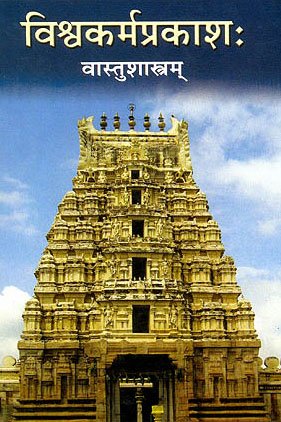
Vastushastra (वास्तुशास्त्र, vāstuśāstra) refers to the ancient Indian science (shastra) of architecture (vastu), dealing with topics such architecture, sculpture, town-building, fort building and various other constructions. Vastu also deals with the philosophy of the architectural relation with the cosmic universe.
Shilpashastra (iconography)
Bilva (बिल्व) refers to one of the various substances used in the process of creating a Canvas, in the ancient Indian art of Painting (citra), according to the Viṣṇudharmottarapurāṇa, an ancient Sanskrit text which (being encyclopedic in nature) deals with a variety of cultural topics such as arts, architecture, music, grammar and astronomy.—Canvas is a kind of surface on which a painter can draw a picture. In ancient time walls are seen to be plastered with different substances (i.e., bilva) and these were prepared for Painting. [...] For the process of kuḍya i.e., plastering on a wall, the painter needs iṣṭakācūrṇa i.e., powder of bricks and mṛd i.e., clay as basic ingredients. [...] Along with this mixture, some more ingredients [viz., double amount of bilva, ... etc.] should be mingled. After that, the mixture should be transferred to a touch stone mortar for the process of pounding.

Shilpashastra (शिल्पशास्त्र, śilpaśāstra) represents the ancient Indian science (shastra) of creative arts (shilpa) such as sculpture, iconography and painting. Closely related to Vastushastra (architecture), they often share the same literature.
Shyanika-shastra (the science of Hawking and Hunting)
Bilva (बिल्व) refers to “(the root of) Bel” (used in the treatment of hawks), according to the Śyainika-śāstra: a Sanskrit treatise dealing with the divisions and benefits of Hunting and Hawking, written by Rājā Rudradeva (or Candradeva) in possibly the 13th century.—Accordingly, [while discussing the treatment of hawks]: “If a hawk does not bathe through fear, and lice with their eggs thrive in its body, to radically destroy them, a powder of long pepper should be scattered over, or the bark of the root of Bel (bilva-mūlatvac) pounded with cow’s urine should be plastered over its body. There is no doubt that this destroys lice with their eggs”.

Shyanika-shastra (श्यैनिकशास्त्र, śyainikaśāstra) deals with ancient Indian skill of hawking/falconry (one of the ways of hunting) which were laid down in a systematic manner in various Sanskrit treatises. It also explains the philosophy behind how the pleasures derived from sense-experience could lead the way to liberation.
General definition (in Hinduism)
Bilva (बिल्व) is the name of the wood-apple tree (Aigle marmelos). It is mentioned in the Brāhmaṇas and in the Atharvaveda, where a reference to its valuable fruit may be intended. According to the Taittirīya Saṃhitā, the sacrificial post was made of Bilva wood in some cases. The Śāṅkhāyana Āraṇyaka contains a hymn in praise of the virtues of an amulet of Bilva (irā-mani bailva).
In Buddhism
Tibetan Buddhism (Vajrayana or tantric Buddhism)
Bilva (बिल्व) refers to one of the eight trees (vṛkṣa) of the Medinīcakra, according to the 10th century Ḍākārṇava chapter 15. Accordingly, the medinīcakra refers to one of the three divisions of the dharma-puṭa (‘dharma layer’), situated in the Herukamaṇḍala. Bilva is associated with the charnel ground (śmaśāna) named Uccāṭaṇa; with the female world-guardian (lokapālinī) named Bhūtinī; with a female serpent (nāginī) and with a female cloud (meghinī).
Bilva (बिल्व) refers to a type of tree, as mentioned in Chapter 12 (“offering food”) of the Susiddhikara-sūtra. Accordingly, “the fruit of the tāla (palmyra) tree, the fruit of the coconut, the fruit of the bilva, the fruit of the nimba (neem), and other malodorous fruits unpleasant to all should not be offered. [...] There are many more kinds of fruit such as the above varieties, but with different names: examine their taste and use them accordingly to make offerings”.
When you wish to offer food [viz., bilva], first cleanse the ground, sprinkle scented water all around, spread out on the ground leaves that have been washed clean, such as lotus leaves, palāśa (dhak) leaves, and leaves from lactescent trees, or new cotton cloth, and then set down the oblatory dishes. [...] First smear and sprinkle the ground and then spread the leaves; wash your hands clean, rinse out your mouth several times, swallow some water, and then you should set down the food [viz., bilva]. [...]

Tibetan Buddhism includes schools such as Nyingma, Kadampa, Kagyu and Gelug. Their primary canon of literature is divided in two broad categories: The Kangyur, which consists of Buddha’s words, and the Tengyur, which includes commentaries from various sources. Esotericism and tantra techniques (vajrayāna) are collected indepently.
In Jainism
General definition (in Jainism)
Bilva (बिल्व) refers to a kind of tree (vṛkṣa) commonly found in the forests (vaṇa) of ancient India, mentioned in the Jñātādharmakathāṅga-sūtra. Forests have been a significant part of the Indian economy since ancient days. They have been considered essential for economic development in as much as, besides bestowing many geographical advantages, they provide basic materials for building, furniture and various industries. The most important forest products are wood and timber which have been used by the mankind to fulfil his various needs—domestic, agricultural and industrial.
Different kinds of trees (e.g., the Bilva tree) provided firewood and timber. The latter was used for furniture, building materials, enclosures, staircases, pillars, agricultural purposes, e. g. for making ploughs, transportation e. g. for making carts, chariots, boats, ships, and for various industrial needs. Vaṇa-kamma was an occupation dealing in wood and in various otherforest products. Iṅgāla-kamma was another occupation which was concerned with preparing charcoal from firewood.
Vilva (विल्व) refers to the tree (Aegle marmelos) associated with Śītalanātha: the tenth of twenty-four Tīrthaṃkaras or Jinas, commonly depicted in Jaina iconography.—Śītalanātha was born of a Kṣatriya family of Malaya Kingdom. His birth-place is named Bhadrikapura or Bhadillapura (Madrapura according to one version). His parent’s names were king Dṛḍharatha and Queen Sunandā respectively. His chowri-bearer was called Rājā Sīmandhara. The tree under which he attained the Kevala knowledge is Vilva (Aegle Marmelos), The Jaina texts assign tohim the Yakṣa named Brahmā and Yakṣiṇī named Aśokā (Digambara: Mānavī). The Digambaras regard the Aśvattha (Ficus religioso)as his emblem, the Śvetāmbaras Śrīvatsa (wishing tree) for the same.

Jainism is an Indian religion of Dharma whose doctrine revolves around harmlessness (ahimsa) towards every living being. The two major branches (Digambara and Svetambara) of Jainism stimulate self-control (or, shramana, ‘self-reliance’) and spiritual development through a path of peace for the soul to progess to the ultimate goal.
Biology (plants and animals)
1) Bilva in India is the name of a plant defined with Aegle marmelos in various botanical sources. This page contains potential references in Ayurveda, modern medicine, and other folk traditions or local practices It has the synonym Feronia pellucida Roth (among others).
2) Bilva is also identified with Crateva adansonii It has the synonym Capparis trifoliata Roxb. (etc.).
3) Bilva is also identified with Semecarpus anacardium It has the synonym Semecarpus anacardium Blume (etc.).
Example references for further research on medicinal uses or toxicity (see latin names for full list):
· Prodromus Systematis Naturalis Regni Vegetabilis (DC.) (1824)
· Transactions of the Linnean Society of London (1800)
· Pl. Coast Corom. (1798)
· Taxon (1979)
· Annales du musée du Congo.
· Suppl. (1782)
If you are looking for specific details regarding Bilva, for example side effects, extract dosage, health benefits, pregnancy safety, diet and recipes, chemical composition, have a look at these references.

This sections includes definitions from the five kingdoms of living things: Animals, Plants, Fungi, Protists and Monera. It will include both the official binomial nomenclature (scientific names usually in Latin) as well as regional spellings and variants.
Languages of India and abroad
Marathi-English dictionary
bilva (बिल्व).—m (S) A tree sacred to śiva, Ӕgle marmelos or Cratæva religiosa. 2 A leaf of it. 3 Its fruit.
Marathi is an Indo-European language having over 70 million native speakers people in (predominantly) Maharashtra India. Marathi, like many other Indo-Aryan languages, evolved from early forms of Prakrit, which itself is a subset of Sanskrit, one of the most ancient languages of the world.
Sanskrit dictionary
Vilva (विल्व) or Bilva.—A species of tree, Aegle Marmelos or wood-apple; its leaves are used in the worship of Śiva.
-lvam 1 The fruit of this tree; बिल्वं बालं कषायोष्णं पाचनं वह्निदीपनम् । संग्राहि तिक्तकटुकं तीक्ष्णं वातकफापहम् (bilvaṃ bālaṃ kaṣāyoṣṇaṃ pācanaṃ vahnidīpanam | saṃgrāhi tiktakaṭukaṃ tīkṣṇaṃ vātakaphāpaham) || Bhāva. P.
2) A particular weight (= one pala).
3) A small pond or pool.
Derivable forms: bilvaḥ (बिल्वः).
Vilva (विल्व).—nt., pool: Mahāvyutpatti 4172 = Tibetan lteṅ ka; placed between taḍāga and utsa.
Vilva (विल्व) or Bilva.—m.
(-lvaḥ) A fruit tree, commonly named Bel, (Ægle marmelos.) n.
(-lvaṃ) 1. The fruit of the Bel. 2. A measure, the same as the Pala. E. vil to divide, Unadi aff. van .
Vilva (विल्व).—I. m. A fruit tree, Aegle marmelos, [Bhartṛhari, (ed. Bohlen.)] 2, 68. Ii. n. 1. Its fruit. 2. A measure, the same as the Pala.
Bilva (बिल्व).—[masculine] [Name] of a tree; [neuter] its fruit, also a cert. weight.
--- OR ---
Vilva (विल्व).—v. bilva.
1) Bilva (बिल्व):—[from vil] m. (in later language also vilva) Aegle Marmelos, the wood-apple tree (commonly called Bel; its delicious fruit when unripe is used medicinally; its leaves, are employed in the ceremonial of the worship of Śiva; cf. [Religious Thought and Life in India 336]), [Atharva-veda] etc. etc.
2) Bilvā (बिल्वा):—[from bilva > vil] f. a kind of plant (= hiṅgu-pattrī), [cf. Lexicographers, esp. such as amarasiṃha, halāyudha, hemacandra, etc.]
3) Bilva (बिल्व):—[from vil] n. the Bilva fruit, [Mahābhārata; Kathāsaritsāgara]
4) [v.s. ...] a [particular] weight (= 1 Pala, = 4 Akṣas, 1/4= Kuḍava), [Suśruta; Śārṅgadhara-saṃhitā]
5) [v.s. ...] a kind of vegetable, [Suśruta]
6) [v.s. ...] a small pond, pool, [cf. Lexicographers, esp. such as amarasiṃha, halāyudha, hemacandra, etc.] (cf. billa).
Vilva (विल्व):—(lvaḥ) 1. m. A fruit tree, Bel. n. Its fruit; the measure Pala.
Bilva (बिल्व):—[Śāntanācārya’s Phiṭsūtrāṇi 4, 9.] in der späteren Sprache auch vilva [1, 24.]
1) m. Aegle Marmelos Corr., ein zu den Citraceen gehöriger Baum, welcher köstliche Früchte (bilva n.) trägt; unreif werden dieselben in der Medicin verwendet. [Yāska’s Nirukta 1, 14.] [Amarakoṣa 2, 4, 2, 12.] [Trikāṇḍaśeṣa 2, 4, 11.] [Hemacandra’s Abhidhānacintāmaṇi 1135.] [Medinīkoṣa v. 24.] [Halāyudha 2, 39.] [Ratnamālā 6.] samāṃ samāṃ vai bilvo gṛbhītaḥ [Aitareyabrāhmaṇa 2, 1.] [Taittirīyasaṃhitā 2, 1, 8, 2.] [The Śatapathabrāhmaṇa 13, 4, 4, 8.] [Atharvavedasaṃhitā 20, 136, 15.] [Kātyāyana’s Śrautasūtrāṇi 6, 1, 9.] [Śāṅkhāyana’s Śrautasūtrāṇi 12, 24, 8.] [GOBH. 4, 1, 7.] [Kauśika’s Sūtra zum Atuarvaveda 8.] [Mahābhārata 3, 2405. 11569. 14, 1709.] [Rāmāyaṇa 2, 56, 7. 91, 30. 94, 8.] [Rāmāyaṇa] [Gorresio 1, 27, 14. 2, 100, 27. 3, 76, 3.] [Spr. 802.] [Brahmapurāṇa] in [Lassen’s Anthologie 52, 13.] [Suśruta 1, 6, 17. 137, 15. 143, 7. 212, 14.] phaleṣu paripakvaṃ yadguṇavattadudāhṛtam . vilvādanyatra vijñeyamāmaṃ taddhi guṇottaram .. [215, 20. 367, 20. 2, 175, 2. 366, 18. 440, 4.] [Mahābhārata 14, 1710.] kuṇīnāmiva vilvāni paṅgūnāmiva dhenavaḥ . hṛtamaiśvaryamasmākaṃ jīvatāṃ bhavataḥ kṛte .. [3, 1270.] (tasya) nāgo vilvamivākramya pothayiṣyāmyahaṃ śiraḥ [4, 732.] khalaḥ sarṣapamātrāṇi paracchidrāṇi paśyati . ātmano vilvamātrāṇi paśyannapi na paśyati .. [Spr. 800.] vilvairhomaṃ vidadhataṃ tatra brāhmaṇam [Kathāsaritsāgara 35, 56.] vilvahomasya saptarātro vilvasaptarātraḥ [Pāṇini’s acht Bücher 6, 2, 97,] [Scholiast] bilvāda [Yāska’s Nirukta 1, 14.] dve vilve kāñcane śubhe [Harivaṃśa 7888.] peśikā, peśī die getrocknete Schale der Bilva-Frucht [Rājanirghaṇṭa im Śabdakalpadruma] [Suśruta 1, 141, 9. 2, 38, 21. 436, 14.] daṇḍa einen Stab von Bilva-Holz tragend, Beiw. Śiva’s [Mahābhārata 14, 196.] Blätter vom Bilva beim Śiva-Cultus angewendet [WILSON], Sel. Works [?II,217. Oxforder Handschriften 74,a,20.] —
2) n. ein best. Gewicht, = 1 Pala [Śabdamālā im Śabdakalpadruma] [Oxforder Handschriften 307,b,7.] = 4 Akṣa = (1/4) Kuḍava [Śārṅgadhara SAṂH. 1, 1, 24.] mātra [Suśruta 2, 35, 10. 350, 14. 15.] —
3) ein best. Gemüse [Suśruta 1, 220, 9.] —
4) f. ā = hiṅgupattrī (vgl. billa) [Rājanirghaṇṭa im Śabdakalpadruma] — Vgl. uruvilvā, kuruvilva, ciravilva, jalavilva, bailva, bailvaka .
--- OR ---
Bilva (बिल्व):—
1) āntarairbhedayitvārīnbilvaṃ bilvena bhedaya [Mahābhārata 12, 3913.]
Bilva (बिल्व):——
1) m. Aegle Marmelos (eine Citracee mit köstlichen Früchten) [Bhāvaprakāśa 1,196.242.] [Rājan 11,191.] [Materia medica of the Hindus 129.] —
2) *f. ā = hiṅgapattrī [Rājan 6,72.] —
3) n. — a) die Frucht von Aegle Marmelos. — b) ein best. Gewicht. — c) ein best. Gemüse.
Bilva (बिल्व) in the Sanskrit language is related to the Prakrit word: Billa.
Sanskrit, also spelled संस्कृतम् (saṃskṛtam), is an ancient language of India commonly seen as the grandmother of the Indo-European language family (even English!). Closely allied with Prakrit and Pali, Sanskrit is more exhaustive in both grammar and terms and has the most extensive collection of literature in the world, greatly surpassing its sister-languages Greek and Latin.
Hindi dictionary
1) Bilva (बिल्व):—(nm) the wood-apple- Aegle mormelos.
2) Vilva (विल्व) [Also spelled vilv]:—(nm) wood-apple tree and its fruit —Aegle marmelos; ~[patra] leaves of the wood apple tree.
...
Kannada-English dictionary
Bilva (ಬಿಲ್ವ):—[noun] the tree Aegle marmelos of Rutaceae family; stone apple tree.
Kannada is a Dravidian language (as opposed to the Indo-European language family) mainly spoken in the southwestern region of India.
See also (Relevant definitions)
Starts with (+20): Bilva karra, Bilva mool, Bilva pathre, Bilva-aku, Bilva-pandu, Bilvaara, Bilvaarada mara, Bilvabija, Bilvachettu, Bilvadanda, Bilvadandin, Bilvadi, Bilvaja, Bilvakalpa, Bilvamadhya, Bilvamangala, Bilvamatra, Bilvamula, Bilvamulaka, Bilvanatha.
Full-text (+386): Uruvilva, Bilvamangala, Bilvapatra, Bilvavana, Ciravilva, Bilvaparni, Urubilva, Bailva, Bilvamula, Vilvam, Raucya, Shakabilva, Bilvadanda, Billa, Bilvaja, Cirivilva, Bilvapattra, Cirabilva, Bilvapatre, Bilvadi.
Relevant text
Search found 183 books and stories containing Bilva, Bilvā, Vilva, Vilvā, Vilvas; (plurals include: Bilvas, Bilvās, Vilvas, Vilvās, Vilvases). You can also click to the full overview containing English textual excerpts. Below are direct links for the most relevant articles:
Dictionaries of Indian languages (Kosha)
Page 559 < [Tamil-Hindi-English, Volume 2]
Page 324 < [Hindi-English-Nepali (1 volume)]
Page 499 < [Tamil-English-Malayalam (1 volume)]
Manasollasa (study of Arts and Sciences) (by Mahadev Narayanrao Joshi)
7. Description and treatment of Fever (Jvara) < [Chapter 5 - Sciences in Someshvara’s Manasollasa]
Physician as depicted in Manasollasa (by Sri B. S. Hebballi)
3. Description of Jvara or Fever < [Chapter 4 - Ancient treatises on Indian medicine]
Tirumantiram by Tirumular (English translation)
Verse 1921: Samadhi Rituals (Cont.) < [Tantra Seven (elam tantiram) (verses 1704-2121)]
Verse 2999: How Lord is Seated < [Tantra Nine (onpatam tantiram) (verses 2649-3047)]
Verse 1720: How Linga is shaped < [Tantra Seven (elam tantiram) (verses 1704-2121)]
Sucindrasthala-mahatmya (critical edition and study) (by Anand Dilip Raj)
Tree Worship in Sucindrasthalamahatmya < [Chapter 4 - Sucindrasthalamahatmya: a critical study]
Chapter 1 - Sthala-mahatmyas of South India
World Journal of Pharmaceutical Research
Aegle marmelos extracts vs. bacterial cold water disease: screening. < [2014: Volume 3, January issue 1]
Bilva and Mandukaparni in managing IBS and Vataja Grahani Roga. < [2022: Volume 11, June issue 7]
Prameha – a penalty for faulty pattern of life < [2023: Volume 12, February issue 3]