Bei, Běi, Bèi, Bēi: 61 definitions
Introduction:
Bei means something in Buddhism, Pali, the history of ancient India. If you want to know the exact meaning, history, etymology or English translation of this term then check out the descriptions on this page. Add your comment or reference to a book if you want to contribute to this summary article.
Images (photo gallery)
In Buddhism
Chinese Buddhism
1) 北 [bei]—uttara, North.
2) 孛 [bei]—Po; plants shooting; a comet.
3) 貝 [bei]—śaṅkha a shell, cowry, conch; valuables, riches; a large trumpet sounded to call the assembly together.
4) 卑 [bei]—Low, inferior; translit. p, pi, v, vy, m.
5) 杯 [bei]—A cup.
6) 背 [bei]—Back, behind; turn the back on, go contrary on the back.
7) 倍 [bei]—Double, double-fold, a fold; to turn from or against, to revolt.
8) 唄 [bei]—pāṭha; pāṭhaka; read, recite, intone, chant, hymns in praise of Buddha; 唄匿 [bei ni] is erroneously said to transliterate the Sanskrit root vi-ne and to be the same as 婆陟 [po zhi] (or 婆師 [po shi]), but these are bhāṣa.
9) 梖 [bei]—pattra; 梖多葉 [bei duo ye] the palm-leaves used for writing; the 梖多樹 [bei duo shu] is erroneously said to be the borassus flabelliformis, described as 60 or 70 feet high, not deciduous, the bark used for writing.
10) 被 [bei]—A quilt, coverlet; to cover; to suffer; sign of the passive.
11) 悲 [bei]—karuṇā; kṛpā. Sympathy, pity for another in distress and the desire to help him, sad.
12) 碑 [bei]—A stone tablet, or monument.
[The following represents an unverified English translation. For all purposes consult the original Chinese text.]
唄 [bei]—(bài) — [Miscellaneous Word] An abbreviation of 匿 [ni] (bài nì). It refers to the chanting or singing of Sanskrit sounds. See the entry for 匿 [ni].
唄—【雜語】唄匿之略。梵音之歌詠也。見唄匿條。(唄匿)
[zá yǔ] bei nì zhī lüè. fàn yīn zhī gē yǒng yě. jiàn bei nì tiáo.(bei nì)
[za yu] bei ni zhi lue. fan yin zhi ge yong ye. jian bei ni tiao.(bei ni)
[The following represents an unverified English translation. For all purposes consult the original Chinese text.]
貝 [bei]—Bèi — [Noun] It is the dharma conch (法螺 [fa luo]), which is blown to announce the time of Buddhist rituals (法事 [fa shi]) and gather the assembly (大眾 [da zhong]). The Lotus Sutra (法華經 [fa hua jing]) states: "Beat drums and blow horns and conches," referring to the dharma conch.
貝—【物名】即法螺也,吹之以報法事之時期招集大眾者。法華經曰:「擊鼓吹角貝。」(法螺)
[wù míng] jí fǎ luó yě, chuī zhī yǐ bào fǎ shì zhī shí qī zhāo jí dà zhòng zhě. fǎ huá jīng yuē: “jī gǔ chuī jiǎo bèi.” (fǎ luó)
[wu ming] ji fa luo ye, chui zhi yi bao fa shi zhi shi qi zhao ji da zhong zhe. fa hua jing yue: "ji gu chui jiao bei." (fa luo)
[The following represents an unverified English translation. For all purposes consult the original Chinese text.]
悲 [bei]—(Bēi) — [Technical term] From Sanskrit Karuṇā, or 跛哩泥嚩 [bo li ni mo] (bǎlǐníwā) Parideva, it is the feeling of being pained by the suffering of others and desiring to relieve it. The Eleven Chapters of Mahayana Meanings (大乘義章十一 [da cheng yi zhang shi yi]) states: "Cherishing and pitying is called Cí (慈 [ci]), being pained is called Bēi." It also says: "Cí (慈 [ci]) can give joy, Bēi can remove suffering." The Sanskrit Miscellaneous Names (梵語雜名 [fan yu za ming]) states: "Bēi is 跛哩泥嚩 [bo li ni mo] (bǎlǐníwā) Parideva."
悲—【術語】梵語 Karuṇā,或跛哩泥嚩 Parideva,惻愴他人之苦而欲救濟之之心也。大乘義章十一曰:「愛憐名慈,惻愴曰悲。」又曰:「慈能與樂,悲能拔苦。」梵語雜名曰:「悲,跛哩泥嚩。」
[shù yǔ] fàn yǔ Karuṇā, huò bǒ lī ní mó Parideva, cè chuàng tā rén zhī kǔ ér yù jiù jì zhī zhī xīn yě. dà chéng yì zhāng shí yī yuē: “ài lián míng cí, cè chuàng yuē bēi.” yòu yuē: “cí néng yǔ lè, bēi néng bá kǔ.” fàn yǔ zá míng yuē: “bēi, bǒ lī ní mó.”
[shu yu] fan yu Karuna, huo bo li ni mo Parideva, ce chuang ta ren zhi ku er yu jiu ji zhi zhi xin ye. da cheng yi zhang shi yi yue: "ai lian ming ci, ce chuang yue bei." you yue: "ci neng yu le, bei neng ba ku." fan yu za ming yue: "bei, bo li ni mo."
[The following represents an unverified English translation. For all purposes consult the original Chinese text.]
碑 [bei]—(bēi) — [物名 [wu ming] (wù míng)] An object, such as a stone tablet or stele, on which the deeds or eulogies of deceased persons are carved, and which is erected in a place visible to all, with the aim of ensuring their achievements are eternally remembered.
碑—【物名】欲使永知死人之功績,以其事蹟或讚辭等刻於石等,建之於眾人共見之處者。
[wù míng] yù shǐ yǒng zhī sǐ rén zhī gōng jī, yǐ qí shì jī huò zàn cí děng kè yú shí děng, jiàn zhī yú zhòng rén gòng jiàn zhī chù zhě.
[wu ming] yu shi yong zhi si ren zhi gong ji, yi qi shi ji huo zan ci deng ke yu shi deng, jian zhi yu zhong ren gong jian zhi chu zhe.
[The following represents an unverified English translation. For all purposes consult the original Chinese text.]
被 [bei]—(bèi) - A type of 衣服 [yi fu] (yīfu) (garment) used to cover the body when lying down. The 章服儀 [zhang fu yi] (zhāngfúyí) (Book of Attire Regulations) refers to it as a 單 [dan] (bèidān) (quilt cover).
被—【衣服】臥時覆身之物也,章服儀謂為被單。
[yī fú] wò shí fù shēn zhī wù yě, zhāng fú yí wèi wèi bèi dān.
[yi fu] wo shi fu shen zhi wu ye, zhang fu yi wei wei bei dan.
1) 輩 t = 辈 s = bèi p refers to [noun] “kind of; bhāgīya”; Domain: Buddhism 佛教 [fu jiao]; Notes: Sanskrit equivalent: bhāgīya, Pali: bhāgiya, Japanese: hai (BCSD '輩 [bei]', p. 1135; Edgerton 1953 'bhāgīya', p. 408; MW 'bhāgīya'; Unihan '輩 [bei]').
2) 倍 ts = bèi p refers to [noun] “a multiplier; guṇa”; Domain: Buddhism 佛教 [fu jiao]; Notes: Sanskrit equivalent: guṇa (BCSD '倍 [bei]', p. 142; MW 'guṇa')..
3) 北 ts = běi p refers to [noun] “north”; Domain: Buddhism 佛教 [fu jiao]; Notes: Sanskrit equivalent: uttara, Japanese: hoku, Tibetan: byang (BCSD '北 [bei]', p. 213; DJBT '北 [bei]', p. 432; Mahāvyutpatti 'uttaraḥ'; MW 'uttara'; SH '北 [bei]', p. 168)..
4) 陂 ts = bēi p refers to [noun] “embankment”; Domain: Buddhism 佛教 [fu jiao]; Notes: Japanese: ha, or: hi (BCSD '陂 [bei]', p. 1210; Unihan '陂 [bei]')..
5) 孛 ts = bèi p refers to [noun] “blossom; puṣya”; Domain: Buddhism 佛教 [fu jiao]; Notes: Sanskrit equivalent: puṣya, Japanese: botsu, or: hai (BCSD '孛 [bei]', p. 369; MW 'puṣya'; SH '孛 [bei]', p. 236; Unihan '孛 [bei]')..
6) 背 ts = bèi p refers to [noun] “back; pṛṣṭha”; Domain: Buddhism 佛教 [fu jiao]; Notes: Sanskrit equivalent: pṛṣṭha, Japanese: hai, Tibetan: rgyab (BCSD '背 [bei]', p. 963; Mahāvyutpatti 'pṛṣṭhaṃ'; MW 'pṛṣṭha'; SH '背 [bei]', p. 311; Unihan '背 [bei]')..
7) 悲 ts = bēi p refers to [noun] “Kindness”; Domain: Buddhism 佛教 [fu jiao] , Subdomain: Fo Guang Shan; Notes: (Glossary of Humanistic Buddhism)..
8) 悲 ts = bēi p refers to [noun] “compassion; empathy; karuna”; Domain: Buddhism 佛教 [fu jiao]; Notes: Sanskrit equivalent: karuṇā, or: kāruṇya, Pali: karuṇā, Japanese: hi, Tibetan: snying rje; one of the 四無量心 [si wu liang xin] 'four immeasurables' (ABC 'bēi' bf; BCSD '悲 [bei]', p. 483; BL 'karuṇā'; Ci Yuan '悲 [bei]' 3; FGDB '悲 [bei]'; Kroll 2015 '悲 [bei]' 4, p. 12; Mahāvyutpatti 'karuṇā'; MW 'karuṇā'; SH '悲 [bei]', p. 371)..
9) 備 t = 备 s = bèi p refers to [adjective] “gathered; udyojita”; Domain: Buddhism 佛教 [fu jiao]; Notes: Sanskrit equivalent: udyojita (BCSD '備 [bei]', p. 146; Mahāvyutpatti 'udyojitaḥ'; MW 'udyojita')..
10) 被 ts = bèi p refers to [verb] “to cover; prāvṛta”; Domain: Buddhism 佛教 [fu jiao]; Notes: Sanskrit equivalent: prāvṛta, Japanese: hi (BCSD '被 [bei]', p. 1050; MW 'prāvṛta'; SH '被 [bei]', p. 363; Unihan '被 [bei]')..
11) 卑 ts = bēi p refers to [adjective] “inferior; hīna”; Domain: Buddhism 佛教 [fu jiao]; Notes: Sanskrit equivalent: hīna (BCSD '卑 [bei]', p. 220; MW 'hīna'; SH '卑 [bei]', p. 251)..
Chinese Buddhism (漢傳佛教, hanchuan fojiao) is the form of Buddhism that developed in China, blending Mahayana teachings with Daoist and Confucian thought. Its texts are mainly in Classical Chinese, based on translations from Sanskrit. Major schools include Chan (Zen), Pure Land, Tiantai, and Huayan. Chinese Buddhism has greatly influenced East Asian religion and culture.
India history and geography
Bei refers to “Place of bathing the bride or the groom”.—It is included in the glossary section of the study on the Sonowal and Thengal Kacharis tribes of Assam (India) who possess a rich cultural heritage, folk customs, local traditions and oral histories
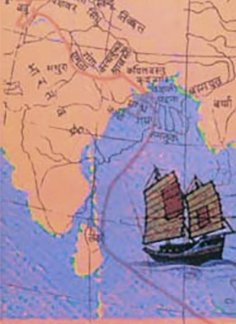
The history of India traces the identification of countries, villages, towns and other regions of India, as well as mythology, zoology, royal dynasties, rulers, tribes, local festivities and traditions and regional languages. Ancient India enjoyed religious freedom and encourages the path of Dharma, a concept common to Buddhism, Hinduism, and Jainism.
Languages of India and abroad
Chinese-English dictionary
[The following represents an unverified English translation. For all purposes consult the original Chinese text.]
孛 [bèi] [bei]—
[Adverb]
Face (臉部 [lian bu]) changes color (變色 [bian se]). Same as "勃 [bo]". For example: "然大怒 [ran da nu]" (suddenly furious, face turning red with anger).
[Prefix]
Placed before nouns (名詞 [ming ci]). For example: "老 [lao]" (an old man in Yuan dynasty plays (元劇 [yuan ju]), referring to an old male (年老男性 [nian lao nan xing])).
孛:[副]
臉部變色。同「勃」。如:「孛然大怒」。
[綴]
置於名詞前。如:「孛老」(為元劇中的年老男性)。
bèi:[fù]
liǎn bù biàn sè. tóng “bó” . rú: “bèi rán dà nù” .
[zhuì]
zhì yú míng cí qián. rú: “bèi lǎo” (wèi yuán jù zhōng de nián lǎo nán xìng).
bei:[fu]
lian bu bian se. tong "bo" . ru: "bei ran da nu" .
[zhui]
zhi yu ming ci qian. ru: "bei lao" (wei yuan ju zhong de nian lao nan xing).
[The following represents an unverified English translation. For all purposes consult the original Chinese text.]
悖 [bèi] [bei]—
Adjective
Vigorous; flourishing. Interchangeable with `勃 [bo]` (bó). From "Zuo Zhuan" (左傳 [zuo chuan]), "Duke Zhuang" (莊公 [zhuang gong]) Year 11: "Yu" (禹 [yu]) and "Tang" (湯 [tang]) blamed themselves, and their rise was vigorous.
悖:[形]
旺盛。通「勃」。《左傳.莊公十一年》:「禹湯罪己,其興也悖焉。」
bèi:[xíng]
wàng shèng. tōng “bó” . < zuǒ chuán. zhuāng gōng shí yī nián>: “yǔ tāng zuì jǐ, qí xìng yě bèi yān.”
bei:[xing]
wang sheng. tong "bo" . < zuo chuan. zhuang gong shi yi nian>: "yu tang zui ji, qi xing ye bei yan."
[The following represents an unverified English translation. For all purposes consult the original Chinese text.]
北 [běi] [bei]—
The pronunciation of 一 [yi] (yī).
北:(一)之讀音。
běi:(yī) zhī dú yīn.
bei:(yi) zhi du yin.
[The following represents an unverified English translation. For all purposes consult the original Chinese text.]
唄 [bei]—
Noun
In India (印度 [yin du]), both chanting scriptures (詠經 [yong jing]) and singing praises (唱讚 [chang zan]) are called '' (bài). In China (中國 [zhong guo]), only singing praises (唱讚 [chang zan]) is called '' (bài). From Emperor Jianwen (簡文帝 [jian wen di]) of the Southern Dynasties Liang (南朝梁 [nan chao liang])'s 'Stele of Stone Statues in Wu Commandery' (吳郡石像碑 [wu jun shi xiang bei]): "We prostrate and take refuge (頂禮歸依 [ding li gui yi]), singing '' (bài) to praise virtue (歌贊德 [ge zan de])."
唄:[名]
印度詠經或唱讚都稱為「唄」,在中國只有唱讚稱為「唄」。南朝梁.簡文帝〈吳郡石像碑〉:「頂禮歸依,歌唄贊德。」
bei:[míng]
yìn dù yǒng jīng huò chàng zàn dōu chēng wèi “bei” , zài zhōng guó zhǐ yǒu chàng zàn chēng wèi “bei” . nán cháo liáng. jiǎn wén dì 〈wú jùn shí xiàng bēi〉: “dǐng lǐ guī yī, gē bei zàn dé.”
bei:[ming]
yin du yong jing huo chang zan dou cheng wei "bei" , zai zhong guo zhi you chang zan cheng wei "bei" . nan chao liang. jian wen di
[The following represents an unverified English translation. For all purposes consult the original Chinese text.]
杯 [bēi] [bei]—
Noun
1. A vessel for holding liquids such as wine (酒 [jiu]), water (水 [shui]), or tea (茶 [cha]). In The Scholars (《儒林外史 [ru lin wai shi]》), Chapter 1: "Wang Mian (王冕 [wang mian]) held a cup in his left hand (左手 [zuo shou]) and the stars in the sky (天上的星 [tian shang de xing]) in his right, saying to Old Man Qin (秦老 [qin lao]): 'Look, Guansuo (貫索 [guan suo]) is offending Wenchang (文昌 [wen chang]); a generation of literati (文人 [wen ren]) will face calamity (有厄 [you e])!' "
2. A prize (獎品 [jiang pin]) for winning a competition (競賽 [jing sai]), also used by extension to refer to the competition (競賽 [jing sai]) itself. Examples: trophy (獎 [jiang]), World Cup (世界 [shi jie]). Today, the character 盃 [bei] (bēi) is more commonly used.
3. Measure word (量詞 [liang ci]). A unit (單位 [dan wei]) for counting things contained in a cup (裝物 [zhuang wu]). Examples: one cup of water (一水 [yi shui]), two cups of flour (兩麵粉 [liang mian fen]).
杯:[名]
1.一種盛酒、水、茶等液體的器皿。《儒林外史》第一回:「王冕左手持杯,右手持著天上的星,向秦老道:『你看貫索犯文昌,一代文人有厄!』」
2.競賽優勝的獎品,也借指競賽。如:「獎杯」、「世界杯」。今多用「盃」字。
3.量詞。計算杯裝物的單位。如:「一杯水」、「兩杯麵粉」。
bēi:[míng]
1. yī zhǒng shèng jiǔ,, shuǐ,, chá děng yè tǐ de qì mǐn. < rú lín wài shǐ> dì yī huí: “wáng miǎn zuǒ shǒu chí bēi, yòu shǒu chí zhe tiān shàng de xīng, xiàng qín lǎo dào: ‘nǐ kàn guàn suǒ fàn wén chāng, yī dài wén rén yǒu è! ’ ”
2. jìng sài yōu shèng de jiǎng pǐn, yě jiè zhǐ jìng sài. rú: “jiǎng bēi” ,, “shì jiè bēi” . jīn duō yòng “bēi” zì.
3. liàng cí. jì suàn bēi zhuāng wù de dān wèi. rú: “yī bēi shuǐ” ,, “liǎng bēi miàn fěn” .
bei:[ming]
1. yi zhong sheng jiu,, shui,, cha deng ye ti de qi min. < ru lin wai shi> di yi hui: "wang mian zuo shou chi bei, you shou chi zhe tian shang de xing, xiang qin lao dao: 'ni kan guan suo fan wen chang, yi dai wen ren you e! ' "
2. jing sai you sheng de jiang pin, ye jie zhi jing sai. ru: "jiang bei" ,, "shi jie bei" . jin duo yong "bei" zi.
3. liang ci. ji suan bei zhuang wu de dan wei. ru: "yi bei shui" ,, "liang bei mian fen" .
[The following represents an unverified English translation. For all purposes consult the original Chinese text.]
盃 [bēi] [bei]—
[Noun]
1. A vessel for holding liquids such as wine, water, tea, etc. Same as 「杯 [bei]」 (bēi).
Han Dynasty, Sima Qian, "Letter to Ren Shaoqing" (〈報任少卿書 [bao ren shao qing shu]〉): "Li Ling (李陵 [li ling]) and I (僕 [pu]) were both retainers (門下 [men xia]), and we had never been particularly close (素非能相善也 [su fei neng xiang shan ye]). Our paths (趨舍 [qu she]) diverged (異路 [yi lu]), and we never shared a cup of wine (銜酒 [xian jiu]) or enjoyed intimate conversations (接殷勤之餘歡 [jie yin qin zhi yu huan])."
2. A prize for winning a competition, also by extension referring to the competition itself. Same as 「杯 [bei]」 (bēi).
Examples: 「獎 [jiang]」 (jiǎngbēi, trophy), 「世界 [shi jie]」 (shìjièbēi, World Cup).
3. Measure word. Using the capacity of a 「」 (bēi) as a unit of measurement.
Three Kingdoms, Wei Dynasty. Ji Kang (嵇康 [ji kang]), "Letter to Shan Juyuan Declaring Our Breakup" (〈與山巨源絕交書 [yu shan ju yuan jue jiao shu]〉): "One cup (一 [yi]) of turbid wine (濁酒 [zhuo jiu]), one piece of music (一曲 [yi qu]) played on the qin (彈琴 [dan qin]), and my aspirations (志願 [zhi yuan]) are fulfilled (畢矣 [bi yi])!"
盃:[名]
1.一種盛酒、水、茶等液體的器皿。同「杯」。漢.司馬遷〈報任少卿書〉:「僕與李陵俱居門下,素非能相善也,趨舍異路,未嘗銜盃酒,接殷勤之餘歡。」
2.競賽優勝的獎品,也借指競賽。同「杯」。如:「獎盃」、「世界盃」。
3.量詞。以盃的容量作為計算的單位。三國魏.嵇康〈與山巨源絕交書〉:「濁酒一盃,彈琴一曲,志願畢矣!」
bēi:[míng]
1. yī zhǒng shèng jiǔ,, shuǐ,, chá děng yè tǐ de qì mǐn. tóng “bēi” . hàn. sī mǎ qiān 〈bào rèn shǎo qīng shū〉: “pú yǔ lǐ líng jù jū mén xià, sù fēi néng xiāng shàn yě, qū shě yì lù, wèi cháng xián bēi jiǔ, jiē yīn qín zhī yú huān.”
2. jìng sài yōu shèng de jiǎng pǐn, yě jiè zhǐ jìng sài. tóng “bēi” . rú: “jiǎng bēi” ,, “shì jiè bēi” .
3. liàng cí. yǐ bēi de róng liàng zuò wèi jì suàn de dān wèi. sān guó wèi. jī kāng 〈yǔ shān jù yuán jué jiāo shū〉: “zhuó jiǔ yī bēi, dàn qín yī qū, zhì yuàn bì yǐ! ”
bei:[ming]
1. yi zhong sheng jiu,, shui,, cha deng ye ti de qi min. tong "bei" . han. si ma qian
2. jing sai you sheng de jiang pin, ye jie zhi jing sai. tong "bei" . ru: "jiang bei" ,, "shi jie bei" .
3. liang ci. yi bei de rong liang zuo wei ji suan de dan wei. san guo wei. ji kang
[The following represents an unverified English translation. For all purposes consult the original Chinese text.]
桮 [bēi] [bei]—
[Noun]
A vessel for holding liquids such as soup or wine. Same as `杯 [bei] (bēi)`.
`Shuowen Jiezi (說文解字 [shuo wen jie zi])`, `Wood Radical (木部 [mu bu])`: "`(bēi)`, a `㔶 [gong] (kui)`."
`Qing Dynasty (清 [qing])` `Duan Yucai (段玉裁 [duan yu cai])`'s commentary: "Anciently, `(bēi)` was used to hold soup (`羹 [geng], gēng`), `圈 [quan] (bēi quān)` is this."
`Records of the Grand Historian (史記 [shi ji])`, `Volume 7 (卷七 [juan qi])`, `Annals of Xiang Yu (項羽本紀 [xiang yu ben ji])`: "If you must boil your father, then please share a `(bēi)` of the soup (`羹 [geng], gēng`) with me."
`Ming Dynasty (明 [ming])` `Song Zhengyu (宋徵輿 [song zheng yu])`'s `Xiao Chongshan (小重山 [xiao zhong shan])` (title: `Spring Stream Half Encircles Phoenix Terrace (春流半繞鳳凰臺 [chun liu ban rao feng huang tai])`) `ci (詞 [ci])`: "Ten years of moonlit nights with flowers, floating golden `(bēi)`. Jade flutes wailing, painted boats set sail."
桮:[名]
盛湯、酒等液體的器皿。同「杯」。《說文解字.木部》:「桮,㔶也。」清.段玉裁.注:「古以桮盛羹,桮圈是也。」《史記.卷七.項羽本紀》:「必欲烹而翁,則幸分我一桮羹。」明.宋徵輿〈小重山.春流半繞鳳凰臺〉詞:「十年花月夜,汎金桮。玉簫嗚咽畫船開。」
bēi:[míng]
shèng tāng,, jiǔ děng yè tǐ de qì mǐn. tóng “bēi” . < shuō wén jiě zì. mù bù>: “bēi, gòng yě.” qīng. duàn yù cái. zhù: “gǔ yǐ bēi shèng gēng, bēi quān shì yě.” < shǐ jì. juǎn qī. xiàng yǔ běn jì>: “bì yù pēng ér wēng, zé xìng fēn wǒ yī bēi gēng.” míng. sòng zhēng yú 〈xiǎo zhòng shān. chūn liú bàn rào fèng huáng tái〉 cí: “shí nián huā yuè yè, fàn jīn bēi. yù xiāo wū yàn huà chuán kāi.”
bei:[ming]
sheng tang,, jiu deng ye ti de qi min. tong "bei" . < shuo wen jie zi. mu bu>: "bei, gong ye." qing. duan yu cai. zhu: "gu yi bei sheng geng, bei quan shi ye." < shi ji. juan qi. xiang yu ben ji>: "bi yu peng er weng, ze xing fen wo yi bei geng." ming. song zheng yu
[The following represents an unverified English translation. For all purposes consult the original Chinese text.]
卑 [bēi] [bei]—
[形 [xing]]
1. 低下 [di xia] (dī xià), 低微 [di wei] (dī wēi). For example: 賤 [jian] (bēi jiàn - humble and lowly), 天尊地 [tian zun de] (tiān zūn dì bēi - Heaven is high, Earth is low; refers to the hierarchical order of the universe). 南朝梁 [nan chao liang] (Náncháo Liáng).沈約 [chen yue] (Shěn Yuē)〈恩倖傳論 [en xing chuan lun]〉(Ēnxìng Zhuàn Lùn - On the Eunuchs and Favorites): "The ruler considered them to be of humble status and low position, thinking their power could not be significant."
2. 衰微 [shuai wei] (shuāi wēi), 沒落 [mei luo] (mò luò). 《國語 [guo yu].周語上 [zhou yu shang]》 (Guóyǔ.Zhōu Yǔ Shàng - Discourses of the States, Discourses of Zhou, Part One): "Will the royal house decline?"
3. 簡陋 [jian lou] (jiǎnlòu). 漢 [han] (Hàn).張衡 [zhang heng] (Zhāng Héng)〈東京賦 [dong jing fu]〉(Dōngjīng Fù - Ode to the Eastern Capital): "admired the thatched huts of 唐虞 [tang yu] (Táng Yú - Tang and Yu), and thought of the humble dwellings of 夏后 [xia hou] (Xiàhòu - Xiahou)."
4. 品格低劣 [pin ge di lie] (pǐngé dīliè). 《孟子 [meng zi].公孫丑上 [gong sun chou shang]》 (Mèngzǐ.Gōngsūn Chǒu Shàng - Mencius, Gongsun Chou, Part One): "Engaged in state affairs for so long; yet his achievements were so meager."
5. 謙恭 [qian gong] (qiāngōng). For example: 謙 [qian] (qiān bēi - humble), 躬屈膝 [gong qu xi] (bēi gōng qū xī - to bow and scrape, to fawn), 詞厚禮 [ci hou li] (bēi cí hòu lǐ - humble words and generous gifts).
[名 [ming]]
A low place. For example: 登高必自 [deng gao bi zi] (dēng gāo bì zì bēi - One who ascends to a height must start from a low place).
[動 [dong]]
1. To make simple and crude, to debase. 《論語 [lun yu].秦伯 [qin bo]》 (Lúnyǔ.Qín Bó - Analects, Qin Bo): "to humble his palaces and exert all efforts on irrigation ditches." 宋 [song] (Sòng).邢昺 [xing bing] (Xíng Bǐng).疏 [shu] (Shū - Commentary): "It means 禹 [yu] (Yǔ - Yu) humbled the palaces where he lived and exerted all efforts to manage the irrigation ditches in the fields."
2. To look down upon, to despise. 《國語 [guo yu].晉語四 [jin yu si]》 (Guóyǔ.Jìn Yǔ Sì - Discourses of the States, Discourses of Jin, Part Four): "秦 [qin] (Qín) and 晉 [jin] (Jìn) are equals, why do you despise me?"
卑:[形]
1.低下、低微。如:「卑賤」、「天尊地卑」。南朝梁.沈約〈恩倖傳論〉:「人主謂其身卑位薄,以為權不得重。」
2.衰微、沒落。《國語.周語上》:「王室其將卑乎?」
3.簡陋。漢.張衡〈東京賦〉:「慕唐虞之茅茨,思夏后之卑室。」
4.品格低劣。《孟子.公孫丑上》:「行乎國政,如彼其久也;功烈,如彼其卑也。」
5.謙恭。如:「謙卑」、「卑躬屈膝」、「卑詞厚禮」。
[名]
低下的地方。如:「登高必自卑」。
[動]
1.使簡陋、低俗。《論語.秦伯》:「卑宮室而盡力乎溝洫。」宋.邢昺.疏:「言禹卑下所居之宮室而盡力以治田間之溝洫。」
2.輕視、藐視。《國語.晉語四》:「秦、晉匹也,何以卑我?」
bēi:[xíng]
1. dī xià,, dī wēi. rú: “bēi jiàn” ,, “tiān zūn de bēi” . nán cháo liáng. chén yuē 〈ēn xìng chuán lùn〉: “rén zhǔ wèi qí shēn bēi wèi báo, yǐ wèi quán bù dé zhòng.”
2. shuāi wēi,, méi luò. < guó yǔ. zhōu yǔ shàng>: “wáng shì qí jiāng bēi hū?”
3. jiǎn lòu. hàn. zhāng héng 〈dōng jīng fù〉: “mù táng yú zhī máo cí, sī xià hòu zhī bēi shì.”
4. pǐn gé dī liè. < mèng zi. gōng sūn chǒu shàng>: “xíng hū guó zhèng, rú bǐ qí jiǔ yě; gōng liè, rú bǐ qí bēi yě.”
5. qiān gōng. rú: “qiān bēi” ,, “bēi gōng qū xī” ,, “bēi cí hòu lǐ” .
[míng]
dī xià de de fāng. rú: “dēng gāo bì zì bēi” .
[dòng]
1. shǐ jiǎn lòu,, dī sú. < lùn yǔ. qín bó>: “bēi gōng shì ér jǐn lì hū gōu xù.” sòng. xíng bǐng. shū: “yán yǔ bēi xià suǒ jū zhī gōng shì ér jǐn lì yǐ zhì tián jiān zhī gōu xù.”
2. qīng shì,, miǎo shì. < guó yǔ. jìn yǔ sì>: “qín,, jìn pǐ yě, hé yǐ bēi wǒ?”
bei:[xing]
1. di xia,, di wei. ru: "bei jian" ,, "tian zun de bei" . nan chao liang. chen yue
2. shuai wei,, mei luo. < guo yu. zhou yu shang>: "wang shi qi jiang bei hu?"
3. jian lou. han. zhang heng
4. pin ge di lie. < meng zi. gong sun chou shang>: "xing hu guo zheng, ru bi qi jiu ye; gong lie, ru bi qi bei ye."
5. qian gong. ru: "qian bei" ,, "bei gong qu xi" ,, "bei ci hou li" .
[ming]
di xia de de fang. ru: "deng gao bi zi bei" .
[dong]
1. shi jian lou,, di su. < lun yu. qin bo>: "bei gong shi er jin li hu gou xu." song. xing bing. shu: "yan yu bei xia suo ju zhi gong shi er jin li yi zhi tian jian zhi gou xu."
2. qing shi,, miao shi. < guo yu. jin yu si>: "qin,, jin pi ye, he yi bei wo?"
[The following represents an unverified English translation. For all purposes consult the original Chinese text.]
椑 [bēi] [bei]—
See the entry for '柿 [shi]'.
椑:參見「椑柿」條。
bēi: cān jiàn “bēi shì” tiáo.
bei: can jian "bei shi" tiao.
[The following represents an unverified English translation. For all purposes consult the original Chinese text.]
碑 [bēi] [bei]—
[Noun]
1. A large upright stone block (石塊 [shi kuai]) or wooden pillar (木柱 [mu zhu]). In ancient times (古代 [gu dai]), it was used for observing sundials (日影 [ri ying]), tethering livestock (拴綁牲口 [shuan bang sheng kou]), guiding coffins into graves (引棺入穴 [yin guan ru xue]), etc. It sometimes had holes (穿孔 [chuan kong]) on top. Shuowen Jiezi - Stone Radical (《說文解字 [shuo wen jie zi].石部 [shi bu]》) states: "Bei, an upright stone (豎石 [shu shi])." Duan Yucai's (段玉裁 [duan yu cai]) annotation from the Qing (清 [qing]) Dynasty states: "Zheng's (鄭 [zheng]) annotation to the Pinli (《聘禮 [pin li]》) says: 'Palaces (宮 [gong]) must have a bei, used to mark the sun's shadow (日景 [ri jing]) and guide yin (陰 [yin]) and yang (陽 [yang]); for all bei used to guide objects, in ancestral temples (宗廟 [zong miao]) they are adorned with sacrificial animals (麗牲 [li sheng]); their material, for palaces and temples (宮廟 [gong miao]) is stone (石 [shi]), and for burials (窆 [bian]) it is wood (木 [mu]).'"
2. A stone block (石塊 [shi kuai]) engraved with text (文字 [wen zi]) or patterns (圖案 [tu an]), erected as a marker (標誌 [biao zhi]) or for commemorative purposes (紀念 [ji nian]). E.g., boundary marker (界 [jie]), milestone (里程 [li cheng]), monument (紀念 [ji nian]).
3. A genre of writing (文體名 [wen ti ming]). Inscriptions (文詞 [wen ci]) carved on stone (石 [shi]), used to praise merits (功德 [gong de]), or record the deeds and conduct (言行 [yan xing]) of the deceased. E.g., The Stele of Songgao Lingmiao (嵩高靈廟 [song gao ling miao]) from the Northern Wei (北魏 [bei wei]) Dynasty, The Stele of Jing Shijun (敬史君 [jing shi jun]) from the Eastern Wei (東魏 [dong wei]) Dynasty.
4. Calligraphic material (書法資料 [shu fa zi liao]) from stone inscriptions (刻 [ke]). Refers to taking rubbings (搨摹 [ta mo]) of the text (文字 [wen zi]) on the front (陽 [yang]), back (陰 [yin]), sides (側 [ce]), top (額 [e]), and base (趺 [fu]) of a stele, for calligraphy practice (書法臨寫 [shu fa lin xie]). E.g., The Liqi Bei (禮器 [li qi]), The Cao Quan Bei (曹全 [cao quan]), The Zhang Menglong Bei (張猛龍 [zhang meng long]) from the Northern Wei (北魏 [bei wei]) Dynasty.
碑:[名]
1.豎起來的大石塊或木柱。古代用來觀測日影、拴綁牲口、引棺入穴等。上或有穿孔。《說文解字.石部》:「碑,豎石也。」清.段玉裁.注:「《聘禮》鄭注曰:『宮必有碑,所以識日景,引陰陽也;凡碑引物者宗廟則麗牲焉;其材,宮廟以石,窆用木。』」
2.刻上文字或圖案的石塊,豎立起來作為標誌,或紀念之用。如:「界碑」、「里程碑」、「紀念碑」。
3.文體名。刻在石上的文詞,用以頌揚功德,或記載死者的行誼等。如:「北魏嵩高靈廟碑」、「東魏敬史君碑」。
4.碑刻的書法資料。指將碑的正面(碑陽)、背面(碑陰)、兩旁(碑側)、上頭(碑額)、下座(碑趺)上面的文字搨摹下來,以供書法臨寫。如:「禮器碑」、「曹全碑」、「北魏張猛龍碑」。
bēi:[míng]
1. shù qǐ lái de dà shí kuài huò mù zhù. gǔ dài yòng lái guān cè rì yǐng,, shuān bǎng shēng kǒu,, yǐn guān rù xué děng. shàng huò yǒu chuān kǒng. < shuō wén jiě zì. shí bù>: “bēi, shù shí yě.” qīng. duàn yù cái. zhù: “ < pìn lǐ> zhèng zhù yuē: ‘gōng bì yǒu bēi, suǒ yǐ shí rì jǐng, yǐn yīn yáng yě; fán bēi yǐn wù zhě zōng miào zé lì shēng yān; qí cái, gōng miào yǐ shí, biǎn yòng mù.’ ”
2. kè shàng wén zì huò tú àn de shí kuài, shù lì qǐ lái zuò wèi biāo zhì, huò jì niàn zhī yòng. rú: “jiè bēi” ,, “lǐ chéng bēi” ,, “jì niàn bēi” .
3. wén tǐ míng. kè zài shí shàng de wén cí, yòng yǐ sòng yáng gōng dé, huò jì zài sǐ zhě de xíng yì děng. rú: “běi wèi sōng gāo líng miào bēi” ,, “dōng wèi jìng shǐ jūn bēi” .
4. bēi kè de shū fǎ zī liào. zhǐ jiāng bēi de zhèng miàn (bēi yáng),, bèi miàn (bēi yīn),, liǎng páng (bēi cè),, shàng tóu (bēi é),, xià zuò (bēi fū) shàng miàn de wén zì tà mó xià lái, yǐ gōng shū fǎ lín xiě. rú: “lǐ qì bēi” ,, “cáo quán bēi” ,, “běi wèi zhāng měng lóng bēi” .
bei:[ming]
1. shu qi lai de da shi kuai huo mu zhu. gu dai yong lai guan ce ri ying,, shuan bang sheng kou,, yin guan ru xue deng. shang huo you chuan kong. < shuo wen jie zi. shi bu>: "bei, shu shi ye." qing. duan yu cai. zhu: " < pin li> zheng zhu yue: 'gong bi you bei, suo yi shi ri jing, yin yin yang ye; fan bei yin wu zhe zong miao ze li sheng yan; qi cai, gong miao yi shi, bian yong mu.' "
2. ke shang wen zi huo tu an de shi kuai, shu li qi lai zuo wei biao zhi, huo ji nian zhi yong. ru: "jie bei" ,, "li cheng bei" ,, "ji nian bei" .
3. wen ti ming. ke zai shi shang de wen ci, yong yi song yang gong de, huo ji zai si zhe de xing yi deng. ru: "bei wei song gao ling miao bei" ,, "dong wei jing shi jun bei" .
4. bei ke de shu fa zi liao. zhi jiang bei de zheng mian (bei yang),, bei mian (bei yin),, liang pang (bei ce),, shang tou (bei e),, xia zuo (bei fu) shang mian de wen zi ta mo xia lai, yi gong shu fa lin xie. ru: "li qi bei" ,, "cao quan bei" ,, "bei wei zhang meng long bei" .
[The following represents an unverified English translation. For all purposes consult the original Chinese text.]
鵯 [bēi] [bei]—
See also the entries for '鵊 [jia]', '鶋 [ju]', etc.
鵯:參見「鵯鵊」、「鵯鶋」等條。
bēi: cān jiàn “bēi jiá” ,, “bēi jū” děng tiáo.
bei: can jian "bei jia" ,, "bei ju" deng tiao.
[The following represents an unverified English translation. For all purposes consult the original Chinese text.]
背 [bèi] [bei]—
[Verb] To carry a load; to bear. For example: "負重任 [fu zhong ren]" (to bear a heavy responsibility), "小孩 [xiao hai]" (to carry a child on one's back). From "紅樓夢 [hong lou meng]" (The Story of the Stone), Chapter 47: "你老人家嫌乏 [ni lao ren jia xian fa],我了你老人家去 [wo le ni lao ren jia qu]。" (If you, venerable elder, feel tired, I will carry you on my back.)
背:[動]
負荷。如:「背負重任」、「背小孩」。《紅樓夢》第四七回:「你老人家嫌乏,我背了你老人家去。」
bèi:[dòng]
fù hé. rú: “bèi fù zhòng rèn” ,, “bèi xiǎo hái” . < hóng lóu mèng> dì sì qī huí: “nǐ lǎo rén jiā xián fá, wǒ bèi le nǐ lǎo rén jiā qù.”
bei:[dong]
fu he. ru: "bei fu zhong ren" ,, "bei xiao hai" . < hong lou meng> di si qi hui: "ni lao ren jia xian fa, wo bei le ni lao ren jia qu."
[The following represents an unverified English translation. For all purposes consult the original Chinese text.]
揹 [bēi] [bei]—
(verb)
To carry a load; to bear. Same as "背 [bei]" (bèi). For example: "黑鍋 [hei guo]" (bèi hēiguō).
揹:[動]
負荷。同「背」。如:「揹黑鍋」。
bēi:[dòng]
fù hé. tóng “bèi” . rú: “bēi hēi guō” .
bei:[dong]
fu he. tong "bei" . ru: "bei hei guo" .
[The following represents an unverified English translation. For all purposes consult the original Chinese text.]
悲 [bēi] [bei]—
[動 [dong]]
1. To be sorrowful; to grieve. 唐 [tang] (Táng).李白 [li bai] (Lǐ Bái)〈將進酒 [jiang jin jiu] (Jiāng Jìn Jiǔ)〉:「君不見高堂明鏡白髮 [jun bu jian gao tang ming jing bai fa] (bái fà),朝如青絲暮成雪 [chao ru qing si mu cheng xue] (xuě)。」 (Don't you see the bright mirrors in the high hall grieve over white hair, morning like black silk, evening turned to snow.) 唐 [tang] (Táng).杜甫 [du fu] (Dù Fǔ)〈登高 [deng gao] (Dēng Gāo)〉詩 [shi] (shī):「萬里秋 [wan li qiu] (bēi qiū)常作客 [chang zuo ke],百年多病獨登臺 [bai nian duo bing du deng tai] (dēng tái)。」 (Ten thousand miles, grieving over autumn, always a sojourner, a hundred years full of illness, I ascend the terrace alone.)
2. To miss; to long for; to care about. 《詩經 [shi jing] (Shī Jīng).豳風 [bin feng] (Bīn Fēng).東山 [dong shan] (Dōng Shān)》:「我東日歸 [wo dong ri gui],我心西 [wo xin xi](xī bēi)。」 (I return from the east, my heart grieves for the west.) 《漢書 [han shu] (Hàn Shū).卷一 [juan yi] (juàn yī).高帝紀下 [gao di ji xia] (Gāo Dì Jì Xià)》:「謂沛父兄曰 [wei pei fu xiong yue]:『游子 [you zi] (yóu zǐ)故鄉 [gu xiang] (gù xiāng)。吾雖都關中 [wu sui dou guan zhong] (guān zhōng),萬歲 [wan sui] (wàn suì)之後 [zhi hou],吾魂魄 [wu hun po] (hún pò)猶思沛 [you si pei] (sī Pèi)。』」 (He said to the elders of 沛 [pei] (Pèi): "A wanderer grieves for his hometown. Although I made 關中 [guan zhong] (Guān Zhōng) my capital, after ten thousand years, my soul will still long for 沛 [pei] (Pèi).")
[名 [ming]]
1. Sorrow; grief. Such as: 忍 [ren](rěn bēi) (to suppress grief), 含 [han](hán bēi) (to be filled with sorrow), 樂極生 [le ji sheng](lè jí shēng bēi) (extreme joy turns to sorrow). 唐 [tang] (Táng).白居易 [bai ju yi] (Bái Jūyì)〈新樂府 [xin le fu] (Xīn Yuè Fǔ).上陽白髮人 [shang yang bai fa ren] (Shàng Yáng Bái Fà Rén)〉:「憶昔吞 [yi xi tun](tūn bēi)別親族 [bie qin zu] (qīn zú),扶入車中不教哭 [fu ru che zhong bu jiao ku] (bù jiào kū)。」 (I recall then swallowing my sorrow, parting from relatives, being helped into the carriage, not allowed to cry.)
2. In 佛學 [fu xue] (Fó Xué) (Buddhism), the act or state of mind of relieving 眾生 [zhong sheng] (zhòng shēng) (sentient beings) from 痛苦 [tong ku] (tòng kǔ) (suffering). Such as: 慈 [ci](cí bēi) (compassion).
[形 [xing]]
1. Sorrowful; mournful. 《詩經 [shi jing] (Shī Jīng).豳風 [bin feng] (Bīn Fēng).七月 [qi yue] (Qī Yuè)》:「女心傷 [nu xin shang](shāng bēi),殆及公子 [dai ji gong zi] (gōng zǐ)同歸 [tong gui] (tóng guī)。」 (The woman's heart is sorrowful, perhaps about to return with the young master.)
2. Piercing; mournful; desolate. Such as: 曲 [qu] (bēi qǔ) (a mournful tune), 聲 [sheng] (bēi shēng) (a mournful sound). 唐 [tang] (Táng).杜甫 [du fu] (Dù Fǔ)〈自京赴奉先縣詠懷五百字 [zi jing fu feng xian xian yong huai wu bai zi] (Zì Jīng Fù Fèng Xiān Xiàn Yǒng Huái Wǔ Bǎi Zì)〉詩 [shi] (shī):「暖客貂鼠裘 [nuan ke diao shu qiu] (diāo shǔ qiú),管 [guan] (bēi guǎn)逐清瑟 [zhu qing se] (qīng sè)。」 (Warming guests with sable furs, mournful pipes follow the clear zither.)
悲:[動]
1.哀傷。唐.李白〈將進酒〉:「君不見高堂明鏡悲白髮,朝如青絲暮成雪。」唐.杜甫〈登高〉詩:「萬里悲秋常作客,百年多病獨登臺。」
2.思念、顧念。《詩經.豳風.東山》:「我東日歸,我心西悲。」《漢書.卷一.高帝紀下》:「謂沛父兄曰:『游子悲故鄉。吾雖都關中,萬歲之後,吾魂魄猶思沛。』」
[名]
1.哀痛。如:「忍悲」、「含悲」、「樂極生悲」。唐.白居易〈新樂府.上陽白髮人〉:「憶昔吞悲別親族,扶入車中不教哭。」
2.佛學中拔除眾生痛苦的行為、心境。如:「慈悲」。
[形]
1.哀傷的。《詩經.豳風.七月》:「女心傷悲,殆及公子同歸。」
2.淒厲的。如:「悲曲」、「悲聲」。唐.杜甫〈自京赴奉先縣詠懷五百字〉詩:「暖客貂鼠裘,悲管逐清瑟。」
bēi:[dòng]
1. āi shāng. táng. lǐ bái 〈jiāng jìn jiǔ〉: “jūn bù jiàn gāo táng míng jìng bēi bái fà, cháo rú qīng sī mù chéng xuě.” táng. dù fǔ 〈dēng gāo〉 shī: “wàn lǐ bēi qiū cháng zuò kè, bǎi nián duō bìng dú dēng tái.”
2. sī niàn,, gù niàn. < shī jīng. bīn fēng. dōng shān>: “wǒ dōng rì guī, wǒ xīn xī bēi.” < hàn shū. juǎn yī. gāo dì jì xià>: “wèi pèi fù xiōng yuē: ‘yóu zi bēi gù xiāng. wú suī dōu guān zhōng, wàn suì zhī hòu, wú hún pò yóu sī pèi.’ ”
[míng]
1. āi tòng. rú: “rěn bēi” ,, “hán bēi” ,, “lè jí shēng bēi” . táng. bái jū yì 〈xīn lè fǔ. shàng yáng bái fà rén〉: “yì xī tūn bēi bié qīn zú, fú rù chē zhōng bù jiào kū.”
2. fú xué zhōng bá chú zhòng shēng tòng kǔ de xíng wèi,, xīn jìng. rú: “cí bēi” .
[xíng]
1. āi shāng de. < shī jīng. bīn fēng. qī yuè>: “nǚ xīn shāng bēi, dài jí gōng zi tóng guī.”
2. qī lì de. rú: “bēi qū” ,, “bēi shēng” . táng. dù fǔ 〈zì jīng fù fèng xiān xiàn yǒng huái wǔ bǎi zì〉 shī: “nuǎn kè diāo shǔ qiú, bēi guǎn zhú qīng sè.”
bei:[dong]
1. ai shang. tang. li bai
2. si nian,, gu nian. < shi jing. bin feng. dong shan>: "wo dong ri gui, wo xin xi bei." < han shu. juan yi. gao di ji xia>: "wei pei fu xiong yue: 'you zi bei gu xiang. wu sui dou guan zhong, wan sui zhi hou, wu hun po you si pei.' "
[ming]
1. ai tong. ru: "ren bei" ,, "han bei" ,, "le ji sheng bei" . tang. bai ju yi
2. fu xue zhong ba chu zhong sheng tong ku de xing wei,, xin jing. ru: "ci bei" .
[xing]
1. ai shang de. < shi jing. bin feng. qi yue>: "nu xin shang bei, dai ji gong zi tong gui."
2. qi li de. ru: "bei qu" ,, "bei sheng" . tang. du fu
[The following represents an unverified English translation. For all purposes consult the original Chinese text.]
藣 [bēi] [bei]—
[Noun]
1. A type of grass. Shuowen Jiezi (《說文解字 [shuo wen jie zi]》), Radical Section (艸部 [cao bu]): "(wěi), is grass (艸 [cao])."
2. The ox tail (牛尾 [niu wei]) held by dancers (舞者 [wu zhe]) during the maodance (旄舞 [mao wu]). It resembles the grass, hence it is called "". Erya (《爾雅 [er ya]》), Chapter on Utensils (釋器 [shi qi]): "旄 [mao] (máo) is called ''." Song Dynasty (宋 [song]), Xing Bing's (邢昺 [xing bing]) Commentary (疏 [shu]): "旄 [mao] (máo) is an ox tail (牛尾 [niu wei]), also named , and is held by dancers (舞者 [wu zhe])."
藣:[名]
1.一種草。《說文解字.艸部》:「藣,艸也。」
2.旄舞時舞者所執的牛尾,像藣草,故稱為「藣」。《爾雅.釋器》:「旄謂之『藣』。」宋.邢昺.疏:「旄,牛尾,一名藣,舞者所執也。」
bēi:[míng]
1. yī zhǒng cǎo. < shuō wén jiě zì. cǎo bù>: “bēi, cǎo yě.”
2. máo wǔ shí wǔ zhě suǒ zhí de niú wěi, xiàng bēi cǎo, gù chēng wèi “bēi” . < ěr yǎ. shì qì>: “máo wèi zhī ‘bēi’ .” sòng. xíng bǐng. shū: “máo, niú wěi, yī míng bēi, wǔ zhě suǒ zhí yě.”
bei:[ming]
1. yi zhong cao. < shuo wen jie zi. cao bu>: "bei, cao ye."
2. mao wu shi wu zhe suo zhi de niu wei, xiang bei cao, gu cheng wei "bei" . < er ya. shi qi>: "mao wei zhi 'bei' ." song. xing bing. shu: "mao, niu wei, yi ming bei, wu zhe suo zhi ye."
[The following represents an unverified English translation. For all purposes consult the original Chinese text.]
北 [běi] [bei]—
[Noun]
1. A directional term. Opposite to "south" (南 [nan]). For example: "east, west, south, north" (東西南 [dong xi nan]), "north of the desert" (漠 [mo]).
2. A defeated and fleeing army. From Li Ling's (李陵 [li ling]) "Letter in Reply to Su Wu" (答蘇武書 [da su wu shu]) in the Han Dynasty (漢 [han]): "Behead generals and capture flags, pursue the fleeing and chase the defeated (追奔逐 [zhui ben zhu])."
[Adjective]
In the north or coming from the north. For example: "the north" (方 [fang]), "northern country" (國 [guo]), "north wind" (風 [feng]). From "North Wind" (風 [feng]) in "Airs of Bei" (邶風 [bei feng]) from The Classic of Poetry (詩經 [shi jing]): "The north wind (風 [feng]) is cool, the snow falls heavily."
[Verb]
1. To go north. From "First Month of Spring" (孟春 [meng chun]) in "Annals of the First Month of Spring" (孟春紀 [meng chun ji]) from Master Lü's Spring and Autumn Annals (呂氏春秋 [lu shi chun qiu]): "The east wind thaws the ice, hibernating insects begin to stir, fish rise to the ice, otters sacrifice fish, migratory geese go north."
2. To fail, to flee in defeat. For example: "to be defeated" (敗 [bai]). From "The Five Vermin" (五蠹 [wu du]) in Han Feizi (韓非子 [han fei zi]): "The people of Lu (魯 [lu]) fought with their lord, they fought three battles and were defeated three times (三戰三 [san zhan san])."
[Adverb]
Towards the north, indicating the direction of an action. For example: "to go north" (上 [shang]), "to campaign north" (征 [zheng]). From Lu Ji's (陸機 [lu ji]) "Eulogy for the Meritorious Officials of Emperor Gaozu of Han" (漢高祖功臣頌 [han gao zu gong chen song]) in the Jin Dynasty (晉 [jin]): "After securing Jing and Suo (京索 [jing suo]), he led the army to campaign north (討 [tao])."
北:[名]
1.方位名。與「南」相對。如:「東西南北」、「漠北」。
2.敗逃的軍隊。漢.李陵〈答蘇武書〉:「斬將搴旗,追奔逐北。」
[形]
在北方或從北來的。如:「北方」、「北國」、「北風」。《詩經.邶風.北風》:「北風其涼,雨雪其雱。」
[動]
1.向北行。《呂氏春秋.孟春紀.孟春》:「東風解凍,蟄蟲始振,魚上冰,獺祭魚,候鴈北。」
2.失敗、敗逃。如:「敗北」。《韓非子.五蠹》:「魯人從君戰,三戰三北。」
[副]
向北,表示行動的方向。如:「北上」、「北征」。晉.陸機〈漢高祖功臣頌〉:「京索既扼,引師北討。」
běi:[míng]
1. fāng wèi míng. yǔ “nán” xiāng duì. rú: “dōng xī nán běi” ,, “mò běi” .
2. bài táo de jūn duì. hàn. lǐ líng 〈dá sū wǔ shū〉: “zhǎn jiāng qiān qí, zhuī bēn zhú běi.”
[xíng]
zài běi fāng huò cóng běi lái de. rú: “běi fāng” ,, “běi guó” ,, “běi fēng” . < shī jīng. bèi fēng. běi fēng>: “běi fēng qí liáng, yǔ xuě qí pāng.”
[dòng]
1. xiàng běi xíng. < lǚ shì chūn qiū. mèng chūn jì. mèng chūn>: “dōng fēng jiě dòng, zhé chóng shǐ zhèn, yú shàng bīng, tǎ jì yú, hòu yàn běi.”
2. shī bài,, bài táo. rú: “bài běi” . < hán fēi zi. wǔ dù>: “lǔ rén cóng jūn zhàn, sān zhàn sān běi.”
[fù]
xiàng běi, biǎo shì xíng dòng de fāng xiàng. rú: “běi shàng” ,, “běi zhēng” . jìn. lù jī 〈hàn gāo zǔ gōng chén sòng〉: “jīng suǒ jì è, yǐn shī běi tǎo.”
bei:[ming]
1. fang wei ming. yu "nan" xiang dui. ru: "dong xi nan bei" ,, "mo bei" .
2. bai tao de jun dui. han. li ling
[xing]
zai bei fang huo cong bei lai de. ru: "bei fang" ,, "bei guo" ,, "bei feng" . < shi jing. bei feng. bei feng>: "bei feng qi liang, yu xue qi pang."
[dong]
1. xiang bei xing. < lu shi chun qiu. meng chun ji. meng chun>: "dong feng jie dong, zhe chong shi zhen, yu shang bing, ta ji yu, hou yan bei."
2. shi bai,, bai tao. ru: "bai bei" . < han fei zi. wu du>: "lu ren cong jun zhan, san zhan san bei."
[fu]
xiang bei, biao shi xing dong de fang xiang. ru: "bei shang" ,, "bei zheng" . jin. lu ji
[The following represents an unverified English translation. For all purposes consult the original Chinese text.]
鉳 [běi] [bei]—
[Noun]
(berkelium, Bk) A chemical element. Atomic number 97. It is one of the metallic radioactive elements, belonging to the 錒系元素 [ke xi yuan su] (actinide series). The most stable -247 (berkelium-247) has a half-life of approximately 1400 years. It is an artificial 超鈾元素 [chao you yuan su] (transuranic element). In mainland China, it is translated as 錇 [pou].
鉳:[名]
(berkelium,Bk)化學元素。原子序97。金屬放射性元素之一,屬於錒系元素,最穩定的鉳-247的半衰期約為一千四百年。為人造超鈾元素。大陸地區譯為錇。
běi:[míng]
(berkelium,Bk) huà xué yuán sù. yuán zi xù97. jīn shǔ fàng shè xìng yuán sù zhī yī, shǔ yú kē xì yuán sù, zuì wěn dìng de běi-247de bàn shuāi qī yuē wèi yī qiān sì bǎi nián. wèi rén zào chāo yóu yuán sù. dà lù de qū yì wèi póu.
bei:[ming]
(berkelium,Bk) hua xue yuan su. yuan zi xu97. jin shu fang she xing yuan su zhi yi, shu yu ke xi yuan su, zui wen ding de bei-247de ban shuai qi yue wei yi qian si bai nian. wei ren zao chao you yuan su. da lu de qu yi wei pou.
[The following represents an unverified English translation. For all purposes consult the original Chinese text.]
北 [běi] [bei]—
[Verb]
To violate, to betray. Interchangeable with 「背 [bei]」 (bèi).
From Shuowen Jiezi, Bu Part (《說文解字 [shuo wen jie zi].部 [bu]》): "「」 (bèi) means to go against (「乖 [guai]」 guāi). It depicts two people turning their backs on each other."
From Strategies of the Warring States, Qi Strategies 6 (《戰國策 [zhan guo ce].齊策六 [qi ce liu]》): "Even when people are eaten and bones are cooked, if the soldiers have no intention of rebelling (「反 [fan]」), this is the army of Sun Bin (「孫諲 [sun yin]」) and Wu Qi (「吳起 [wu qi]」)."
北:[動]
違反、背叛。通「背」。《說文解字.北部》:「北,乖也,从二人相背也。」《戰國策.齊策六》:「食人炊骨,士無反北之心,是孫臏、吳起之兵也。」
běi:[dòng]
wéi fǎn,, bèi pàn. tōng “bèi” . < shuō wén jiě zì. běi bù>: “běi, guāi yě, cóng èr rén xiāng bèi yě.” < zhàn guó cè. qí cè liù>: “shí rén chuī gǔ, shì wú fǎn běi zhī xīn, shì sūn bìn,, wú qǐ zhī bīng yě.”
bei:[dong]
wei fan,, bei pan. tong "bei" . < shuo wen jie zi. bei bu>: "bei, guai ye, cong er ren xiang bei ye." < zhan guo ce. qi ce liu>: "shi ren chui gu, shi wu fan bei zhi xin, shi sun bin,, wu qi zhi bing ye."
[The following represents an unverified English translation. For all purposes consult the original Chinese text.]
邶 [bèi] [bei]—
Noun.
A state name (國名 [guo ming]). After King Wu of Zhou (周武王 [zhou wu wang]) destroyed the Shang (商 [shang]) dynasty, he enfeoffed Wu Geng (武庚 [wu geng]), son of King Zhou (紂王 [zhou wang]), in Bei. Its location is approximately in the southeast of today's Tangyin County (湯陰縣 [tang yin xian]), Henan Province (河南省 [he nan sheng]).
邶:[名]
國名。周武王滅商後,封紂王之子武庚於邶。其地約在今河南省湯陰縣東南。
bèi:[míng]
guó míng. zhōu wǔ wáng miè shāng hòu, fēng zhòu wáng zhī zi wǔ gēng yú bèi. qí de yuē zài jīn hé nán shěng tāng yīn xiàn dōng nán.
bei:[ming]
guo ming. zhou wu wang mie shang hou, feng zhou wang zhi zi wu geng yu bei. qi de yue zai jin he nan sheng tang yin xian dong nan.
[The following represents an unverified English translation. For all purposes consult the original Chinese text.]
背 [bèi] [bei]—
[名 [ming]]
1. The back of the body, the part from above the lower back (後腰 [hou yao]) to below the neck (頸下 [jing xia]).
2. The reverse or back side of an object. Examples: 山 [shan](mountain back/slope), 刀 [dao](knife back/blunt edge).
[動 [dong]]
1. To turn one's back to; to face away from. Examples: 著太陽 [zhe tai yang] (to have one's back to the sun), 山面海 [shan mian hai] (to have one's back to the mountain and face the sea), 水一戰 [shui yi zhan] (to fight with one's back to the river/a last-ditch battle).
2. To leave, to abandon. Example: 離鄉井 [li xiang jing] (to leave one's hometown). From 《商君書 [shang jun shu].君臣 [jun chen]》 (Book of Lord Shang, "Monarch and Minister"): "今世君不然 [jin shi jun bu ran],釋法而以知 [shi fa er yi zhi],功而以譽 [gong er yi yu]。" (Today's rulers are not like this; they abandon the law (法 [fa]) for cleverness (知 [zhi]), and forsake merit (功 [gong]) for reputation (譽 [yu]).)
3. To violate, to go against. Examples: 約 [yue] (to break a promise/contract), 棄理義 [qi li yi] (to abandon reason and betray justice), 信忘義 [xin wang yi] (to be perfidious and ungrateful).
4. To die, to pass away. From 《文選 [wen xuan].李密 [li mi].陳情表 [chen qing biao]》 (Selections of Refined Literature, Li Mi, "Memorial to the Emperor"): "生孩六月 [sheng hai liu yue],慈父見 [ci fu jian]。" (When I was six months old, my kind father passed away.) From 《晉書 [jin shu].卷七九 [juan qi jiu].謝安傳 [xie an chuan]》 (Book of Jin, Volume 79, Biography of Xie An): "(玄 [xuan])上延亡叔臣安 [shang yan wang shu chen an]、亡兄臣靖 [wang xiong chen jing],數月之間 [shu yue zhi jian],相係殂 [xiang xi cu]。" (Xuan's uncle, your servant An, and his elder brother, your servant Jing, passed away one after another within a few months.)
5. To avoid, to do behind someone's back. Example: 你是不是著我幹了什麼壞事 [ni shi bu shi zhe wo gan le shen me huai shi]? (Did you do something bad behind my back?)
6. To memorize. Example: 臺詞 [tai ci] (to memorize lines). From 《儒林外史 [ru lin wai shi]》 (The Scholars), Chapter 13: "或一天遇著那小子書不熟 [huo yi tian yu zhe na xiao zi shu bu shu],小姐就要督責他念到天亮 [xiao jie jiu yao du ze ta nian dao tian liang]。" (If one day the boy failed to memorize his lessons, the young lady would urge him to read until dawn.)
7. To mount or frame calligraphy, paintings, or books; to 裱褙 [biao bei] (mount/back). From Song Dynasty, Fan Gongcheng, 《過庭錄 [guo ting lu]》 (Guoting Lu): "然絹地朽爛為數十片 [ran juan de xiu lan wei shu shi pian],無能修之者 [wu neng xiu zhi zhe]。李因薦一匠者 [li yin jian yi jiang zhe],酬傭直四十千 [chou yong zhi si shi qian],就書室之 [jiu shu shi zhi]。" (However, the silk ground had decayed into dozens of pieces, and no one could repair it. Li Yin recommended a craftsman, who was paid forty thousand [cash], and he mounted it in the study.)
[形 [xing]]
1. Unlucky, having bad luck. Examples: 走運 [zou yun] (to have a run of bad luck), 手氣 [shou qi](to have bad luck in gambling/cards).
2. Hard of hearing. Examples: 耳 [er](hard of hearing), 聽 [ting] (hard of hearing).
3. Secluded, out of the way. Example: 街小巷 [jie xiao xiang] (a secluded alley). From Yuan Dynasty, Gong Dayong, 《范張雞黍 [fan zhang ji shu]》 (Fan Zhang Jishu), Act 1: "既然賢弟要去 [ji ran xian di yao qu],其路也不 [qi lu ye bu],同往赴會去便了 [tong wang fu hui qu bian le]。" (Since you, my virtuous younger brother, are going, the road is not secluded; let's go to the meeting together.)
背:[名]
1.胸部的後面,從後腰以上到頸下的部位。
2.物體的反面或後面。如:「山背」、「刀背」。
[動]
1.用背部對著。如:「背著太陽」、「背山面海」、「背水一戰」。
2.離開、拋棄。如:「離鄉背井」。《商君書.君臣》:「今世君不然,釋法而以知,背功而以譽。」
3.違反。如:「背約」、「棄理背義」、「背信忘義」。
4.死亡、去世。《文選.李密.陳情表》:「生孩六月,慈父見背。」《晉書.卷七九.謝安傳》:「(玄)上延亡叔臣安、亡兄臣靖,數月之間,相係殂背。」
5.躲避、瞞著。如:「你是不是背著我幹了什麼壞事?」
6.記憶。如:「背臺詞」。《儒林外史》第一三回:「或一天遇著那小子書背不熟,小姐就要督責他念到天亮。」
7.裝潢字畫或書冊,即裱褙。宋.范公偁《過庭錄》:「然絹地朽爛為數十片,無能修之者。李因薦一匠者,酬傭直四十千,就書室背之。」
[形]
1.運氣不好。如:「走背運」、「手氣背」。
2.聽力不好。如:「耳背」、「背聽」。
3.僻靜的。如:「背街小巷」。元.宮大用《范張雞黍》第一折:「既然賢弟要去,其路也不背,同往赴會去便了。」
bèi:[míng]
1. xiōng bù de hòu miàn, cóng hòu yāo yǐ shàng dào jǐng xià de bù wèi.
2. wù tǐ de fǎn miàn huò hòu miàn. rú: “shān bèi” ,, “dāo bèi” .
[dòng]
1. yòng bèi bù duì zhe. rú: “bèi zhe tài yáng” ,, “bèi shān miàn hǎi” ,, “bèi shuǐ yī zhàn” .
2. lí kāi,, pāo qì. rú: “lí xiāng bèi jǐng” . < shāng jūn shū. jūn chén>: “jīn shì jūn bù rán, shì fǎ ér yǐ zhī, bèi gōng ér yǐ yù.”
3. wéi fǎn. rú: “bèi yuē” ,, “qì lǐ bèi yì” ,, “bèi xìn wàng yì” .
4. sǐ wáng,, qù shì. < wén xuǎn. lǐ mì. chén qíng biǎo>: “shēng hái liù yuè, cí fù jiàn bèi.” < jìn shū. juǎn qī jiǔ. xiè ān chuán>: “ (xuán) shàng yán wáng shū chén ān,, wáng xiōng chén jìng, shù yuè zhī jiān, xiāng xì cú bèi.”
5. duǒ bì,, mán zhe. rú: “nǐ shì bù shì bèi zhe wǒ gàn le shén me huài shì?”
6. jì yì. rú: “bèi tái cí” . < rú lín wài shǐ> dì yī sān huí: “huò yī tiān yù zhe nà xiǎo zi shū bèi bù shú, xiǎo jiě jiù yào dū zé tā niàn dào tiān liàng.”
7. zhuāng huáng zì huà huò shū cè, jí biǎo bèi. sòng. fàn gōng chēng < guò tíng lù>: “rán juàn de xiǔ làn wèi shù shí piàn, wú néng xiū zhī zhě. lǐ yīn jiàn yī jiàng zhě, chóu yōng zhí sì shí qiān, jiù shū shì bèi zhī.”
[xíng]
1. yùn qì bù hǎo. rú: “zǒu bèi yùn” ,, “shǒu qì bèi” .
2. tīng lì bù hǎo. rú: “ěr bèi” ,, “bèi tīng” .
3. pì jìng de. rú: “bèi jiē xiǎo xiàng” . yuán. gōng dà yòng < fàn zhāng jī shǔ> dì yī zhé: “jì rán xián dì yào qù, qí lù yě bù bèi, tóng wǎng fù huì qù biàn le.”
bei:[ming]
1. xiong bu de hou mian, cong hou yao yi shang dao jing xia de bu wei.
2. wu ti de fan mian huo hou mian. ru: "shan bei" ,, "dao bei" .
[dong]
1. yong bei bu dui zhe. ru: "bei zhe tai yang" ,, "bei shan mian hai" ,, "bei shui yi zhan" .
2. li kai,, pao qi. ru: "li xiang bei jing" . < shang jun shu. jun chen>: "jin shi jun bu ran, shi fa er yi zhi, bei gong er yi yu."
3. wei fan. ru: "bei yue" ,, "qi li bei yi" ,, "bei xin wang yi" .
4. si wang,, qu shi. < wen xuan. li mi. chen qing biao>: "sheng hai liu yue, ci fu jian bei." < jin shu. juan qi jiu. xie an chuan>: " (xuan) shang yan wang shu chen an,, wang xiong chen jing, shu yue zhi jian, xiang xi cu bei."
5. duo bi,, man zhe. ru: "ni shi bu shi bei zhe wo gan le shen me huai shi?"
6. ji yi. ru: "bei tai ci" . < ru lin wai shi> di yi san hui: "huo yi tian yu zhe na xiao zi shu bei bu shu, xiao jie jiu yao du ze ta nian dao tian liang."
7. zhuang huang zi hua huo shu ce, ji biao bei. song. fan gong cheng < guo ting lu>: "ran juan de xiu lan wei shu shi pian, wu neng xiu zhi zhe. li yin jian yi jiang zhe, chou yong zhi si shi qian, jiu shu shi bei zhi."
[xing]
1. yun qi bu hao. ru: "zou bei yun" ,, "shou qi bei" .
2. ting li bu hao. ru: "er bei" ,, "bei ting" .
3. pi jing de. ru: "bei jie xiao xiang" . yuan. gong da yong < fan zhang ji shu> di yi zhe: "ji ran xian di yao qu, qi lu ye bu bei, tong wang fu hui qu bian le."
[The following represents an unverified English translation. For all purposes consult the original Chinese text.]
偝 [bèi] [bei]—
[Verb]
To abandon, to forsake. In the Jiyun (集韻 [ji yun]), 'qu sheng' (去聲 [qu sheng]), 'dui yun' (隊韻 [dui yun]) section: "(bèi) means to violate (違 [wei])." In the Liji (禮記 [li ji]), 'Fangji' (坊記 [fang ji]) chapter: "If benefits and emoluments (利祿 [li lu]) prioritize the dead (死者 [si zhe]) over the living (生者 [sheng zhe]), then the people (民 [min]) will not abandon [their principles/the state] (不 [bu])."
[Adverb]
With one's back facing; facing away. In the Liji (禮記 [li ji]), 'Touhu' (投壺 [tou hu]) chapter: "Do not stand with your back [to the host] (毋立 [wu li]), do not speak excessively (毋踰言 [wu yu yan])." Han (漢 [han]) Dynasty, Zheng Xuan's (鄭玄 [zheng xuan]) commentary: "(bèi) means not facing directly forward (不正鄉前 [bu zheng xiang qian])."
偝:[動]
離棄、拋棄。《集韻.去聲.隊韻》:「偝,違也。」《禮記.坊記》:「利祿先死者而後生者,則民不偝。」
[副]
背向。《禮記.投壺》:「毋偝立,毋踰言。」漢.鄭玄.注:「偝者,不正鄉前也。」
bèi:[dòng]
lí qì,, pāo qì. < jí yùn. qù shēng. duì yùn>: “bèi, wéi yě.” < lǐ jì. fāng jì>: “lì lù xiān sǐ zhě ér hòu shēng zhě, zé mín bù bèi.”
[fù]
bèi xiàng. < lǐ jì. tóu hú>: “wú bèi lì, wú yú yán.” hàn. zhèng xuán. zhù: “bèi zhě, bù zhèng xiāng qián yě.”
bei:[dong]
li qi,, pao qi. < ji yun. qu sheng. dui yun>: "bei, wei ye." < li ji. fang ji>: "li lu xian si zhe er hou sheng zhe, ze min bu bei."
[fu]
bei xiang. < li ji. tou hu>: "wu bei li, wu yu yan." han. zheng xuan. zhu: "bei zhe, bu zheng xiang qian ye."
[The following represents an unverified English translation. For all purposes consult the original Chinese text.]
褙 [bèi] [bei]—
[N]
A short coat/jacket. From Jiyun (集韻 [ji yun]), Qusheng (去聲 [qu sheng]), Duiyun (隊韻 [dui yun]): "Bei is a short coat/jacket (襦 [ru])."
[V]
To mount or paste paintings and calligraphy. See the entry "Biaobei (裱 [biao])".
褙:[名]
短衣。《集韻.去聲.隊韻》:「褙,襦也。」
[動]
裝貼書畫。參見「裱褙」條。
bèi:[míng]
duǎn yī. < jí yùn. qù shēng. duì yùn>: “bèi, rú yě.”
[dòng]
zhuāng tiē shū huà. cān jiàn “biǎo bèi” tiáo.
bei:[ming]
duan yi. < ji yun. qu sheng. dui yun>: "bei, ru ye."
[dong]
zhuang tie shu hua. can jian "biao bei" tiao.
[The following represents an unverified English translation. For all purposes consult the original Chinese text.]
孛 [bèi] [bei]—
Noun
One of the ancient names for a comet (彗星 [hui xing]). From the Gongyang Commentary (《公羊傳 [gong yang chuan]》), "Duke Zhao 17th Year" (昭公十七年 [zhao gong shi qi nian]): "In winter (冬 [dong]), a star (星 [xing]) with a 'bo' phenomenon appeared near Da Chen (大辰 [da chen]). What is 'bo'? It is a comet (彗星 [hui xing])."
孛:[名]
彗星的古稱之一。《公羊傳.昭公十七年》:「冬,有星孛於大辰。孛者何?彗星也。」
bèi:[míng]
huì xīng de gǔ chēng zhī yī. < gōng yáng chuán. zhāo gōng shí qī nián>: “dōng, yǒu xīng bèi yú dà chén. bèi zhě hé? huì xīng yě.”
bei:[ming]
hui xing de gu cheng zhi yi. < gong yang chuan. zhao gong shi qi nian>: "dong, you xing bei yu da chen. bei zhe he? hui xing ye."
[The following represents an unverified English translation. For all purposes consult the original Chinese text.]
悖 [bèi] [bei]—
[動 [dong]] (verb)
1. To violate, to go against. From 《荀子 [xun zi].性惡 [xing e]》 (Xúnzǐ: Human Nature is Evil): "皆反於性而於情也 [jie fan yu xing er yu qing ye]" (all go against nature and contradict emotion). From 《國語 [guo yu].周語上 [zhou yu shang]》 (Guóyǔ: Discourses of Zhou, Part One): "而後王斟酌焉 [er hou wang zhen zhuo yan],是以事行而不 [shi yi shi xing er bu]" (and then the kings consider it, thus affairs proceed without contradiction).
2. To conflict, to contradict. From 《淮南子 [huai nan zi].脩務 [xiu wu]》 (Huáinánzǐ: Cultivating Efforts): "聖人憂民如此其明也 [sheng ren you min ru ci qi ming ye],而稱以無為 [er cheng yi wu wei],豈不哉 [qi bu zai]!" (The sage is so clear in his concern for the people, yet advocates non-action; is this not contradictory!).
悖:[動]
1.違背、違反。《荀子.性惡》:「皆反於性而悖於情也。」《國語.周語上》:「而後王斟酌焉,是以事行而不悖。」
2.衝突、矛盾。《淮南子.脩務》:「聖人憂民如此其明也,而稱以無為,豈不悖哉!」
bèi:[dòng]
1. wéi bèi,, wéi fǎn. < xún zi. xìng è>: “jiē fǎn yú xìng ér bèi yú qíng yě.” < guó yǔ. zhōu yǔ shàng>: “ér hòu wáng zhēn zhuó yān, shì yǐ shì xíng ér bù bèi.”
2. chōng tū,, máo dùn. < huái nán zi. xiū wù>: “shèng rén yōu mín rú cǐ qí míng yě, ér chēng yǐ wú wèi, qǐ bù bèi zāi! ”
bei:[dong]
1. wei bei,, wei fan. < xun zi. xing e>: "jie fan yu xing er bei yu qing ye." < guo yu. zhou yu shang>: "er hou wang zhen zhuo yan, shi yi shi xing er bu bei."
2. chong tu,, mao dun. < huai nan zi. xiu wu>: "sheng ren you min ru ci qi ming ye, er cheng yi wu wei, qi bu bei zai! "
[The following represents an unverified English translation. For all purposes consult the original Chinese text.]
誖 [bèi] [bei]—
[Verb]
1. To violate, to go against. From Han Shu (《漢書 [han shu]》), Volume 97 (卷九七 [juan jiu qi]), Biography of Empresses and Consorts (Part 2) (外戚傳下 [wai qi chuan xia]), Biography of Empress Zhao of Emperor Cheng (孝成趙皇后傳 [xiao cheng zhao huang hou chuan]): "To destroy the heir (繼嗣 [ji si]) and endanger the ancestral temple (宗廟 [zong miao]), violating Heaven (天 [tian]) and offending ancestors (祖 [zu]), there is no righteousness (義 [yi]) to be the mother (母 [mu]) of the world (天下 [tian xia])."
2. To confuse, to mislead. From Han Shu (《漢書 [han shu]》), Volume 62 (卷六二 [juan liu er]), Biography of Sima Qian (司馬遷傳 [si ma qian chuan]): "Pitying scholars (學者 [xue zhe]) who did not understand its meaning (意 [yi]) and were misled by teachers (師 [shi]), he then discussed the essentials of the Six Schools (六家 [liu jia])."
誖:[動]
1.違背。《漢書.卷九七.外戚傳下.孝成趙皇后傳》:「殘滅繼嗣以危宗廟,誖天犯祖,無為天下母之義。」
2.迷惑。《漢書.卷六二.司馬遷傳》:「愍學者不達其意而師誖,乃論六家之要。」
bèi:[dòng]
1. wéi bèi. < hàn shū. juǎn jiǔ qī. wài qī chuán xià. xiào chéng zhào huáng hòu chuán>: “cán miè jì sì yǐ wēi zōng miào, bèi tiān fàn zǔ, wú wèi tiān xià mǔ zhī yì.”
2. mí huò. < hàn shū. juǎn liù èr. sī mǎ qiān chuán>: “mǐn xué zhě bù dá qí yì ér shī bèi, nǎi lùn liù jiā zhī yào.”
bei:[dong]
1. wei bei. < han shu. juan jiu qi. wai qi chuan xia. xiao cheng zhao huang hou chuan>: "can mie ji si yi wei zong miao, bei tian fan zu, wu wei tian xia mu zhi yi."
2. mi huo. < han shu. juan liu er. si ma qian chuan>: "min xue zhe bu da qi yi er shi bei, nai lun liu jia zhi yao."
[The following represents an unverified English translation. For all purposes consult the original Chinese text.]
貝 [bèi] [bei]—
Noun (名 [ming])
1. Shelled mollusks. Examples include clams (蛤類 [ha lei]) and snails (螺類 [luo lei]).
2. In ancient times, seashells were used as currency, known as 'cowry currency' (貨 [huo]). Han (漢 [han]) dynasty, Huan Kuan (桓寬 [huan kuan]), Discourses on Salt and Iron (鹽鐵論 [yan tie lun]), 'On Currency' (錯幣 [cuo bi]): "The Xiahou (夏后 [xia hou]) used black cowries (玄 [xuan]), the Zhou (周 [zhou]) people used purple stones (紫石 [zi shi]), and later generations used gold coins (金錢 [jin qian]), knives (刀 [dao]), and cloth (布 [bu])."
3. Musical instrument (樂器名 [le qi ming]). A wind instrument (吹奏樂器 [chui zou le qi]). In present-day Tibet (藏 [cang]) and Mongolia (蒙 [meng]) regions, the tip of a conch (螺 [luo]) is often ground to form a mouthpiece and used in Buddhist music (梵樂 [fan le]), producing a rich and mellow tone. Old Book of Tang (舊唐書 [jiu tang shu]), Volume 29, 'Treatise on Music II' (音樂志二 [yin le zhi er]): "Bei is a conch (蠡 [li]), which can be blown to regulate music (節樂 [jie le]), and also originates from the southern barbarians (南蠻 [nan man])."
4. Abbreviation for Beiduo (多 [duo]) or Beiduoluo tree (多羅樹 [duo luo shu]). Buddhists sometimes wrote scriptures (寫經 [xie jing]) on its leaves. Tang (唐 [tang]) dynasty, Pi Rixiu (皮日休 [pi ri xiu]), 'Harmonizing with Luwang's Rhyme on a Cold Night Visit to Monk Ji' (奉和魯望寒夜訪寂上人次韻 [feng he lu wang han ye fang ji shang ren ci yun]): "A few leaves of Beishu (書 [shu]) darken by the pine fire (松火 [song huo]), a single chime (金磬 [jin qing]) sound deepens in the cypress smoke (檜煙 [gui yan])."
5. Surname (姓 [xing]). For example, during the Song (宋 [song]) dynasty, there was Bei Qinshi (欽世 [qin shi]), and during the Ming (明 [ming]) dynasty, there was Bei Bing (秉 [bing]).
6. One of the 214 radicals (部首 [bu shou]).
貝:[名]
1.有甲殼的軟體動物。如蛤類、螺類等。
2.古代用貝殼做貨幣,稱為「貝貨」。漢.桓寬《鹽鐵論.錯幣》:「夏后以玄貝,周人以紫石,後世或金錢刀布。」
3.樂器名。一種吹奏樂器。今藏、蒙一帶,常將貝螺尖端磨穿為吹嘴,在梵樂中使用,音色渾厚。《舊唐書.卷二九.音樂志二》:「貝,蠡也,容可吹之以節樂,亦出南蠻。」
4.貝多或貝多羅樹的簡稱。佛教徒或以其葉寫經。唐.皮日休〈奉和魯望寒夜訪寂上人次韻〉:「數葉貝書松火暗,一聲金磬檜煙深。」
5.姓。如宋代有貝欽世,明代有貝秉。
6.二一四部首之一。
bèi:[míng]
1. yǒu jiǎ ké de ruǎn tǐ dòng wù. rú há lèi,, luó lèi děng.
2. gǔ dài yòng bèi ké zuò huò bì, chēng wèi “bèi huò” . hàn. huán kuān < yán tiě lùn. cuò bì>: “xià hòu yǐ xuán bèi, zhōu rén yǐ zǐ shí, hòu shì huò jīn qián dāo bù.”
3. lè qì míng. yī zhǒng chuī zòu lè qì. jīn cáng,, méng yī dài, cháng jiāng bèi luó jiān duān mó chuān wèi chuī zuǐ, zài fàn lè zhōng shǐ yòng, yīn sè hún hòu. < jiù táng shū. juǎn èr jiǔ. yīn lè zhì èr>: “bèi, lí yě, róng kě chuī zhī yǐ jié lè, yì chū nán mán.”
4. bèi duō huò bèi duō luó shù de jiǎn chēng. fú jiào tú huò yǐ qí yè xiě jīng. táng. pí rì xiū 〈fèng hé lǔ wàng hán yè fǎng jì shàng rén cì yùn〉: “shù yè bèi shū sōng huǒ àn, yī shēng jīn qìng guì yān shēn.”
5. xìng. rú sòng dài yǒu bèi qīn shì, míng dài yǒu bèi bǐng.
6. èr yī sì bù shǒu zhī yī.
bei:[ming]
1. you jia ke de ruan ti dong wu. ru ha lei,, luo lei deng.
2. gu dai yong bei ke zuo huo bi, cheng wei "bei huo" . han. huan kuan < yan tie lun. cuo bi>: "xia hou yi xuan bei, zhou ren yi zi shi, hou shi huo jin qian dao bu."
3. le qi ming. yi zhong chui zou le qi. jin cang,, meng yi dai, chang jiang bei luo jian duan mo chuan wei chui zui, zai fan le zhong shi yong, yin se hun hou. < jiu tang shu. juan er jiu. yin le zhi er>: "bei, li ye, rong ke chui zhi yi jie le, yi chu nan man."
4. bei duo huo bei duo luo shu de jian cheng. fu jiao tu huo yi qi ye xie jing. tang. pi ri xiu
5. xing. ru song dai you bei qin shi, ming dai you bei bing.
6. er yi si bu shou zhi yi.
[The following represents an unverified English translation. For all purposes consult the original Chinese text.]
狽 [bèi] [bei]—
(Noun)
A legendary beast (野獸 [ye shou]) of the wolf (狼屬 [lang shu]) genus. Its forelegs (前腳 [qian jiao]) are very short, and it travels alongside a wolf (狼 [lang]), relying on it. See also the entry for "狼 [lang]".
狽:[名]
傳說中的一種狼屬野獸。前腳很短,與狼相附而行。參見「狼狽」條。
bèi:[míng]
chuán shuō zhōng de yī zhǒng láng shǔ yě shòu. qián jiǎo hěn duǎn, yǔ láng xiāng fù ér xíng. cān jiàn “láng bèi” tiáo.
bei:[ming]
chuan shuo zhong de yi zhong lang shu ye shou. qian jiao hen duan, yu lang xiang fu er xing. can jian "lang bei" tiao.
[The following represents an unverified English translation. For all purposes consult the original Chinese text.]
鋇 [bèi] [bei]—
Noun
(barium, Ba) A chemical element. Atomic number 56. It belongs to the alkaline earth metals (鹼土金屬 [jian tu jin shu]). It accounts for approximately 0.05% of the Earth's crust (地殼 [de ke]), appearing silver-white or pale yellow. It is ductile (延 [yan]) and malleable (展性 [zhan xing]), easily combines with oxygen (氧化合 [yang hua he]), and its compounds have practical value, for example, barium sulfate (硫酸 [liu suan]) is used as a contrast agent (顯影劑 [xian ying ji]) in medicine.
鋇:[名]
(barium,Ba)化學元素。原子序56。屬鹼土金屬。約占地殼的百分之零點零五,呈銀白色或淡黃色。具延、展性,容易與氧化合,化合物具有利用價值,如醫學上以硫酸鋇作為顯影劑。
bèi:[míng]
(barium,Ba) huà xué yuán sù. yuán zi xù56. shǔ jiǎn tǔ jīn shǔ. yuē zhàn de ké de bǎi fēn zhī líng diǎn líng wǔ, chéng yín bái sè huò dàn huáng sè. jù yán,, zhǎn xìng, róng yì yǔ yǎng huà hé, huà hé wù jù yǒu lì yòng jià zhí, rú yī xué shàng yǐ liú suān bèi zuò wèi xiǎn yǐng jì.
bei:[ming]
(barium,Ba) hua xue yuan su. yuan zi xu56. shu jian tu jin shu. yue zhan de ke de bai fen zhi ling dian ling wu, cheng yin bai se huo dan huang se. ju yan,, zhan xing, rong yi yu yang hua he, hua he wu ju you li yong jia zhi, ru yi xue shang yi liu suan bei zuo wei xian ying ji.
[The following represents an unverified English translation. For all purposes consult the original Chinese text.]
牬 [bèi] [bei]—
Noun
A long-bodied ox (體長的牛 [ti zhang de niu]) is called "(bā)". 《爾雅 [er ya] (Ěryǎ) - 釋畜 [shi chu] (Shìchù)》 states: "體長 [ti zhang](tǐ cháng bā)." Xíng Bǐng's (邢昺 [xing bing]) commentary quotes 《經典釋文 [jing dian shi wen] (Jīngdiǎn Shìwén)》 as saying: "Any ox whose body is long is named (bā) (凡牛之身長者名 [fan niu zhi shen zhang zhe ming])."
牬:[名]
體長的牛,稱為「牬」。《爾雅.釋畜》:「體長牬。」邢昺疏引《經典釋文》曰:「凡牛之身長者名牬。」
bèi:[míng]
tǐ zhǎng de niú, chēng wèi “bèi” . < ěr yǎ. shì chù>: “tǐ zhǎng bèi.” xíng bǐng shū yǐn < jīng diǎn shì wén> yuē: “fán niú zhī shēn zhǎng zhě míng bèi.”
bei:[ming]
ti zhang de niu, cheng wei "bei" . < er ya. shi chu>: "ti zhang bei." xing bing shu yin < jing dian shi wen> yue: "fan niu zhi shen zhang zhe ming bei."
[The following represents an unverified English translation. For all purposes consult the original Chinese text.]
倍 [bèi] [bei]—
[動 [dong]] (Verb)
1. To violate, to rebel. 《说文解字 [shuo wen jie zi].人部 [ren bu]》 (Shuowen Jiezi, Renbu): "(bèi) means to rebel." 《礼记 [li ji].缁衣 [zi yi]》 (Liji, Ziyi): "If bound by trust, the people will not rebel (不 [bu])."
2. To turn one's back on, to have one's back facing, to carry on one's back. 《战国策 [zhan guo ce].赵策三 [zhao ce san]》 (Strategies of the Warring States, Zhao Ce 3): "When the Son of Heaven (天子 [tian zi]) offers condolences, the host (主人 [zhu ren]) must turn his back to the coffin (殡柩 [bin jiu])." 《史记 [shi ji].卷九二 [juan jiu er].淮阴侯传 [huai yin hou chuan]》 (Records of the Grand Historian, Vol. 92, Biography of Marquis of Huaiyin): "Military strategy (兵法 [bing fa]) dictates having mountains (山陵 [shan ling]) to the right and back (右 [you]), and water (水泽 [shui ze]) to the front and left (前左 [qian zuo])."
3. To increase by a number equal to the original; to multiply. 《孟子 [meng zi].公孙丑上 [gong sun chou shang]》 (Mencius, Gongsun Chou I): "Therefore, if one's deeds (事 [shi]) are half of those of the ancients (古之人 [gu zhi ren]), their achievements (功 [gong]) will certainly be doubled (之 [zhi])." Southern Dynasties, Liang, 刘勰 [liu xie] (Liu Xie), 《文心雕龙 [wen xin diao long].镕裁 [rong cai]》 (The Literary Mind and the Carving of Dragons, Rongcai): "Although one enjoys its splendor (采 [cai]), it does not double (不 [bu]) the collar and sleeves (领袖 [ling xiu])."
[名 [ming]] (Noun)
Classifier. Used to calculate a unit where the original number is added one or more times. E.g., "tenfold (十 [shi])", "six is twice (两 [liang]) three", "annual income (年所得 [nian suo de]) increased by one time (增加一 [zeng jia yi])."
[副 [fu]] (Adverb)
More, increasingly. E.g., "courage multiplied (勇气增 [yong qi zeng])", "greatly favored (受恩宠 [shou en chong])". Tang Dynasty, 王维 [wang wei] (Wang Wei), 〈九月九日忆山东兄弟 [jiu yue jiu ri yi shan dong xiong di]〉 ("Recalling My Brothers in Shandong on the Double Ninth Festival") poem: "Alone in a foreign land (异乡 [yi xiang]) as a stranger (异客 [yi ke]), every festive occasion (佳节 [jia jie]) doubles my longing for kin (思亲 [si qin])."
倍:[動]
1.違背、反叛。《說文解字.人部》:「倍,反也。」《禮記.緇衣》:「信以結之,則民不倍。」
2.背向、背著。《戰國策.趙策三》:「天子弔,主人必將倍殯柩。」《史記.卷九二.淮陰侯傳》:「兵法右倍山陵,前左水澤。」
3.增加與原數相等的數。《孟子.公孫丑上》:「故事半古之人,功必倍之。」南朝梁.劉勰《文心雕龍.鎔裁》:「雖翫其采,不倍領袖。」
[名]
量詞。計算照原數再加上一個或幾個全數的單位。如:「十倍」、「六是三的兩倍」、「年所得增加一倍。」
[副]
更加、益增。如:「勇氣倍增」、「倍受恩寵」。唐.王維.〈九月九日憶山東兄弟〉詩:「獨在異鄉為異客,每逢佳節倍思親。」
bèi:[dòng]
1. wéi bèi,, fǎn pàn. < shuō wén jiě zì. rén bù>: “bèi, fǎn yě.” < lǐ jì. zī yī>: “xìn yǐ jié zhī, zé mín bù bèi.”
2. bèi xiàng,, bèi zhe. < zhàn guó cè. zhào cè sān>: “tiān zi diào, zhǔ rén bì jiāng bèi bìn jiù.” < shǐ jì. juǎn jiǔ èr. huái yīn hóu chuán>: “bīng fǎ yòu bèi shān líng, qián zuǒ shuǐ zé.”
3. zēng jiā yǔ yuán shù xiāng děng de shù. < mèng zi. gōng sūn chǒu shàng>: “gù shì bàn gǔ zhī rén, gōng bì bèi zhī.” nán cháo liáng. liú xié < wén xīn diāo lóng. róng cái>: “suī wán qí cǎi, bù bèi lǐng xiù.”
[míng]
liàng cí. jì suàn zhào yuán shù zài jiā shàng yī gè huò jǐ gè quán shù de dān wèi. rú: “shí bèi” ,, “liù shì sān de liǎng bèi” ,, “nián suǒ dé zēng jiā yī bèi.”
[fù]
gèng jiā,, yì zēng. rú: “yǒng qì bèi zēng” ,, “bèi shòu ēn chǒng” . táng. wáng wéi.〈jiǔ yuè jiǔ rì yì shān dōng xiōng dì〉 shī: “dú zài yì xiāng wèi yì kè, měi féng jiā jié bèi sī qīn.”
bei:[dong]
1. wei bei,, fan pan. < shuo wen jie zi. ren bu>: "bei, fan ye." < li ji. zi yi>: "xin yi jie zhi, ze min bu bei."
2. bei xiang,, bei zhe. < zhan guo ce. zhao ce san>: "tian zi diao, zhu ren bi jiang bei bin jiu." < shi ji. juan jiu er. huai yin hou chuan>: "bing fa you bei shan ling, qian zuo shui ze."
3. zeng jia yu yuan shu xiang deng de shu. < meng zi. gong sun chou shang>: "gu shi ban gu zhi ren, gong bi bei zhi." nan chao liang. liu xie < wen xin diao long. rong cai>: "sui wan qi cai, bu bei ling xiu."
[ming]
liang ci. ji suan zhao yuan shu zai jia shang yi ge huo ji ge quan shu de dan wei. ru: "shi bei" ,, "liu shi san de liang bei" ,, "nian suo de zeng jia yi bei."
[fu]
geng jia,, yi zeng. ru: "yong qi bei zeng" ,, "bei shou en chong" . tang. wang wei.
[The following represents an unverified English translation. For all purposes consult the original Chinese text.]
焙 [bèi] [bei]—
[Verb]
To dry something by heating it gently over a low fire. For example: `烘 [hong](hōngbèi)` (to bake, to roast), `茶 [cha] (bèichá)` (to roast tea). From `皮日休 [pi ri xiu] (Pí Rìxiū)`'s poem `〈寄懷南陽潤卿 [ji huai nan yang run qing]〉 (Jì Huái Nányáng Rùnqīng)` in the `唐 [tang] (Táng)` Dynasty: "When drunk, I completely forgot where the flowers were moved; after recovering from illness, I only smelled the aroma of `藥 [yao] (bèiyào)` (roasting medicinal herbs)." From `陳章 [chen zhang] (Chén Zhāng)`'s `〈採茶歌 [cai cha ge]〉 (Cǎichá Gē)` in the `清 [qing] (Qīng)` Dynasty: "Roasted into tiny pellets like `蓮心 [lian xin] (liánxīn)` (lotus plumules); who knows my suffering is greater than that of a `蓮心 [lian xin] (liánxīn)`?"
焙:[動]
用微火加熱使東西乾燥。如:「烘焙」、「焙茶」。唐.皮日休〈寄懷南陽潤卿〉詩:「醉來渾忘移花處,病起空聞焙藥香。」清.陳章〈採茶歌〉:「焙成粒粒比蓮心,誰知儂比蓮心苦。」
bèi:[dòng]
yòng wēi huǒ jiā rè shǐ dōng xī gān zào. rú: “hōng bèi” ,, “bèi chá” . táng. pí rì xiū 〈jì huái nán yáng rùn qīng〉 shī: “zuì lái hún wàng yí huā chù, bìng qǐ kōng wén bèi yào xiāng.” qīng. chén zhāng 〈cǎi chá gē〉: “bèi chéng lì lì bǐ lián xīn, shuí zhī nóng bǐ lián xīn kǔ.”
bei:[dong]
yong wei huo jia re shi dong xi gan zao. ru: "hong bei" ,, "bei cha" . tang. pi ri xiu
[The following represents an unverified English translation. For all purposes consult the original Chinese text.]
碚 [bèi] [bei]—
[Noun]
1. Flower bud (花苞 [hua bao]). From Emperor Jianwen (簡文帝 [jian wen di]) of the Liang Dynasty (梁 [liang]) in the Southern Dynasties (南朝 [nan chao]), "Something Hurt" (有所傷 [you suo shang]) (Poem 3 of 3): "Entering the forest to look at the flower buds (礧 [lei]), spring will surely arrive soon." (入林看礧 [ru lin kan lei],春至定無賒 [chun zhi ding wu she]。)
2. A character used in place names (地名用字 [de ming yong zi]). For example, Beibei (北 [bei]) in Chongqing City (重慶市 [zhong qing shi]), Sichuan (四川 [si chuan]), mainland China (大陸地區 [da lu de qu]); Xiamabei (蝦蟆 [xia ma]) northwest of Yichang City (宜昌市 [yi chang shi]), Hubei Province (湖北省 [hu bei sheng]).
碚:[名]
1.花苞。南朝梁.簡文帝〈有所傷〉詩三首之三:「入林看碚礧,春至定無賒。」
2.地名用字。如大陸地區四川重慶市的北碚,湖北省宜昌市西北的蝦蟆碚。
bèi:[míng]
1. huā bāo. nán cháo liáng. jiǎn wén dì 〈yǒu suǒ shāng〉 shī sān shǒu zhī sān: “rù lín kàn bèi léi, chūn zhì dìng wú shē.”
2. de míng yòng zì. rú dà lù de qū sì chuān zhòng qìng shì de běi bèi, hú běi shěng yí chāng shì xī běi de xiā má bèi.
bei:[ming]
1. hua bao. nan chao liang. jian wen di
2. de ming yong zi. ru da lu de qu si chuan zhong qing shi de bei bei, hu bei sheng yi chang shi xi bei de xia ma bei.
[The following represents an unverified English translation. For all purposes consult the original Chinese text.]
蓓 [bèi] [bei]—
[Noun] See the entry for 蕾 [lei].
蓓:[名]
參見「蓓蕾」條。
bèi:[míng]
cān jiàn “bèi lěi” tiáo.
bei:[ming]
can jian "bei lei" tiao.
[The following represents an unverified English translation. For all purposes consult the original Chinese text.]
被 [bèi] [bei]—
[Noun]
1. Quilt. Something used to cover oneself while sleeping. From Chu Ci - Zhao Hun by Song Yu: "Jadeite and pearl quilts, sparkling with brilliant light."
2. Surname. For example, during the Spring and Autumn period, the State of Zheng had Bèi Zhān (瞻 [zhan]), and the State of Wu had Bèi Lí (離 [li]).
[Verb]
1. To cover. From Chu Ci - Zhao Hun by Song Yu: "The fragrant orchids cover the path, and this road is gradually."
2. To suffer, to encounter. From Mencius - Li Lou I: "Now, if one has a benevolent heart and a reputation for benevolence, but the people do not receive its benefit." From Strategies of the Warring States - Strategies of Qi IV: "I, the lonely one, am unlucky, afflicted by the curses of the ancestral temple."
3. To reach, to extend to. From Shang Shu - Yu Gong: "Eastward, it extends to the sea; westward, it reaches the shifting sands."
4. To match with, to set to. From The Literary Mind and the Carving of Dragons - Yuefu by Liu Xie (劉勰 [liu xie]) of the Southern Dynasties Liang (南朝梁 [nan chao liang]): "Poetry officials collect words, musicians set them to rhythm, their will moves strings and bamboo, their spirit transforms metal and stone."
[Adverb]
Because. From Water Margin (水滸傳 [shui hu chuan]), Chapter 5: "Because there is a mountain here, called Peach Blossom Mountain (桃花山 [tao hua shan]), recently two great kings have set up stockades on the mountain, gathering five to seven hundred people, robbing homes and plundering villages."
[Particle]
Indicates passive voice, used before a verb to form a passive verb phrase. For example: "to be chosen" (選 [xuan]), "to be harmed" (害 [hai]). From Records of the Grand Historian (史記 [shi ji]), Chapter 84, Biographies of Qu Yuan and Jia Sheng (屈原賈生傳 [qu yuan jia sheng chuan]): "Trusted yet doubted, loyal yet slandered, how can one not resent?" From Latter Chu Shi Biao (後出師表 [hou chu shi biao]) by Zhuge Liang (諸葛亮 [zhu ge liang]) of Shu Han (蜀 [shu]) in the Three Kingdoms period: "However, having traversed dangers and been wounded (創 [chuang]), only after facing peril can one find peace."
被:[名]
1.被子。睡眠時蓋在身上的東西。《楚辭.宋玉.招魂》:「翡翠珠被,爛齊光些。」
2.姓。如春秋時鄭國有被瞻、吳國有被離。
[動]
1.覆蓋。《楚辭.宋玉.招魂》:「皋蘭被徑兮斯路漸。」
2.蒙受、遭遇。《孟子.離婁上》:「今有仁心仁聞,而民不被其澤。」《戰國策.齊策四》:「寡人不祥,被於宗廟之祟。」
3.及,達到。《書經.禹貢》:「東漸于海,西被于流沙。」
4.配上。南朝梁.劉勰《文心雕龍.樂府》:「詩官採言,樂盲被律,志感絲篁,氣變金石。」
[副]
因為。《水滸傳》第五回:「被此間有座山,喚做桃花山,近來山上有兩個大王紮了寨柵,聚集著五七百人,打家劫舍。」
[助]
表被動性,用在動詞前構成被動詞組。如:「被選」、「被害」。《史記.卷八四.屈原賈生傳》:「信而見疑,忠而被謗,能無怨乎?」三國蜀.諸葛亮〈後出師表〉:「然涉險被創,危然後安。」
bèi:[míng]
1. bèi zi. shuì mián shí gài zài shēn shàng de dōng xī. < chǔ cí. sòng yù. zhāo hún>: “fěi cuì zhū bèi, làn qí guāng xiē.”
2. xìng. rú chūn qiū shí zhèng guó yǒu bèi zhān,, wú guó yǒu bèi lí.
[dòng]
1. fù gài. < chǔ cí. sòng yù. zhāo hún>: “gāo lán bèi jìng xī sī lù jiàn.”
2. méng shòu,, zāo yù. < mèng zi. lí lóu shàng>: “jīn yǒu rén xīn rén wén, ér mín bù bèi qí zé.” < zhàn guó cè. qí cè sì>: “guǎ rén bù xiáng, bèi yú zōng miào zhī suì.”
3. jí, dá dào. < shū jīng. yǔ gòng>: “dōng jiàn yú hǎi, xī bèi yú liú shā.”
4. pèi shàng. nán cháo liáng. liú xié < wén xīn diāo lóng. lè fǔ>: “shī guān cǎi yán, lè máng bèi lǜ, zhì gǎn sī huáng, qì biàn jīn shí.”
[fù]
yīn wèi. < shuǐ hǔ chuán> dì wǔ huí: “bèi cǐ jiān yǒu zuò shān, huàn zuò táo huā shān, jìn lái shān shàng yǒu liǎng gè dà wáng zā le zhài shān, jù jí zhe wǔ qī bǎi rén, dǎ jiā jié shě.”
[zhù]
biǎo bèi dòng xìng, yòng zài dòng cí qián gòu chéng bèi dòng cí zǔ. rú: “bèi xuǎn” ,, “bèi hài” . < shǐ jì. juǎn bā sì. qū yuán jiǎ shēng chuán>: “xìn ér jiàn yí, zhōng ér bèi bàng, néng wú yuàn hū?” sān guó shǔ. zhū gé liàng 〈hòu chū shī biǎo〉: “rán shè xiǎn bèi chuàng, wēi rán hòu ān.”
bei:[ming]
1. bei zi. shui mian shi gai zai shen shang de dong xi. < chu ci. song yu. zhao hun>: "fei cui zhu bei, lan qi guang xie."
2. xing. ru chun qiu shi zheng guo you bei zhan,, wu guo you bei li.
[dong]
1. fu gai. < chu ci. song yu. zhao hun>: "gao lan bei jing xi si lu jian."
2. meng shou,, zao yu. < meng zi. li lou shang>: "jin you ren xin ren wen, er min bu bei qi ze." < zhan guo ce. qi ce si>: "gua ren bu xiang, bei yu zong miao zhi sui."
3. ji, da dao. < shu jing. yu gong>: "dong jian yu hai, xi bei yu liu sha."
4. pei shang. nan chao liang. liu xie < wen xin diao long. le fu>: "shi guan cai yan, le mang bei lu, zhi gan si huang, qi bian jin shi."
[fu]
yin wei. < shui hu chuan> di wu hui: "bei ci jian you zuo shan, huan zuo tao hua shan, jin lai shan shang you liang ge da wang za le zhai shan, ju ji zhe wu qi bai ren, da jia jie she."
[zhu]
biao bei dong xing, yong zai dong ci qian gou cheng bei dong ci zu. ru: "bei xuan" ,, "bei hai" . < shi ji. juan ba si. qu yuan jia sheng chuan>: "xin er jian yi, zhong er bei bang, neng wu yuan hu?" san guo shu. zhu ge liang
[The following represents an unverified English translation. For all purposes consult the original Chinese text.]
琲 [bèi] [bei]—
Noun.
Strung pearls (贯珠 [guan zhu]). That is, pearls strung into a series. In Guangyun (《廣韻 [guang yun]》) Shangsheng (上聲 [shang sheng]) Huiyun (賄韻 [hui yun]): "Bei, five hundred pearls." In Wen Xuan (《文選 [wen xuan]》) Volume 5, Fu (賦 [fu]), Zuo Si's (左思 [zuo si]) Wu Du Fu (《吳都賦 [wu dou fu]》): "Pearls bei (珠 [zhu]) dazzle and intermingle (阑干 [lan gan])." Li Shan's (李善 [li shan]) commentary quotes from Shiji (《史記 [shi ji]》): "Bei means string (贯 [guan]). Ten strings (贯 [guan]) of pearls constitute one bei."
琲:[名]
貫珠。即成串的珠子。《廣韻.上聲.賄韻》:「琲,珠五百枚。」《文選.卷五.賦.左思.吳都賦》:「珠琲闌干。」李善注引《史記》:「琲,貫也。珠十貫為一琲。」
bèi:[míng]
guàn zhū. jí chéng chuàn de zhū zi. < guǎng yùn. shàng shēng. huì yùn>: “bèi, zhū wǔ bǎi méi.” < wén xuǎn. juǎn wǔ. fù. zuǒ sī. wú dōu fù>: “zhū bèi lán gàn.” lǐ shàn zhù yǐn < shǐ jì>: “bèi, guàn yě. zhū shí guàn wèi yī bèi.”
bei:[ming]
guan zhu. ji cheng chuan de zhu zi. < guang yun. shang sheng. hui yun>: "bei, zhu wu bai mei." < wen xuan. juan wu. fu. zuo si. wu dou fu>: "zhu bei lan gan." li shan zhu yin < shi ji>: "bei, guan ye. zhu shi guan wei yi bei."
[The following represents an unverified English translation. For all purposes consult the original Chinese text.]
輩 [bèi] [bei]—
1. Family generations; the order of seniority and juniority. For example: `長 [zhang]` (elder), `平 [ping]` (peer), `晚 [wan]` (junior), `前 [qian]` (senior/predecessor).
2. People of the same kind or rank. Extended to refer to a type or kind of something. For example: `汝 [ru]` (your kind/you guys), `鼠 [shu]` (rat-like scoundrels). Southern Dynasties, Song Dynasty. Liu Yiqing's `世說新語 [shi shuo xin yu]` (A New Account of Tales of the World), `德行 [de xing]` (Virtuous Conduct) chapter: "The bandits said to each other: 'We `我 [wo]` (our kind) are unrighteous people, yet we have entered a righteous country!'" Tang Dynasty. Du Fu's `自京赴奉先縣詠懷五百字 [zi jing fu feng xian xian yong huai wu bai zi]` (Five Hundred Words of Reflection from the Capital to Fengxian County) poem: "Considering the `螻蟻 [lou yi]` (ant-like creatures), they merely seek their own holes."
3. Classifier. A unit for calculating seniority or generation. For example: "He is two `` (generations) older than me, he is my great-uncle."
To compare. `後漢書 [hou han shu]` (Book of the Later Han), Volume 76, `循吏傳 [xun li chuan]` (Biographies of Upright Officials), Preface: "Bian Feng and Yan Du successively served as Jingzhao Yin. People at the time `` (compared) them to Zhao Guanghan and Zhang Chang of earlier generations."
輩:[名]
1.家族的世代、長幼的行次。如:「長輩」、「平輩」、「晚輩」、「前輩」。
2.同類、同等級的人。引申為某物之類。如:「汝輩」、「鼠輩」。南朝宋.劉義慶《世說新語.德行》:「賊相謂曰:『我輩無義之人,而入有義之國!』」唐.杜甫〈自京赴奉先縣詠懷五百字〉詩:「顧惟螻蟻輩,但自求其穴。」
3.量詞。計算輩分的單位。如:「他大我兩輩,是我的叔公。」
[動]
比較。《後漢書.卷七六.循吏傳.序》:「邊鳳,延篤先後為京兆尹,時人以輩前世趙(廣漢)、張(敞)。」
bèi:[míng]
1. jiā zú de shì dài,, zhǎng yòu de xíng cì. rú: “zhǎng bèi” ,, “píng bèi” ,, “wǎn bèi” ,, “qián bèi” .
2. tóng lèi,, tóng děng jí de rén. yǐn shēn wèi mǒu wù zhī lèi. rú: “rǔ bèi” ,, “shǔ bèi” . nán cháo sòng. liú yì qìng < shì shuō xīn yǔ. dé xíng>: “zéi xiāng wèi yuē: ‘wǒ bèi wú yì zhī rén, ér rù yǒu yì zhī guó! ’ ” táng. dù fǔ 〈zì jīng fù fèng xiān xiàn yǒng huái wǔ bǎi zì〉 shī: “gù wéi lóu yǐ bèi, dàn zì qiú qí xué.”
3. liàng cí. jì suàn bèi fēn de dān wèi. rú: “tā dà wǒ liǎng bèi, shì wǒ de shū gōng.”
[dòng]
bǐ jiào. < hòu hàn shū. juǎn qī liù. xún lì chuán. xù>: “biān fèng, yán dǔ xiān hòu wèi jīng zhào yǐn, shí rén yǐ bèi qián shì zhào (guǎng hàn),, zhāng (chǎng).”
bei:[ming]
1. jia zu de shi dai,, zhang you de xing ci. ru: "zhang bei" ,, "ping bei" ,, "wan bei" ,, "qian bei" .
2. tong lei,, tong deng ji de ren. yin shen wei mou wu zhi lei. ru: "ru bei" ,, "shu bei" . nan chao song. liu yi qing < shi shuo xin yu. de xing>: "zei xiang wei yue: 'wo bei wu yi zhi ren, er ru you yi zhi guo! ' " tang. du fu
3. liang ci. ji suan bei fen de dan wei. ru: "ta da wo liang bei, shi wo de shu gong."
[dong]
bi jiao. < hou han shu. juan qi liu. xun li chuan. xu>: "bian feng, yan du xian hou wei jing zhao yin, shi ren yi bei qian shi zhao (guang han),, zhang (chang)."
[The following represents an unverified English translation. For all purposes consult the original Chinese text.]
備 [bèi] [bei]—
[Verb]
To arrange beforehand, to be prepared. For example, "zhǔnbèi" (准备 [zhun bei]) and "yùbèi" (预备 [yu bei]). In "Shujing: Yue Ming" (书经 [shu jing].说命 [shuo ming]), it states: "Only by being prepared for everything can one be without worries." (惟事事乃其有备 [wei shi shi nai qi you bei],有备无患 [you bei wu huan]。)
[Adjective]
Complete, comprehensive. In "Shiji, Volume 77, Biography of Lord Wei" (史記 [shi ji].卷七七 [juan qi qi].魏公子傳 [wei gong zi chuan]), it states: "My preparations for treating Lord Hou (侯生 [hou sheng]) are complete, and no one in the world has not heard of it." (吾所以待侯生者矣 [wu suo yi dai hou sheng zhe yi],天下莫不聞 [tian xia mo bu wen]。)
[Adverb]
All, entirely, meaning completely. In "Liji: Yue Ling" (禮記 [li ji].月令 [yue ling]), it states: "Then the chief minister (冢宰 [zhong zai]) was ordered, and the agricultural work was fully harvested." (乃命冢宰 [nai ming zhong zai],農事收 [nong shi shou]。)
[Noun]
Facilities. For example, "zhuāngbèi" (装备 [zhuang bei]) and "pèibèi" (配备 [pei bei]).
備:[動]
事先安排好,有所預防。如:「準備」、「預備」。《書經.說命》中:「惟事事乃其有備,有備無患。」
[形]
完備、齊全。《史記.卷七七.魏公子傳》:「吾所以待侯生者備矣,天下莫不聞。」
[副]
盡、皆,完全的意思。《禮記.月令》:「乃命冢宰,農事備收。」
[名]
設施。如:「裝備」、「配備」。
bèi:[dòng]
shì xiān ān pái hǎo, yǒu suǒ yù fáng. rú: “zhǔn bèi” ,, “yù bèi” . < shū jīng. shuō mìng> zhōng: “wéi shì shì nǎi qí yǒu bèi, yǒu bèi wú huàn.”
[xíng]
wán bèi,, qí quán. < shǐ jì. juǎn qī qī. wèi gōng zi chuán>: “wú suǒ yǐ dài hóu shēng zhě bèi yǐ, tiān xià mò bù wén.”
[fù]
jǐn,, jiē, wán quán de yì sī. < lǐ jì. yuè lìng>: “nǎi mìng zhǒng zǎi, nóng shì bèi shōu.”
[míng]
shè shī. rú: “zhuāng bèi” ,, “pèi bèi” .
bei:[dong]
shi xian an pai hao, you suo yu fang. ru: "zhun bei" ,, "yu bei" . < shu jing. shuo ming> zhong: "wei shi shi nai qi you bei, you bei wu huan."
[xing]
wan bei,, qi quan. < shi ji. juan qi qi. wei gong zi chuan>: "wu suo yi dai hou sheng zhe bei yi, tian xia mo bu wen."
[fu]
jin,, jie, wan quan de yi si. < li ji. yue ling>: "nai ming zhong zai, nong shi bei shou."
[ming]
she shi. ru: "zhuang bei" ,, "pei bei" .
[The following represents an unverified English translation. For all purposes consult the original Chinese text.]
犕 [bèi] [bei]—
[動 [dong]]
1. To put tack on an animal. 《說文解字 [shuo wen jie zi].牛部 [niu bu]》 (Shuowen Jiezi, Cattle Radical section) states: "(bèi), The 《易 [yi]》 (Yi) says: '牛乘馬 [niu cheng ma] (bèi niú chéng mǎ).' " 《玉篇 [yu pian].牛部 [niu bu]》 (Yupian, Cattle Radical section) states: "(bèi), to harness; to saddle a horse."
2. To be convinced; to submit. Interchangeable with 服 [fu] (fú). 《後漢書 [hou han shu].卷七一 [juan qi yi].皇甫嵩傳 [huang fu song chuan]》 (Hou Hanshu, Volume 71, Biography of Huangfu Song) states: "Dong Zhuo (卓 [zhuo]) commanded the Imperial Censor (御史中丞 [yu shi zhong cheng]) and others below him to bow to humble Huangfu Song (嵩 [song]). Afterwards, he clasped hands and said: 'Has Yizhen (義真 [yi zhen]) submitted yet?' "
[名 [ming]]
1. An eight-year-old ox. 《玉篇 [yu pian].牛部 [niu bu]》 (Yupian, Cattle Radical section) states: "(bèi), an ox of eight years."
2. An old ox. 明 [ming].張自烈 [zhang zi lie]《正字通 [zheng zi tong].牛部 [niu bu]》 (Ming Dynasty, Zhang Zilie, Zhengzitong, Cattle Radical section) states: "(bèi), an old ox."
犕:[動]
1.將鞍具套在牲畜身上。《說文解字.牛部》:「犕,《易》曰:『犕牛乘馬。』」《玉篇.牛部》:「犕,服也,以鞍裝馬也。」
2.心服。通「服」。《後漢書.卷七一.皇甫嵩傳》:「卓風令御史中丞已下皆拜以屈嵩,既而抵手言曰:『義真犕未乎?』」
[名]
1.八歲的牛。《玉篇.牛部》:「犕,牛八歲也。」
2.老牛。明.張自烈《正字通.牛部》:「犕,老牛也。」
bèi:[dòng]
1. jiāng ān jù tào zài shēng chù shēn shàng. < shuō wén jiě zì. niú bù>: “bèi, < yì> yuē: ‘bèi niú chéng mǎ.’ ” < yù piān. niú bù>: “bèi, fú yě, yǐ ān zhuāng mǎ yě.”
2. xīn fú. tōng “fú” . < hòu hàn shū. juǎn qī yī. huáng fǔ sōng chuán>: “zhuō fēng lìng yù shǐ zhōng chéng yǐ xià jiē bài yǐ qū sōng, jì ér dǐ shǒu yán yuē: ‘yì zhēn bèi wèi hū?’ ”
[míng]
1. bā suì de niú. < yù piān. niú bù>: “bèi, niú bā suì yě.”
2. lǎo niú. míng. zhāng zì liè < zhèng zì tōng. niú bù>: “bèi, lǎo niú yě.”
bei:[dong]
1. jiang an ju tao zai sheng chu shen shang. < shuo wen jie zi. niu bu>: "bei, < yi> yue: 'bei niu cheng ma.' " < yu pian. niu bu>: "bei, fu ye, yi an zhuang ma ye."
2. xin fu. tong "fu" . < hou han shu. juan qi yi. huang fu song chuan>: "zhuo feng ling yu shi zhong cheng yi xia jie bai yi qu song, ji er di shou yan yue: 'yi zhen bei wei hu?' "
[ming]
1. ba sui de niu. < yu pian. niu bu>: "bei, niu ba sui ye."
2. lao niu. ming. zhang zi lie < zheng zi tong. niu bu>: "bei, lao niu ye."
[The following represents an unverified English translation. For all purposes consult the original Chinese text.]
糒 [bèi] [bei]—
[Noun]
`乾飯 [gan fan]` (gān fàn). Cooked rice; dry provisions. `《史記 [shi ji].卷一 [juan yi]○九 [jiu].李將軍傳 [li jiang jun chuan]》` (Shǐjì, Juǎn 109, Lǐ Jiāngjūn Zhuàn): The Grand General `大將軍 [da jiang jun]` (Dà Jiāngjūn) sent his chief clerk `長史 [zhang shi]` (zhǎngshǐ) with cooked rice `` (bèi) and thick wine `醪 [lao]` (láo) to give to `廣 [guang]` (Guǎng), and then asked `廣 [guang]` (Guǎng) and `食其 [shi qi]` (Yìjī) about the circumstances of losing their way `失道狀 [shi dao zhuang]` (shīdào zhuàng). `青 [qing]` (Qīng) wanted to submit a memorial `上書 [shang shu]` (shàngshū) to report to the Son of Heaven `天子 [tian zi]` (tiānzǐ) about the military's details `軍曲折 [jun qu zhe]` (jūn qūzhé). `《文選 [wen xuan].陸機 [lu ji].弔魏武帝文 [diao wei wu di wen]》` (Wénxuǎn, Lù Jī, Diào Wèi Wǔdì Wén): The clear strings `清絃 [qing xian]` (qīng xián) of the instrument `徽 [hui]` (huī) are played solo `獨奏 [du zou]` (dú zòu), but who would taste `嘗 [chang]` (cháng) the offered `進 [jin]` (jìn) dried meat `脯 [pu]` (pú) and cooked rice `` (bèi)?
糒:[名]
乾飯。《史記.卷一○九.李將軍傳》:「大將軍使長史持糒醪遺廣,因問廣、食其失道狀,青欲上書報天子軍曲折。」《文選.陸機.弔魏武帝文》:「徽清絃而獨奏,進脯糒而誰嘗?」
bèi:[míng]
gān fàn. < shǐ jì. juǎn yī○jiǔ. lǐ jiāng jūn chuán>: “dà jiāng jūn shǐ zhǎng shǐ chí bèi láo yí guǎng, yīn wèn guǎng,, shí qí shī dào zhuàng, qīng yù shàng shū bào tiān zi jūn qū zhé.” < wén xuǎn. lù jī. diào wèi wǔ dì wén>: “huī qīng xián ér dú zòu, jìn pú bèi ér shuí cháng?”
bei:[ming]
gan fan. < shi ji. juan yi○jiu. li jiang jun chuan>: "da jiang jun shi zhang shi chi bei lao yi guang, yin wen guang,, shi qi shi dao zhuang, qing yu shang shu bao tian zi jun qu zhe." < wen xuan. lu ji. diao wei wu di wen>: "hui qing xian er du zou, jin pu bei er shui chang?"
[The following represents an unverified English translation. For all purposes consult the original Chinese text.]
憊 [bèi] [bei]—
[Adjective]
Extremely mentally fatigued (精神極度疲困 [jing shen ji du pi kun]). For example: "疲不堪 [pi bu kan]" (píbèi bùkān) (utterly exhausted). From Qing (清 [qing]) Dynasty's Jiang Shiquan's (蔣士銓 [jiang shi quan]) "Record of Night Study by the Sound of the Loom" (鳴機夜課圖記 [ming ji ye ke tu ji]): "The daughter (女 [nu]) was originally weak, but now she is more exhausted from overwork (勞瘁 [lao cui]) than all her brothers (諸兄 [zhu xiong]); she is utterly worn out (矣 [yi])."
憊:[形]
精神極度疲困。如:「疲憊不堪」。清.蔣士銓〈鳴機夜課圖記〉:「女本弱,今勞瘁過諸兄,憊矣。」
bèi:[xíng]
jīng shén jí dù pí kùn. rú: “pí bèi bù kān” . qīng. jiǎng shì quán 〈míng jī yè kè tú jì〉: “nǚ běn ruò, jīn láo cuì guò zhū xiōng, bèi yǐ.”
bei:[xing]
jing shen ji du pi kun. ru: "pi bei bu kan" . qing. jiang shi quan
[The following represents an unverified English translation. For all purposes consult the original Chinese text.]
鞴 [bèi] [bei]—
[名 [ming]]
車絥 [che fu] (chē fú). An ornament on a horse-drawn carriage (馬車 [ma che]). From Guangyun (《廣韻 [guang yun]》), Falling Tone, Zhi Rhyme: "(bèi), Shuowen Jiezi (《說文 [shuo wen]》) says: 'It is a 車絥 [che fu] (chē fú).'"
[動 [dong]]
To put equipment such as a saddle (鞍 [an]) and bridle (轡 [pei]) on a horse (馬 [ma]). From Yuan (元 [yuan]) Dynasty, Guan Hanqing's (關漢卿 [guan han qing]) The Injustice to Dou E (《竇娥冤 [dou e yuan]》), Act 2: "It is difficult for me to saddle two saddles (鞍 [an]) on one horse (馬 [ma])." From First Collection of Stories to Strike the Table and Amaze the World (《初刻拍案驚奇 [chu ke pai an jing qi]》), Volume 3: "Saddling a good horse (好馬 [hao ma]), with a bow (弓 [gong]), arrows (箭 [jian]), and a short sword (短劍 [duan jian]) at his waist, he rode alone with a whip (鞭 [bian])."
鞴:[名]
車絥。馬車上的飾物。《廣韻.去聲.至韻》:「鞴,《說文》曰:『車絥也。』」
[動]
將鞍轡等裝備套於馬上。元.關漢卿《竇娥冤》第二折:「我一馬難將兩鞍鞴。」《初刻拍案驚奇》卷三:「鞴著一疋好馬,腰束弓箭短劍,一鞭獨行。」
bèi:[míng]
chē fú. mǎ chē shàng de shì wù. < guǎng yùn. qù shēng. zhì yùn>: “bèi, < shuō wén> yuē: ‘chē fú yě.’ ”
[dòng]
jiāng ān pèi děng zhuāng bèi tào yú mǎ shàng. yuán. guān hàn qīng < dòu é yuān> dì èr zhé: “wǒ yī mǎ nán jiāng liǎng ān bèi.” < chū kè pāi àn jīng qí> juǎn sān: “bèi zhe yī pǐ hǎo mǎ, yāo shù gōng jiàn duǎn jiàn, yī biān dú xíng.”
bei:[ming]
che fu. ma che shang de shi wu. < guang yun. qu sheng. zhi yun>: "bei, < shuo wen> yue: 'che fu ye.' "
[dong]
jiang an pei deng zhuang bei tao yu ma shang. yuan. guan han qing < dou e yuan> di er zhe: "wo yi ma nan jiang liang an bei." < chu ke pai an jing qi> juan san: "bei zhe yi pi hao ma, yao shu gong jian duan jian, yi bian du xing."
[The following represents an unverified English translation. For all purposes consult the original Chinese text.]
唄 [bei]—
[助 [zhu]] [zhù] (Particle)
A sentence-final particle (語尾助詞 [yu wei zhu ci] yǔwěi zhùcí). For example: "Since you don't understand, you should learn properly!" (既然不懂 [ji ran bu dong],你就好好學 [ni jiu hao hao xue]。jìrán bù dǒng, nǐ jiù hǎohǎo xué bei.)
唄:[助]
語尾助詞。如:「既然不懂,你就好好學唄。」
bei:[zhù]
yǔ wěi zhù cí. rú: “jì rán bù dǒng, nǐ jiù hǎo hǎo xué bei.”
bei:[zhu]
yu wei zhu ci. ru: "ji ran bu dong, ni jiu hao hao xue bei."
[The following represents an unverified English translation. For all purposes consult the original Chinese text.]
骳 [bèi] [bei]—
See the entry '骫 [wei]'.
骳:參見「骫骳」條。
bèi: cān jiàn “wěi bèi” tiáo.
bei: can jian "wei bei" tiao.
[The following represents an unverified English translation. For all purposes consult the original Chinese text.]
陂 [bēi] [bei]—
See the entry for '陀 [tuo]'.
陂:參見「陂陀」條。
bēi: cān jiàn “bēi tuó” tiáo.
bei: can jian "bei tuo" tiao.
[The following represents an unverified English translation. For all purposes consult the original Chinese text.]
被 [bèi] [bei]—
[動 [dong]] Verb
1. To disperse; to scatter. Interchangeable with [通 [tong]「披 [pi]」] '披 [pi]'. From [《論語 [lun yu].憲問 [xian wen]》] The Analects of Confucius, Xian Wen: "Without [管仲 [guan zhong]] Guan Zhong, we would be [髮 [fa]] wearing our hair loose and [左衽 [zuo ren]] folding our clothes to the left!"
2. To put clothes on the body without tying a belt [加衣於身而不束帶 [jia yi yu shen er bu shu dai]]. Interchangeable with [通 [tong]「披 [pi]」] '披 [pi]'. From [《楚辭 [chu ci].屈原 [qu yuan].九歌 [jiu ge].國殤 [guo shang]》] Chu Ci, Qu Yuan, Nine Songs, Guoshang: "Wielding [吳戈 [wu ge]] Wu-ge spears and wearing [犀甲 [xi jia]] rhinoceros armor."
被:[動]
1.分散。通「披」。《論語.憲問》:「微管仲,吾其被髮左衽矣!」
2.加衣於身而不束帶。通「披」。《楚辭.屈原.九歌.國殤》:「操吳戈兮被犀甲。」
bèi:[dòng]
1. fēn sàn. tōng “pī” . < lùn yǔ. xiàn wèn>: “wēi guǎn zhòng, wú qí bèi fà zuǒ rèn yǐ! ”
2. jiā yī yú shēn ér bù shù dài. tōng “pī” . < chǔ cí. qū yuán. jiǔ gē. guó shāng>: “cāo wú gē xī bèi xī jiǎ.”
bei:[dong]
1. fen san. tong "pi" . < lun yu. xian wen>: "wei guan zhong, wu qi bei fa zuo ren yi! "
2. jia yi yu shen er bu shu dai. tong "pi" . < chu ci. qu yuan. jiu ge. guo shang>: "cao wu ge xi bei xi jia."
[The following represents an unverified English translation. For all purposes consult the original Chinese text.]
陂 [bēi] [bei]—
Noun
1. Hillside; slope (山坡 [shan po]).
From Wenxuan (文選 [wen xuan]), Nineteen Ancient Poems (古詩十九首 [gu shi shi jiu shou]), "Slowly Growing Solitary Bamboo" (冉冉生孤竹 [ran ran sheng gu zhu]): "Marrying far away for a thousand li, vastly separated by mountain slopes (山 [shan])." From Ming Dynasty (明 [ming]) Xu Hongzu's (徐弘祖 [xu hong zu]) The Travel Diaries of Xu Xiake (徐霞客遊記 [xu xia ke you ji]), Volume 2, Part B, "Diary of Travels in Chu" (楚遊日記 [chu you ri ji]): "Locals (土人 [tu ren]) encircled stones to form embankments, damming them to create a huge pond (巨潭 [ju tan]), to irrigate the mountain terraces (山塍 [shan cheng])."
2. Pond (池塘 [chi tang]); lake (湖泊 [hu po]).
From Huainanzi (淮南子 [huai nan zi]), "Discourses on Forests" (說林 [shuo lin]): "A pond of ten qǐng can irrigate forty qǐng." From Wenxuan (文選 [wen xuan]), Sima Xiangru's (司馬相如 [si ma xiang ru]) Rhapsody on the Imperial Park (上林賦 [shang lin fu]): "The sun rises from the eastern marsh (東沼 [dong zhao]) and sets into the western pond."
陂:[名]
1.山坡。《文選.古詩十九首.冉冉生孤竹》:「千里遠結婚,悠悠隔山陂。」明.徐弘祖《徐霞客遊記.卷二下.楚遊日記》:「土人環石為陂,壅成巨潭,以灌山塍。」
2.池塘、湖泊。《淮南子.說林》:「十頃之陂,可以灌四十頃。」《文選.司馬相如.上林賦》:「日出東沼,入乎西陂。」
bēi:[míng]
1. shān pō. < wén xuǎn. gǔ shī shí jiǔ shǒu. rǎn rǎn shēng gū zhú>: “qiān lǐ yuǎn jié hūn, yōu yōu gé shān bēi.” míng. xú hóng zǔ < xú xiá kè yóu jì. juǎn èr xià. chǔ yóu rì jì>: “tǔ rén huán shí wèi bēi, yōng chéng jù tán, yǐ guàn shān chéng.”
2. chí táng,, hú pō. < huái nán zi. shuō lín>: “shí qǐng zhī bēi, kě yǐ guàn sì shí qǐng.” < wén xuǎn. sī mǎ xiāng rú. shàng lín fù>: “rì chū dōng zhǎo, rù hū xī bēi.”
bei:[ming]
1. shan po. < wen xuan. gu shi shi jiu shou. ran ran sheng gu zhu>: "qian li yuan jie hun, you you ge shan bei." ming. xu hong zu < xu xia ke you ji. juan er xia. chu you ri ji>: "tu ren huan shi wei bei, yong cheng ju tan, yi guan shan cheng."
2. chi tang,, hu po. < huai nan zi. shuo lin>: "shi qing zhi bei, ke yi guan si shi qing." < wen xuan. si ma xiang ru. shang lin fu>: "ri chu dong zhao, ru hu xi bei."
[The following represents an unverified English translation. For all purposes consult the original Chinese text.]
椑 [bēi] [bei]—
Noun
1. An oval-shaped (橢圓形 [tuo yuan xing]) wine vessel (盛酒器 [sheng jiu qi]). According to Shuowen Jiezi (《說文解字 [shuo wen jie zi]》), Wood Radical (木部 [mu bu]): "Bi is a round wine vessel (圜榼 [huan ke])." In Hanshu (《漢書 [han shu]》), Volume 61 (卷六一 [juan liu yi]), "Biography of Zhang Qian" (張騫傳 [zhang qian chuan]), below the sentence "used its head as a drinking vessel (以其頭為飲器 [yi qi tou wei yin qi])," Tang (唐 [tang]) dynasty scholar Yan Shigu (顏師古 [yan shi gu]) commented: "Bi ke (榼 [ke]) is what is now called pian ke (偏榼 [pian ke]), used for holding wine, not for drinking."
2. An axe handle (斧柄 [fu bing]). According to Yupian (《玉篇 [yu pian]》), Wood Radical (木部 [mu bu]): "Bi, the people of Qi (齊人 [qi ren]) call an axe handle (斧柯 [fu ke]) 'bi'."
椑:[名]
1.橢圓形的盛酒器。《說文解字.木部》:「椑,圜榼也。」《漢書.卷六一.張騫傳》「以其頭為飲器」句下唐.顏師古.注:「椑榼,即今之偏榼,所以盛酒耳,非用飲者也。」
2.斧柄。《玉篇.木部》:「椑,齊人謂斧柯為椑。」
bēi:[míng]
1. tuǒ yuán xíng de shèng jiǔ qì. < shuō wén jiě zì. mù bù>: “bēi, huán kē yě.” < hàn shū. juǎn liù yī. zhāng qiān chuán> “yǐ qí tóu wèi yǐn qì” jù xià táng. yán shī gǔ. zhù: “bēi kē, jí jīn zhī piān kē, suǒ yǐ shèng jiǔ ěr, fēi yòng yǐn zhě yě.”
2. fǔ bǐng. < yù piān. mù bù>: “bēi, qí rén wèi fǔ kē wèi bēi.”
bei:[ming]
1. tuo yuan xing de sheng jiu qi. < shuo wen jie zi. mu bu>: "bei, huan ke ye." < han shu. juan liu yi. zhang qian chuan> "yi qi tou wei yin qi" ju xia tang. yan shi gu. zhu: "bei ke, ji jin zhi pian ke, suo yi sheng jiu er, fei yong yin zhe ye."
2. fu bing. < yu pian. mu bu>: "bei, qi ren wei fu ke wei bei."
[The following represents an unverified English translation. For all purposes consult the original Chinese text.]
㻗 [bèi] [bei]—
The variant characters (异体字 [yi ti zi]) of 琲 [bei] (bèi) are 珼 [bei] and 𤩃 [𤩃].
㻗:「琲」的異體字。
bèi: “bèi” de yì tǐ zì.
bei: "bei" de yi ti zi.
[The following represents an unverified English translation. For all purposes consult the original Chinese text.]
俻 [bèi] [bei]—
Variant character of 備 [bei].
俻:「備」的異體字。
bèi: “bèi” de yì tǐ zì.
bei: "bei" de yi ti zi.
[The following represents an unverified English translation. For all purposes consult the original Chinese text.]
僃 [bèi] [bei]—
variant character of 備 [bei]
僃:「備」的異體字。
bèi: “bèi” de yì tǐ zì.
bei: "bei" de yi ti zi.
1) 䥯 ts = bēi p refers to “plow”.
2) 俻 t = 备 s = bèi p refers to “variant of 備 | 备 [bei4]”..
3) 倍 ts = bèi p refers to “(two, three etc) -fold/times (multiplier)/double/to increase or multiply”..
4) 偝 ts = bèi p refers to “to disobey/to stand back-to-back”..
5) 備 t = 备 s = bèi p refers to “(bound form) to prepare; to equip/(literary) fully; completely”..
6) 僃 ts = bèi p refers to “old variant of 備 | 备 [bei4]”..
7) 北 ts = běi p refers to “north/(classical) to be defeated”..
8) 卑 ts = bēi p refers to “low/base/vulgar/inferior/humble”..
9) 唄 t = 呗 s = bei p refers to “(bound form) to chant (from Sanskrit "pāṭhaka")”..
10) 唄 t = 呗 s = bei p refers to “modal particle indicating lack of enthusiasm/modal particle indicating that things should only or can only be done a certain way”..
11) 孛 ts = bèi p refers to “comet”..
12) 悖 ts = bèi p refers to “to go against/to be contrary to/perverse/rebellious”..
13) 悲 ts = bēi p refers to “sad/sadness/sorrow/grief”..
14) 憊 t = 惫 s = bèi p refers to “exhausted”..
15) 揹 t = 背 s = bēi p refers to “variant of 背 [bei1]”..
16) 杯 ts = bēi p refers to “cup/trophy cup/classifier for certain containers of liquids: glass, cup”..
17) 桮 t = 杯 s = bēi p refers to “variant of 杯 [bei1]”..
18) 椑 ts = bēi p refers to “Fagus sylvatica”..
19) 焙 ts = bèi p refers to “to dry over a fire/to bake”..
20) 狽 t = 狈 s = bèi p refers to “a legendary wolf/distressed/wretched”..
21) 琲 ts = bèi p refers to “necklace”..
22) 盃 t = 杯 s = bēi p refers to “variant of 杯 [bei1]/trophy cup/classifier for certain containers of liquids: glass, cup”..
23) 碑 ts = bēi p refers to “a monument/an upright stone tablet/stele/CL:塊 | 块 [kuai4],面 [mian4]”..
24) 碚 ts = bèi p refers to “(used in place names)”..
25) 糒 ts = bèi p refers to “food for a journey/cakes”..
26) 背 ts = bèi p refers to “to be burdened/to carry on the back or shoulder”..
27) 背 ts = bèi p refers to “the back of a body or object/to turn one's back/to hide something from/to learn by heart/to recite from memory/(slang) unlucky/hard of hearing”..
28) 蓓 ts = bèi p refers to “used in 蓓蕾 [bei4 lei3]”..
29) 被 ts = bèi p refers to “quilt/to cover (with)/(literary) to suffer (a misfortune)/used to indicate passive voice (placed before the doer of the action like "by" in English passive-voice sentences, or, if the doer is not mentioned, before the verb)/(since c. 2009) (sarcastic or jocular) used to indicate that the following word should be regarded as being in air quotes (as in 被旅遊 | 被旅游 [bei4 lu:3you2] to "go on a trip")”..
30) 褙 ts = bèi p refers to “paper or cloth pasted together”..
31) 誖 t = 悖 s = bèi p refers to “old variant of 悖 [bei4]”..
32) 貝 t = 贝 s = bèi p refers to “surname Bei”..
33) 貝 t = 贝 s = bèi p refers to “cowrie/shellfish/currency (archaic)”..
34) 輩 t = 辈 s = bèi p refers to “lifetime/generation/group of people/class/classifier for generations/(literary) classifier for people”..
35) 邶 ts = bèi p refers to “name of a feudal state”..
36) 鉳 ts = běi p refers to “berkelium (chemistry) (Tw)”..
37) 鋇 t = 钡 s = bèi p refers to “barium (chemistry)”..
38) 鐾 ts = bèi p refers to “to sharpen (a knife) on a stone or a strop”..
39) 陂 ts = bēi p refers to “pool/pond/bank of a pond/mountain slope/Taiwan pr. [pi2]”..
40) 陂 ts = bēi p refers to “used in 黃陂 | 黄陂 [Huang2 pi2], a district in Hubei”..
41) 陂 ts = bēi p refers to “rugged/uneven”..
42) 鞁 ts = bèi p refers to “horse tack (articles of harness such as saddle and bridle)/variant of 鞴 [bei4]”..
43) 鞴 ts = bèi p refers to “to saddle a horse”..
44) 鵯 t = 鹎 s = bēi p refers to “the Pycnonotidae or bulbul family of birds”..
1) 輩 t = 辈 s = bèi p refers to [noun] “contemporaries; generation; lifetime”; Domain: Modern Chinese 现代汉语 [xian dai han yu]; Notes: (Guoyu '輩 [bei]' n 1; Kroll 2015 '輩 [bei]' 2; Unihan '輩 [bei]').
2) 輩 t = 辈 s = bèi p refers to [measure word] “generation; lifetime”; Domain: Modern Chinese 现代汉语 [xian dai han yu] , Subdomain: Quantity; Notes: (Guoyu '輩 [bei]' n 3)..
3) 輩 t = 辈 s = bèi p refers to [noun] “an array of things”; Domain: Literary Chinese 文言文 [wen yan wen]; Notes: (Kroll 2015 '輩 [bei]' 1)..
4) 輩 t = 辈 s = bèi p refers to [noun] “a class of thing; a kind of person”; Domain: Literary Chinese 文言文 [wen yan wen]; Notes: (Guoyu '輩 [bei]' n 2; Kroll 2015 '輩 [bei]' 1a)..
5) 輩 t = 辈 s = bèi p refers to [verb] “to compare”; Domain: Literary Chinese 文言文 [wen yan wen]; Notes: In the sense of 比较 [bi jiao] (Guoyu '輩 [bei]' v)..
6) 輩 t = 辈 s = bèi p refers to [particle] “plural marker”; Domain: Literary Chinese 文言文 [wen yan wen]; Notes: (Kroll 2015 '輩 [bei]' 3)..
7) 倍 ts = bèi p refers to [measure word] “-fold; times (multiplier)”; Domain: Modern Chinese 现代汉语 [xian dai han yu] , Subdomain: Quantity; Notes: The measure word 倍 [bei] can be used to represent multiples. For example, 三倍 [san bei] 'three times' (Guoyu '倍 [bei]' n; Kroll 2015 '倍 [bei]' 2; Unihan '倍 [bei]'; XHZD '倍 [bei]' 1)...
8) 倍 ts = bèi p refers to [verb] “to double”; Domain: Modern Chinese 现代汉语 [xian dai han yu] , Subdomain: Quantity; Notes: (Kroll 2015 '倍 [bei]' 1; XHZD '倍 [bei]' 2)..
9) 倍 ts = bèi p refers to [verb] “to add to; to augment”; Domain: Literary Chinese 文言文 [wen yan wen]; Notes: (Guoyu '倍 [bei]' v 3; Kroll 2015 '倍 [bei]' 1a)..
10) 倍 ts = bèi p refers to [adverb] “contrary to; to defy”; Domain: Literary Chinese 文言文 [wen yan wen]; Notes: In the sense of 违背 [wei bei] or 反叛 [fan pan] (Guoyu '倍 [bei]' v 1; Kroll 2015 '倍 [bei]' 3)..
11) 倍 ts = bèi p refers to [adverb] “to turn away from”; Domain: Literary Chinese 文言文 [wen yan wen]; Notes: In the sense of 背向 [bei xiang] (Guoyu '倍 [bei]' v 2; Kroll 2015 '倍 [bei]' 3)..
12) 北 ts = běi p refers to [noun] “north”; Domain: Modern Chinese 现代汉语 [xian dai han yu] , Subdomain: Geography , Concept: Direction 方向 [fang xiang]; Notes: (Guoyu '北 [bei]' n 1; Unihan '北 [bei]')..
13) 北 ts = běi p refers to [noun] “fleeing troops”; Domain: Literary Chinese 文言文 [wen yan wen]; Notes: (Guoyu '北 [bei]' n 2)..
14) 北 ts = běi p refers to [verb] “to go north”; Domain: Literary Chinese 文言文 [wen yan wen]; Notes: (Guoyu '北 [bei]' v 1)..
15) 北 ts = běi p refers to [verb] “to be defeated; to be routed”; Domain: Literary Chinese 文言文 [wen yan wen]; Notes: In the sense of 失败 [shi bai] or 敗败 [bai bai] (Guoyu '北 [bei]' v 2)..
16) 北 ts = běi p refers to [verb] “to violate; to betray”; Domain: Literary Chinese 文言文 [wen yan wen]; Notes: In the sense of 违反 [wei fan] or 背叛 [bei pan] (Guoyu '北 [bei]' v 2)..
17) 陂 ts = bēi p refers to [noun] “a reservoir”; Domain: Literary Chinese 文言文 [wen yan wen]; Notes: (Guoyu '陂 [bei]' n 2; Unihan '陂 [bei]')..
18) 陂 ts = bēi p refers to [adjective] “rugged; uneven”; Domain: Literary Chinese 文言文 [wen yan wen]; Notes: In the sense of 陂陀 [bei tuo] (Guoyu '陂 [bei]' pō)..
19) 陂 ts = bēi p refers to [noun] “a hillslope; an embankment”; Domain: Literary Chinese 文言文 [wen yan wen]; Notes: (Guoyu '陂 [bei]' n 1; Unihan '陂 [bei]')..
20) 孛 ts = bèi p refers to [noun] “a comet”; Domain: Literary Chinese 文言文 [wen yan wen]; Notes: (CCD '孛 [bei]' bèi; Unihan '孛 [bei]'; XHZD '孛 [bei]' bèi)..
21) 孛 ts = bèi p refers to [adverb] “suddenly; abruptly”; Domain: Literary Chinese 文言文 [wen yan wen]; Notes: Same as 勃 [bo] (CCD '孛 [bei]' bó 1; Guoyu '孛 [bei]' bó adv 1)..
22) 孛 ts = bèi p refers to [prefix] “indicates sequence”; Domain: Literary Chinese 文言文 [wen yan wen]; Notes: (Guoyu '孛 [bei]' bó prefix)..
23) 背 ts = bèi p refers to [noun] “back [of the body]”; Domain: Modern Chinese 现代汉语 [xian dai han yu]; Notes: (Kroll 2015 '背 [bei]' 1, p. 13; Unihan '背 [bei]')..
24) 背 ts = bèi p refers to [noun] “back side”; Domain: Modern Chinese 现代汉语 [xian dai han yu]; Notes: (Kroll 2015 '背 [bei]' 2, p. 13; Unihan '背 [bei]')..
25) 背 ts = bèi p refers to [noun] “north side”; Domain: Literary Chinese 文言文 [wen yan wen]; Notes: (Kroll 2015 '背 [bei]' 3, p. 13)..
26) 背 ts = bèi p refers to [verb] “turn one's back on”; Domain: Literary Chinese 文言文 [wen yan wen]; Notes: (Kroll 2015 '背 [bei]' bwojH 1, p. 13)..
27) 背 ts = bèi p refers to [verb] “depart from”; Domain: Literary Chinese 文言文 [wen yan wen]; Notes: (Kroll 2015 '背 [bei]' bwojH ab, p. 13)..
28) 背 ts = bèi p refers to [verb] “recite from memory”; Domain: Literary Chinese 文言文 [wen yan wen]; Notes: (Kroll 2015 '背 [bei]' bwojH 2, p. 13)..
29) 背 ts = bèi p refers to [verb] “carry on the back”; Domain: Literary Chinese 文言文 [wen yan wen]; Notes: (Kroll 2015 '背 [bei]' bēi 1, p. 13)..
30) 背 ts = bèi p refers to [adjective] “behind; secret”; Domain: Literary Chinese 文言文 [wen yan wen]; Notes: (Kroll 2015 '背 [bei]' 4, p. 13; Unihan '背 [bei]')..
31) 背 ts = bèi p refers to [verb] “to betray”; Domain: Literary Chinese 文言文 [wen yan wen]; Notes: (Kroll 2015 '背 [bei]' bwojH 1a, p. 13; Unihan '背 [bei]')..
32) 悲 ts = bēi p refers to [noun] “sadness; sorrow; grief”; Domain: Literary Chinese 文言文 [wen yan wen]; Notes: Middle Chinese: pij (Guoyu '悲 [bei]' n 1; Kroll 2015 '悲 [bei]' 1)..
33) 悲 ts = bēi p refers to [verb] “grieved; to be sorrowful”; Domain: Literary Chinese 文言文 [wen yan wen]; Notes: In the sense of 悲痛 [bei tong] (ABC 'bēi' sv; Ci Yuan '悲 [bei]' 1; Guoyu '悲 [bei]' v 1; Kroll 2015 '悲 [bei]' 2, p. 12; GHC '悲 [bei]' 1; NCCED '悲 [bei]' 1)..
34) 悲 ts = bēi p refers to [verb] “to think fondly of”; Domain: Modern Chinese 现代汉语 [xian dai han yu]; Notes: Synonymous in this sense with 怀念 [huai nian] (GHC '悲 [bei]' 3; Guoyu '悲 [bei]' v 2)..
35) 悲 ts = bēi p refers to [verb] “to pity; to mercy; to have compassion for”; Domain: Modern Chinese 现代汉语 [xian dai han yu]; Notes: Synonymous in this sense with 哀怜 [ai lian] or 怜悯 [lian min] (Ci Yuan '悲 [bei]' 2; GHC '悲 [bei]' 2; Kroll 2015 '悲 [bei]' 3, p. 12; NCCED '悲 [bei]' 2)..
36) 悲 ts = bēi p refers to [verb] “to sigh”; Domain: Modern Chinese 现代汉语 [xian dai han yu]; Notes: Synonymous in this sense with 感叹 [gan tan] or 慨叹 [kai tan] (Guoyu '悲 [bei]' adj 2)..
37) 邶 ts = bèi p refers to [proper noun] “Bei”; Domain: History 历史 [li shi] , Subdomain: China , Concept: State 国 [guo]; Notes: A historic state in the Zhou dynasty, located in present-day Henan ..
38) 備 t = 备 s = bèi p refers to [verb] “to prepare; get ready”; Domain: Literary Chinese 文言文 [wen yan wen]; Notes: (Unihan '備 [bei]')..
39) 被 ts = bèi p refers to [preposition] “by”; Domain: Modern Chinese 现代汉语 [xian dai han yu] , Subdomain: Function Words , Concept: Passive 被动 [bei dong]; Notes: 被 [bei] indicates passive-voice sentences or clauses and usually conveys a sense of adversity, for example 被骂 [bei ma] 'was scolded' (CC-CEDICT '被 [bei]'; Guoyu '被 [bei]' particle; Kroll 2015 '被 [bei]' 4a, p. 13; Sun 2006, loc. 2193; Unihan '被 [bei]'; XHZD '被 [bei]' 3, p. 30)..
40) 被 ts = bèi p refers to [noun] “a quilt”; Domain: Literary Chinese 文言文 [wen yan wen]; Notes: As in 被子 [bei zi] (CC-CEDICT '被 [bei]'; Guoyu '被 [bei]' n 1; Kroll 2015 '被 [bei]' 1, p. 13; XHZD '被 [bei]' 1, p. 30)..
41) 被 ts = bèi p refers to [verb] “to cover”; Domain: Literary Chinese 文言文 [wen yan wen]; Notes: As in 被覆 [bei fu] (CC-CEDICT '被 [bei]'; Guoyu '被 [bei]' v 1; Kroll 2015 '被 [bei]' 2a, p. 13; Wu and Tee 2015, loc. 523; XHZD '被 [bei]' 2, p. 30)..
42) 被 ts = bèi p refers to [noun] “a cape”; Domain: Literary Chinese 文言文 [wen yan wen]; Notes: (Kroll 2015 '被 [bei]' 2, p. 13)..
43) 被 ts = bèi p refers to [verb] “to put over the top of”; Domain: Literary Chinese 文言文 [wen yan wen]; Notes: In the sense of 配上 [pei shang] (Guoyu '被 [bei]' v 4; Kroll 2015 '被 [bei]' 2b, p. 13)..
44) 被 ts = bèi p refers to [verb] “to reach”; Domain: Literary Chinese 文言文 [wen yan wen]; Notes: In the sense of 及 [ji] or 达到 [da dao] (Guoyu '被 [bei]' v 3; Kroll 2015 '被 [bei]' 3, p. 13)..
45) 被 ts = bèi p refers to [verb] “to encounter; to be subject to; to incur”; Domain: Literary Chinese 文言文 [wen yan wen]; Notes: In the sense of 遭遇 [zao yu] (Guoyu '被 [bei]' v 2; Kroll 2015 '被 [bei]' 4, p. 13)..
46) 被 ts = bèi p refers to [adverb] “because”; Domain: Literary Chinese 文言文 [wen yan wen]; Notes: In the sense of 因为 [yin wei] (Guoyu '被 [bei]' adv)..
47) 被 ts = bèi p refers to [proper noun] “Bei”; Domain: Modern Chinese 现代汉语 [xian dai han yu] , Subdomain: Names , Concept: Surname 姓氏 [xing shi]; Notes: (Guoyu '被 [bei]' n 2)..
48) 被 ts = bèi p refers to [verb] “to drape over”; Domain: Literary Chinese 文言文 [wen yan wen]; Notes: As in wearing a cape over the shoulders; as a variant of 披 [pi] (Guoyu '被 [bei]' pī v 2; Kroll 2015 '被 [bei]' pī, p. 13; XHZD '被 [bei]' pī, p. 30)..
49) 被 ts = bèi p refers to [verb] “to scatter”; Domain: Literary Chinese 文言文 [wen yan wen]; Notes: As a variant of 披 [pi] (Guoyu '被 [bei]' pī v 1)..
50) 卑 ts = bēi p refers to [adjective] “low; low lying”; Domain: Literary Chinese 文言文 [wen yan wen]; Notes: (Guoyu '卑 [bei]' adj 1; Kroll 2015 '卑 [bei]' 1, p. 11; Unihan '卑 [bei]'; XHZD '卑 [bei]', p. 28)..
51) 卑 ts = bēi p refers to [adjective] “base; vulgar; inferior; humble”; Domain: Literary Chinese 文言文 [wen yan wen]; Notes: (Guoyu '卑 [bei]' adj 4; Kroll 2015 '卑 [bei]' 2, p. 12; Unihan '卑 [bei]'; XHZD '卑 [bei]', p. 28)..
52) 卑 ts = bēi p refers to [verb] “to wane; to decline”; Domain: Literary Chinese 文言文 [wen yan wen]; Notes: In the sense of 没落 [mei luo] (Guoyu '卑 [bei]' adj 2; Kroll 2015 '卑 [bei]' 3, p. 12)..
53) 卑 ts = bēi p refers to [adjective] “simple; crude”; Domain: Literary Chinese 文言文 [wen yan wen]; Notes: In the sense of 简陋 [jian lou] (Guoyu '卑 [bei]' adj 3)..
54) 卑 ts = bēi p refers to [adjective] “modest”; Domain: Literary Chinese 文言文 [wen yan wen]; Notes: In the sense of 谦恭 [qian gong] (Guoyu '卑 [bei]' adj 5)..
55) 卑 ts = bēi p refers to [verb] “to despise; to disdain”; Domain: Literary Chinese 文言文 [wen yan wen]; Notes: (Guoyu '卑 [bei]' v 2; Kroll 2015 '卑 [bei]' 2a, p. 12; Unihan '卑 [bei]')..
56) 杯 ts = bēi p refers to [noun] “a cup; a glass”; Domain: Modern Chinese 现代汉语 [xian dai han yu] , Subdomain: Food and Drink , Concept: Tableware 餐具 [can ju]; Notes: (Guoyu '杯 [bei]' n 1; Unihan '杯 [bei]')..
57) 杯 ts = bēi p refers to [measure word] “cup [measure word]”; Domain: Modern Chinese 现代汉语 [xian dai han yu] , Subdomain: Quantity; Notes: (Guoyu '杯 [bei]' n 3)..
58) 杯 ts = bēi p refers to [noun] “a trophy”; Domain: Modern Chinese 现代汉语 [xian dai han yu]; Notes: In the sense of 奖品 [jiang pin]; for example, 奖杯 [jiang bei] trophy cup; same as 盃 [bei] (Guoyu '杯 [bei]' n 2)..
59) 碑 ts = bēi p refers to [noun] “a stone tablet”; Domain: Literary Chinese 文言文 [wen yan wen]; Notes: (Unihan '碑 [bei]')..
60) 碑 ts = bēi p refers to [noun] “a gravestone”; Domain: Literary Chinese 文言文 [wen yan wen]; Notes: (Unihan '碑 [bei]')..
1) 孛 [bèi] refers to: “comet”.
孛 is further associated with the following language/terms:
[Vietnamese] bột.
[Korean] 발 / bal.
[Japanese] バイ / bai.
2) 杯 [bēi] refers to: “cup”.
杯 is further associated with the following language/terms:
[Vietnamese] bôi.
[Korean] 배 / bae.
[Japanese] ハイ / hai.
3) 倍 [bèi] refers to: “double”.
倍 is further associated with the following language/terms:
[Related Chinese terms] 轉增.
[Sanskrit] bhūya; bhūyasā mātrayā.
[Tibetan] bsgres pa; nyis 'gyur; shas cher.
[Vietnamese] bội.
[Korean] 배 / bae.
[Japanese] バイ / bai.
4) 輩 [bèi] refers to: “fellows”.
輩 is further associated with the following language/terms:
[Tibetan] lta bu.
[Vietnamese] bối.
[Korean] 배 / bae.
[Japanese] ハイ / hai.
5) 背 [bèi] refers to: “harbor animosity”.
背 is further associated with the following language/terms:
[Vietnamese] bội.
[Korean] 배 / bae.
[Japanese] ハイ / hai.
6) 被 [bèi] refers to: (1) “incur”; (2) “receive”.
被 is further associated with the following language/terms:
[Related Chinese terms] 承; 攝受; 納; 納受.
[Sanskrit] kavacaya (den-); panveṣṭita; pra-√vṛ; saṃ-√nah.
[Vietnamese] bị.
[Korean] 피 / pi.
[Japanese] ヒ / bi.
7) 卑 [bēi] refers to: “inferior”.
卑 is further associated with the following language/terms:
[Related Chinese terms] 下劣; 劣; 劣不; 卑下; 弊; 羸弱.
[Tibetan] cung zad; mchog ma yin pa.
[Vietnamese] ty.
[Korean] 비 / bi.
[Japanese] ヒ / hi.
8) 北 [běi] refers to: “north”.
北 is further associated with the following language/terms:
[Tibetan] byang.
[Vietnamese] bắc.
[Korean] 북 / buk.
[Japanese] ホク / hoku.
9) 備 [bèi] refers to: “provided with”.
備 is further associated with the following language/terms:
[Related Chinese terms] 了; 了達; 修得; 修行; 得; 得果; 得行; 成; 成就; 成正覺; 成道; 所修; 所得; 所證; 智慧; 曉了; 求; 知見; 能觸; 能趣證; 至; 行; 解; 證; 證得; 證法; 趣證; 通; 達.
[Sanskrit] adhigama.
[Tibetan] ldan pa.
[Vietnamese] bị.
[Korean] 비 / bi.
[Japanese] ビ / bi.
10) 悲 [bēi] refers to: “sad”.
悲 is further associated with the following language/terms:
[Related Chinese terms] 悲憂; 憐愍; 哀; 哀愍; 大悲; 大悲心; 大慈大悲; 大慈悲; 悲愍; 慈; 慈心; 慈悲; 慈悲心; 慈愍; 迦樓那; 迦盧拏; 悲者.
[Sanskrit] anukampanā; karuṇatā; karuṇyā; karuṇā; karuṇāya; kṛpābhra-maṇḍala; kṛpānila; kṛpātmaka; kṛpā-sneha; paridevayanti.
[Tibetan] snying rje; snying rje.
[Vietnamese] bi.
[Korean] 비 / bi.
[Japanese] ヒ / hi.
11) 貝 [bèi] refers to: “shell”.
貝 is further associated with the following language/terms:
[Related Chinese terms] 勝伽; 商佉; 商迦; 珂貝; 螺; 螺鼓; 螺文; 蠡; 角貝; 角鬢; 霜佉; 餉佉.
[Sanskrit] śaṅkha.
[Tibetan] dung.
[Vietnamese] bối.
[Korean] 패 / pae.
[Japanese] バイ / hai.
12) 碑 [bēi] refers to: “stone tablet”.
碑 is further associated with the following language/terms:
[Vietnamese] bi.
[Korean] 비 / bi.
[Japanese] ヒ / hi.
13) 梖 [bèi] refers to: “pattra”.
梖 is further associated with the following language/terms:
[Vietnamese] bái.
[Korean] 패 / p-ae.
[Japanese] バイ / bai.
Chinese language.
See also (Relevant definitions)
Starts with (+22): Bai, Bei chai hu, Bei cong, Bei dian di mei, Bei e hai sang, Bei fei xue song, Bei heng shan, Bei huang hua cai, Bei ji guo, Bei jie guo, Bei me fei zao jia, Bei mei qiao bai, Bei mei xiang bai, Bei mu, Bei qiao shan, Bei qin ling xuan shen, Bei sha shen, Bei she sheng, Bei shui ku mai, Bei xuan gou zi.
Full-text (+38259): Pi, Bei shi, Zhi bei, Bei qi, Bei jian, Bei fu, Bei zhi, Bei zi, Jia bei, Da bei, Bei xing, Bei li, Bei wei, Bi, Yi bei, Bei shu, Xian bei, Bei zhu, Bei ming, Bei ji.
Relevant text
Search found 404 books and stories containing Bei, 北, Běi, 孛, Bèi, 貝, 卑, Bēi, 杯, 背, 倍, 唄, 梖, 被, 悲, 碑, 悖, 盃, 桮, 椑, 鵯, 揹, 藣, 鉳, 邶, 偝, 褙, 誖, 狽, 鋇, 牬, 焙, 碚, 蓓, 琲, 輩, 備, 犕, 糒, 憊, 鞴, 骳, 陂, 㻗, 俻, 僃, 䥯, 备, 呗, 惫, 狈, 贝, 辈, 钡, 鐾, 鞁, 鹎, Pí, Pi; (plurals include: Beis, Běis, Bèis, Bēis). You can also click to the full overview containing English textual excerpts. Below are direct links for the most relevant articles:
Taisho: Chinese Buddhist Canon
Chapter 15: Chapter on Renunciation < [Part 187 - Lalitavistara (translated by Divakara)]
Sutta 5: The Story of the Brahman Ketu < [Part 125 - Ekottara-Agama (Numbered Discourses)]
Chapter 120: The Sub-Chapter on the Cause of Mahakashyapa, Part 1 < [Part 190 - The Abhinishkramana-sutra]
Dictionaries of Indian languages (Kosha)
Page 72 < [English-Mizo (1 volume)]
Page 664 < [English-Mizo (1 volume)]
Page 941 < [English-Mizo (1 volume)]
Categorizing Bicycling Environment Quality Based on Mobile Sensor Data and... < [Volume 13, Issue 8 (2021)]
Bioeconomic Clusters—Background, Emergence, Localization and Modelling < [Volume 11, Issue 17 (2019)]
Sub-National Scale Initiatives for Climate Change Mitigation < [Volume 15, Issue 1 (2023)]
International Journal of Environmental Research and Public Health (MDPI)
Vulnerable Factors Affecting Urinary N-Methylformamide Concentration among... < [Volume 19, Issue 20 (2022)]
External Exposure to BTEX, Internal Biomarker Response, and Health Risk... < [Volume 19, Issue 2 (2022)]
Evaluation of Occupational Exposure to Perchlorethylene in a Group of Italian... < [Volume 16, Issue 16 (2019)]
Journal of the European Ayurvedic Society (by Inge Wezler)
Kshemendra’s Garbhavakranti Avadana < [Volume 5 (1997)]
Biology in Bhaskarakantha’s Cittanubodhasastra < [Volume 3 (1993)]
Female “Fertility” in the Thought of Vedic Indians < [Volume 4 (1995)]
A Description of the Crimean Khanate in 1669 by J. Matuz < [Volume 28 (1963)]
Transitions between 'i' and Dental Consonants in Ancient Egyptian < [Volume 74 (2013)]
Variability in Egyptian Writings of the Word for "Egg" (cwH.t) < [Volume 79 (2018)]