Balidana, Balidāna, Bali-dana: 17 definitions
Introduction:
Balidana means something in Hinduism, Sanskrit, Buddhism, Pali, Marathi, Hindi. If you want to know the exact meaning, history, etymology or English translation of this term then check out the descriptions on this page. Add your comment or reference to a book if you want to contribute to this summary article.
Alternative spellings of this word include Balidan.
Images (photo gallery)
In Hinduism
Pancaratra (worship of Nārāyaṇa)
Balidāna (बलिदान) or Balidānavidhi is the name of chapter 35 of the Saura-Kāṇḍa of the Hayaśīrṣapañcarātra: an ancient Pāñcarātra consisting of four sections (kāṇḍas), deriving its name from the fact that according to its frame-story (ādikāṇḍa) it was revealed by God in the form of Hayaśiras, the Horse-Headed One. The Agnipurāṇa chapters 62-69 have parallels with the Saṃkarṣaṇakāṇḍa of the Hayaśīrṣa-pañcarātra.
1) Balidāna (बलिदान) refers to “offerings” (as part of daily worship), as discussed in chapter 7 (Kriyākāṇḍa) of the Pārameśvarasaṃhitā: an important Pāñcarātra text of 8700 verses followed closely by the Ranganathaswamy temple at Srirangam—dealing with priestly concerns such as their daily routines, occasional liturgies and expiatory services.—Description of the chapter [nityotsavā-vidhāna]:—[After pitṛsaṃvibhāga] daily worship [=balidāna-offerings] are next attended to, first by making offerings to the parivāra-deities, then to the balipīṭha (375-404). Approaching the deities again, the Arcaka divests them of the flowers, leaves and water-offerings made to them (405-409). (Then, returning to his home) He takes his own meal-and in doing so he must be careful to adhere to certain disciplines and rules (410-428). [...]
2) Balidāna (बलिदान) refers to certain rites given for the first six days of a (particular) festival, as discussed in chapter 20 of the Viṣṇusaṃhitā: a Sanskrit text written in 2600 verses which covers typical Pāñcarātra topics through a narrative dialogue between Aupagāyana and Siddha Sumati.—Description of the chapter [utsava-vidhi]: [...] The regular routine up to balidāna-rites is given for the first six days (of Brahmotsava? 42-52). On the seventh day of the festival, puṣpayāga is to be offered with directions given for kautukabandha-rites, pūjā, etc. followed on the next (8th) day by cūrṇābhiṣeka and other bathing-rites and the construction of a maṇḍala-design made from flowers of 5 colors. [...]
3) Balidana (बलिदन) refers to “bali-offerings”, as discussed in chapter 6 of the Ṛṣirātra section of the Sanatkumārasaṃhitā: an encyclopedic Sanskrit text written in over 3500 verses dealing with a variety of topics such as yoga, temple-building, consecration ceremonies, initiation and dhanurveda (martial arts).—Description of the chapter [balividhāna]: Balidāna-offerings are here described step-by-step. The first matters taken up are the patra-vessels to be used, the metals from which they are to be made, and their shape, etc. (1-14). Then the attention turns to the grains to be used (15) and moves on to details of how to perform bali-offerings with the proper mantras, mudrās, etc. (16-181).
4) Balidāna (बलिदान) refers to “offerings”, as discussed in chapter 41 of the Ādikāṇḍa of the Hayaśīrṣasaṃhitā: a large Pāñcarātra Āgama consisting of roughly 6500 verses dealing primarily with architecture, temple-building and consecration rituals and iconography.—Description of the chapter [balidāna]: This chapter contains detailed directions on how to make bali-offerings daily—from the time pratiṣṭhā rites are completed, thereafter (1-27a).

Pancaratra (पाञ्चरात्र, pāñcarātra) represents a tradition of Hinduism where Narayana is revered and worshipped. Closeley related to Vaishnavism, the Pancaratra literature includes various Agamas and tantras incorporating many Vaishnava philosophies.
Vastushastra (architecture)
Balidāna (बलिदान) refers to “offerings” (made at the temple-building site), as discussed in chapter 9 of the Ādikāṇḍa of the Hayaśīrṣasaṃhitā: a large Pāñcarātra Āgama consisting of roughly 6500 verses dealing primarily with architecture, temple-building and consecration rituals and iconography.—Description of the chapter [balidāna]: Colored powders should be used to mark off different areas of the vāstupuruṣa-diagram and bali-offerings should be made to the various portions, followed by pūjā-offerings of mutton (1-23).
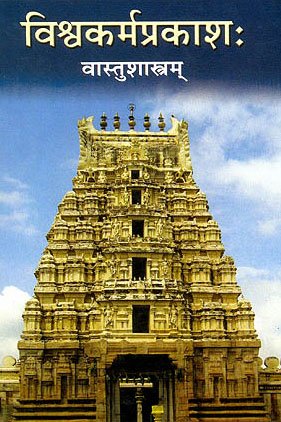
Vastushastra (वास्तुशास्त्र, vāstuśāstra) refers to the ancient Indian science (shastra) of architecture (vastu), dealing with topics such architecture, sculpture, town-building, fort building and various other constructions. Vastu also deals with the philosophy of the architectural relation with the cosmic universe.
Shaivism
Balidāna (बलिदान) refers to one of the topics discussed in the Mahāmokṣa-Tantra, a Sanskrit manuscript collected in volume 12 of the catalogue “Notices of Sanskrit Manuscripts (second series)” by Mahamahopadhyaya Haraprasad Shastri.—The Mahāmokṣatantra manuscript, consisting of 3,024 ślokas (metrical verses), is deposit: Dhaka, Vikramapura Majhapada, Babu Rasavihari Raya. It deals with the salvation, cosmogony (i.e., the order of cosmic regions) and contains a bibliography of Tantric literature.— The catalogue includes the term—Balidāna-vidhi in its ‘subject-matter list’ or Viṣaya (which lists topics, chapters and technical terms). The complete entry reads—validānavidhiśva .

Shaiva (शैव, śaiva) or Shaivism (śaivism) represents a tradition of Hinduism worshiping Shiva as the supreme being. Closely related to Shaktism, Shaiva literature includes a range of scriptures, including Tantras, while the root of this tradition may be traced back to the ancient Vedas.
Languages of India and abroad
Marathi-English dictionary
balidāna (बलिदान) [or बलिप्रदान, balipradāna].—n (S) The offering or presenting of a sacrifice or other oblation.
--- OR ---
baḷīdāna (बळीदान).—& baḷīpratipadā Properly balidāna & bali pratipadā.
balidāna (बलिदान) [or balipradāna, or बलिप्रदान].—n The offering of oblation.
Marathi is an Indo-European language having over 70 million native speakers people in (predominantly) Maharashtra India. Marathi, like many other Indo-Aryan languages, evolved from early forms of Prakrit, which itself is a subset of Sanskrit, one of the most ancient languages of the world.
Sanskrit dictionary
Balidāna (बलिदान).—
1) presentation of an offering to a deity.
2) offering oblations to all creatures.
Derivable forms: balidānam (बलिदानम्).
Balidāna is a Sanskrit compound consisting of the terms bali and dāna (दान).
Balidāna (बलिदान).—n.
(-naṃ) 1. Offering victims in sacrifice. 2. Giving food to all beings. E. bali, and dāna giving.
1) Balidāna (बलिदान):—[=bali-dāna] [from bali] n. the presentation of an offering to a deity (consisting of rice, milk, fruits etc. when presented to Viṣṇu, or of living victims when offered to Śiva or Durgā), [Purāṇa]
2) [v.s. ...] presentation of grain etc. to all creatures, [Catalogue(s)]
Balidāna (बलिदान):—[bali-dāna] (naṃ) 1. n. Offering in sacrifice; giving food for birds, &c.
Balidāna (बलिदान):—n. = balikarman [Kalikāpurāṇa im Śabdakalpadruma] [Weber’s Verzeichniss No. 139. 330. 1054. 1061. 1254.] [Oxforder Handschriften 102,a,10 v. u.]
Balidāna (बलिदान):—n. = balikarman
Sanskrit, also spelled संस्कृतम् (saṃskṛtam), is an ancient language of India commonly seen as the grandmother of the Indo-European language family (even English!). Closely allied with Prakrit and Pali, Sanskrit is more exhaustive in both grammar and terms and has the most extensive collection of literature in the world, greatly surpassing its sister-languages Greek and Latin.
Hindi dictionary
Balidāna (बलिदान) [Also spelled balidan]:—(nm) a sacrifice; offering; —[karanā] to sacrifice; —[denā] to make a sacrifice.
...
Kannada-English dictionary
Balidāna (ಬಲಿದಾನ):—
1) [noun] the offering of animal, plant or human life or of some material possession to a deity, as in propitiation or homage; a sacrifice.
2) [noun] the surrender or destruction of something prized or desirable for the sake of something considered as having a higher or more pressing claim; a sacrifice.
Kannada is a Dravidian language (as opposed to the Indo-European language family) mainly spoken in the southwestern region of India.
Nepali dictionary
Balidāna (बलिदान):—n. 1. sacrifice; 2. animal sacrifice;
Nepali is the primary language of the Nepalese people counting almost 20 million native speakers. The country of Nepal is situated in the Himalaya mountain range to the north of India.
Pali-English dictionary
1) balidāna (ဗလိဒါန) [(na) (န)]—
[bali+dāna]
[ဗလိ+ဒါန]
2) balidāna (ဗလိဒါန) [(na) (န)]—
[bali+dāna]
[ဗလိ+ဒါန]
[Pali to Burmese]
1) balidāna—
(Burmese text): ဗလိနတ်စာပေးခြင်း။ ဗလိကမ္မ-(၂)-ကြည့်။
(Auto-Translation): Vala-nat letter delivery. Vala-kamma (2) view.
2) balidāna—
(Burmese text): ဗလိနတ်စာပေးခြင်း။ ဗလိကမ္မ-(၂)-ကြည့်။
(Auto-Translation): Balinat Delivery. Balikamma-(2)-View.

Pali is the language of the Tipiṭaka, which is the sacred canon of Theravāda Buddhism and contains much of the Buddha’s speech. Closeley related to Sanskrit, both languages are used interchangeably between religions.
See also (Relevant definitions)
Partial matches (+0): Dana, Vali, Bali, Tana.
Starts with (+0): Balidanapaddhati, Balidanavidhi.
Full-text (+15): Balidanavidhi, Balidanapaddhati, Phirautiko-balidana, Balidan, Navagrahabalidanaprayoga, Phirotiko-balidaan, Bali, Punyahadi, Curnabhisheka, Nityahoma, Nityotsava, Dvarapuja, Balividhana, Hiranyashraddha, Homakarma, Punyaha, Tandava, Utsavadhyaya, Karmabera, Pitrisamvibhagavidhana.
Relevant text
Search found 22 books and stories containing Balidana, Bali-dāna, Bali-dana, Balidāna, Baḷīdāna, Balīdāna, Vali-dāna, Vali-dana, Validāna, Validana; (plurals include: Balidanas, dānas, danas, Balidānas, Baḷīdānas, Balīdānas, Validānas, Validanas). You can also click to the full overview containing English textual excerpts. Below are direct links for the most relevant articles:
Shiva Purana [sanskrit/english]
Verse 1.17.52 < [Chapter 17]
Dictionaries of Indian languages (Kosha)
Page 425 < [Hindi-Assamese-English Volume 2]
Page 425 < [Hindi-Bengali-English Volume 2]
Page 137 < [Hindi-Sindhi-English Volume 3]
Notices of Sanskrit Manuscripts (by Rajendralala Mitra)
Vastu-shastra (Introduction to Indian architecture) (by D. N. Shukla)
Chapter 1 - Preliminaries In House-Construction < [Volume 3 - House Architecture]
Preliminaries (a): Regional Planning < [Chapter 3 - Preliminaries of Town Planning]
Introductory < [Volume 3 - House Architecture]
A Descriptive Catalogue of the Sanskrit Manuscripts, Madras (by M. Seshagiri Sastri)
Varahi Tantra (English Study) (by Roberta Pamio)
Chapter 23 - Prayoga (the application of the Sādhanā of a deity) < [Summary of the Vārāhī Tantra]
Chapter 29 - The worship of Caṇḍikā < [Summary of the Vārāhī Tantra]