Bahyartha, Bahya-artha, Bāhyārtha: 6 definitions
Introduction:
Bahyartha means something in Buddhism, Pali, Hinduism, Sanskrit, Jainism, Prakrit. If you want to know the exact meaning, history, etymology or English translation of this term then check out the descriptions on this page. Add your comment or reference to a book if you want to contribute to this summary article.
In Hinduism
Shaiva philosophy
Bāhyārtha (बाह्यार्थ) refers to “external objects”, according to Utpaladeva’s Vivṛti on Īśvarapratyabhijñākārikā 1.5.6.—Accordingly, “[...] If, on the other hand, external objects (bāhyārtha) are only atoms that are partless [and] aggregated, even so, a pot, which appears in a [spatially] extended form, necessarily appears as having [different] parts [respectively located in the] east, west, etc.; and [this spatial extendedness] is not possible if [this pot] is thus made of atoms[, since by definition an atom cannot have different parts] [...]”.
Shaiva philosophy is a spritiual tradition within Hinduism that includes theories such as the relationship between the Atman (individual soul) and Siva, the nature of liberation (moksha), and the concepts of maya (illusion) and shakti (divine energy). Saiva philosophy teaches that union with Shiva can be achieved through knowledge, devotion, and spiritual practice. It encompasses major branches like Shaiva Siddhanta and Kashmir Shaivism.
In Buddhism
Mahayana (major branch of Buddhism)
Bāhyārtha (बाह्यार्थ) refers to “external objects” (in philosophy), according to the Tattvaratnāvalī (“a jewel garland of true reality”)—the title of one of the 26 texts revolving around the theme of amanasikāra (“non-conceptual realization”) ascribed to Maitrīpa (c. 986–1063)—an influential late Indian Buddhist master who helped bring Mahāsiddha-style Mahāmudrā teachings into a monastic Mahāyāna scholastic setting.—Accordingly, [while describing the “superior (adhimātra)” philosophy of Śrāvakayāna]: “The explanation of the superior Śrāvakas, who [also] postulate external objects (bāhyārtha-aṅgīkārin), is based on the no-self of the body. They thoroughly know the four noble truths, and their meditation is the view of emptiness with regard to the person (pudgala). [...]”.
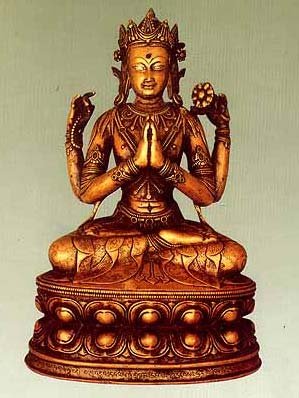
Mahayana (महायान, mahāyāna) is a major branch of Buddhism focusing on the path of a Bodhisattva (spiritual aspirants/ enlightened beings). Extant literature is vast and primarely composed in the Sanskrit language. There are many sūtras of which some of the earliest are the various Prajñāpāramitā sūtras.
In Jainism
Jain philosophy
Bāhyārtha (बाह्यार्थ) refers to “(the reality of) external objects”, as occurring in the Anekāntajayapatākā-prakaraṇa, a Śvetāmbara Jain philosophical work written by Haribhadra Sūri.—[Cf. Vol. II, P. 6, l. 28]—‘Bāhyārtha-vādin’ means one who accepts the reality of external objects. This phrase occurs on p. 7, l. 12.
-
Languages of India and abroad
Sanskrit dictionary
Bahyartha (बह्यर्थ).—a.
1) having many senses.
2) having many objects.
3) important.
Bahyartha is a Sanskrit compound consisting of the terms bahī and artha (अर्थ). See also (synonyms): bahvartha.
--- OR ---
Bāhyārtha (बाह्यार्थ).—a meaning external to the sounds or letters forming a word; P.I.1.68 (com.). °वादः (vādaḥ) the doctrine that the external world has a real existence.
Derivable forms: bāhyārthaḥ (बाह्यार्थः).
Bāhyārtha is a Sanskrit compound consisting of the terms bāhya and artha (अर्थ).
1) Bāhyārtha (बाह्यार्थ):—[from bāhya] m. an external meaning (cf. bāhya artha above), [Madhusūdana]
2) [v.s. ...] external objects or matter or reality
Sanskrit, also spelled संस्कृतम् (saṃskṛtam), is an ancient language of India commonly seen as the grandmother of the Indo-European language family (even English!). Closely allied with Prakrit and Pali, Sanskrit is more exhaustive in both grammar and terms and has the most extensive collection of literature in the world, greatly surpassing its sister-languages Greek and Latin.
Kannada-English dictionary
Bāhyārtha (ಬಾಹ್ಯಾರ್ಥ):—[noun] a meaning of a word or term that is not fitting properly to the context.
Kannada is a Dravidian language (as opposed to the Indo-European language family) mainly spoken in the southwestern region of India.
See also (Relevant definitions)
Partial matches (+0): Artha, Bahya, Bahi.
Starts with (+0): Bahyarthabhanganirakarana, Bahyarthavada, Bahyarthavadin.
Full-text (+0): Bahyarthavadin, Bahyarthavada, Bahyarthabhanganirakarana, Shunya, Wai jing, Bahvartha, Wai jing jie.
Relevant text
Search found 9 books and stories containing Bahyartha, Bahī-artha, Bahi-artha, Bahya-artha, Bāhya-artha, Bāhyārtha; (plurals include: Bahyarthas, arthas, Bāhyārthas). You can also click to the full overview containing English textual excerpts. Below are direct links for the most relevant articles:
Reverberations of Dharmakirti’s Philosophy (by Birgit Kellner)
Tattvasangraha [with commentary] (by Ganganatha Jha)
Verse 1118-1119 < [Chapter 16 - Examination of the Import of Words]
Dictionaries of Indian languages (Kosha)
Abhinaya-darpana (English) (by Ananda Coomaraswamy)
Consciousness in Gaudapada’s Mandukya-karika (by V. Sujata Raju)
Cognition and the problem of objective reference < [Chapter 6: A Study of Māṇḍūkya Kārikā: Alātaśānti Prakaraṇa]
Advayavajra-samgraha (Sanskrit text and English introduction) (by Mahamahopadhyaya Haraprasad Shastri)
Part 1 - Introduction (to the Advayavajra-samgraha) < [Introduction]