Ayushya, Āyuṣya: 19 definitions
Introduction:
Ayushya means something in Hinduism, Sanskrit, the history of ancient India, Marathi. If you want to know the exact meaning, history, etymology or English translation of this term then check out the descriptions on this page. Add your comment or reference to a book if you want to contribute to this summary article.
The Sanskrit term Āyuṣya can be transliterated into English as Ayusya or Ayushya, using the IAST transliteration scheme (?).
In Hinduism
Ayurveda (science of life)
Āyuṣya (आयुष्य) refers to “vitalizing”, and is mentioned in verse 2.15 of the Aṣṭāṅgahṛdayasaṃhitā (Sūtrasthāna) by Vāgbhaṭa.—Vṛṣya (“viriligenic”), āyuṣya (“vitalizing”), and ūrjābalaprada (“generative of vigour and strength”) have been combined to rotsa daṅ thse daṅ mdaṅs daṅ stobs rah (b)skyed (“generates virility, life, vigour, and strength”)—ūrjā (~mdaṅs) denotes the vital essence, usually called ojas, that consists of the seven elements, pervades the whole body, and brings about the functioning of the organs. It is described in Suśrutasaṃhitā I.15.21 as a soma-like, unctuous, white, cold, solidifying, mobile, distinct, soft, and slimy substance and identified by Bhishagrantna (Transl. I p. 130) as albumen.—rab is used pleonastically for the prefix pra.
Āyuṣya (आयुष्य):—[āyuṣyaḥ] Substances which enhance life span
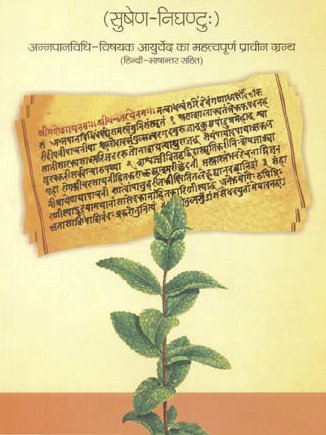
Āyurveda (आयुर्वेद, ayurveda) is a branch of Indian science dealing with medicine, herbalism, taxology, anatomy, surgery, alchemy and related topics. Traditional practice of Āyurveda in ancient India dates back to at least the first millenium BC. Literature is commonly written in Sanskrit using various poetic metres.
Purana and Itihasa (epic history)
Āyuṣya (आयुष्य) refers to “longevity”, according to the Śivapurāṇa 2.2.43.—Accordingly, as Brahmā narrated to Nārada:—“[...] thus I have described the fascinating story of Satī (i.e., satīcaritra) to you which confers worldly pleasures and salvation, which is divine and bestows all wishes. This narrative is flawless, pure, sanctifying, conferring heavenly pleasures, glory, longevity (i.e., āyuṣya) and the pleasure of sons and grandsons”.
The Purana (पुराण, purāṇas) refers to Sanskrit literature preserving ancient India’s vast cultural history, including historical legends, religious ceremonies, various arts and sciences. The eighteen mahapuranas total over 400,000 shlokas (metrical couplets) and date to at least several centuries BCE.
Jyotisha (astronomy and astrology)
Āyuṣya (आयुष्य) refers to “physicians”, according to the Bṛhatsaṃhitā (chapter 16) (“On the planets—graha-bhaktiyoga”), an encyclopedic Sanskrit work written by Varāhamihira mainly focusing on the science of ancient Indian astronomy astronomy (Jyotiṣa).—Accordingly, “[...] Mercury also presides over painters, grammarians, mathematicians, physicians (āyuṣya), sculptors, spies, jugglers, infants, poets, rogues, tale-bearers, black-magicians, messengers, eunuchs, buffoons, sorcerers and conjurers; over sentinels, dancers and dancing masters; over ghee, gingelly and other oils; over seeds, over bitter flavour, over observers of religious ceremonies, over chemists and mules”.
Jyotisha (ज्योतिष, jyotiṣa or jyotish) refers to ‘astronomy’ or “Vedic astrology” and represents the fifth of the six Vedangas (additional sciences to be studied along with the Vedas). Jyotisha concerns itself with the study and prediction of the movements of celestial bodies, in order to calculate the auspicious time for rituals and ceremonies.
Pancaratra (worship of Nārāyaṇa)
Āyuṣya (आयुष्य) or Āyuṣyamaṇḍala refers to one of the twenty-five Maṇḍalas (“esoteric designs”) mentioned in chapter 5 of the Pauṣkarasaṃhitā: a Pāñcarātra text of almost 5900 verses divided into forty-three chapters presented as a frame-work dialogue between Pauṣkara and Bhagavān dealing with the esoteric meaning of maṇḍala-designs, worship routines and temple-building.—[Cf. chapter 5 named sarvatobhadrādimaṇḍa-lalakṣaṇa].
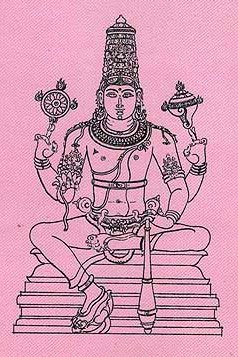
Pancaratra (पाञ्चरात्र, pāñcarātra) represents a tradition of Hinduism where Narayana is revered and worshipped. Closeley related to Vaishnavism, the Pancaratra literature includes various Agamas and tantras incorporating many Vaishnava philosophies.
Kama-shastra (the science of Love-making)
Āyuṣya (आयुष्य) refers to “shaving (one’s face)” (as part of the traditional morning-routine-duties of the householder), according to chapter 1.4 of Vātsyāyana’s Kāmasūtra: a Sanskrit text from the 2nd century dealing with eroticism, sexuality and emotional fulfillment in life belonging to Kāmaśāstra (the ancient Indian science of love-making).—Accordingly [while describing the morning routine of a citizen]: “He should bathe daily, anoint his body with oil every other day, apply a lathering substance to his body every three days, get his head (including face) shaved every four days [caturthakam āyuṣyam] and the other parts of his body every five or ten days. All these things should be done without fail, and the sweat of the armpits should also be removed. [...]”.
Kamashastra (कामशास्त्र, kāmaśāstra) deals with ancient Indian science of love-making, passion, emotions and other related topics dealing with the pleasures of the senses.
India history and geography
Āyuṣya.—(EI 10), Jain; a variety of karman. Note: āyuṣya is defined in the “Indian epigraphical glossary” as it can be found on ancient inscriptions commonly written in Sanskrit, Prakrit or Dravidian languages.
The history of India traces the identification of countries, villages, towns and other regions of India, as well as mythology, zoology, royal dynasties, rulers, tribes, local festivities and traditions and regional languages. Ancient India enjoyed religious freedom and encourages the path of Dharma, a concept common to Buddhism, Hinduism, and Jainism.
Languages of India and abroad
Marathi-English dictionary
āyuṣya (आयुष्य).—n (S) Life, life-time, the term or period of life. āyuṣyācēṃ uṇēṃ karaṇēṃ To consume one's life.
--- OR ---
āyuṣya (आयुष्य).—. Add:--āyuṣya puṣkaḷa āhē (Long is your life--numerous are your days.) A phrase addressed to a person entering or appearing upon the mention of his name.
āyuṣya (आयुष्य).—Life, life-time. āyuṣyamān a Long-lived.
Marathi is an Indo-European language having over 70 million native speakers people in (predominantly) Maharashtra India. Marathi, like many other Indo-Aryan languages, evolved from early forms of Prakrit, which itself is a subset of Sanskrit, one of the most ancient languages of the world.
Sanskrit dictionary
Āyuṣya (आयुष्य).—a. [āyuḥ prayojanamasya, yat] Promoting long life, vital, preservative of life; इदं यशस्यमायुष्यमिदं निःश्रेयसं परम् (idaṃ yaśasyamāyuṣyamidaṃ niḥśreyasaṃ param) Manusmṛti 1.16,3.16,4.13; M.4.4 v. l.; Daśakumāracarita 158.
-ṣyam 1 Vital power, abundance of life or vigour.
2) Name of a ceremony performed after the birth of a child.
Āyuṣya (आयुष्य).—mfn.
(-ṣyaḥ-ṣyā-ṣyaṃ) Vital, preservative of life, for the sake of life, relating or belonging to it. E. āyus and yat aff.
Āyuṣya (आयुष्य).—i. e. āyus + ya, I. adj., f. yā, Procuring long life, [Mānavadharmaśāstra] 1, 106. Ii. n. Long life, [Mānavadharmaśāstra] 2, 52.
Āyuṣya (आयुष्य).—[adjective] giving (long) life; [neuter] vital power, longevity.
1) Āyuṣya (आयुष्य):—[from āyu] mfn. giving long life, vital, preservative of life, for the sake of life, relating or belonging to it, [Śatapatha-brāhmaṇa; Manu-smṛti; Mahābhārata; Rāmāyaṇa]
2) [v.s. ...] n. vital power, abundance of life, longevity, [Atharva-veda; Vājasaneyi-saṃhitā; Śatapatha-brāhmaṇa; Manu-smṛti; Pañcatantra] etc.
3) [v.s. ...] a medicament, [cf. Lexicographers, esp. such as amarasiṃha, halāyudha, hemacandra, etc.]
4) [v.s. ...] ‘vivifying’, Name of a ceremony performed after a child’s birth, [Pāraskara-gṛhya-sūtra]
1) Āyuṣya (आयुष्य):—[(ṣyaḥ-ṣyā-ṣyaṃ) a.] Vital.
2) [(ṣyaḥ-ṣyā-ṣyaṃ) a.] Conferring long life.
Āyuṣya (आयुष्य):—
--- OR ---
Āyuṣya (आयुष्य):—
1) langes Leben verleihend [Prātiśākhya zur Vājasaneyisaṃhitā 8, 39.] [Varāhamihira’s Bṛhajjātaka S. 48, 74.] —
2) a) füge noch langes Leben und [Spr. 2052] (Gegens. mṛtyu) . [WEBER, Rāmatāpanīya Upaniṣad 357] hinzu.
Āyuṣya (आयुष्य):—, āyuṣia —
1) Adj. (f. ā) langes Leben verleihend. —
2) n. — a) Lebenskraft , Lebensfülle , langes Leben. — b) *Arzenei [Galano's Wörterbuch] — c) eine langes Leben verleihende Handlung [Gautama's Dharmaśāstra] — d) eine best. Begehung nach der Geburt eines Kindes [Pāraskara’s Gṛhyasūtra 1,16,3.]
Sanskrit, also spelled संस्कृतम् (saṃskṛtam), is an ancient language of India commonly seen as the grandmother of the Indo-European language family (even English!). Closely allied with Prakrit and Pali, Sanskrit is more exhaustive in both grammar and terms and has the most extensive collection of literature in the world, greatly surpassing its sister-languages Greek and Latin.
Kannada-English dictionary
Āyuṣya (ಆಯುಷ್ಯ):—[adjective] that helps one live long.
--- OR ---
Āyuṣya (ಆಯುಷ್ಯ):—[noun] the duration of one’s life-time; life-span.
Kannada is a Dravidian language (as opposed to the Indo-European language family) mainly spoken in the southwestern region of India.
Nepali dictionary
Āyuṣya (आयुष्य):—adj. promoting long life; preservative of life; n. one's span of life; life-time;
Nepali is the primary language of the Nepalese people counting almost 20 million native speakers. The country of Nepal is situated in the Himalaya mountain range to the north of India.
See also (Relevant definitions)
Starts with (+0): Ayushyabhivriddhi, Ayushyadori, Ayushyagana, Ayushyahoma, Ayushyahomapaddhati, Ayushyakshepa, Ayushyam, Ayushyamandala, Ayushyamaryada, Ayushyamta, Ayushyarekhe, Ayushyavant, Ayushyavat, Ayushyavomam.
Full-text (+20): Dirghayushya, Anayushya, Ayushyahoma, Ayushyam, Ayushyavat, Ayushyagana, Ayushyavomam, Ayushyamandala, Ayusha, Anavalya, Pratyayushya, Ayussu, Auksha, Yashasya, Ayushyavant, Akatikal, Nirayushyam, Ayussa, Mapadya, Dona Divasa.
Relevant text
Search found 46 books and stories containing Ayushya, Āyuṣya, Ayusya; (plurals include: Ayushyas, Āyuṣyas, Ayusyas). You can also click to the full overview containing English textual excerpts. Below are direct links for the most relevant articles:
Charaka Samhita and Sushruta Samhita (by Nayana Sharma)
Hygiene of the body and personal grooming < [Chapter 6]
Manusmriti with the Commentary of Medhatithi (by Ganganatha Jha)
Verse 2.52 < [Section XIII - Initiation (upanayana)]
Verse 2.126 < [Section XXIII - Rules regarding Salutation]
International Ayurvedic Medical Journal
Mukta bhasma- an effective ayurvedic drug in mother child health care: a review < [2017, Issue III March,]
A comparative clinical study on the effect of kamadugh rasa and dhatri lauha in garbhini pandu (iron deficiency anaemia) < [2015, Issue XII December]
Pharmacological potential of pathyakusthumbaradi kwatha in combating infectious respiratory diseases caused by air borne pathogens < [2023, Issue 03, March]
Women in the Atharva-veda Samhita (by Pranab Jyoti Kalita)
5. Contents of the Atharvaveda < [Chapter 1 - The Atharvaveda and its importance in the Vedic Literature]
Jainism and Patanjali Yoga (Comparative Study) (by Deepak bagadia)
Part 3.4 - Nine Elements (4): Bandha (Bondage of karma) < [Chapter 3 - Jain Philosophy and Practice]
Part 3.4 - Nine Elements (5): Punya (Favourable condition) < [Chapter 3 - Jain Philosophy and Practice]
Part 4 - Stages of spiritual elevation (guna-sthanakas) < [Chapter 3 - Jain Philosophy and Practice]
Journal of Ayurveda and Integrated Medical Sciences
Role of Ayurveda in Graceful Ageing w.s.r. to Dincharya, Ratricharya &... < [Vol. 9 No. 2 (2024)]
Review on internal use of Gold in the form of Suvarnaprashana in Pediatric... < [Vol. 8 No. 5 (2023)]
A critical review on Snana: An Ayurvedic way of bathing < [Vol. 9 No. 2 (2024)]