Avagadha, Avagāḍha: 11 definitions
Introduction:
Avagadha means something in Hinduism, Sanskrit. If you want to know the exact meaning, history, etymology or English translation of this term then check out the descriptions on this page. Add your comment or reference to a book if you want to contribute to this summary article.
In Hinduism
Natyashastra (theatrics and dramaturgy)
Avagāḍha (अवगाढ) refers to one of the three limbs of ullopyaka, according to the Nāṭyaśāstra chapter 31. Ullopyaka refers to on the seven types of song (gitaka).
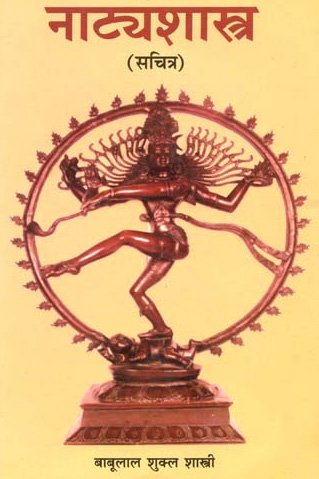
Natyashastra (नाट्यशास्त्र, nāṭyaśāstra) refers to both the ancient Indian tradition (shastra) of performing arts, (natya—theatrics, drama, dance, music), as well as the name of a Sanskrit work dealing with these subjects. It also teaches the rules for composing Dramatic plays (nataka), construction and performance of Theater, and Poetic works (kavya).
Ayurveda (science of life)
Avagāḍha (अवगाढ):—[avagāḍhaṃ] Hard
Āyurveda (आयुर्वेद, ayurveda) is a branch of Indian science dealing with medicine, herbalism, taxology, anatomy, surgery, alchemy and related topics. Traditional practice of Āyurveda in ancient India dates back to at least the first millenium BC. Literature is commonly written in Sanskrit using various poetic metres.
Languages of India and abroad
Sanskrit dictionary
Avagāḍha (अवगाढ).—p. p.
1) Plunged into, entered into, immersed; जलावगाढस्य वनद्विपस्य (jalāvagāḍhasya vanadvipasya) Mṛcchakaṭika 2; अमृतह्रदमिवावगाढोऽस्मि (amṛtahradamivāvagāḍho'smi) Ś.7; अवगाढः शोकसागरम् (avagāḍhaḥ śokasāgaram) Rām.; समुद्रमवगाढानि पत्तनानि (samudramavagāḍhāni pattanāni) Rām.
2) Depressed, low, deep (lit. and fig.); Rām.6.88.74. अभ्युन्नता पुरस्तादवगाढा जघनगौरवात्पश्चात् (abhyunnatā purastādavagāḍhā jaghanagauravātpaścāt) Ś.3.7.; मन्युरभज- दवगाढतरः (manyurabhaja- davagāḍhataraḥ) Śiśupālavadha 15.2.
3) That in which one bathes; अवगाढा च पीता च (avagāḍhā ca pītā ca) (gaṅgā) पुनात्यासप्तमं कुलम् (punātyāsaptamaṃ kulam) Mb.
4) Congealed, curdling (as blood).
Avagāḍha (अवगाढ).—mfn.
(-ḍhaḥ-ḍhā-ḍhaṃ) 1. Immersed, plunged, bathed. 2. Deep. E. avagāha and kta aff.
Avagāḍha (अवगाढ).—[adjective] entered (act. & pass.), immersed (l.&[feminine]), depressed, deep.
1) Avagadha (अवगध):—m. [plural] Name of a people, [Aitareya-āraṇyaka]
2) Avagāḍha (अवगाढ):—[=ava-gāḍha] [from ava-gāh] mfn. immersed, bathed, plunged into ([accusative] [Rāmāyaṇa; Śakuntalā]; [locative case] [Āpastamba-dharma-sūtra; Mahābhārata i, 5300]; rarely [genitive case] [Rāmāyaṇa iv, 43, 32]; often in [compound] [Śakuntalā; Mṛcchakaṭikā])
3) [v.s. ...] that in which one bathes, [Mahābhārata iii, 8236]
4) [v.s. ...] deepened, low, [Śakuntalā; Suśruta]
5) [v.s. ...] curdling (as blood), [Suśruta]
6) [v.s. ...] having disappeared, vanished, [Mahābhārata iv, 2238.]
Avagāḍha (अवगाढ):—[ava-gāḍha] (ḍhaḥ-ḍhā-ḍhaṃ) p. Immersed; bathed; deep.
Avagāḍha (अवगाढ):—(von gāh mit ava) adj.
1) eingetaucht [Kātyāyana’s Śrautasūtrāṇi 15, 4, 26. 20, 5, 14.] avagāḍhaḥ -śokasāgaram [Rāmāyaṇa 2, 59, 28.] amṛtahradamivāvagāḍho smi [Śākuntala 100, 17.] avagāḍham salile [Mahābhārata 1, 5300.] pūrvāparasamudrāvagāḍhaḥ sānumān [Śākuntala 99, 15.] —
2) worin man sich eintaucht, badet: avagāḍhā (gaṅgā) ca pītā ca punātyāsaptamaṃ kulam [Mahābhārata 3, 8236.] —
3) vertieft (Gegens. abhyunnata), tiefliegend: padapaṅktiḥ [Śākuntala 56.] [Suśruta 1, 283, 17. 326, 13.] —
4) versteckt, stockend, vom Blut [Suśruta 1, 353, 3.] — Vgl. gāḍha .
--- OR ---
Avagāḍha (अवगाढ):—vgl. anavagāḍha .
Avagadha (अवगध):—m. Kraut [Aitareyāraṇyaka 136,5.] v.u.
Avagāḍha (अवगाढ) in the Sanskrit language is related to the Prakrit word: Ogāḍha.
Sanskrit, also spelled संस्कृतम् (saṃskṛtam), is an ancient language of India commonly seen as the grandmother of the Indo-European language family (even English!). Closely allied with Prakrit and Pali, Sanskrit is more exhaustive in both grammar and terms and has the most extensive collection of literature in the world, greatly surpassing its sister-languages Greek and Latin.
Kannada-English dictionary
Avagāḍha (ಅವಗಾಢ):—
1) [adjective] gone below the surface of a liquid; plunged; immersed.
2) [adjective] deeply involved; engaged in a subject single-mindedly.
Kannada is a Dravidian language (as opposed to the Indo-European language family) mainly spoken in the southwestern region of India.
See also (Relevant definitions)
Partial matches (+0): Gadha, Ava.
Starts with (+0): Avagadhavat, Avakatavay.
Full-text (+0): Avagadhavat, Antogadha, Ogadha, Vyavagadha, Gahati, Vigah, Ogahana, Gah, Avagah, Ullopyaka.
Relevant text
Search found 18 books and stories containing Avagadha, Ava-gadha, Ava-gāḍha, Avagāḍha; (plurals include: Avagadhas, gadhas, gāḍhas, Avagāḍhas). You can also click to the full overview containing English textual excerpts. Below are direct links for the most relevant articles:
Samyuta Nikaya (Linked Discourses)
Discourse 48.57: Sahampatibrahma-sutta < [48.6. Sūkarakhata-vagga: the Boar’s Cave]
Discourse 48.44: Pubbakoṭṭhaka-sutta < [48.5. Jarā-vagga: Old Age]
Discourse 46.130: Uddhambhāgiya-sutta < [46.13. Ogha-vagga: Floods]
International Ayurvedic Medical Journal
Effect of citrakadi ksara lēpa in the management of second-degree internal haemorrhoids < [2021, Issue 10, October]
A randomized comparative clinical study to evaluate the analgesic effect of jaloukavacharana and siravyadha in vatakantaka with special reference to calcaneal spur < [2024, Issue 07. July]
A case study on effect of raktamokshana and lepa in siragranthi w.s.r. to grade - 2 varicocele < [2019, Issue 3, March]
Cultivation of medicinal plants in Ayurvedic texts. < [Volume 1 (issue 4), Apr-Jun 1982]
World Journal of Pharmaceutical Research
Successful ayurvedic management of adult-onset stills disease (aosd) < [2024: Volume 13, January special issue 2]
Skin disorder highlights from Kashyap Samhita and Brihat Trayee. < [2023: Volume 12, April issue 5]
A critical review of arsha < [2018: Volume 7, June issue 11]
Journal of Ayurveda and Integrated Medical Sciences
A conceptual study on the effect of Tilwaka Prathisaraneeya Kshara in... < [Vol. 6 No. 02 (2021)]
Lateral Fissure-In-Ano - A Case Study < [Vol. 6 No. 6 (2021)]
Role of Leech therapy in the management of Vyanga w.s.r. to Melasma - A... < [Vol. 9 No. 12 (2024)]
Minerals and Metals in Sanskrit literature (by Sulekha Biswas)
3. The Mahabharata—500-100 B.C. Additions < [Chapter 6 - Minerals and Metals in the Indian Epics]