Aushana, Auśana, Auṣaṇa: 9 definitions
Introduction:
Aushana means something in Hinduism, Sanskrit, Jainism, Prakrit, Hindi. If you want to know the exact meaning, history, etymology or English translation of this term then check out the descriptions on this page. Add your comment or reference to a book if you want to contribute to this summary article.
The Sanskrit terms Auśana and Auṣaṇa can be transliterated into English as Ausana or Aushana, using the IAST transliteration scheme (?).
Alternative spellings of this word include Ausan.
In Hinduism
Pancaratra (worship of Nārāyaṇa)
1) Auśana (औशन) or Auśanatantra is the name of an ancient Pāñcarātra Saṃhitā mentioned in the Bhāradvājasaṃhitā or “Bhāradvāja-kaṇva-saṃhitā”: a Pāñcarātra text comprising some 230 ślokas mainly concerned with basic details concerning temple construction and icon consecration.—In the first chapter of the Bhāradvāja-Saṃhitā a list of canonical titles is given—supposedly, but not actually naming “108” titles. The list is almost identical to that found in the Kapiñjala-saṃhitā.
2) Auśana (औशन) or Auśanasaṃhitā is also mentioned in the Mārkaṇḍeyasaṃhitā: a Pāñcarātra text comprising some 2200 Sanskrit verses mainly dealing with temple-building, iconography, pūjā (worship procedures), utsava (festivities) and prāyaścitta (expiatory measures).
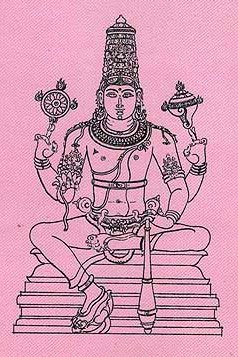
Pancaratra (पाञ्चरात्र, pāñcarātra) represents a tradition of Hinduism where Narayana is revered and worshipped. Closeley related to Vaishnavism, the Pancaratra literature includes various Agamas and tantras incorporating many Vaishnava philosophies.
Languages of India and abroad
Sanskrit dictionary
Auśana (औशन).—a. (-nī, -sī f.) [उशनस्-अण् (uśanas-aṇ)] Belonging or peculiar to Uśanas; originating from Uśanas, or taught by him; पितामहाद्वरं लेभे सर्वमौशनसं धनम् (pitāmahādvaraṃ lebhe sarvamauśanasaṃ dhanam) Rām.4.51.13.
-sam 1 The law-book of उशनस् (uśanas) (a treatise on civil polity).
2) Name of an Upapurāṇa.
-sāḥ Name of a school of writers on the science of government mentioned by Kauṭilya; Kau. A.1.15.
-sī Name of Devayanī; तं वीरमाहौशनसी प्रेमनिर्भरया गिरा (taṃ vīramāhauśanasī premanirbharayā girā) Bhāgavata 9.18.2.
See also (synonyms): auśanasa.
--- OR ---
Auṣaṇa (औषण).—[uṣaṇ-aṇ]
1) Pungency.
2) Black pepper.
Derivable forms: auṣaṇam (औषणम्).
Auṣaṇa (औषण).—n.
(-ṇaṃ) Pungency. E. uṣaṇa pepper, &c. aṇ affix; also uṣaṇa.
1) Auśana (औशन):—mf(ī)n. ([from] uśanas) = auśanasa below, [Kāśikā-vṛtti on Pāṇini 4-2, 8]
2) n. Name of several Sāmans [commentator or commentary] on [Nyāyamālā-vistara]
3) Auśāna (औशान):—mfn. (perhaps [present tense] p. of ā-√vaś, [Boehtlingk’s Sanskrit-Woerterbuch in kuerzerer fassung]) wishing for, desirous (somena saha miśrī-bhāvaṃ kāmayamāna, [Sāyaṇa]), [Ṛg-veda x, 30, 9.]
4) Auṣaṇa (औषण):—n. ([from] uṣaṇa), pungency, [cf. Lexicographers, esp. such as amarasiṃha, halāyudha, hemacandra, etc.]
Auṣaṇa (औषण):—(ṇaṃ) 1. n. Pungency.
Auśana (औशन):—adj. f. ī = auśanasa [Pāṇini’s acht Bücher 4, 2, 8, Vārttika von Kātyāyana. 2,] [Scholiast]
--- OR ---
Auśāna (औशान):—s. u. vaś .
--- OR ---
Auṣaṇa (औषण):—(von uṣaṇa Pfeffer) n. brennender Geschmack [Śabdakalpadruma] und [Wilson’s Wörterbuch] auṣaṇaśoṇḍī (l. śauṇḍī) schwarzer Pfeffer [Hemacandra’s Abhidhānacintāmaṇi 101.]
--- OR ---
Auśana (औशन):—n. Name verschiedener Sāman [Weber’s Indische Studien.3,212,b.] [Pañcaviṃśabrāhmaṇa 7.5,16.8,5,18. 24,11,7.]
Auśana (औशन):——
1) *Adj. (f. ī) = auśanasa. —
2) n. Name verschiedener Sāman Comm. zu [Jaiminiyanyāyamālāvistara 9,2,9.]
--- OR ---
Auśāna (औशान):—Adj. [Ṛgveda (roth). 10,30,9] vielleicht = āuśāna.
--- OR ---
Auṣaṇa (औषण):—n. brennender Geschmack.
Sanskrit, also spelled संस्कृतम् (saṃskṛtam), is an ancient language of India commonly seen as the grandmother of the Indo-European language family (even English!). Closely allied with Prakrit and Pali, Sanskrit is more exhaustive in both grammar and terms and has the most extensive collection of literature in the world, greatly surpassing its sister-languages Greek and Latin.
Hindi dictionary
1) Ausāna (औसान) [Also spelled ausan]:—(nm) wits, presence of mind; —[khatā honā] to be like a duck in thunderstorm, to lose wits, to be demoralised; —[bhulānā] to unnerve, to put in a quandry.
2) Ausānā (औसाना):—(v) to winnow.
...
Prakrit-English dictionary
Āusaṇā (आउसणा) in the Prakrit language is related to the Sanskrit word: Ākrośanā.
Prakrit is an ancient language closely associated with both Pali and Sanskrit. Jain literature is often composed in this language or sub-dialects, such as the Agamas and their commentaries which are written in Ardhamagadhi and Maharashtri Prakrit. The earliest extant texts can be dated to as early as the 4th century BCE although core portions might be older.
See also (Relevant definitions)
Starts with (+0): Aushanas, Aushanasa, Aushanasadbhutani, Aushanasamhita, Aushanasapurana, Aushanasasamhita, Aushanasatantra, Aushanashaundi, Aushanasya, Aushanatantra, Aushanottara.
Full-text (+0): Aushanashaundi, Aushanas, Aushanottara, Aushanatantra, Aushanasamhita, Aushanasa, Aushanasya, Padanusvara, Avucanam, Aucanam, Akroshana, Aloe variegata, Ushanas, Ucanam, Ausan, Cotyledon orbiculata, Vash.
Relevant text
Search found 14 books and stories containing Aushana, Auśana, Ausana, Auṣaṇa, Auśāna, Ausāna, Ausānā, Āusaṇā; (plurals include: Aushanas, Auśanas, Ausanas, Auṣaṇas, Auśānas, Ausānas, Ausānās, Āusaṇās). You can also click to the full overview containing English textual excerpts. Below are direct links for the most relevant articles:
Rig Veda (translation and commentary) (by H. H. Wilson)
Rig Veda 10.30.9 < [Sukta 30]
Panchavimsha Brahmana (English translation) (by W. Caland)
Chapter 7 - The Jyotistoma, Ukthya and Atiratra (continued)
Introduction 2: Development of the older Samavedic texts
Notices of Sanskrit Manuscripts (by Rajendralala Mitra)
Page 39 < [Volume 4 (1877)]
Dictionaries of Indian languages (Kosha)
Page 78 < [Hindi-English-Nepali (1 volume)]
Manusmriti with the Commentary of Medhatithi (by Ganganatha Jha)
Verse 7.2 < [Section I - Important Position of the King (rājan)]
Devala-smriti (critical study) (by Mukund Lalji Wadekar)
2.1. Male and female members, worthy of respect, as ‘Guru’ < [Chapter 9 - The distinctive features of the Devalasmriti]