Atharvaveda, Atharva-Veda: 12 definitions
Introduction:
Atharvaveda means something in Hinduism, Sanskrit, Jainism, Prakrit, the history of ancient India. If you want to know the exact meaning, history, etymology or English translation of this term then check out the descriptions on this page. Add your comment or reference to a book if you want to contribute to this summary article.
Images (photo gallery)


In Hinduism
Purana and Itihasa (epic history)
Atharvaveda (अथर्ववेद).—One of the four Vedas useful for kings.1 Rearranged by Sumantu (s.v.) under the guidance of Vyāsa; in five parts.2 Part of Viṣṇu.3 mantras connected with war.4 Twenty-one Atharvas from the face of Brahmā.5
- 1) Bhāgavata-purāṇa, X. 53. 12; Vāyu-purāṇa 9. 51; 60. 15, 20.
- 2) Bhāgavata-purāṇa I. 4. 22; XII. 7. 1; Brahmāṇḍa-purāṇa II. 34. 15; Viṣṇu-purāṇa III. 4. 9 & 14; 6. 8, 13-14.
- 3) Viṣṇu-purāṇa V. 1. 37.
- 4) Brahmāṇḍa-purāṇa IV. 20. 104.
- 5) Brahmāṇḍa-purāṇa II. 8. 53.
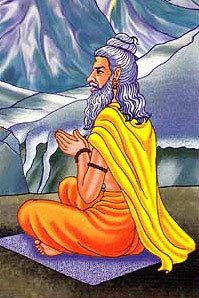
The Purana (पुराण, purāṇas) refers to Sanskrit literature preserving ancient India’s vast cultural history, including historical legends, religious ceremonies, various arts and sciences. The eighteen mahapuranas total over 400,000 shlokas (metrical couplets) and date to at least several centuries BCE.
Vastushastra (architecture)
Atharvaveda (अथर्ववेद) is the name of a Sanskrit word partly dealing with the “science of architecture” (vāstuvidyā).—In the Atharvaveda there are references to different parts of the building such as sitting-room, inner apartment, room for sacred fire, cattle shed and reception room. (Atharvaveda, IX.3). The
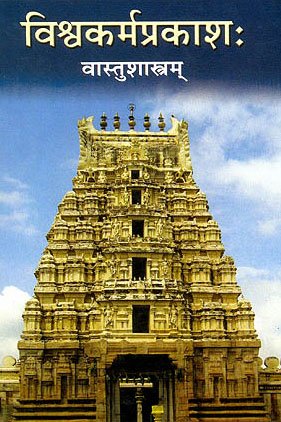
Vastushastra (वास्तुशास्त्र, vāstuśāstra) refers to the ancient Indian science (shastra) of architecture (vastu), dealing with topics such architecture, sculpture, town-building, fort building and various other constructions. Vastu also deals with the philosophy of the architectural relation with the cosmic universe.
Shaktism
Atharvaveda (अथर्ववेद) refers to one of the topics discussed in the Rudrayāmalatantra, a Sanskrit manuscript collected in volume 1 of the catalogue “Notices of Sanskrit Manuscripts (first series)” by Rajendralal Mitra (1822–1891), who was one of the first English-writing historians dealing with Indian culture and heritage.— The Rudrayāmala-tantra is an elaborate and original Tantra, including the whole range of Śākta knowledge about religion, social orders, castes, sacred places, modes of adoration, forms of ceremonies, etc. It contains roughly 9,000 verses divided into 67 sections.—The catalogue includes the term—Atharvaveda in its ‘subject-matter list’ or Viṣaya (which lists topics, chapters and technical terms). The complete entry reads—[chapter 17: atharvvavedaprakaraṇaṃ].
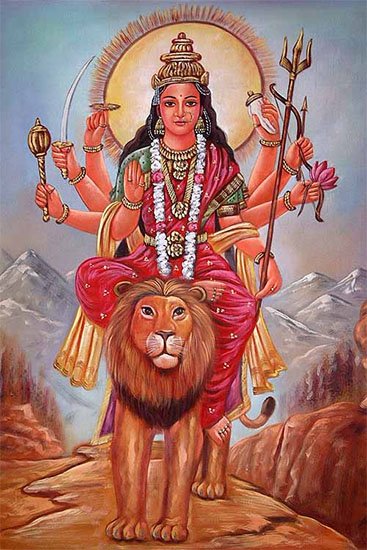
Shakta (शाक्त, śākta) or Shaktism (śāktism) represents a tradition of Hinduism where the Goddess (Devi) is revered and worshipped. Shakta literature includes a range of scriptures, including various Agamas and Tantras, although its roots may be traced back to the Vedas.
General definition (in Hinduism)
The Atharvaveda is a sacred text of Hinduism and one of the four Vedas, often called the "fourth Veda". The bulk of the text dates from c. 1200–1000 BCE (see below).
According to the tradition, the Atharvaveda was mainly composed by two groups of rishis known as the Atharvanas and the Angirasa, hence its oldest name is Ātharvāṅgirasa. In the Late Vedic Gopatha Brahmana, it is attributed to the Bhrigu and Angirasa. Additionally, tradition ascribes parts to other rishis, such as Kauśika, Vasiṣṭha and Kaśyapa. There are two surviving recensions (śākhās), known as Śaunakīya (AVS) and Paippalāda (AVP).
etymology: Atharvaveda (Sanskrit: अथर्ववेदः, atharvaveda, a tatpurusha compound of Atharvan, an ancient Rishi, and veda, meaning "knowledge")
India history and geography
Atharva-veda.—(CII 3; etc.), one of the four Vedas. See Veda. Note: atharva-veda is defined in the “Indian epigraphical glossary” as it can be found on ancient inscriptions commonly written in Sanskrit, Prakrit or Dravidian languages.
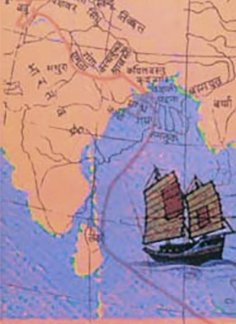
The history of India traces the identification of countries, villages, towns and other regions of India, as well as mythology, zoology, royal dynasties, rulers, tribes, local festivities and traditions and regional languages. Ancient India enjoyed religious freedom and encourages the path of Dharma, a concept common to Buddhism, Hinduism, and Jainism.
Languages of India and abroad
Sanskrit dictionary
Atharvaveda (अथर्ववेद).—[masculine] the Atharvaveda.
1) Atharvaveda (अथर्ववेद) as mentioned in Aufrecht’s Catalogus Catalogorum:—1) The saṃhitā and pada texts are given together, as most of the lists do not distinguish between both. Io. 113. 682. 901. 1137. 2141. 2142. W. p. 82-85. Oxf. 385^b. 392^b. Paris. (D 204. 205). Khn. 2. Kh. 55, B. 1, 2. Ben. 18(3). Bik. 6. 7. Rādh. 1. NW. 4. Np. I, 7. Haug. 12. 13. Burnell. 12^b. Gu. 3. Mysore. 1. Lahore. 2. P. 7. 8. Bhk. 5. Oppert. 683. 4578. 6721. Ii, 4445. 4447. Rice. 4. Peters. 2, 182. 3, 383. Bp. 283. W. 1486. (19th Kāṇḍa).
—[commentary] Oppert. Ii, 4446. See Atharvabhāṣya, Ātharvaṇaṭīkā. Paippalādaśākhā. Report. I. Jaṭāpāṭha. Kh. 55. B. 1, 2. Prātiśākhya. W. p. 87 (and—[commentary]). Kh. 56. 61 (2). 82. Haug. 42. Peters. 2, 182 (and—[commentary]). 3, 383 (and—[commentary]). Anukrama. Kh. 57. B. 1, 198. Sarvānukramaṇī. Io. 2142. B. 1, 198. Bṛhatsarvānukramaṇikā. W. 1487. Peters. 3, 383. Mantrāśīrvadasaṃhitā. Kh. 57. Saubhāgyakāṇḍa. Quoted by Kaivalyāśrama. Oxf. 108^a. Gṛhyasūtra. Haug. 23.
2) Atharvaveda (अथर्ववेद):—read Np. I, 22. Sarvānukramaṇī. add Peters. 2, 183.
3) Atharvaveda (अथर्ववेद):—Ulwar 321 (Saṃhitāpāṭha).
—Sarvānukramaṇī. Ulwar 322.
—Prātiśākhya. Ulwar 327. Bhāṣya. 328. Extr. 97.
4) Atharvaveda (अथर्ववेद):—Ak 1 (pada). As p. 3 (2 Mss.). 18 (Kāṇḍa 12-20). L.. 87-102. Tb. 12. 13. Paippalādaśākhā. Tb. 14-17. Prātiśākhya. Tb. 213. Prātiśākhyamūlasūtra in 3 Prapāṭhaka. Tb. 36. 213. Bṛhatsarvānukramaṇikā. Ak 64.
Atharvaveda (अथर्ववेद):—[=atharva-veda] [from atharva > atharvan] m. Name of the fourth Veda (See above).
Atharvaveda (अथर्ववेद):—[tatpurusha compound] m.
(-daḥ) The fourth or Atharvaveda (see ṛc, yajus, sāman), the Veda revealed by Atharvan or Angiras and sometimes considered, therefore, personified as a son of Angiras. See atharvan, atharvāṅgiras, pratyaṅgiras, brahmaveda. E. atharvan and veda.
Atharvaveda (अथर्ववेद):—(atharvan + veda) m. eine der vedischen Liedersammlungen, die vierte nach indischer Zählung. Dieselbe hat, so wie sie auf uns gekommen ist, nach sachlicher Eintheilung [20] Bücher (Kāṇḍa), deren letztes jedoch mit den vorangehenden nicht gleichartig und als ein Zusatz zu betrachten ist. [Muṇḍakopaniṣad 1, 1, 5.] [Mahābhārata 2, 450. 5, 548.] — Vgl. atharvan, atharvāṅgiras, brahmaveda .
Atharvaveda (अथर्ववेद):—m. die vierte der vedischen Liedersammlungen.
Atharvaveda (in Sanskrit) can be associated with the following Chinese terms:
1) 阿他婆吠陀 [ā tā pó fèi tuó]: “Ātharvaṇa”; “Atharvaveda” [Sanskrit text name].
2) 阿達婆鞞陀 [ā dá pó bǐng tuó]: “Atharvaveda” [Sanskrit text name].
3) 阿闥波陀 [ā tà bō tuó]: “Atharvaveda” [Sanskrit text name].
Sanskrit, also spelled संस्कृतम् (saṃskṛtam), is an ancient language of India commonly seen as the grandmother of the Indo-European language family (even English!). Closely allied with Prakrit and Pali, Sanskrit is more exhaustive in both grammar and terms and has the most extensive collection of literature in the world, greatly surpassing its sister-languages Greek and Latin.
See also (Relevant definitions)
Partial matches (+0): Atharva, Vedas, Vedavedanga, Veda.
Starts with (+0): Atharvavedantargatopamishada, Atharvavedantargatopanishada, Atharvavedaprakarana, Atharvavedasamhita.
Full-text (+6585): Veda, Atharvana, Atharvani, Atharvan, Brahmaveda, Atharvangiras, Angiras, Kankaparvan, Atharvavid, Atharvangirasa, Himsaka, Atharvanika, Manushyat, Prishtya, A ta po fei tuo, Navaprabhramshana, Nakshatrakalpa, Jangida, Pravalhika, Barhatsama.
Relevant text
Search found 332 books and stories containing Atharvaveda, Atharva vedas, Atharva-veda; (plurals include: Atharvavedas, Atharva vedases, vedas). You can also click to the full overview containing English textual excerpts. Below are direct links for the most relevant articles:
Vishnu Purana (Taylor) (by McComas Taylor)
Chapter 6 - The branches of the Sāma and Atharva Vedas; The purāṇas < [Book Three: Society]
Chapter 3 - The Vyāsas arrange the Vedas; The syllable Oṃ < [Book Three: Society]
Chapter 1 - The Solar Dynasty: The lineage of Manu < [Book Four: The Royal Dynasties]
Yoga Vasistha [English], Volume 1-4 (by Vihari-Lala Mitra)
Chapter IX - Origin of yoga in the vedas < [The yoga philosophy]
Chapter X - Rise of the heretical yogas < [The yoga philosophy]
Chapter IX - Theology of om in the monads of monotheistic creeds < [The om tat sat]
Goddesses from the Samhitas to the Sutras (by Rajeshri Goswami)
Description of Goddess Vac (Goddess of speech) < [Chapter 2]
Description of Goddess Sinivali < [Chapter 1]
Description of Goddess Akuti < [Chapter 2]
Brahma Samhita (Jiva Goswami commentary) (by Srila Narayana Maharaja)
Atharvaveda and Charaka Samhita (by Laxmi Maji)
Maṇis (medical amulets) in the Atharva Veda < [Chapter 3 - Diseases and Remedial measures (described in Atharvaveda)]
Medicinal herbs and plants in the Atharva-veda < [Chapter 3 - Diseases and Remedial measures (described in Atharvaveda)]
5a. Worm infestation (Kṛmi) in the Atharvaveda < [Chapter 5 - Diseases and Remedies in Atharvaveda and Caraka-Saṃhitā]
Abhinaya-darpana (English) (by Ananda Coomaraswamy)