Arising, Ārise, Arised: 4 definitions
Introduction:
Arising means something in Hinduism, Sanskrit, biology. If you want to know the exact meaning, history, etymology or English translation of this term then check out the descriptions on this page. Add your comment or reference to a book if you want to contribute to this summary article.
Images (photo gallery)


In Hinduism
Yoga (school of philosophy)
The Arising (of the no-mind state) is denoted by the Sanskrit term Sañjāta, according to the Amanaska Yoga treatise dealing with meditation, absorption, yogic powers and liberation.—Accordingly, as Īśvara says to Vāmadeva: “[...] [Now], I will teach the practice of that, which produces absorption. [...] When the highest reality has approached [him], the no-mind [state] is brought forth. When the no-mind [state] has arisen (sañjāta), dissolution of thinking, [ego, etc.] occurs. [...]”.
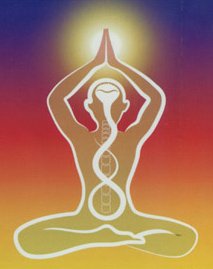
Yoga is originally considered a branch of Hindu philosophy (astika), but both ancient and modern Yoga combine the physical, mental and spiritual. Yoga teaches various physical techniques also known as āsanas (postures), used for various purposes (eg., meditation, contemplation, relaxation).
Biology (plants and animals)
1) Arise in India is the name of a plant defined with Bauhinia racemosa in various botanical sources. This page contains potential references in Ayurveda, modern medicine, and other folk traditions or local practices It has the synonym Piliostigma racemosum (Lam.) Benth. (among others).
2) Arise is also identified with Sesbania grandiflora It has the synonym Agati coccinea (L.f.) Desv. (etc.).
Example references for further research on medicinal uses or toxicity (see latin names for full list):
· Helv. Chim. Acta (1991)
· Archives of Pharmacal Research
· Journal de Botanique, Appliquée à l’Agriculture, à la Pharmacie, à la Médecine et aux Arts (1813)
· Species Plantarum (1753)
· Journal of Economic and Taxonomic Botany (1997)
· Synopsis Plantarum (1807)
If you are looking for specific details regarding Arise, for example side effects, chemical composition, health benefits, diet and recipes, pregnancy safety, extract dosage, have a look at these references.
This sections includes definitions from the five kingdoms of living things: Animals, Plants, Fungi, Protists and Monera. It will include both the official binomial nomenclature (scientific names usually in Latin) as well as regional spellings and variants.
Languages of India and abroad
Kannada-English dictionary
Arise (ಅರಿಸೆ):—[noun] a painful swelling of a vein in the region of the anus, often with bleeding; haemorrhoids; piles.
Kannada is a Dravidian language (as opposed to the Indo-European language family) mainly spoken in the southwestern region of India.
Nepali dictionary
Ārise (आरिसे):—adj. jealous; malicious;
Nepali is the primary language of the Nepalese people counting almost 20 million native speakers. The country of Nepal is situated in the Himalaya mountain range to the north of India.
See also (Relevant definitions)
Starts with (+0): Arising And Vanishing.
Full-text (+7762): Paticcasamuppada, Udbhava, Udaya, Pratityasamutpada, Cetasika, Anutpada, Cetana, Samuttha, Jada, Vatajvara, Yuan qi, Pratyaksha, Jati, Bing qi, Kamaja, Die qi, Jayamana, Upasthana, Audayika, Uttha.
Relevant text
Search found 723 books and stories containing Arising, Arise, Ārise, Arised, Arises; (plurals include: Arisings, Arises, Ārises, Ariseds, Ariseses). You can also click to the full overview containing English textual excerpts. Below are direct links for the most relevant articles:
Introducing Buddhist Abhidhamma (by Kyaw Min, U)
Chapter 7 - Vipassana Meditation < [Part 2 - Meditation]
Chapter 6 - Right Understanding < [Part 2 - Meditation]
Chapter 2 - Consciousness < [Part 1 - Abhidhamma]
World Journal of Pharmaceutical Research
Unusual varitions in second part of axillary artery – a case report < [2023: Volume 12, July special issue 12]
Synthesis and characterization of amphiphilic poly(ethylcyanoacrylate) < [2022: Volume 11, December issue 16]
Concept of agni in madhumeha according to ayurveda w.s.r. to diabetes mellitus < [2023: Volume 12, June special issue 10]
Visuddhimagga (the pah of purification) (by Ñāṇamoli Bhikkhu)
Comprehension of the Immaterial < [Chapter XX - Purification by Knowledge and Vision of the Path and the Not-path]
(9) Mindfulness of Breathing < [Chapter VIII - Other Recollections as Meditation Subjects]
II. The States Associated with the Path, etc. < [Chapter XXII - Purification by Knowledge and Vision (ñāṇadassana-visuddhi-niddesa)]
Fundamentals of Vipassana Meditation (by Venerable Mahāsi Sayādaw)
Conditions (by Nina van Gorkom)
The Great Chariot (by Longchenpa)
Part 10b.6) The six perfections: Prajña that realizes the natural state < [B. the extensive explanation of arousing bodhicitta]
Part 4c - The accompanying samaya and action/practice < [B. The explanation of meditation practice]
Part 2c.7 - How the noble ones are perfected by full attainment < [B. The gradation of powers of those who meditate into high, middle, and low]